Intentional Growth

Intentional Growth

By Arkona - Intentional GrowthBusinessEntrepreneurshipInvestingManagement
Download on the App Store

Intentional Growth episodes

  • Getting Unstuck and Selling Companies

    Are you feeling stuck in your business or don’t know what to do next? Kenyon Blunt, certified Gazelles coach, Value Builder, and expert in growing and selling businesses, gives his advice on what to do when you hit a wall in your business… Maybe that means you want to move on from it to the next phase of your life or maybe that just means figuring out how to take it to the next level.


    In today’s episode, you will learn:
    • The difficulty of having a business partner with a different vision
    • How to get “unstuck”
    • Importance of a network or entrepreneur’s organization
    • What is a roll-up of a company
    • Importance of long range plans for your company
    • Challenges with the turnaround of a business owned by a PE firm
    • Kenyon didn’t start out as a business coach – he went through his own exit first. During the episode, you will hear more about this journey and the exit option he chose when he was feeling completely burned out. You will hear about the next company he helped to turnaround and the challenges he faced with it being owned by a private equity firmed.

      After going through these different exits, Kenyon wanted to help other business owners plan out their exits and grow and sell their companies on their own terms. Every entrepreneur at some point hits a personal or business plateau, just as Kenyon had, and with the help of his training in Scaling Up (Mastering Rockefeller Habits) through Gazelles, he helps people see beyond these plateaus.

      The biggest takeaway Kenyon has for us is: “If you think you are stuck in your business and feeling like you are trapped, get some help… Try to get someone to bounce ideas off of. There are a lot of people who have gone through the same problems.”

      Thanks to Kenyon for sharing his experience with us and I hope you all enjoy today’s episode! Please leave me any comments you have in the section below.

      To help out this show, leave an honest review on iTunes. I read every review and your ratings will help the Life After Business Podcast gain exposure and hopefully help more business owners to exit happy! 


      Contact Information and Bio for Kenyon:
      LinkedIn: https://www.linkedin.com/in/kenyonblunt/
      Twitter: https://twitter.com/kenyonblunt?lang=en
      Website: http://kenyonblunt.com/
      Unstuck Website: http://unstuckbook.info/
      Buy “Unstuck” on Amazon HERE

      Kenyon Blunt is an expert in growing small and medium-sized businesses. He likes to say that he has walked in the shoes of the business owner; he has founded and grown several companies in his career. Kenyon works with business owners and entrepreneurs to get unstuck and he knows how tough this can be especially with companies who have hit a bump in the road. In his last company, Kenyon led the turnaround of a struggling marketing services company. It was this experience and many before that showed him how businesses grow with core competencies he has labeled the Strategic 8: talent management, marketing, sales, operations, customer relationships, financial management, technology and innovation.

      Past Accomplishments


      Kenyon has a long career

      0 min
    • Ep. #51 Getting Unstuck and Selling Companies with Kenyon Blunt
      Are you feeling stuck in your business or don’t know what to do next? Kenyon Blunt, certified Gazelles coach, Value Builder, and expert in growing and selling businesses, gives his advice on what to do when you hit a wall in your business… Maybe that means you want to move on from it to the next phase of your life or maybe that just means figuring out how to take it to the next level.
      In today’s episode, you will learn:
      The difficulty of having a business partner with a different vision
      How to get “unstuck”
      Importance of a network or entrepreneur’s organization
      What is a roll-up of a company
      Importance of long range plans for your company
      Challenges with the turnaround of a business owned by a PE firm
      Kenyon didn’t start out as a business coach – he went through his own exit first. During the episode, you will hear more about this journey and the exit option he chose when he was feeling completely burned out. You will hear about the next company he helped to turnaround and the challenges he faced with it being owned by a private equity firmed.
      After going through these different exits, Kenyon wanted to help other business owners plan out their exits and grow and sell their companies on their own terms. Every entrepreneur at some point hits a personal or business plateau, just as Kenyon had, and with the help of his training in Scaling Up (Mastering Rockefeller Habits) through Gazelles, he helps people see beyond these plateaus.
      The biggest takeaway Kenyon has for us is: “If you think you are stuck in your business and feeling like you are trapped, get some help… Try to get someone to bounce ideas off of. There are a lot of people who have gone through the same problems.”
      Thanks to Kenyon for sharing his experience with us and I hope you all enjoy today’s episode! Please leave me any comments you have in the section below.
      To help out this show, leave an honest review on iTunes. I read every review and your ratings will help the Life After Business Podcast gain exposure and hopefully help more business owners to exit happy! 
      Contact Information and Bio for Kenyon:
      Email: [email protected] LinkedIn: https://www.linkedin.com/in/kenyonblunt/ Twitter: https://twitter.com/kenyonblunt?lang=en Website: http://kenyonblunt.com/ Unstuck Website: http://unstuckbook.info/ Buy “Unstuck” on Amazon HERE
      Kenyon Blunt is an expert in growing small and medium-sized businesses. He likes to say that he has walked in the shoes of the business owner; he has founded and grown several companies in his career. Kenyon works with business owners and entrepreneurs to get unstuck and he knows how tough this can be especially with companies who have hit a bump in the road. In his last company, Kenyon led the turnaround of a struggling marketing services company. It was this experience and many before that showed him how businesses grow with core competencies he has labeled the Strategic 8: talent management, marketing, sales, operations, customer relationships, financial management, techno
      42 min
    • Divestopedia Co-founder Talks Valuations

      Do you have a realistic valuation of your company? A lot of business owners never actually know what their company is worth until they go to sell their business. It is important to know this earlier to be able to figure out what exit option makes the most sense.

      John Carvalho, president and founder of the middle market M&A advisory firm, Stone Oak Capital, as well as co-founder of Divestopedia, talks about the importance of starting to plan for your exit early so you can have time to get the valuation to where it needs to be. If a change in objectives or change in business is needed, you can back into that if not selling for another few years. The more time you have, the more able you will be to achieve the goals you want when selling your company.

      In today’s episode you’ll learn:
      • How to structure your company sale
      • Who to find as a likely buyer
      • How to architect the financing behind the deal
      • How to reverse back into what you want out of your exit
      • Making a healthier business before sale
      • In today’s episode, you will also get John’s expert advice on business valuations, exit options, how deals are structured, financing options, and we have a discussion on return on equity. With 15+ years of experience in the M&A space, John also tells us the three most important variables in value creation, one being to make sure you have a great M&A advisor.

        “A great M&A advisor increases value from that timeframe when you start to market the business to the timeframe you close the deal,” says John.

        My purpose for starting this podcast was to bring my listeners everything I wish I would have known when we sold our company. I am very grateful this podcast will be an added resource on John’s online publication site, Divestopedia, to further this mission. Co-founded with the founder of Investopedia, Cory Janssen, Divestopedia is an online resource for entrepreneurs who want to sell their business for the best price and terms.

        Thanks to John for sharing all of his M&A knowledge with us and I hope you all like today’s episode! Please leave me any comments you have in the section below and let me know what you enjoyed, didn’t enjoy, or want to know more about.

        To help out this show, leave an honest review on iTunes. I read every review and your ratings will help the Life After Business Podcast gain exposure and hopefully help more business owners to exit happy!

        Contact Information and Bio for John:
        LinkedIn: https://www.linkedin.com/in/johnpcarvalho/
        Stone Oak Capital Website: http://stoneoakcapital.com/
        Divestopedia: https://www.divestopedia.com/
        Divestopedia Twitter: https://twitter.com/divestopedia
        Divestopedia Facebook: https://www.facebook.com/Divestopedia/

        John is president and founder of Stone Oak Capital Inc., an M&A advisory firm as well as co-founder of the online publication Divestopedia. For over 15 years, John has served his clients on numerous financial advisory assignments and M&A transactions in various industries. John’s established pro

        0 min
      • Divestopedia Co-founder Talks Valuations
        Do you have a realistic valuation of your company? A lot of business owners never actually know what their company is worth until they go to sell their business. It is important to know this earlier to be able to figure out what exit option makes the most sense.
        John Carvalho, president and founder of the middle market M&A advisory firm, Stone Oak Capital, as well as co-founder of Divestopedia, talks about the importance of starting to plan for your exit early so you can have time to get the valuation to where it needs to be. If a change in objectives or change in business is needed, you can back into that if not selling for another few years. The more time you have, the more able you will be to achieve the goals you want when selling your company.
        In today’s episode you’ll learn:
        How to structure your company sale
        Who to find as a likely buyer
        How to architect the financing behind the deal
        How to reverse back into what you want out of your exit
        Making a healthier business before sale
        In today’s episode, you will also get John’s expert advice on business valuations, exit options, how deals are structured, financing options, and we have a discussion on return on equity. With 15+ years of experience in the M&A space, John also tells us the three most important variables in value creation, one being to make sure you have a great M&A advisor.
        “A great M&A advisor increases value from that timeframe when you start to market the business to the timeframe you close the deal,” says John.
        My purpose for starting this podcast was to bring my listeners everything I wish I would have known when we sold our company. I am very grateful this podcast will be an added resource on John’s online publication site, Divestopedia, to further this mission. Co-founded with the founder of Investopedia, Cory Janssen, Divestopedia is an online resource for entrepreneurs who want to sell their business for the best price and terms.
        Thanks to John for sharing all of his M&A knowledge with us and I hope you all like today’s episode! Please leave me any comments you have in the section below and let me know what you enjoyed, didn’t enjoy, or want to know more about.
        To help out this show, leave an honest review on iTunes. I read every review and your ratings will help the Life After Business Podcast gain exposure and hopefully help more business owners to exit happy!
        Contact Information and Bio for John:
        LinkedIn: https://www.linkedin.com/in/johnpcarvalho/
        Stone Oak Capital Website: http://stoneoakcapital.com/
        Divestopedia: https://www.divestopedia.com/
        Divestopedia Twitter: https://twitter.com/divestopedia
        Divestopedia Facebook: https://www.facebook.com/Divestopedia/
        John is president and founder of Stone Oak Capital Inc., an M&A advisory firm as well as co-founder of the online publication Divestopedia. For over 15 years, John has served his clients on numerous financial advisory assignments and M&A transactions in various industries. John’s established pro
        44 min
      • What is a Family Office?

        Richard Wilson creates and manages single family offices for ultra-wealthy families. He also is the founder of the Family Office Club with membership of over 1,500 families of similar net worth totaling over $1 Trillion in Assets. He started off doing risk consulting out of college and joined the angel investing and capital raising world before positioning himself as the thought leader on family offices.


        If you listen, you will learn:
        • What is a family office
        • The different types of family offices
        • How to create a family office to manage your wealth and business
        • Benefits of a holistic wealth management solution
        • Importance of building a platform business expanding on your niche
        • How a family office can reduce chaos and stress

        • Family Office Defined

          There wasn’t a ton of knowledge being shared on family offices and Richard saw an opportunity to fill that gap. He saw the extreme benefits of creating a family office for wealthy families. For these individuals, even a 1% mistake on their finances or taxes can be very costly.

          Family offices are private wealth management firms that provide a more complete, holistic wealth management solution. They manage everything that affects a family’s balance sheet. They don’t just look at stocks, bonds, market exposure, etc. – They essentially manage everything in your life that has anything to do with finances and investments.

          Richard talks about three different types of family offices – single family offices, virtual family offices, and multi-family offices. He works with single family offices for the ultra-wealthy individuals working with families worth $50 million up to a couple billion! Single family offices are set up for just the wealth creator and their family. A single-family office has a staff that only serves that family all day long unlike the other two options.


          Family Office Deal Flow

          As previously stated, a family office manages to a family’s balance sheet. A family that has this high of net-worth usually has a portfolio including real estate investments, different businesses, and other assets. The office manages all of the family’s deals, income, and cash flow. They help mitigate risk and losses rather than just chasing returns.

          The family office staff has to understand the goals of the family. Usually the wealth creator of the family is passionate in a certain industry where they have built-up industry experience and connections. It is important that the family office has excellent deal flow within their niche industry. Richard explains the staff should continuously be looking at deals and making decisions that will “sweat for you (the family) day in and day out” without too much oversight.

          “People need a family office if they want to reduce chaos and stress, have a more holistic mindset and oversight on their assets and their service providers that are serving them, define their strike zone and their goals more, organize and prioritize their deal flow, and then as a result do all that so they have less taxes, less fees paid hopefully, as well as better returns because you are more focused and organized in what you’re doing. A little formalization can save a lot of time and grief,” explains Richard.


          Selling to a Family Office

          When selling a business, people sometimes do not think about selling to a family office. The reality is family offices buy companies all the time. There is a lack of knowledge of where to find a potential family office buyer and the benefits this kind of sale may prov

          0 min
        • What is a Family Office?
          Richard Wilson creates and manages single family offices for ultra-wealthy families. He also is the founder of the Family Office Club with membership of over 1,500 families of similar net worth totaling over $1 Trillion in Assets. He started off doing risk consulting out of college and joined the angel investing and capital raising world before positioning himself as the thought leader on family offices.
          If you listen, you will learn:
          What is a family office
          The different types of family offices
          How to create a family office to manage your wealth and business
          Benefits of a holistic wealth management solution
          Importance of building a platform business expanding on your niche
          How a family office can reduce chaos and stress
          Family Office Defined
          There wasn’t a ton of knowledge being shared on family offices and Richard saw an opportunity to fill that gap. He saw the extreme benefits of creating a family office for wealthy families. For these individuals, even a 1% mistake on their finances or taxes can be very costly.
          Family offices are private wealth management firms that provide a more complete, holistic wealth management solution. They manage everything that affects a family’s balance sheet. They don’t just look at stocks, bonds, market exposure, etc. – They essentially manage everything in your life that has anything to do with finances and investments.
          Richard talks about three different types of family offices – single family offices, virtual family offices, and multi-family offices. He works with single family offices for the ultra-wealthy individuals working with families worth $50 million up to a couple billion! Single family offices are set up for just the wealth creator and their family. A single-family office has a staff that only serves that family all day long unlike the other two options.
          Family Office Deal Flow
          As previously stated, a family office manages to a family’s balance sheet. A family that has this high of net-worth usually has a portfolio including real estate investments, different businesses, and other assets. The office manages all of the family’s deals, income, and cash flow. They help mitigate risk and losses rather than just chasing returns.
          The family office staff has to understand the goals of the family. Usually the wealth creator of the family is passionate in a certain industry where they have built-up industry experience and connections. It is important that the family office has excellent deal flow within their niche industry. Richard explains the staff should continuously be looking at deals and making decisions that will “sweat for you (the family) day in and day out” without too much oversight.
          “People need a family office if they want to reduce chaos and stress, have a more holistic mindset and oversight on their assets and their service providers that are serving them, define their strike zone and their goals more, organize and prioritize their deal flow, and then as a result do all that so they have less taxes, less fees paid hopefully, as well as better returns because you are more focused and organized in what you’re doing. A little formalization can save a lot of time and grief,” explains Richard.
          Selling to a Family Office
          When selling a business, people sometimes do not think about selling to a family office. The reality is family offices buy companies all the time. There is a lack of knowledge of where to find a potential family office buyer and the benefits this kind of sale may prov
          56 min
        • Designing Your Key Employee Golden Handcuffs

          Dyanne Ross-Hanson started Exit Planning Strategies in 2005 when she realized the business owners that she worked with didn’t give much thought to how they were actually going to get out of their businesses. She saw a need to educate these owners and develop intentional plans for ownership transition.


          If you listen, you will learn:
          • Why rewarding and retaining key employees is so important
          • Four design variables of an incentive program for key personnel
          • Difference between cash based and stock based incentive plans
          • Different ways you can structure cash based incentive plans
          • Ways to transition ownership financially to family members
          • Tax implications for different incentive plans

          • Key Employee Retention

            “The reality is that as an owner prepares for that inevitable transition, they recognize the importance of building as much value in the company as they can,” says Dyanne.

            There are many value drivers to look at when exit planning. Nothing is more important than recruiting, establishing, and retaining your “key bench.” This should be top priority well before talking about the sale or transition of your business. If you don’t have an employee retention or incentive program in place, you need to look into it ASAP!

            Key employees will help grow the company before the sale and make the actual deal more valuable because of their extensive knowledge and skill sets in the business. A solid employee retention program should be in place when these people are recruited and hired. You can assume that key performers will ask for it as a part of their compensation plans.


            Employee Incentive Plans

            If an employee retention or incentive plan is structured correctly, the plan will pay for itself. It should be a win-win for the business owner as well as the employee.

            Dyanne explains, “These key employee incentive plans aren’t an additional line item on your balance sheet or on your income statement. If properly designed, they are being completely funded by increased profit.”

            Not only should the program fund itself, when you go to sell your company, you should get a better multiple as well with the promise of these key people as continued employees.     


            Cash or Stock Based Plans

            You can structure your employee incentive plan to be cash based or stock based. Cash based plans are much more common and can include a cash payout, phantom stock option, deferred stock, stock appreciation, etc.

            Phantom stock is the most popular cash based plan. It gives a sense of ownership mentality to the employee without making them an actual minority owner. They don’t have equity in the business but have the characteristics of it. There is an annual award amount put in place and this would be broken up into units that are put into an account and fluctuate based on the actual value of the company stock. The best part about this option for the business owner is that if the employee leaves, they get a payment and don’t have to deal with minority ownership issues with them.

            Dyanne cautions if choosing a stock based incentive option that you should never give equity away in a compensation package before the employee has proven their value. You want to make sure this person will actually be an asset to your company as well as a key employee for any potential future owners.


            Key Podcast Takeaways

            The biggest mistake that some business owners make is they find an amazing key executive that they think may fit well or positively change their company culture and can take them to the promised land financially and decide to give them huge immediate cash bonuses or equity to lock in the relationship.

            The vision of having this person to help possibly relieve some of t

            0 min
          • Designing Your Key Employee Golden Handcuffs
            Dyanne Ross-Hanson started Exit Planning Strategies in 2005 when she realized the business owners that she worked with didn’t give much thought to how they were actually going to get out of their businesses. She saw a need to educate these owners and develop intentional plans for ownership transition.
            If you listen, you will learn:
            Why rewarding and retaining key employees is so important
            Four design variables of an incentive program for key personnel
            Difference between cash based and stock based incentive plans
            Different ways you can structure cash based incentive plans
            Ways to transition ownership financially to family members
            Tax implications for different incentive plans
            Key Employee Retention
            “The reality is that as an owner prepares for that inevitable transition, they recognize the importance of building as much value in the company as they can,” says Dyanne.
            There are many value drivers to look at when exit planning. Nothing is more important than recruiting, establishing, and retaining your “key bench.” This should be top priority well before talking about the sale or transition of your business. If you don’t have an employee retention or incentive program in place, you need to look into it ASAP!
            Key employees will help grow the company before the sale and make the actual deal more valuable because of their extensive knowledge and skill sets in the business. A solid employee retention program should be in place when these people are recruited and hired. You can assume that key performers will ask for it as a part of their compensation plans.
            Employee Incentive Plans
            If an employee retention or incentive plan is structured correctly, the plan will pay for itself. It should be a win-win for the business owner as well as the employee.
            Dyanne explains, “These key employee incentive plans aren’t an additional line item on your balance sheet or on your income statement. If properly designed, they are being completely funded by increased profit.”
            Not only should the program fund itself, when you go to sell your company, you should get a better multiple as well with the promise of these key people as continued employees.     
            Cash or Stock Based Plans
            You can structure your employee incentive plan to be cash based or stock based. Cash based plans are much more common and can include a cash payout, phantom stock option, deferred stock, stock appreciation, etc.
            Phantom stock is the most popular cash based plan. It gives a sense of ownership mentality to the employee without making them an actual minority owner. They don’t have equity in the business but have the characteristics of it. There is an annual award amount put in place and this would be broken up into units that are put into an account and fluctuate based on the actual value of the company stock. The best part about this option for the business owner is that if the employee leaves, they get a payment and don’t have to deal with minority ownership issues with them.
            Dyanne cautions if choosing a stock based incentive option that you should never give equity away in a compensation package before the employee has proven their value. You want to make sure this person will actually be an asset to your company as well as a key employee for any potential future owners.
            Key Podcast Takeaways
            The biggest mistake that some business owners make is they find an amazing key executive that they think may fit well or positively change their company culture and can take them to the promised land financially and decide to give them huge immediate cash bonuses or equity to lock in the relationship.
            The vision of having this person to help possibly relieve some of t
            51 min
          • Always Be Ready to Sell

            Stuart Sorkin is a lawyer and CPA who spent many years working for large accounting firms before starting his own law practice. His broad range of experience allows him to see how tax, financial, and estate planning are intertwined and become extremely important when selling a business. He took everything he learned working with large clients on business plans and estate planning and co-wrote a book called “Expensive Mistakes When Buying and Selling Companies.”


            If you listen, you will learn:
            • Top mistakes made when buying or selling a business
            • The importance of exit and post-acquisition planning
            • How estate planning and the sale of the business are intertwined
            • What is a Monte Carlo Analysis and how it can help with exit planning
            • How key employees can increase the value of the business
            • Keeping an up-to-date due diligence library will make the sale and transition easier
            • The six ways an entrepreneur can exit their business

            • Planning, Planning, Planning

              “Every entrepreneur exits his business in one of six ways,” says Stuart. “He sells it to family, he sells it to management, he sells it to a third party, he becomes an absentee owner, it gets liquidated, or he dies.”

              This is where planning comes in. If a business owner chooses not to have an exit plan that involves one of the first four choices, then the company will either be liquidated someday or they will die working in the business. An exit plan includes planning for the sale as well as post-acquisition.

              What is your real number? What are you going to do with the rest of your life? Stuart explains that many entrepreneurs have an inflated view of the value of their business and do not understand what needs to be done to fulfill their long-term financial plans. A vague exit strategy will set the deal and their life after business up for failure.

              Tax and estate planning are a part of financial and exit planning. Estate planning is big in family business scenarios. “It is not what you leave your kids, it’s how you leave it to you kids,” states Stuart. A business owner can save a lot in taxes or save their family that burden if they set up their plans ahead of time and look at all implications.

              Stuart stresses that one of the most important things is to have someone that is the quarterback and makes sure the right people are involved at the right time. You need to have someone who knows how these deals are run and how to set yourself up for success.


              Become An Absentee Owner

              Stuart gives the advice that business owners should have a plan that includes striving toward becoming an absentee owner to get the most value from their business. It is all about transferable value. How easy would it be for a seller to come in and take over operations?

              Smart owners bring in key employees or partners to handle areas of the business they are not necessary the most skilled at and also teach them to run the business without them. These key employees become essential in a successful acquisition.

              “By locking up your employees before you are in acquisition mode, you also increase the likelihood of success,” says Stuart.


              Get Ready for Due Diligence

              A business owner has to act like they are selling their business at any time. Having a due diligence library is part of this process. If someone would come with an offer tomorrow then everything would be ready. All the corporate records, annual minutes, financial statements, projections, etc. should be kept in one place and updated annually with the correct information.

              When you have to gather everything

              0 min
            • Always Be Ready to Sell
              Stuart Sorkin is a lawyer and CPA who spent many years working for large accounting firms before starting his own law practice. His broad range of experience allows him to see how tax, financial, and estate planning are intertwined and become extremely important when selling a business. He took everything he learned working with large clients on business plans and estate planning and co-wrote a book called “Expensive Mistakes When Buying and Selling Companies.”
              If you listen, you will learn:
              Top mistakes made when buying or selling a business
              The importance of exit and post-acquisition planning
              How estate planning and the sale of the business are intertwined
              What is a Monte Carlo Analysis and how it can help with exit planning
              How key employees can increase the value of the business
              Keeping an up-to-date due diligence library will make the sale and transition easier
              The six ways an entrepreneur can exit their business
              Planning, Planning, Planning
              “Every entrepreneur exits his business in one of six ways,” says Stuart. “He sells it to family, he sells it to management, he sells it to a third party, he becomes an absentee owner, it gets liquidated, or he dies.”
              This is where planning comes in. If a business owner chooses not to have an exit plan that involves one of the first four choices, then the company will either be liquidated someday or they will die working in the business. An exit plan includes planning for the sale as well as post-acquisition.
              What is your real number? What are you going to do with the rest of your life? Stuart explains that many entrepreneurs have an inflated view of the value of their business and do not understand what needs to be done to fulfill their long-term financial plans. A vague exit strategy will set the deal and their life after business up for failure.
              Tax and estate planning are a part of financial and exit planning. Estate planning is big in family business scenarios. “It is not what you leave your kids, it’s how you leave it to you kids,” states Stuart. A business owner can save a lot in taxes or save their family that burden if they set up their plans ahead of time and look at all implications.
              Stuart stresses that one of the most important things is to have someone that is the quarterback and makes sure the right people are involved at the right time. You need to have someone who knows how these deals are run and how to set yourself up for success.
              Become An Absentee Owner
              Stuart gives the advice that business owners should have a plan that includes striving toward becoming an absentee owner to get the most value from their business. It is all about transferable value. How easy would it be for a seller to come in and take over operations?
              Smart owners bring in key employees or partners to handle areas of the business they are not necessary the most skilled at and also teach them to run the business without them. These key employees become essential in a successful acquisition.
              “By locking up your employees before you are in acquisition mode, you also increase the likelihood of success,” says Stuart.
              Get Ready for Due Diligence
              A business owner has to act like they are selling their business at any time. Having a due diligence library is part of this process. If someone would come with an offer tomorrow then everything would be ready. All the corporate records, annual minutes, financial statements, projections, etc. should be kept in one place and updated annually with the correct information.
              When you have to gather everything
              1 hr

            About Intentional Growth

            From the publisher's feed

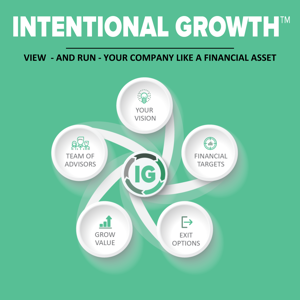
            Intentional Growth™ is a podcast is a podcast for entrepreneurs and business owners wanting to view - and run - their company like a financial asset so they can have fun, create wealth, and make an impact. Truly make the entire journey of owning and running a company "worth it".