
Sign up to save your podcasts
Or

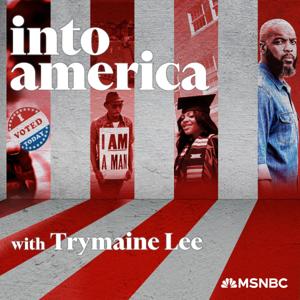

As he lay on the ground under the knee of a Minneapolis Police Officer, George Floyd called out “I can’t breathe” more than 20 times. In 2014, Eric Garner struggled to say the same words 11 times while being choked by an officer in New York. These high-profile deaths have been at the center of protests across the country. But in addition to the names we know, there are plenty that we don’t. According to a 2013 Department of Justice survey, of the police departments nationwide that serve more than 1 million people, 43 percent allow a neck restraint of some kind. There are no national statistics telling us how often these holds—sanctioned or not—end in death.
This summer we’ve seen conversations at the local and national levels about the use of police neck restraints. States like California and New York have moved to put an end to the controversial restraints; but why are they used in the first place? And is reform even possible?
Trymaine Lee speaks with Paul Butler, law professor and author of the book Chokehold, and Ed Obayashi, a Deputy Sheriff and a use-of-force training expert, about the history of chokeholds and the potential for reform. He also talks to Robert Branch, a Black man placed in a neck restraint by an officer in San Diego back in May of 2015.
For a transcript, please visit https://www.msnbc.com/intoamerica.
Further Reading:
To listen to this show and other MS podcasts without ads, sign up for MS NOW Premium on Apple Podcasts.
Hosted by Simplecast, an AdsWizz company. See pcm.adswizz.com for information about our collection and use of personal data for advertising.
 View all episodes
 By Trymaine Lee, MS NOW

4.6
33503,350 ratings
As he lay on the ground under the knee of a Minneapolis Police Officer, George Floyd called out “I can’t breathe” more than 20 times. In 2014, Eric Garner struggled to say the same words 11 times while being choked by an officer in New York. These high-profile deaths have been at the center of protests across the country. But in addition to the names we know, there are plenty that we don’t. According to a 2013 Department of Justice survey, of the police departments nationwide that serve more than 1 million people, 43 percent allow a neck restraint of some kind. There are no national statistics telling us how often these holds—sanctioned or not—end in death.
This summer we’ve seen conversations at the local and national levels about the use of police neck restraints. States like California and New York have moved to put an end to the controversial restraints; but why are they used in the first place? And is reform even possible?
Trymaine Lee speaks with Paul Butler, law professor and author of the book Chokehold, and Ed Obayashi, a Deputy Sheriff and a use-of-force training expert, about the history of chokeholds and the potential for reform. He also talks to Robert Branch, a Black man placed in a neck restraint by an officer in San Diego back in May of 2015.
For a transcript, please visit https://www.msnbc.com/intoamerica.
Further Reading:
To listen to this show and other MS podcasts without ads, sign up for MS NOW Premium on Apple Podcasts.
Hosted by Simplecast, an AdsWizz company. See pcm.adswizz.com for information about our collection and use of personal data for advertising.

37,247 Listeners

8,794 Listeners
7,350 Listeners
5,867 Listeners

3,934 Listeners

4,471 Listeners

6,988 Listeners
9,475 Listeners

628 Listeners
27,721 Listeners

15,600 Listeners

8,562 Listeners
5,832 Listeners
834 Listeners
10,475 Listeners

965 Listeners
4,357 Listeners

1,429 Listeners
31,821 Listeners
2,159 Listeners

7,014 Listeners

6,288 Listeners

1,460 Listeners
1,768 Listeners
54 Listeners

203 Listeners
65 Listeners

4,433 Listeners