
Sign up to save your podcasts
Or

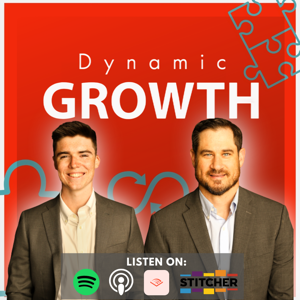

Each investing year tends to coalesce around distinct themes that are difficult to identify upfront and only become clear through observation and adaptation. Reviewing prior years helps reveal recurring patterns and informs future strategy.
"You either make money or you learn something." Even profitable years yield process insights and highlight missed opportunities, reinforcing resilience and long-term skill building.
Investing is like golf: just when your "swing" feels right, conditions change. Continuous refinement is essential because evolving market environments expose new weaknesses.
Appropriate risk-taking is crucial for young investors. Under-allocation to equities can be the bigger mistake given long-term upward market drift and compounding. Understanding what you own reduces perceived risk and helps investors ride out volatility and buy dips with conviction.
Passive, buy-and-hold investing generally outperforms frequent trading, which often triggers taxes on short-term gains and causes investors to sell winners too early.
Asset allocation over market timing: set target allocations (e.g., US, international, real estate) and regularly add to underrepresented assets. This dollar-cost averaging approach removes emotion and naturally buys low. Timing tops and bottoms is a losing game relative to disciplined allocation.
Be a "nerd" about learning: read constantly, pursue structured education when suitable (e.g., CFA), and align learning methods to personal style. Maintain an investment journal to recognize recurring patterns and avoid repeating mistakes.
Discipline is forged in bear markets. Determine true risk tolerance during downturns and use those lessons to guide profit-taking and positioning in subsequent bull markets.
Traditional intermediate and long-term bonds have shown higher correlation and volatility with equities, challenging their stabilizing role. Structural concerns (e.g., deficits) may pressure future returns.
Alternatives include short-duration bonds for stability, gold as an uncorrelated substitute for long duration, and other tools to mitigate sequence-of-returns risk such as high-yield savings, annuities, or an Indexed Universal Life (IUL) policy with stability, tax advantages, and a death benefit.
Shorting individual stocks offers a poor risk-return trade-off: capped upside (100%) with theoretically unlimited downside. Only top-tier professionals with deep access and diligence should consider it.
Chasing high yield is a trap. Elevated yields usually signal higher risk, potential financial distress, or "return of capital" that erodes principal. Favor quality yield and total return via strong businesses and long-term capital gains.
Very high dividends can indicate limited reinvestment opportunities, effectively de-capitalizing the business and implying muted growth expectations.
Share buybacks are a tax-efficient way to return capital, raising ownership per share without immediate tax consequences.
Focus on what you can control: increase income to boost contributions, extend time in the market, and pursue quality growth. Contributions and time are controllable; market returns are not.
Wealth builds through contributions, growth rate, and time. Becoming more valuable professionally to raise income often beats trimming small expenses.
Invest in yourself through continuous education, structured learning, and stepping outside your comfort zone. Mutual accountability within teams drives higher performance and consistent improvement.
Successful long-term wealth accumulation centers on appropriate, well-understood risk; disciplined buy-and-hold allocation; continuous learning and journaling; and emotional discipline tested in downturns. Avoid asymmetric pitfalls like shorting and chasing high yields, rethink the role of traditional bonds, and consider diversified stabilizers. Emphasize controllables—income, contributions, and time—while reinforcing professional growth and accountability.
 View all episodes
 By Crosby Advisory Group

4.9
1515 ratings
Each investing year tends to coalesce around distinct themes that are difficult to identify upfront and only become clear through observation and adaptation. Reviewing prior years helps reveal recurring patterns and informs future strategy.
"You either make money or you learn something." Even profitable years yield process insights and highlight missed opportunities, reinforcing resilience and long-term skill building.
Investing is like golf: just when your "swing" feels right, conditions change. Continuous refinement is essential because evolving market environments expose new weaknesses.
Appropriate risk-taking is crucial for young investors. Under-allocation to equities can be the bigger mistake given long-term upward market drift and compounding. Understanding what you own reduces perceived risk and helps investors ride out volatility and buy dips with conviction.
Passive, buy-and-hold investing generally outperforms frequent trading, which often triggers taxes on short-term gains and causes investors to sell winners too early.
Asset allocation over market timing: set target allocations (e.g., US, international, real estate) and regularly add to underrepresented assets. This dollar-cost averaging approach removes emotion and naturally buys low. Timing tops and bottoms is a losing game relative to disciplined allocation.
Be a "nerd" about learning: read constantly, pursue structured education when suitable (e.g., CFA), and align learning methods to personal style. Maintain an investment journal to recognize recurring patterns and avoid repeating mistakes.
Discipline is forged in bear markets. Determine true risk tolerance during downturns and use those lessons to guide profit-taking and positioning in subsequent bull markets.
Traditional intermediate and long-term bonds have shown higher correlation and volatility with equities, challenging their stabilizing role. Structural concerns (e.g., deficits) may pressure future returns.
Alternatives include short-duration bonds for stability, gold as an uncorrelated substitute for long duration, and other tools to mitigate sequence-of-returns risk such as high-yield savings, annuities, or an Indexed Universal Life (IUL) policy with stability, tax advantages, and a death benefit.
Shorting individual stocks offers a poor risk-return trade-off: capped upside (100%) with theoretically unlimited downside. Only top-tier professionals with deep access and diligence should consider it.
Chasing high yield is a trap. Elevated yields usually signal higher risk, potential financial distress, or "return of capital" that erodes principal. Favor quality yield and total return via strong businesses and long-term capital gains.
Very high dividends can indicate limited reinvestment opportunities, effectively de-capitalizing the business and implying muted growth expectations.
Share buybacks are a tax-efficient way to return capital, raising ownership per share without immediate tax consequences.
Focus on what you can control: increase income to boost contributions, extend time in the market, and pursue quality growth. Contributions and time are controllable; market returns are not.
Wealth builds through contributions, growth rate, and time. Becoming more valuable professionally to raise income often beats trimming small expenses.
Invest in yourself through continuous education, structured learning, and stepping outside your comfort zone. Mutual accountability within teams drives higher performance and consistent improvement.
Successful long-term wealth accumulation centers on appropriate, well-understood risk; disciplined buy-and-hold allocation; continuous learning and journaling; and emotional discipline tested in downturns. Avoid asymmetric pitfalls like shorting and chasing high yields, rethink the role of traditional bonds, and consider diversified stabilizers. Emphasize controllables—income, contributions, and time—while reinforcing professional growth and accountability.

228,383 Listeners

30,666 Listeners

3,217 Listeners

3,339 Listeners

111,948 Listeners
1,422 Listeners

8,748 Listeners

4,045 Listeners
562 Listeners

213 Listeners

19,524 Listeners

1,489 Listeners