
Sign up to save your podcasts
Or

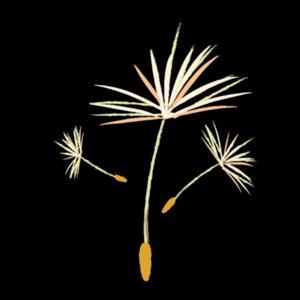


Hello, our fellow dandelions!
In last week's episode, we shared our love for BoA, H.O.T., and g.o.d. with all of you, hopefully introducing some new music to your music library.
This week, we're super excited to continue sharing our love for K-Pop, as we discuss four of our favorite 2nd gen artists.
We start off with a bang with Big Bang's "Haru Haru" (Day by Day). This song reminds Estar of all the reasons why she loves K-pop when bad things happen in K-pop land. Released in 2008, this song (coupled with "Lies") shot Big Bang to stardom and started Big Bang on their journey to worldwide fame. ~Before there was BTS, there was Big Bang.~
Our second introduction this week is SHINee's "Noona Neomu Yeppeo" (Replay). This debut track is so iconic that almost every K-pop fan knows it. It's a groovy R&B track that will for sure have you dancing and moving and grooving along as you listen to it. Also, this song is the song that Bella credits with getting her into K-pop.
After SHINee, we follow it up with Wonder Girls' "Like This". After all, 2nd Gen K-pop was NOT just about the boy groups and Wonder Girls, like their name implies, showed the world their ability to exist as full human beings. What we mean by that is, they were not limited to super cutesy songs or hypersexualized performances. It also helps that "Like This" is a super upbeat song and never fails to bring a smile to our faces.
Last, but not least, we have 2PM with A.D.T.O.Y (All Day I Think of You). This song cranks up the heat and had us thinking about 2PM all day.
For our listeners who have not heard these songs before, they are mostly available on Spotify (and have been collected into a playlist). Please check them out and let us know your thoughts! And if there are any songs (not limited to K-pop) you want us to listen to and share, feel free to call them out in a comment. As always, you can reach us on IG @itaintnewpodcast or Twitter @itaintnewpdcst. Thank you! Best, Estar, Nyke, and Bella
Hey hey, our dear listeners!
This week, we are wrapping up our first series on how we protest for social change.
As a quick recap, in our first episode in this series, Nyke shared with us about how she's always viewed Art as a form of resistance - introducing us to various historical characters such as Phillis Wheatley and Zora Neale Hurston. In our second episode in the series, we heard from Bella about how education is a form of protest and are asked why only some historical events and characters are taught or even mentioned in modern media.
In this episode, Estar shares how she became more aware of her own political agency as an adult, her experience partaking in the Black Lives Matter marches in LA in 2020, what her expectations were through that whole experience, and how she chooses to change the world around her. Later on in the episode, we also discuss our podcast logo and what it means.
If you haven’t had a chance to check out our social media, you can find us on IG (@itaintnewpodcast) and Twitter (@itaintnewpdcst). We appreciate all our supporters and listeners' likes, shares, and follows. Thank you so very much!
From,
Bella, Nyke, and Estar
Hey hey, our dear listeners!
We are so excited to bring you our fourth episode - the second in a series of three! - where we discuss how we protest for social change.
This week, Bella discusses what feelings came up for her while watching “Hidden Figures”, and why she views education as a form of protest.
We are listing the historical characters that are brought up in today's episode down below in hopes that this will help you on your journey with learning more about each of these characters and their legacy.
“Hidden Figures”
Katherine Johnson - NASA
In an interview with WHRO-TV, Johnson stated that she "didn't feel the segregation at NASA, because everybody there was doing research. You had a mission and you worked on it, and it was important to you to do your job ... and play bridge at lunch." She added: "I didn't feel any segregation. I knew it was there, but I didn't feel it."[24]
US President Thomas Jefferson
Smithsonian Magazine:Jefferson denounced the slave trade as an “execrable commerce ...this assemblage of horrors,” a “cruel war against human nature itself, violating its most sacred rights of life & liberties.” As historian John Chester Miller put it, “The inclusion of Jefferson’s strictures on slavery and the slave trade would have committed the United States to the abolition of slavery.”
How do you believe the above mentioned statements and then proceed to own 600 humans for unpaid labor during your lifetime?
Biddie Mason - a former slave traveling by foot, while pregnant, from Mississippi* (wrongly stated as Georgia in the podcast) to Los Angeles, California
Known for her charity to those less fortunate regardless of race or religious beliefs
Became one of the first African American women to own land in LA
In next week’s episode, Estar shares how she became more aware of her own political agency as an adult, and how she chooses to change the world around her. We also discuss our podcast logo and why we chose it. We look forward to sharing more with you all then!
If you haven’t had a chance to check out our social media, you can find us on IG (@itaintnewpodcast) and Twitter (@itaintnewpdcst). We appreciate all our supporters and listeners' likes, shares, and follows. Thank you so very much!
From,
Bella, Nyke, and Estar
Hello dear listener!
We are so excited to bring you our third episode - the first in a series of three! - where we discuss how we protest for social change.
This week, Nyke educates us on how art has historically been used as a medium for protest.
We have broken out the artists that are brought up in today's episode, and we hope that this will help you on your journey with learning more about each of these artists and their works.
Beyoncé - Lemonade Grammy Speech
Phyllis Wheatley - a famous poet from the 1700s who was taught by her masters how to read and write
Harlem Renaissance:
Zora Neale Hurston
wrote about being Black and Female and what that meant living in the USA during the early 1900s
Also wrote to Black newspapers about US foreign policy in Asia
Pan-African + Pan-Asian conferences during the mid-1900s
Black Grace - Maori Dance Troupe from New Zealand
Next week’s episode discusses how a specific piece of art can foster a sense of urgency to learn and educate ourselves about our history. We look forward to sharing more with you all then!
If you haven’t had a chance to check out our social media, you can find us on IG (@itaintnewpodcast) and Twitter (@itaintnewpdcst). We appreciate all our supporters and listeners' likes, shares, and follows. Thank you so very much!
From,
Bella, Nyke, and Estar
Hello!!
Welcome to "It Ain't New", the show that re-presents the history of ethnic minority groups in the USA and where knowledge becomes power. If you don't know, now you know.
We're so excited to start this journey with podcasting and want to introduce ourselves, and tell you a little about the podcast and what we aim to give to our listeners.
A transcription for this episode can be found here.
You can support us by following our IG (@itaintnewpodcast) and Twitter (@itaintnewpdcst).
From,
Bella, Estar, and Nyke
Hello! Welcome to the 2nd episode! In this episode we discuss our mutual love of Kpop and the K-drama that went down earlier this year regarding the hostile takeover that SM Entertainment experienced. We ponder on why this seems to be such a big deal that western media has also now taken it on, and when we first heard western media news outlets covering anything Kpop related (psst, it was probably 2012 with Psy's "Gangnam Style"). And with all the changes that seem to be happening, we discuss what we can do to future proof our own kpop playlists from being suddenly removed.
From the publisher's feed