
Sign up to save your podcasts
Or

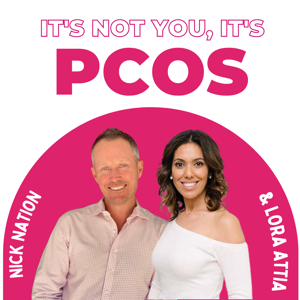


Does PMOS Disappear at Menopause? | PMOS, PCOS & Menopause
Does PMOS (formerly known as PCOS) disappear when you reach menopause? The short answer is no — but PMOS can change significantly throughout perimenopause and menopause.
In this episode of It’s Not You, It’s PMOS, Lora and Nick explore what happens to PCOS/PMOS after menopause, including which symptoms may improve, which can persist, and why metabolic health becomes an increasingly important focus beyond the reproductive years.
As oestrogen levels change during perimenopause and menopause, women with PMOS may experience changes in insulin resistance, weight management, body composition, cardiovascular health, androgen levels, mental health and metabolic risk.
Lora and Nick discuss practical, evidence-informed strategies to support your health during this transition, including the role of nutrition, protein, resistance training, cardiovascular exercise, muscle mass, bone health and the Mediterranean diet.
In this episode, we cover:
• Why PMOS is a lifelong condition that can evolve over time
Whether you have been diagnosed with PCOS/PMOS, are approaching perimenopause, or are already in menopause, this episode explores how to shift the focus from fertility alone towards long-term metabolic, cardiovascular, physical and mental health.
Key takeaway: PMOS doesn't simply disappear at menopause — its presentation changes, and so should the way we support your health.
Follow us on Instagram for more evidence-based information about PMOS, PCOS, fertility, menopause, nutrition and women's health:
🎙️ Listen, follow and share It’s Not You, It’s PMOS to help more women understand that PMOS is about more than fertility — it’s a lifelong health condition that deserves attention at every stage of life.
Keywords: PMOS, PCOS, polycystic ovary syndrome, menopause, perimenopause, PCOS and menopause, PMOS and menopause, insulin resistance, metabolic health, women's health, menopause nutrition, PCOS weight management, Mediterranean diet, resistance training, cardiovascular health, protein, mental health, hormonal changes, body composition, bone health.
Vitamin D is one of the most common nutrient deficiencies in women with PMOS (Polycystic Metabolic Ovarian Syndrome), but its role extends far beyond bone health.
In this episode of It's Not You, It's PMOS, fertility dietitian Lora Attia and co-host Nick Nation explore the growing evidence linking Vitamin D to insulin resistance, hormone regulation, ovulation, fertility, inflammation, mood, and overall metabolic health.
You'll learn:
Whether you're trying to improve your fertility, manage PMOS symptoms, or better understand your metabolic health, this episode provides practical, evidence-based information to help you make informed decisions.
Subscribe to It's Not You, It's PMOS for expert conversations that separate fact from fiction and empower you to take control of your health—because it's not your fault. It's not you. It's PMOS.
Don't forget to follow us on socials too!
In this episode of It's Not You, It's PMOS, Lora and Nick unpack one of the biggest changes in women's health in decades: the transition from Polycystic Ovary Syndrome (PCOS) to Polyendocrine Metabolic Ovarian Syndrome (PMOS).
For years, the name PCOS has caused confusion, anxiety, and misunderstanding. Many women were told they had "cysts on their ovaries" when, in reality, the condition is far more complex and affects much more than reproductive health.
Join us as we explore:
• Why international experts agreed the name PCOS no longer reflected the condition accurately
We also discuss the global collaboration that led to the name change, involving thousands of women with lived experience, researchers, clinicians, and advocacy groups worldwide.
Whether you've recently been diagnosed, have lived with PCOS for years, or support someone with the condition, this episode will help you understand why this change matters and what it means for the future of diagnosis, treatment, and awareness.
Key Takeaway:
Subscribe, share, and join us as we continue to challenge outdated narratives and empower women with evidence-based information about PMOS.
Follow Lora: @itsnotyouitspmos
Links: https://www.nih.gov/news-events/nih-research-matters/polcystic-ovary-syndrome
Cravings, Cramps & Cortisol - Maybe it's time to look at Magnesium!
Magnesium is one of the most underrated nutrients when it comes to managing PCOS—but it plays a powerful role behind the scenes.
In this episode, we unpack how magnesium influences key aspects of PCOS, from insulin resistance and hormonal balance to mood, inflammation, and long-term cardiovascular health. You’ll learn why women with PCOS are more likely to have lower magnesium levels, how this impacts symptoms like acne, hirsutism, and anxiety, and what you can do about it.
We also break down the best food sources of magnesium, practical ways to increase your intake, and when supplementation may be helpful—including which forms to consider depending on your symptoms.
Whether you’re trying to improve your metabolic health, support your mental wellbeing, or optimise your fertility, this episode will give you a clear, evidence-based understanding of how magnesium fits into your PCOS management plan.
What we cover:
We walk you through the different types of Magnesium and why they are used for different outcomes:
Want to boost your magnesium intake through food? Try Nick’s famous bean recipe—a simple, nourishing way to support your intake while keeping meals PCOS-friendly.
Link: https://drive.google.com/file/d/1_sDexgE2dUPqdS9pXMCleICO4lqOWOLW/view?usp=sharing
If you love this episode, don’t forget to follow the podcast, rate and review, and share it with a friend who might benefit.
Happy Listening - Lora & Nick
PCOS & Fertility Dietitians
Follow us on socials - Facebook
Disclaimer:
Struggling with PCOS facial hair or hirsutism and wondering if supplements actually help?
In this episode of It’s Not You, It’s PCOS, fertility dietitian Lora Attia and co-host Nick unpack the science behind hirsutism in PCOS, including:
• Why facial hair growth happens in PCOS
We cover inositol, omega-3, zinc, vitamin D, spearmint tea, DIM, and saw palmetto — and explain how nutrition, hormones, and medical care all play a role.
If you’re tired of quick fixes and want honest, evidence-based guidance for PCOS facial hair and hirsutism, this episode is for you.
Follow us on socials: https://www.instagram.com/itsnotyouitspcos/
Loved this episode? Leave a 5 star review to help us reach more amazing women like you!
Cheers, Nick and Lora!
Feeling overwhelmed by conflicting PCOS advice like “cut carbs,” “exercise more,” or “just take supplements”? In this episode of It’s Not You, It’s PCOS, we break it down into five practical, evidence-based PCOS hacks that actually make a difference — without turning your life upside down.
We cover simple strategies that support hormone balance, insulin resistance, energy, weight management, and overall wellbeing, and most importantly, how to make them realistic and sustainable.
In this episode, we talk about:
If you’re trying to manage PCOS, improve insulin sensitivity, support fertility, or just feel more like yourself again — this episode is for you.
🎧 Hit follow so you don’t miss future PCOS, fertility, and hormone-health episodes.
Facebook: https://www.facebook.com/profile.php?id=61579068012822
If you have found the podcast valuable - please share and leave a 5 star review, to help us reach more amazing women like you!
Cheers, Nick Nation & Lora Attia
PCOS Accredited Practicing Dietitians
In this episode of 'It's Not You, It's PCOS', hosts Laura and Nick discuss the critical role of fats in managing PCOS. They explore the different types of fats, emphasizing the importance of healthy fats like omega-3s while cautioning against trans fats. The conversation highlights practical dietary tips for incorporating beneficial fats into meals and the impact of these choices on inflammation, hormone balance, and overall fertility outcomes.
Takeaways
Fat plays a powerful role in hormones, inflammation, and fertility.
Not all fats are created equal; some are beneficial while others are harmful.
The tastiest foods are often unhealthy and can lead to addiction.
It's possible to reduce cravings for unhealthy foods over time.
Trans fats are particularly harmful and should be avoided.
Incorporating omega-3s from food is preferable to supplements.
Healthy fats can improve hormone balance and fertility outcomes.
Dietitians also face challenges with food cravings and balance.
Making simple swaps in your diet can lead to better health.
Fat should be viewed as an ally in managing PCOS, not an enemy.
Chapters
00:00 Understanding the Role of Fats in PCOS
05:11 The Power of Omega-3 Fatty Acids
12:12 Navigating Omega-6 and Other Fats
17:54 Practical Strategies for Healthy Fat Consumption
Ask us a question on your socials:
Leave us a 5 star review to help us reach more amazing women like you!
A New Approach to PCOS, how eating More for PCOS can be a game changer for weight loss and improving your relationship with food! It's nourishment over restriction here's why...
Join Nick Nation, Accredited Practising Dietitian, and Lora Attia, PCOS and Women’s Health Dietitian, in this episode of It’s Not You, It’s PCOS as they break down the link between PCOS, nutrition, weight loss, and insulin resistance.
Discover why eating more nutrient-dense foods—not less—can support healthy weight management, weight loss, better blood sugar control, and improved hormonal balance.
Nick and Lora tackle common misconceptions about calorie restriction, share practical dietary tips for balanced meals with protein, healthy fats and fibre, and explain how to shift your mindset from restriction to nourishment. Whether you’re struggling with PCOS symptoms, insulin resistance or want to feel confident about your food choices, this episode offers real-life strategies to make food your ally.
HAVE A QUESTION?
GET IN TOUCH!
We would love to hear from you
It's not you, It's PCOS
Dietitians Nick & Lora share nutrition tips to beat PCOS bloating...
Feeling bloated with PCOS? You’re not alone. As dietitians specialising in PCOS nutrition, Nick and Lora unpack why bloating happens and share practical tips to help you feel lighter, more comfortable, and in control.
Bloating with PCOS is more than just discomfort—it’s often tied to insulin resistance, hormones, gut health, and inflammation. In this episode of It’s Not You, It’s PCOS, dietitians Nick and Lora share their expertise in PCOS nutrition to help you understand why bloating happens and what you can do to ease it.
We break down:
How insulin resistance and inflammation impact digestion and bloating
The link between hormones, gut health, and PCOS bloating
Practical nutrition strategies: getting the right type and amount of fiber, staying hydrated, and including anti-inflammatory foods
Simple lifestyle tips like gentle movement after meals
The role of probiotics and fermented foods in reducing bloating
If you’ve been asking yourself, “Why am I always bloated with PCOS?” this episode will give you the nutrition and lifestyle tools to beat the bloat and feel more comfortable day to day.
Struggling with the PCOS bloat?
Follow us and DM us at:
It's Not You, It's PCOS Instagram
Keywords: PCOS bloating, PCOS dietitian, PCOS nutrition, PCOS gut health, PCOS digestion, PCOS inflammation, insulin resistance, probiotics for PCOS, anti-inflammatory diet PCOS, women’s health nutrition
Part 2: IVF & PCOS with Dr. Jenny Cook, What You Need to Know
IVF with PCOS can feel confusing and a little daunting—but you don’t have to navigate it alone. In this episode, I’m joined by my co-host Nick and the brilliant Dr. Jenny Cook, Fertility Specialist and Medical Director of Monash IVF to bust some big myths and answer the questions so many women have.
We dive into whether women with PCOS can conceive naturally, what makes IVF treatment a little different with PCOS, and how to reduce the risks of OHSS (Ovarian Hyperstimulation Syndrome). You’ll also hear how diet, lifestyle, and supplements like inositol, vitamin D, and omega-3s can support ovulation, hormonal balance, and IVF outcomes.
If you’ve ever wondered “Will IVF work for me with PCOS?” or “What should I be doing to prepare my body?”—this conversation is packed with clarity, practical strategies, and hope.
If you haven't listened to Part 1 - How to prepare for IVF with Dr. Jenny go on back!
To connect with us or ask a question DM us at:
(1) Instagram
It's not you it's PCOS - YouTube
Nick & Lora
PCOS & Fertility Dietitian's
From the publisher's feed
874 Listeners
44 Listeners
148 Listeners
1,882 Listeners

47 Listeners