
Sign up to save your podcasts
Or



00:00 – The special qualities of Shaul HaMelech (King Saul) were purity of mind and humility. In pursuit of lost donkeys, he meets the Prophet Shmuel (Samuel).
03:35 – The custom of going to a chassidic Rebbe for advice and donating a gift as expression of respect. (Presentation of a “kvitel“.)
07:00 – Shaul is told that he will be king of Israel. Shmuel instructs him to look up at the sky to strengthen his yiras shemayaim (reverence for Hashem).
10:00 – The meaning of the expression “Shaul is also among the prophets?” Shaul becomes king. A king of Israel may not negate the honor due him.
13:00 – Nachash Kig of Ammon threatens the Jewish community of Yavesh Gilad. Shaul destroys the army of Ammon.
19:00 – Shmuel reprimands the People of Israel for believing in a king instead of believing in Hashem. Shaul leads the People to do teshuvah by praying before defending themselves against the Philistines, but an act of disrespect of Shmuel HaNavi causes him to lose the kingdom.
25:00 – Yonasan, the son of Shaul, succeeds in a valiant and shrewd attack on the enemy.
30:00 – Shaul HaMelech fails to wipe out the entire nation of Amalekbecause he allowed their king, Agog, to live. Shmuel executes Agog.
38:00 – The gemara questions the strictness of this judgment. Couldn’t Shaul HaMelech have done teshuvah and been forgiven? He could have, except he fell into despair and he was therefore not able to do teshuvah.
43:00 – How did the music of Dovid’s harp soothe the despair of Shaul? The story of the Seventh Beggar: the princess and the Castle of Water.
45:00 – A Jew should never lose hope.
00:00 – In the last story of the Sipurey Masiyos – Rabbi Nachman’s story of The Seven Beggars – the fourth beggar (with a crooked neck) speaks about two birds who have been distanced from one another. The beggar describes his talent as a ventriloquist whereby he throws his voice to imitate the sound of each bird until the two are reunited. This alludes to the way Hashem used His “Voice” the first time He spoke to the prophet Shmuel.
04:31 – The Aron Kodesh (Holy Ark) is captured by the Philistines. This incident relates to a later moment in Jewish history when Dovid Hamelech (King David) defeats the giant Golias (Goliath).
08:46 – The heroism of Shaul (Saul) even before he is made king. He risks his life, alone, to rescue the luchos (tablets of the Torah) from the Aron Kodesh.
13:49 – The death of Eli HaKohen and his sons.
15:34 – The Philistines celebrate their victory in the city of Ashdod but their idol, Dagan (a kind of “merman” figure) is destroyed and a plague breaks out. They move the Aron Kodesh to other locations but the trouble continues until they decide to let oxen pulling the wagon decide to return it to the Jews.
22:11 – Shmuel gives rebuke to Israel. The Philistines are defeated by Hashem through thunder.
25:08 – The People of Israel ask for a King and Shaul is annointed by Shmuel.
29:29 – Why was Shmuel HaNavi angry that the People of Israel asked for a king, when it’s actually a mitzvah in the Torah? The response includes some of the Seven Mitzvos (commandments) of the Bnei Noach (descendants of Noah) as listed in Sanhedrin 58b:
1) Do not murder.
2) Do not steal.
3) Do not worship false gods.
4) Do not commit adultery.
5) Do not eat the limb of a living animal.
6) Do not curse God.
7) Set up courts and bring offenders to justice.
38:32 – King Yeravam Ben Nevat (Jeroboam) threatens the prophet, his hand shrinks (Melachim Aleph – 1 Kings:13). Moral of this incident for today: emunas chochomim.
00:00 – The story behind the birth of Shmuel HaNavi (Samuel the Prophet). Elkanah, Chana, Penina.
11:45 – Introduction to basic concepts of kabbalah and how Chana’s prayer reached “above Hashem“. She accessed an upper realm called mazal and because of what she achieved, the formation of the Shemoneh Esrei is based on her prayer.
*17:50 – True account from the time of Rebbe Nachman illustrating the live-giving power of a Jewish woman’s prayer.
26:32 – The sons of Eli HaKohen.
27:51 – The first nevuah (prophecy) of Shmuel HaNavi. The curse against the house of Eli HaKohen and his descendants and how it was counteracted through Torah study and tzedaka (charity).
Two accounts from Jewish history that illustrate how a small domestic problem can escalate to war. First – the account of Micah‘s idol, second, the account of how and why the tribe of Benyamin was almost completely destroyed by the other tribes of Israel. Text: Shoftim/Judges 17-20.
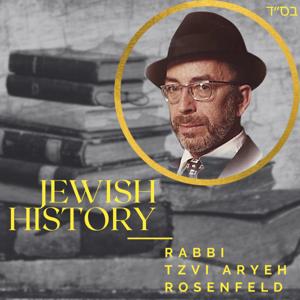
Shoftim – The Book of Judges – presented by Rabbi Zvi Aryeh Rosenfeld z”l.
00:00 – Delilah’s attempts to find out the secret of Shimshon‘s strength.
09:15 – Shimshon reveals the truth about his supernatural powers and he is captured by the Plishtim (Philistines). He is blinded and endures many trials but remains a tzaddik.
15:58 – Through his death, Shimshon brings down more enemies of Israel than he did in all his battles against them during his lifetime.
20:57 – Shimshon was a tzaddik and achieved even more through his death than he did through his life. There are two types of gehinnam (hell) – one of fire and one of ice. The antidote for the gehinnam of of ice is hidden in the mitzvos that are done through pairs (e.g. tefillin, two Shabbos loaves at every meal).
27:30 – The powers of a tzaddik to destroy his enemies are even greater after he passes away than they were in his lifetime.
30:16 – The gilgulim (incarnations) of Shimshon, who was, himself, a gilgul of Nadav and Avihu, the sons of Aharon HaKohen.
35:52 – The lesson of Shimshon and his ultimate victory is that a person should strengthen his faith in the tzaddikim and never give up.
Shoftim – Lesson 3 – Birth Of Shimshon Riddle Wars
00:00 – Peace in Israel under the leadership of Tolah ben Puah from the tribe of Yissachar.
00:40 – The next leader was Yair HaGiladi of Shevet Menashe (East). He called the villages of his sons “Chavos Yair” to commemorate Yair ben Menashe, who had no children. Why does the Torah mention this? The true offspring of tzaddikim are the Torah and maasim tovim (good deeds) they bring to the world. “Chavos Yair” (gematria is 635: 613 mitzvos plus the 22 letters of the Torah).
05:56 – Jewish emunah (faith) faltered and as a result Hashem allowed the nation of Ammon oppressed them.
07:31 – Hashem refused to help Israel because of their idol worship, but Am Yisrael continued to beg Him to return to them.
08:57 – “Lam’natzeach” in Tehillim alludes to Hashem‘s “defeat” through prayer, teaching us that no one should ever give up hope, no matter what the circumstances.
10:40 – Yiftach, arises from humble beginnings to become a fierce defender of Israel. The Jews are forbidden to make war against Moav because Rus would come from that land.
13:55 – Ammon declares war against the Jews.
17:00 – Sichon, king of Amori and Og, King of Bashan were supernatural giants. They had survived the flood of Noach. Yiftach refuses to give back trans-Jordan and the army of Israel was victorious even though they were greatly outnumbered.
19:52 – Yiftach’s vow to sacrifice the first thing he meets after the battle if he is victorious.
23:14 – Did Yiftach actually sacrifice his only daughter? The Zohar says yes. Because of Yiftach‘s refusal to meet with Pinchas, Kohen Gadol, his daughter lost her life. Both men were punished severely by Hashem for their stubbornness.
28:38 – Civil war with Ephraim.
30:03 – The origin of the term for a password: “shibboleth.”
32:03 – Aftzon/Boaz and Rus and the origin of Mashiach in spiritual purity.
35:36 – Lineage of Shimshon HaGibor (Samson).
37:34 – Elon and Avadon.
00:00 – Review of the beginning of Sefer Shoftim.
03:00 – “You cannot reach the limit of Hashem’s patience and kindness.” – Rabbi Zvi Aryeh Rosenfeld z”l
04:00 – An angel appears to Gidon ben Yoash, (from the tribe of Menashe).
11:20 – Hashem commands Gidon to destroy an alter to Baal and receives an additional name: Yiru-Baal. He asks and receives Divine proof that he should amass an army against Midian.
18:00 – A selection of soldiers is made by testing them in drinking at a river. Only 300 of 10,000 soldiers didn’t get down on their knees to drink. “At no time should a Jew get down on both knees.” – R’ Rosenfeld.
23:00 – Meaning of the Midianite soldier’s dream about the loaf of oat bread.
26:00 – In panic, the Midianite soldiers destroyed one another. Gidon pursues and kills the two kings of Midian.
30:00 – Gidon refuses to accept kingship over Israel. His half-son Avimelech instigates a rebellion and killed 69 of Gidon’s 70 sons. Only the youngest son, Yosam (Jotham), remained.
38:00 – Yosam tells the parable of the thorn to the people of Shechem who had joined Avimelech’s rebellion.
40:00 – Avimelech is killed and temporary peace for the Jews returned until they fell away from Hashem again. “Each Jew can find himself in the words of the Navi because [like the People of Israel] he [personally] goes through these periods of elevation and descent.” – R” Rosenfeld z”l.
00:00 – After the passing of Yehoshua, the first of Israel’s judges – Osniel ben Kenaz – takes command. As the faith of the new generation weakens, enemies arise and Hashem warns us to be harsh with our oppressors.
09:20 – Moab rises up against the Bnei Yisrael.
13:00 – The heroic deeds of the righteous Ehud against the King of Moab, Eglon.
00:00 – The Battle of Yericho (Jericho). The unusual faith of Rachav in protecting the People of Israel shows how a person who comes from the lowest depths can rise to the highest spiritual levels. “There’s no such thing as a person having passed the point of no return.” – Rabbi Zvi Aryeh Rosenfeld z”l.
06:00 – Why didn’t Yehoshua/Joshua have any sons? This was a punishment for having stated a Torah law in front of his teacher, Moshe Rabbeinu. The Zohar, however, says that Yehoshua did no sin.
08:30 – The battle of Ai and the death of a Jewish warrior who was “like” 36 men – Yair ben Menashe, even though Hashem had assured Israel they would be victorious. Why this casualty?
11:00 – The lottery to find the person who disobeyed the commandment not to loot the city of Yericho.
12:30 – “No matter how bad his behavior, a Jew still retains the holy title of Jew.” – Rabbi Zvi ARyeh Rosenfeld z”l.
13:00 – The lottery is arranged because Hashem refuses to speak Loshon Hara (evil report) about a Jew. The culprit – Achan – is found and he confesses.
16:00 – The power of viduy (confession).
17:00 – The strategy against the city of Ai that led to victory was used by the Israeli army in the war of 1967.
18:00 – The importance of establishing and upholding effective judicial system to combat evil. Judges who are too liberal and show mercy when it’s not warranted are themselves criminal.
24:50 – The deception of the inhabitants of Gibeon in offering a false treaty of peace.
29:00 – Yehoshua commands the sun to halt during the battle against Gibeon.
From the publisher's feed
This is a series of lectures on the history of the People of Israel based on NaCH (Prophets and Writings) presented by Rabbi Zvi Aryeh…
This podcast was created Leilui Nishmas Simcha Melech ben Meir Leib HaLevi
For more Shiurim go to www.breslovtorah.com

5 Listeners

4 Listeners
16 Listeners

9 Listeners

4 Listeners

5 Listeners
2 Listeners
1 Listeners

17 Listeners

2 Listeners
6 Listeners

5 Listeners

0 Listeners
4 Listeners

0 Listeners

4 Listeners

5 Listeners
0 Listeners

0 Listeners