
Sign up to save your podcasts
Or

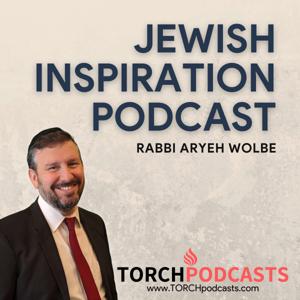


In this episode, Rabbi Aryeh Wolbe presents one of the most important tools for spiritual growth during Elul: never try to transform yourself by making an unsustainable leap. Although the weeks leading to Rosh Hashanah and Yom Kippur inspire ambitious resolutions, genuine growth usually happens through small, deliberate steps. A person who tries to change everything at once is likely to fall—and may then blame Hashem, the process, or themselves for the failure.
Rabbi Wolbe offers a powerful interpretation of the evening prayer asking Hashem to remove the spiritual adversary “from before us and from behind us.” The obstacles before us are the challenges that block our progress. The danger from behind is the voice that pushes us to move too quickly, take on too much, and run before we have learned to walk. Falling is not itself the greatest danger; righteous people fall and rise again. The greater danger is falling so painfully that we become discouraged and decide, “I tried. This is not for me.”
Spiritual growth resembles climbing a ladder: one rung at a time. Instead of trying to master the entire prayer book, understand one line. Instead of imagining that you must learn the entire Talmud, begin with one word, one passage, or one page. Rabbi Moshe Feinstein’s attendance at a celebration for someone who completed a single page of Talmud demonstrates that an accomplishment’s greatness is measured not only by its size, but also by the effort, persistence, and obstacles overcome. As we prepare for the High Holidays, the goal is not to change everything—it is to choose one small, meaningful change that can last.
_____________
This Podcast Series is Generously Underwritten by Peter & Becky Botvin
This Episode is dedicated in Honor of Rivka Bas Meira
Recorded at TORCH Centre in the Levin Family Studios (B) to a live audience on August 25, 2023, in Houston, Texas.
Released as Podcast on August 27, 2023
_____________
Listen, Subscribe & Share:
Share your questions at [email protected] or visit torchweb.org for more Torah content.
_____________
About the Host:
Rabbi Aryeh Wolbe, Director of TORCH in Houston, brings decades of Torah scholarship to guide listeners in applying Jewish wisdom to daily life. To directly send your questions, comments, and feedback, please email: [email protected]
_____________
Support Our Mission:
Our Mission is Connecting Jews & Judaism. Help us spread Judaism globally by sponsoring an episode at torchweb.org.
Your support makes a HUGE difference!
_____________
Listen More
Other podcasts by Rabbi Aryeh Wolbe:
For a full listing of podcasts available by TORCH at http://podcast.torchweb.orgv
_____________
Keywords:
#JewishInspiration, #Mussar, #MasterClass, #Elul, #RoshHashanah, #YomKippur, #HighHolidays, #Teshuvah, #Shofar, #40days
Rabbi Aryeh Wolbe explores the distinctive meaning of the number forty in Judaism. Forty appears repeatedly at moments of creation and transformation: the Flood lasted forty days and nights, pregnancy lasts forty weeks, a mikvah requires forty se’ah of water, Moshe remained on Mount Sinai for forty days, and the journey from Rosh Chodesh Elul to Yom Kippur spans forty days. Even the Torah’s punishment of thirty-nine lashes is described as “forty minus one.” Together, these examples reveal forty as the number associated with becoming something new.
Each example involves a fundamental change of state. The Flood renewed the world; gestation produces a new life; immersion in a mikvah moves a person from ritual impurity to purity; conversion creates a new Jewish identity; and Moshe’s ascent helped transform a nation of former slaves into a sanctified people. In the same way, the forty days from Elul through Yom Kippur give every person the ability to transform spiritually and approach Hashem as someone genuinely new.
Teshuvah is not merely an apology for past actions. Sin creates barriers between a person and Hashem, while repentance removes those barriers and restores the original closeness of the relationship. This is why Yom Kippur, despite its fasting and seriousness, is one of the happiest days of the Jewish year: sincere repentance brings forgiveness, atonement, wholeness, and a clean slate. These forty days are a uniquely favorable period in which even an imperfect but genuine effort is precious to Hashem.
_____________
This Podcast Series is Generously Underwritten by Peter & Becky Botvin
This Episode is dedicated in Honor of Hubba Wubba
Recorded at TORCH Centre in the Levin Family Studios (B) to a live audience on August 22, 2023, in Houston, Texas.
Released as Podcast on August 25, 2023
_____________
Listen, Subscribe & Share:
Share your questions at [email protected] or visit torchweb.org for more Torah content.
_____________
About the Host:
Rabbi Aryeh Wolbe, Director of TORCH in Houston, brings decades of Torah scholarship to guide listeners in applying Jewish wisdom to daily life. To directly send your questions, comments, and feedback, please email: [email protected]
_____________
Support Our Mission:
Our Mission is Connecting Jews & Judaism. Help us spread Judaism globally by sponsoring an episode at torchweb.org.
Your support makes a HUGE difference!
_____________
Listen More
Other podcasts by Rabbi Aryeh Wolbe:
For a full listing of podcasts available by TORCH at http://podcast.torchweb.orgv
_____________
Keywords:
#JewishInspiration, #Mussar, #MasterClass, #Elul, #RoshHashanah, #YomKippur, #HighHolidays, #Teshuvah, #Shofar, #40days
Rabbi Aryeh Wolbe explores the extraordinary power of beginnings. Drawing on examples involving Abraham, Noah, Rav Chia, the rededication of the Temple at Hanukkah, young Torah students, and the first year of marriage, he explains that beginnings establish roots and shape everything that follows. Because Rosh Hashanah is the beginning of the new year, Elul is our opportunity to prepare ourselves to enter it in the purest, holiest, and most intentional state possible.
Rosh Hashanah is presented as a microcosm of the coming year. Its joy, prayer, mitzvahs, symbolic foods, and spiritual atmosphere are not merely isolated customs; they express the kind of year we hope to create. Endings are equally important because every strong ending produces a new beginning. By finishing Elul with growth, higher standards, and changed habits, we demonstrate that we are ready to begin again.
Rabbi Wolbe also revisits the difference between human and Divine forgiveness. Human forgiveness often resembles an erasable pen: the words fade, but the mark remains. Hashem’s forgiveness resembles a pencil erased completely. Once forgiveness is granted, the old wrongdoing is not kept in a file to be used against us later. Yom Kippur offers a genuine clean slate and the opportunity to present ourselves as changed people.
Finally, the parable of the diamonds and coconuts challenges us to distinguish between what is temporarily valuable in this world and what possesses eternal value. Money, possessions, and status may be useful here, but mitzvahs, character, closeness to Hashem, and fulfilling our unique purpose are the “diamonds” we were sent to collect. Elul is not meant to frighten us; it is an energizing forty-day invitation to awaken, take the first step, and become the person we know we can be.
_____________
This Podcast Series is Generously Underwritten by Peter & Becky Botvin
This Episode is dedicated in Honor of Steve & Sandra Finkelman
Recorded at TORCH Centre in the Levin Family Studios (B) to a live audience on October, 2020, in Houston, Texas.
Released as Podcast on August 30, 2022
_____________
Listen, Subscribe & Share:
Share your questions at [email protected] or visit torchweb.org for more Torah content.
_____________
About the Host:
Rabbi Aryeh Wolbe, Director of TORCH in Houston, brings decades of Torah scholarship to guide listeners in applying Jewish wisdom to daily life. To directly send your questions, comments, and feedback, please email: [email protected]
_____________
Support Our Mission:
Our Mission is Connecting Jews & Judaism. Help us spread Judaism globally by sponsoring an episode at torchweb.org.
Your support makes a HUGE difference!
_____________
Listen More
Other podcasts by Rabbi Aryeh Wolbe:
For a full listing of podcasts available by TORCH at http://podcast.torchweb.orgv
_____________
Keywords:
#JewishInspiration, #Mussar, #MasterClass, #Elul, #RoshHashanah, #YomKippur, #HighHolidays, #Teshuvah, #Shofar, #40days
In Day 193 of The Ways of the Righteous (Orchot Tzaddikim), in the Gate of Fear of Heaven, Rabbi Aryeh Wolbe continues exploring the remarkable ways human beings reflect, on a limited scale, qualities Hashem placed into creation. Just as Hashem distinguishes between good and evil, human beings possess the capacity to discern between them. And just as Hashem created and formed the world, mankind has been endowed with extraordinary creative abilities—to build, plant, develop, transform, and accomplish.
But human potential does not mean effortless success. Rabbi Wolbe emphasizes that there are no shortcuts. Greatness requires hard work, Torah study, understanding the ways of Hashem, and ultimately Hashem's assistance. The extraordinary capacities placed within us are possibilities that must be cultivated.
The lesson also draws a fascinating parallel between Hashem and the neshamah: neither can be perceived with our physical eyes. We cannot see a soul entering the body at birth or departing at death, yet its reality defines human life. Similarly, the inner thoughts of another person remain hidden from us, while Hashem knows what lies within every heart.
Rabbi Wolbe then explains the purpose of the Yetzer Tov and Yetzer Hara. Human beings were deliberately placed into a world of competing impulses so that our choices would have meaning. Our capacity to build or destroy, plant or uproot, accumulate or relinquish, exercise power or restraint creates the arena in which free will operates. The challenge is not to live without an evil inclination, but to strengthen the Yetzer Tov sufficiently to govern it.
The lesson concludes with the essential balance between Divine judgment and Divine mercy. Rabbi Wolbe discusses Rashi's teaching on the opening of the Torah: creation is introduced with the Divine name Elohim, associated with judgment. Yet a world operating through strict judgment alone could not endure. Human beings need the possibility of making mistakes, repenting, growing, and trying again. Hashem therefore allows mercy to accompany judgment.
Our greatness is found precisely within this system. We possess tremendous potential, but we also possess competing desires and the ability to fail. The person who repeatedly chooses the Yetzer Tov over the Yetzer Hara transforms that struggle into spiritual greatness. Such a person, Rabbi Wolbe concludes, is truly fortunate—and fortunate is the mother who brought such a person into the world.
_____________
This Podcast Series is Generously Underwritten by Peter & Becky Botvin
Recorded at TORCH Centre in the Levin Family Studios (B) to a live audience on March 23, 2026, in Houston, Texas.
Released as Podcast on August 19, 2026
_____________
This series on Orchos Tzadikim/Ways of the Righteous is produced in partnership with Hachzek.
Join the revolution of daily Mussar study at hachzek.com.
We are using the Treasure of Life edition of the Orchos Tzadikkim (Published by Feldheim)
_____________
Listen, Subscribe & Share:
Share your questions at [email protected] or visit torchweb.org for more Torah content.
_____________
About the Host:
Rabbi Aryeh Wolbe, Director of TORCH in Houston, brings decades of Torah scholarship to guide listeners in applying Jewish wisdom to daily life. To directly send your questions, comments, and feedback, please email: [email protected]
_____________
Support Our Mission:
Our Mission is Connecting Jews & Judaism. Help us spread Judaism globally by sponsoring an episode at torchweb.org.
Your support makes a HUGE difference!
_____________
Listen More
Other podcasts by Rabbi Aryeh Wolbe:
For a full listing of podcasts available by TORCH at http://podcast.torchweb.orgv
_____________
Keywords:
#JewishInspiration, #Mussar, #MasterClass, #FearOfHeaven, #YiratShamayim, #Nefesh, #Ruach, #Neshamah, #JewishSoul, #MindOverEmotion, #YetzerHara, #SelfControl, #InnerBattle, #LiveWithPurpose
Rabbi Aryeh Wolbe addresses a fundamental question about repentance: Can someone knowingly continue doing wrong, arrive on Yom Kippur, ask for forgiveness, and expect Hashem to accept the apology? Human beings can observe expressions and behavior, but we cannot see another person’s thoughts or intentions. Hashem can. We may fool other people—and sometimes even ourselves—but we cannot fool the One who sees directly into the heart.
Hashem desires the heart, but sincere intentions do not eliminate the importance of proper action. Mitzvahs and established prayers provide the channels through which we build our relationship with Hashem. At the same time, perfect pronunciation and outward conformity are not substitutes for genuine feeling. The story of the simple peasant who crowed like a rooster on Yom Kippur demonstrates that an unpolished cry from the heart may be more precious than beautifully recited prayers lacking genuine connection.
Elul is therefore a time to turn prayer from routine into relationship. Rabbi Wolbe encourages listeners to speak to Hashem throughout the day—in their own words, while making coffee, before eating, and during ordinary moments. Rather than attempting a complete spiritual transformation overnight, begin with one sincere “Thank You, Hashem.” Day by day, these simple conversations can prepare the heart for a meaningful Rosh Hashanah, Yom Kippur, and an extraordinary new year.
_____________
This Podcast Series is Generously Underwritten by Peter & Becky Botvin
Recorded at TORCH Centre in the Levin Family Studios (B) to a live audience on August 18, 2023, in Houston, Texas.
Released as Podcast on August 22, 2023
_____________
Listen, Subscribe & Share:
Share your questions at [email protected] or visit torchweb.org for more Torah content.
_____________
About the Host:
Rabbi Aryeh Wolbe, Director of TORCH in Houston, brings decades of Torah scholarship to guide listeners in applying Jewish wisdom to daily life. To directly send your questions, comments, and feedback, please email: [email protected]
_____________
Support Our Mission:
Our Mission is Connecting Jews & Judaism. Help us spread Judaism globally by sponsoring an episode at torchweb.org.
Your support makes a HUGE difference!
_____________
Listen More
Other podcasts by Rabbi Aryeh Wolbe:
For a full listing of podcasts available by TORCH at http://podcast.torchweb.orgv
_____________
Keywords:
#JewishInspiration, #Mussar, #MasterClass, #Elul, #RoshHashanah, #YomKippur, #HighHolidays, #Teshuvah, #Shofar, #40days
In Day 192 of The Ways of the Righteous (Orchot Tzaddikim), in the Gate of Fear of Heaven, Rabbi Aryeh Wolbe explores the extraordinary greatness and potential Hashem placed within every human being. Humanity is unique among creation because we possess a neshamah capable of attaining wisdom, penetrating profound ideas, and recognizing both the physical world and the spiritual reality behind it.
Rabbi Wolbe compares the Torah to life's owner's manual. A table, computer, or even a door comes with instructions explaining how it should be assembled and used. Life is infinitely more complicated, so Hashem gave us His instructions as well. The Torah teaches us how to approach marriage, raise children, develop ourselves, and understand the purpose for which we were created. If we want to know how to maximize life, we need to study the manual provided by its Creator.
The lesson compares our relationship with Hashem to a king who brings trusted servants into his innermost chambers, reveals his treasures and secrets, and entrusts them with tremendous responsibility. The very fact that the king shares so much with them demonstrates how highly he regards them. Similarly, Hashem allows humanity to discover the extraordinary wisdom embedded throughout creation and gives us dominion over the physical world. This should awaken us to both our greatness and our responsibility.
Rabbi Wolbe then offers a fascinating explanation for humanity's seemingly endless ambition. Our sages teach that one who has one hundred wants two hundred, and one who has two hundred wants four hundred. The soul originates from a lofty spiritual realm and naturally yearns to rise higher. But when that tremendous drive becomes redirected through the physical body, the desire for spiritual greatness can become a pursuit of bigger houses, greater wealth, higher positions, nicer possessions, and more honor.
The goal, therefore, isn't to eliminate our drive for greatness—it is to redirect it upward. The closer we become to Hashem through Torah and mitzvot, the more we uncover the enormous spiritual potential already within us. Rabbi Wolbe concludes that human beings are capable of far more than we imagine. By fulfilling Hashem's will, we become increasingly connected to Him and can transform the soul's endless desire for "more" into an endless pursuit of wisdom, holiness, and closeness to God.
_____________
This Podcast Series is Generously Underwritten by Peter & Becky Botvin
Recorded at TORCH Centre in the Levin Family Studios (B) to a live audience on March 23, 2026, in Houston, Texas.
Released as Podcast on August 18, 2026
_____________
This series on Orchos Tzadikim/Ways of the Righteous is produced in partnership with Hachzek.
Join the revolution of daily Mussar study at hachzek.com.
We are using the Treasure of Life edition of the Orchos Tzadikkim (Published by Feldheim)
_____________
Listen, Subscribe & Share:
Share your questions at [email protected] or visit torchweb.org for more Torah content.
_____________
About the Host:
Rabbi Aryeh Wolbe, Director of TORCH in Houston, brings decades of Torah scholarship to guide listeners in applying Jewish wisdom to daily life. To directly send your questions, comments, and feedback, please email: [email protected]
_____________
Support Our Mission:
Our Mission is Connecting Jews & Judaism. Help us spread Judaism globally by sponsoring an episode at torchweb.org.
Your support makes a HUGE difference!
_____________
Listen More
Other podcasts by Rabbi Aryeh Wolbe:
For a full listing of podcasts available by TORCH at http://podcast.torchweb.orgv
_____________
Keywords:
#JewishInspiration, #Mussar, #MasterClass, #FearOfHeaven, #YiratShamayim, #Nefesh, #Ruach, #Neshamah, #JewishSoul, #MindOverEmotion, #YetzerHara, #SelfControl, #InnerBattle, #LiveWithPurpose
Rabbi Aryeh Wolbe contrasts the limited way human beings often forgive with the boundless mercy of Hashem. When someone repeatedly wrongs us—even after apologizing—we eventually become suspicious, lose patience, and refuse to forgive again. Yet year after year, we return to Hashem on Yom Kippur admitting many of the same mistakes and asking once more for forgiveness.
The difference is illustrated through a pen and a pencil. Human forgiveness can resemble an erasable pen: the words may become lighter, but the imprint remains. Hashem’s forgiveness resembles a pencil erased completely. When Hashem forgives, the wrongdoing is not left behind as a faded mark waiting to be retrieved from an old file. It is erased, opening a genuinely clean slate.
The key is sincerity. Even one authentic moment of remorse—recognizing that we acted beneath our potential and genuinely wishing we had chosen differently—can open the door to forgiveness. Hashem’s mercy allows us to return, begin again, and enter the coming year without being permanently defined by the mistakes of the past.
_____________
This Podcast Series is Generously Underwritten by Peter & Becky Botvin
This Episode is dedicated in Honor of Yona Kullman!
Recorded at TORCH Centre in the Levin Family Studios (B) to a live audience on August 18, 2023, in Houston, Texas.
Released as Podcast on August 22, 2023
_____________
Listen, Subscribe & Share:
Share your questions at [email protected] or visit torchweb.org for more Torah content.
_____________
About the Host:
Rabbi Aryeh Wolbe, Director of TORCH in Houston, brings decades of Torah scholarship to guide listeners in applying Jewish wisdom to daily life. To directly send your questions, comments, and feedback, please email: [email protected]
_____________
Support Our Mission:
Our Mission is Connecting Jews & Judaism. Help us spread Judaism globally by sponsoring an episode at torchweb.org.
Your support makes a HUGE difference!
_____________
Listen More
Other podcasts by Rabbi Aryeh Wolbe:
For a full listing of podcasts available by TORCH at http://podcast.torchweb.orgv
_____________
Keywords:
#JewishInspiration, #Mussar, #MasterClass, #Elul, #RoshHashanah, #YomKippur, #HighHolidays, #Teshuvah, #Shofar, #40days
In Chodesh Elul, Rabbi Aryeh Wolbe reflects on Moshe’s ascent of Mount Sinai and his plea for forgiveness after the sin of the Golden Calf. Rather than demanding guarantees or questioning the Jewish people’s record, Hashem responds to Moshe’s request with forgiveness. The lesson is simple but profound: our responsibility is to ask. In prayer, as in life, when we never ask, we greatly reduce the possibility of receiving.
Children naturally understand this. They ask repeatedly, confidently, and without concluding that a delayed answer means they are unloved. Rabbi Wolbe illustrates this through the humorous story of his daughter repeatedly requesting coloring pages. When told to wait, she changes tactics, asks for a “hug-it-out candy,” embraces her father—and immediately returns to her original request. Her persistence reflects the trust of a child who knows that her father loves her and wants to give to her.
Elul invites us to bring that same childlike trust into our relationship with Hashem. We should not pray once, hear “not now,” and give up. We return and say, “Hashem, I need help.” We strengthen the relationship through mitzvahs, continue asking, and trust that Hashem never tires of hearing from His children. Persistent prayer is not a lack of faith; it is an expression of closeness, dependence, and confidence in Hashem’s love.
_____________
This Podcast Series is Generously Underwritten by Peter & Becky Botvin
This Episode is dedicated in Honor of Dan & Elisheva Kullman!
Recorded at TORCH Centre in the Levin Family Studios (B) to a live audience on August 18, 2023, in Houston, Texas.
Released as Podcast on August 21, 2023
_____________
Listen, Subscribe & Share:
Share your questions at [email protected] or visit torchweb.org for more Torah content.
_____________
About the Host:
Rabbi Aryeh Wolbe, Director of TORCH in Houston, brings decades of Torah scholarship to guide listeners in applying Jewish wisdom to daily life. To directly send your questions, comments, and feedback, please email: [email protected]
_____________
Support Our Mission:
Our Mission is Connecting Jews & Judaism. Help us spread Judaism globally by sponsoring an episode at torchweb.org.
Your support makes a HUGE difference!
_____________
Listen More
Other podcasts by Rabbi Aryeh Wolbe:
For a full listing of podcasts available by TORCH at http://podcast.torchweb.orgv
_____________
Keywords:
#JewishInspiration, #Mussar, #MasterClass, #Elul, #RoshHashanah, #YomKippur, #HighHolidays, #Teshuvah, #Shofar, #40days
Rabbi Aryeh Wolbe compares spiritual growth to beginning a diet: the most common promise is, “I’ll start tomorrow,” but lasting change can only begin today. Tomorrow always appears easier in our imagination, yet today is the tomorrow we spoke about yesterday. Elul challenges us to stop postponing growth, take out a piece of paper, and identify what we want to change before the coming year.
But transformation begins even before action—it begins with the desire to change. Rabbi Wolbe shares the story of a man who complained to his Rebbe that he had a heart of stone. Only when the man began pleading and crying for the ability to feel did the Rebbe respond, “Now we’re talking.” The longing for a sensitive heart, meaningful prayer, and a genuine relationship with Hashem is itself the first step toward achieving those things.
We therefore begin the Amidah by asking Hashem to open our lips, even though we are already standing in prayer. We are not merely asking for the ability to recite words; we are asking for help to pray with sincerity and connection. Spiritual growth is a partnership: we must begin, persevere when our efforts fail, and continually ask Hashem for inspiration, guidance, and closeness. Elul is the moment to declare: It will not happen someday. It begins today.
_____________
This Podcast Series is Generously Underwritten by Peter & Becky Botvin
This Episode is dedicated in Honor of Etan & Valerie Mirwis!
Recorded at TORCH Centre in the Levin Family Studios (B) to a live audience on August 18, 2023, in Houston, Texas.
Released as Podcast on August 21, 2023
_____________
Listen, Subscribe & Share:
Share your questions at [email protected] or visit torchweb.org for more Torah content.
_____________
About the Host:
Rabbi Aryeh Wolbe, Director of TORCH in Houston, brings decades of Torah scholarship to guide listeners in applying Jewish wisdom to daily life. To directly send your questions, comments, and feedback, please email: [email protected]
_____________
Support Our Mission:
Our Mission is Connecting Jews & Judaism. Help us spread Judaism globally by sponsoring an episode at torchweb.org.
Your support makes a HUGE difference!
_____________
Listen More
Other podcasts by Rabbi Aryeh Wolbe:
For a full listing of podcasts available by TORCH at http://podcast.torchweb.orgv
_____________
Keywords:
#JewishInspiration, #Mussar, #MasterClass, #Elul, #RoshHashanah, #YomKippur, #HighHolidays, #Teshuvah, #Shofar, #40days
On the first day of Elul, Rabbi Aryeh Wolbe explains that meaningful renewal does not happen automatically. Rosh Hashanah may be the day on which we become a “new creation,” but a beautiful new beginning requires preparation—just as an elegant meal requires planning, shopping, cooking, arranging, and setting the table. We cannot simply arrive on Rosh Hashanah and expect transformation. Elul is the time to think, strategize, and decide what we want to accomplish in the coming year.
On Rosh Hashanah, every person passes before Hashem individually, like sheep being counted one at a time. Rabbi Wolbe illustrates this judgment through the image of an investor evaluating a business. Hashem continually invests in us, giving us life, health, intelligence, abilities, and countless daily blessings. The question is whether we are producing a meaningful return from that investment—or merely returning each year with another list of excuses and promises.
Yet Hashem’s extraordinary love means that He remains willing to invest in us again. Our responsibility is to become worthy and willing recipients of that kindness. Rabbi Wolbe challenges listeners to begin today: take out a piece of paper, identify what you intend to produce spiritually in the coming year, and start working toward it during Elul.
_____________
This Podcast Series is Generously Underwritten by Peter & Becky Botvin
This Episode is dedicated in Honor of Sawa Mirwis!
Recorded at TORCH Centre in the Levin Family Studios (B) to a live audience on August 18, 2023, in Houston, Texas.
Released as Podcast on August 20, 2023
_____________
Listen, Subscribe & Share:
Share your questions at [email protected] or visit torchweb.org for more Torah content.
_____________
About the Host:
Rabbi Aryeh Wolbe, Director of TORCH in Houston, brings decades of Torah scholarship to guide listeners in applying Jewish wisdom to daily life. To directly send your questions, comments, and feedback, please email: [email protected]
_____________
Support Our Mission:
Our Mission is Connecting Jews & Judaism. Help us spread Judaism globally by sponsoring an episode at torchweb.org.
Your support makes a HUGE difference!
_____________
Listen More
Other podcasts by Rabbi Aryeh Wolbe:
For a full listing of podcasts available by TORCH at http://podcast.torchweb.orgv
_____________
Keywords:
#JewishInspiration, #Mussar, #MasterClass, #Elul, #RoshHashanah, #YomKippur, #HighHolidays, #Teshuvah, #Shofar, #40days
From the publisher's feed

557 Listeners
178 Listeners

234 Listeners

220 Listeners
81 Listeners
80 Listeners

25 Listeners

1,982 Listeners

399 Listeners

1,121 Listeners

15 Listeners
14 Listeners
15 Listeners
17 Listeners

14 Listeners