
Sign up to save your podcasts
Or

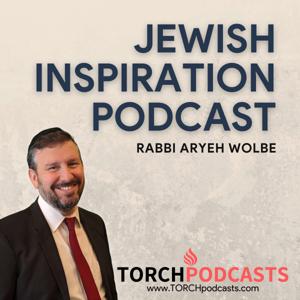


On the first day of Elul, Rabbi Aryeh Wolbe explains that meaningful renewal does not happen automatically. Rosh Hashanah may be the day on which we become a “new creation,” but a beautiful new beginning requires preparation—just as an elegant meal requires planning, shopping, cooking, arranging, and setting the table. We cannot simply arrive on Rosh Hashanah and expect transformation. Elul is the time to think, strategize, and decide what we want to accomplish in the coming year.
On Rosh Hashanah, every person passes before Hashem individually, like sheep being counted one at a time. Rabbi Wolbe illustrates this judgment through the image of an investor evaluating a business. Hashem continually invests in us, giving us life, health, intelligence, abilities, and countless daily blessings. The question is whether we are producing a meaningful return from that investment—or merely returning each year with another list of excuses and promises.
Yet Hashem’s extraordinary love means that He remains willing to invest in us again. Our responsibility is to become worthy and willing recipients of that kindness. Rabbi Wolbe challenges listeners to begin today: take out a piece of paper, identify what you intend to produce spiritually in the coming year, and start working toward it during Elul.
_____________
This Podcast Series is Generously Underwritten by Peter & Becky Botvin
This Episode is dedicated in Honor of Sawa Mirwis!
Recorded at TORCH Centre in the Levin Family Studios (B) to a live audience on August 18, 2023, in Houston, Texas.
Released as Podcast on August 20, 2023
_____________
Listen, Subscribe & Share:
Share your questions at [email protected] or visit torchweb.org for more Torah content.
_____________
About the Host:
Rabbi Aryeh Wolbe, Director of TORCH in Houston, brings decades of Torah scholarship to guide listeners in applying Jewish wisdom to daily life. To directly send your questions, comments, and feedback, please email: [email protected]
_____________
Support Our Mission:
Our Mission is Connecting Jews & Judaism. Help us spread Judaism globally by sponsoring an episode at torchweb.org.
Your support makes a HUGE difference!
_____________
Listen More
Other podcasts by Rabbi Aryeh Wolbe:
For a full listing of podcasts available by TORCH at http://podcast.torchweb.orgv
_____________
Keywords:
#JewishInspiration, #Mussar, #MasterClass, #Elul, #RoshHashanah, #YomKippur, #HighHolidays, #Teshuvah, #Shofar, #40days
In this opening episode on Elul, Rabbi Aryeh Wolbe presents Rosh Chodesh as a recurring opportunity for renewal. Just as Rosh Hashanah invites us to examine the year ahead, every new month—and even every new day—offers a chance to pause, evaluate our direction, and begin again. Elul, the final month before Rosh Hashanah, is especially dedicated to honest introspection: identifying our strengths, confronting our weaknesses, and asking, “What is my purpose, and how am I going to change?”
Drawing on the teaching of HaMelech baSadeh—the King is in the field, Rabbi Wolbe describes Elul as a period of spiritual amnesty. Hashem is close, accessible, and ready to welcome every sincere effort to repair the relationship. The daily shofar serves as a spiritual alarm, recalling Moshe’s ascent of Mount Sinai on Rosh Chodesh Elul and awakening us to the seriousness—and extraordinary possibility—of these forty days leading to Yom Kippur.
The goal is not an unrealistic overnight transformation. Real growth happens through discipline, consistency, and small, deliberate steps. By using Elul to make one meaningful commitment, a person can arrive at Rosh Hashanah able to say: “I am changing. I am becoming a different person.” Elul therefore becomes a journey from tragedy to opportunity, from spiritual sleep to awakening, and from distance to renewed closeness with Hashem.
_____________
This Podcast Series is Generously Underwritten by Peter & Becky Botvin
This Episode is dedicated in Honor of Amy Davis on her Birthday!
Recorded at TORCH Centre in the Levin Family Studios (B) to a live audience on August 17, 2023, in Houston, Texas.
Released as Podcast on August 18, 2023
_____________
Listen, Subscribe & Share:
Share your questions at [email protected] or visit torchweb.org for more Torah content.
_____________
About the Host:
Rabbi Aryeh Wolbe, Director of TORCH in Houston, brings decades of Torah scholarship to guide listeners in applying Jewish wisdom to daily life. To directly send your questions, comments, and feedback, please email: [email protected]
_____________
Support Our Mission:
Our Mission is Connecting Jews & Judaism. Help us spread Judaism globally by sponsoring an episode at torchweb.org.
Your support makes a HUGE difference!
_____________
Listen More
Other podcasts by Rabbi Aryeh Wolbe:
For a full listing of podcasts available by TORCH at http://podcast.torchweb.orgv
_____________
Keywords:
#JewishInspiration, #Mussar, #MasterClass, #Elul, #RoshHashanah, #YomKippur, #HighHolidays, #Teshuvah, #Shofar, #40days
In Day 191 of The Ways of the Righteous (Gate of Fear of Heaven), Rabbi Aryeh Wolbe explains that while human beings are given dominion over creation, that authority carries responsibility. Animals were created to serve mankind—not because they are unimportant, but because humanity possesses something infinitely greater: an eternal soul. We are commanded to treat animals with compassion and even feed them before ourselves, yet our unique role is to elevate creation through our relationship with Hashem.
Rabbi Wolbe emphasizes the extraordinary greatness of the neshamah. Before birth, the soul exists in a realm of perfect spiritual clarity, but at birth it becomes enclosed within a physical body. The crying of a newborn symbolizes the soul's transition from unlimited closeness to Hashem into a world of confusion and physical limitations. Throughout life, the soul longs to return to that closeness, while the body constantly seeks physical gratification. Our task is to allow the soul—not the body—to direct our choices.
Using the metaphor of a rider and a horse, Rabbi Wolbe teaches that the neshamah must hold the reins while the body serves merely as its vehicle. The body is necessary to perform mitzvot and acts of kindness, but it must remain subordinate to the soul's higher purpose. When the soul guides the body, every physical action becomes elevated into something eternal.
The lesson also explores why Judaism teaches the future resurrection of the dead. Both the soul and the body contribute to a life of righteousness: the soul inspires holiness, while the body performs the mitzvot. Therefore, both ultimately share in the eternal reward when they are reunited in the World to Come.
Finally, Rabbi Wolbe explains that the vast universe—the sun, moon, stars, and all of creation—exists not for the temporary body but for the eternal soul. Every aspect of creation is designed to inspire us to recognize Hashem's greatness and draw closer to Him. The purpose of enjoying this world is not indulgence but elevation: to use every blessing Hashem gives us as a means of strengthening our relationship with Him.
_____________
This Podcast Series is Generously Underwritten by Peter & Becky Botvin
Recorded at TORCH Centre in the Levin Family Studios (B) to a live audience on February 23, 2026, in Houston, Texas.
Released as Podcast on August 14, 2026
_____________
This series on Orchos Tzadikim/Ways of the Righteous is produced in partnership with Hachzek.
Join the revolution of daily Mussar study at hachzek.com.
We are using the Treasure of Life edition of the Orchos Tzadikkim (Published by Feldheim)
_____________
Listen, Subscribe & Share:
Share your questions at [email protected] or visit torchweb.org for more Torah content.
_____________
About the Host:
Rabbi Aryeh Wolbe, Director of TORCH in Houston, brings decades of Torah scholarship to guide listeners in applying Jewish wisdom to daily life. To directly send your questions, comments, and feedback, please email: [email protected]
_____________
Support Our Mission:
Our Mission is Connecting Jews & Judaism. Help us spread Judaism globally by sponsoring an episode at torchweb.org.
Your support makes a HUGE difference!
_____________
Listen More
Other podcasts by Rabbi Aryeh Wolbe:
For a full listing of podcasts available by TORCH at http://podcast.torchweb.orgv
_____________
Keywords:
#JewishInspiration, #Mussar, #MasterClass, #FearOfHeaven, #YiratShamayim, #Nefesh, #Ruach, #Neshamah, #JewishSoul, #MindOverEmotion, #YetzerHara, #SelfControl, #InnerBattle, #LiveWithPurpose
In Day 190 of The Ways of the Righteous (Gate of Fear of Heaven), Rabbi Aryeh Wolbe continues exploring the three dimensions of the human soul: the nefesh, ruach, and neshamah. While animals possess the drives of the nefesh and ruach, only human beings are endowed with the neshamah—the uniquely Divine intellect that enables us to discern truth from falsehood, develop wisdom, and elevate ourselves spiritually. Unlike the physical body, the wisdom acquired by the neshamah accompanies a person beyond this world.
The central message of the lesson is that our lives are shaped by whichever part of ourselves we choose to nourish. Rabbi Wolbe compares the neshamah to a vacuum cleaner that is constantly searching to be filled. If we fail to satisfy it with holiness, Torah, mitzvot, and acts of kindness, it will desperately seek fulfillment elsewhere through material pursuits that can never truly satisfy. Wealth, pleasure, fame, and possessions may entertain the body, but only closeness to Hashem nourishes the soul.
Rabbi Wolbe also explains that although the neshamah originates in the intellect, its goal is to transform the heart. The heart is the source of both positive and negative inclinations, and every person chooses which side to strengthen. By allowing the mind and the neshamah to guide the heart, a person redirects powerful emotions and desires toward holiness rather than selfish gratification. The same passion that can drive destructive behavior can also become the engine for tremendous righteousness.
Finally, the lesson teaches that wisdom is the key to understanding both the physical and spiritual worlds. Torah enables a person to distinguish between what merely appears attractive and what genuinely brings eternal value. Every advancement, talent, and technology can be used either for holiness or for destruction. The responsibility lies with us to allow our neshamah to lead our choices so that, when we ultimately stand before Hashem, we can answer that we invested our lives in what truly mattered.
_____________
This Podcast Series is Generously Underwritten by Peter & Becky Botvin
Recorded at TORCH Centre in the Levin Family Studios (B) to a live audience on February 23, 2026, in Houston, Texas.
Released as Podcast on August 13, 2026
_____________
This series on Orchos Tzadikim/Ways of the Righteous is produced in partnership with Hachzek.
Join the revolution of daily Mussar study at hachzek.com.
We are using the Treasure of Life edition of the Orchos Tzadikkim (Published by Feldheim)
_____________
Listen, Subscribe & Share:
Share your questions at [email protected] or visit torchweb.org for more Torah content.
_____________
About the Host:
Rabbi Aryeh Wolbe, Director of TORCH in Houston, brings decades of Torah scholarship to guide listeners in applying Jewish wisdom to daily life. To directly send your questions, comments, and feedback, please email: [email protected]
_____________
Support Our Mission:
Our Mission is Connecting Jews & Judaism. Help us spread Judaism globally by sponsoring an episode at torchweb.org.
Your support makes a HUGE difference!
_____________
Listen More
Other podcasts by Rabbi Aryeh Wolbe:
For a full listing of podcasts available by TORCH at http://podcast.torchweb.orgv
_____________
Keywords:
#JewishInspiration, #Mussar, #MasterClass, #FearOfHeaven, #YiratShamayim, #Nefesh, #Ruach, #Neshamah, #JewishSoul, #MindOverEmotion, #YetzerHara, #SelfControl, #InnerBattle, #LiveWithPurpose
In this lesson from the Gate of Fear of Heaven (Shaar Yirat Shamayim), Rabbi Aryeh Wolbe explores the deeper structure of the human soul through the concepts of nefesh, ruach, and neshamah. Drawing from the teachings of Orchot Tzaddikim, he explains that the nefesh is associated with physical desire, the ruach with emotion, honor, and ego, and the neshamah with the intellect and our highest spiritual aspirations. These three forces operate simultaneously within every person, creating the lifelong struggle between immediate physical gratification and the soul’s desire for closeness to Hashem.
Rabbi Wolbe emphasizes that reality extends far beyond what our physical eyes can perceive. Spiritual causes and consequences may exist even when they are hidden from us. Through a story involving a businessman who sought guidance from a Kabbalistic sage, he illustrates the Torah perspective that our spiritual choices can influence aspects of life in ways that are not visible on the surface. The broader lesson is that Judaism asks us to look beyond the purely material world and recognize that our actions affect both the physical and spiritual dimensions of existence.
The lesson then focuses on the central battle between intellect and emotion. The heart may crave what feels pleasurable in the moment, even when the mind knows that the choice is harmful. Rabbi Wolbe uses the example of someone warned by a doctor to avoid unhealthy food who nevertheless places himself in a tempting environment and gradually rationalizes giving in. Spiritual maturity requires training the mind to govern the heart rather than allowing emotions and impulses to dictate our choices.
Rabbi Wolbe concludes by describing life as an ongoing contest between the physical forces that pursue pleasure, wealth, honor, and comfort and the neshamah that continually asks a deeper question: What will bring me closer to Hashem? Whichever side we strengthen becomes more powerful. When physical desires dominate, spiritual sensitivity weakens. When the neshamah leads, humility, wisdom, and closeness to God flourish. The struggle itself is the purpose of life—and every choice gives us another opportunity to allow the highest part of ourselves to lead.
_____________
This Podcast Series is Generously Underwritten by Peter & Becky Botvin
Recorded at TORCH Centre in the Levin Family Studios (B) to a live audience on February 23, 2026, in Houston, Texas.
Released as Podcast on August 12, 2026
_____________
This series on Orchos Tzadikim/Ways of the Righteous is produced in partnership with Hachzek.
Join the revolution of daily Mussar study at hachzek.com.
We are using the Treasure of Life edition of the Orchos Tzadikkim (Published by Feldheim)
_____________
Listen, Subscribe & Share:
Share your questions at [email protected] or visit torchweb.org for more Torah content.
_____________
About the Host:
Rabbi Aryeh Wolbe, Director of TORCH in Houston, brings decades of Torah scholarship to guide listeners in applying Jewish wisdom to daily life. To directly send your questions, comments, and feedback, please email: [email protected]
_____________
Support Our Mission:
Our Mission is Connecting Jews & Judaism. Help us spread Judaism globally by sponsoring an episode at torchweb.org.
Your support makes a HUGE difference!
_____________
Listen More
Other podcasts by Rabbi Aryeh Wolbe:
For a full listing of podcasts available by TORCH at http://podcast.torchweb.orgv
_____________
Keywords:
#JewishInspiration, #Mussar, #MasterClass, #FearOfHeaven, #YiratShamayim, #Nefesh, #Ruach, #Neshamah, #JewishSoul, #MindOverEmotion, #YetzerHara, #SelfControl, #InnerBattle, #LiveWithPurpose
In this lesson from the Gate of Fear of Heaven (Shaar Yirat Shamayim), Rabbi Aryeh Wolbe continues the powerful parable of the royal soul. The human neshamah is compared to the daughter of a king—pure, precious, and lofty—yet placed inside a physical body filled with earthly desires. The body wants comfort, food, pleasure, materialism, and immediate gratification, while the soul longs for holiness and closeness to Hashem. This tension between body and soul is not a defect in creation; it is the very arena in which human greatness is achieved.
Rabbi Wolbe explains that our mission is not to reject the physical world, but to elevate it. Physical experiences can become extraordinarily holy when directed properly. He illustrates this through marriage and intimacy: what the outside world may treat as merely physical can, within the sanctity of a Jewish marriage, become one of the holiest expressions of Divine service. Torah awakens the soul to remember its royalty and teaches us not to “sell ourselves cheaply” by living beneath our spiritual dignity.
The lesson then turns to the unique privilege and responsibility of the Jewish people. Hashem gave us Torah and mitzvos as the means through which we recognize His greatness, develop Yirat Shamayim, and draw closer to Him. Looking at the heavens, the earth, the sun, moon, and stars can awaken awareness of the Creator—but Torah gives that awareness clarity and direction. Through learning and mitzvah observance, we begin to understand not only that Hashem exists, but what He wants from us.
Rabbi Wolbe concludes by describing Yirat Shamayim as Hashem’s greatest treasure. Gold, silver, possessions, and worldly success cannot compare to the clarity of knowing our relationship with God. The more we invest in Torah, mitzvos, and Hashem’s wisdom, the more we awaken the royal soul within and recognize how privileged we are to live in a personal relationship with the Creator.
_____________
This Podcast Series is Generously Underwritten by Peter & Becky Botvin
Recorded at TORCH Centre in the Levin Family Studios (B) to a live audience on February 16, 2026, in Houston, Texas.
Released as Podcast on August 11, 2026
_____________
This series on Orchos Tzadikim/Ways of the Righteous is produced in partnership with Hachzek.
Join the revolution of daily Mussar study at hachzek.com.
We are using the Treasure of Life edition of the Orchos Tzadikkim (Published by Feldheim)
_____________
Listen, Subscribe & Share:
Share your questions at [email protected] or visit torchweb.org for more Torah content.
_____________
About the Host:
Rabbi Aryeh Wolbe, Director of TORCH in Houston, brings decades of Torah scholarship to guide listeners in applying Jewish wisdom to daily life. To directly send your questions, comments, and feedback, please email: [email protected]
_____________
Support Our Mission:
Our Mission is Connecting Jews & Judaism. Help us spread Judaism globally by sponsoring an episode at torchweb.org.
Your support makes a HUGE difference!
_____________
Listen More
Other podcasts by Rabbi Aryeh Wolbe:
For a full listing of podcasts available by TORCH at http://podcast.torchweb.orgv
_____________
Keywords:
#JewishInspiration, #Mussar, #MasterClass, #FearOfHeaven, #YiratShamayim, #SpiritualGrowth, #Faith, #AweOfGod, #RelationshipWithHashem, #LoveOfHashem, #LiveWithPurpose
In this lesson from the Gate of Fear of Heaven (Shaar Yirat Shamayim), Rabbi Aryeh Wolbe explains that while the highest form of serving Hashem is motivated purely by love and reverence, the Torah recognizes that people often begin with simpler motivations. Children—and even adults who are spiritually immature—are naturally driven by rewards and consequences. Therefore, the Torah itself promises blessings for obedience and warns of punishment for disobedience. These incentives are not the ultimate goal but educational tools that gradually lead a person toward serving Hashem for His sake alone. Eventually, "mitoch shelo lishmah ba lishmah"—doing the right thing for imperfect reasons can develop into doing it for the right reasons.
Rabbi Wolbe emphasizes that spiritual growth mirrors human development. Just as a young child can be motivated by candy far more than by promises of future wealth or royalty, people initially respond to what they immediately understand and value. As wisdom matures, motivations mature as well. A person should never remain spiritually childish but should strive to seek truth simply because it is true and to fulfill Hashem's will because it is Hashem's will.
The centerpiece of the lesson is the moving parable of the kidnapped prince. A young prince is stolen from the royal palace and raised in a simple village, completely unaware of his noble identity. Only after someone reveals his true lineage does he begin to appreciate who he really is. When royal messengers finally arrive with the king's garments and escort him back to the palace, his identity is fully awakened. Rabbi Wolbe explains that this prince represents every Jewish soul. Our neshamah originates beneath Hashem's Heavenly Throne, yet it is placed into a physical body that easily forgets its true greatness. Torah and mitzvot remind us who we really are and awaken us to our royal spiritual identity.
The lesson concludes with a profound reminder: our soul is infinitely greater than our body. The body may be ordinary and earthly, but the soul is a Divine spark breathed into us by Hashem Himself. Developing Yirat Shamayim means living according to that higher identity, remembering our royal origin, and allowing the soul—not the body—to guide our choices.
_____________
This Podcast Series is Generously Underwritten by Peter & Becky Botvin
Recorded at TORCH Centre in the Levin Family Studios (B) to a live audience on February 16, 2026, in Houston, Texas.
Released as Podcast on August 5, 2026
_____________
This series on Orchos Tzadikim/Ways of the Righteous is produced in partnership with Hachzek.
Join the revolution of daily Mussar study at hachzek.com.
We are using the Treasure of Life edition of the Orchos Tzadikkim (Published by Feldheim)
_____________
Listen, Subscribe & Share:
Share your questions at [email protected] or visit torchweb.org for more Torah content.
_____________
About the Host:
Rabbi Aryeh Wolbe, Director of TORCH in Houston, brings decades of Torah scholarship to guide listeners in applying Jewish wisdom to daily life. To directly send your questions, comments, and feedback, please email: [email protected]
_____________
Support Our Mission:
Our Mission is Connecting Jews & Judaism. Help us spread Judaism globally by sponsoring an episode at torchweb.org.
Your support makes a HUGE difference!
_____________
Listen More
Other podcasts by Rabbi Aryeh Wolbe:
For a full listing of podcasts available by TORCH at http://podcast.torchweb.orgv
_____________
Keywords:
#JewishInspiration, #Mussar, #MasterClass, #FearOfHeaven, #YiratShamayim, #SpiritualGrowth, #Faith, #AweOfGod, #RelationshipWithHashem, #LoveOfHashem, #LiveWithPurpose
In this opening lesson of the 28th and final gate of Orchot Tzaddikim—the Gate of Fear of Heaven (Shaar Yirat Shamayim)—Rabbi Aryeh Wolbe explains that the Torah's concept of "fear" does not primarily mean terror or anxiety. Rather, yirah means awe, awareness, perspective, and clarity. True fear of Heaven is living with a constant awareness of Hashem's greatness and recognizing our personal relationship with Him. The Torah repeatedly teaches that this awareness is the foundation of Jewish life and the greatest treasure a person can possess.
Rabbi Wolbe then demonstrates that Torah is not the ultimate goal—it is the pathway that leads to Yirat Shamayim. Torah study without developing a deeper awareness of Hashem is compared to possessing the keys to the inner rooms of a house while lacking the key to the front door. Likewise, the purpose of receiving the Torah at Mount Sinai was not simply to acquire knowledge, but to establish an everlasting relationship with Hashem. Every mitzvah reconnects us to that covenant and strengthens that bond.
The lesson concludes by describing three levels of fear. The lowest level is serving Hashem because of concern for what other people think. A higher level is serving Hashem out of fear of punishment. The highest and purest level is serving Hashem solely because He is Hashem—out of love, awe, gratitude, and a sincere desire to fulfill His will. Rabbi Wolbe closes by encouraging us to recognize the countless gifts Hashem grants us every moment—from the ability to breathe and see to the privilege of living each day—which naturally inspires profound gratitude and authentic Yirat Shamayim.
_____________
This Podcast Series is Generously Underwritten by Peter & Becky Botvin
Recorded at TORCH Centre in the Levin Family Studios (B) to a live audience on February 16, 2026, in Houston, Texas.
Released as Podcast on August 5, 2026
_____________
This series on Orchos Tzadikim/Ways of the Righteous is produced in partnership with Hachzek.
Join the revolution of daily Mussar study at hachzek.com.
We are using the Treasure of Life edition of the Orchos Tzadikkim (Published by Feldheim)
_____________
Listen, Subscribe & Share:
Share your questions at [email protected] or visit torchweb.org for more Torah content.
_____________
About the Host:
Rabbi Aryeh Wolbe, Director of TORCH in Houston, brings decades of Torah scholarship to guide listeners in applying Jewish wisdom to daily life. To directly send your questions, comments, and feedback, please email: [email protected]
_____________
Support Our Mission:
Our Mission is Connecting Jews & Judaism. Help us spread Judaism globally by sponsoring an episode at torchweb.org.
Your support makes a HUGE difference!
_____________
Listen More
Other podcasts by Rabbi Aryeh Wolbe:
For a full listing of podcasts available by TORCH at http://podcast.torchweb.orgv
_____________
Keywords:
#JewishInspiration, #Mussar, #MasterClass, #FearOfHeaven, #YiratShamayim, #SpiritualGrowth, #Faith, #AweOfGod, #RelationshipWithHashem, #LoveOfHashem, #LiveWithPurpose,
In this lesson from the Gate of Torah (Shaar HaTorah), Rabbi Aryeh Wolbe teaches that true Torah study begins with mastering the fundamentals before chasing complexity. A student who rushes into intricate analyses without first understanding the simple flow of the Talmud misses the very foundation upon which Torah is built. Every word of the Talmud is rooted in the Mishnah, and every Mishnah is rooted in the Written Torah. The deeper insights become meaningful only after the basic structure is firmly established.
Rabbi Wolbe emphasizes that Torah is meant to be lived, not merely admired. Every learning session should conclude with the question: How does this change my life today? Quoting the Ramban's famous letter, he encourages listeners to transform every Torah lesson into practical action. Torah is not an academic discipline reserved for intellectual exercise—it is Hashem's guidebook for everyday living, shaping our choices, character, and relationship with the Creator.
The lesson then contrasts Torah study with every other profession. In the business world, people are rewarded for results, but in Torah, Hashem rewards sincere effort. Even when understanding is incomplete, every moment spent striving to comprehend Hashem's wisdom carries eternal value. Rabbi Wolbe illustrates this with the analogy of a plumber who is paid only for a successful repair, while a Torah student is rewarded for every honest attempt to learn, regardless of the outcome.
Finally, Rabbi Wolbe highlights one of the defining features of authentic Torah learning: respectful disagreement in pursuit of truth. The debates of Hillel and Shammai, the passionate discussions of the sages, and the give-and-take of every study partnership all teach that Torah grows through listening, questioning, and refining ideas—not through ego or victory. The goal is never to prove oneself right, but to discover the truth of Hashem's Torah. He concludes with a powerful reminder that Torah is not simply another subject to study—it is the very life force of the Jewish people, nourishing the soul just as food nourishes the body.
_____________
This Podcast Series is Generously Underwritten by Peter & Becky Botvin
Recorded at TORCH Centre in the Levin Family Studios (B) to a live audience on February 9, 2026, in Houston, Texas.
Released as Podcast on August 4, 2026
_____________
This series on Orchos Tzadikim/Ways of the Righteous is produced in partnership with Hachzek.
Join the revolution of daily Mussar study at hachzek.com.
We are using the Treasure of Life edition of the Orchos Tzadikkim (Published by Feldheim)
_____________
Listen, Subscribe & Share:
Share your questions at [email protected] or visit torchweb.org for more Torah content.
_____________
About the Host:
Rabbi Aryeh Wolbe, Director of TORCH in Houston, brings decades of Torah scholarship to guide listeners in applying Jewish wisdom to daily life. To directly send your questions, comments, and feedback, please email: [email protected]
_____________
Support Our Mission:
Our Mission is Connecting Jews & Judaism. Help us spread Judaism globally by sponsoring an episode at torchweb.org.
Your support makes a HUGE difference!
_____________
Listen More
Other podcasts by Rabbi Aryeh Wolbe:
For a full listing of podcasts available by TORCH at http://podcast.torchweb.orgv
_____________
Keywords:
#JewishInspiration, #Mussar, #MasterClass, #GateOfTorah, #TalmudTorah, #TorahStudy, #CrownOfTorah, #JewishLearning, #DailyTorah, #TorahLife, #EffortMatters, #NeverStopLearning, #LearningEveryDay, #ChooseTorah, #TorahFirst
In this lesson from the Gate of Torah (Shaar HaTorah), Rabbi Aryeh Wolbe traces the remarkable chain of the Oral Torah from Mount Sinai through the generations. Every mitzvah, together with its explanation, was given to Moshe Rabbeinu at Sinai. While the Written Torah records the commandments, the Oral Torah preserves the practical details that make those commandments possible to observe. This sacred transmission—from teacher to student, generation after generation—ensures that Torah remains authentic, living, and faithful to its Divine source.
Rabbi Wolbe explains how the Oral Torah was eventually committed to writing as circumstances demanded. Faced with persecution, exile, and the fear that Torah knowledge would be forgotten, Rabbi Yehudah HaNasi compiled the Mishnah. Centuries later, the Talmud expanded upon it, and generations of scholars—including the Geonim, Rashi, and the Rambam—continued organizing and clarifying Torah so that every generation could understand Hashem's will. Far from inventing new ideas, these Torah giants faithfully organized, explained, and transmitted what had already been received.
The lesson also highlights the extraordinary accessibility of Torah in our own generation. Rabbi Wolbe reflects on how previous generations treasured even a single volume of Talmud, while today thousands of Torah classes, translations, and sefarim are available with the touch of a button. This abundance carries a responsibility: to seize the opportunity and immerse ourselves in Torah study with gratitude and purpose.
Finally, Rabbi Wolbe returns to one of the central themes of the Gate of Torah: review, review, review. Torah is not mastered through a single exposure but through constant repetition until it becomes part of who we are. The great sages reviewed their learning countless times, allowing Torah to become second nature. Their message is timeless: learn consistently, review faithfully, and allow the Torah to shape your heart, mind, and life.
_____________
This Podcast Series is Generously Underwritten by Peter & Becky Botvin
Recorded at TORCH Centre in the Levin Family Studios (B) to a live audience on February 9, 2026, in Houston, Texas.
Released as Podcast on August 3, 2026
_____________
This series on Orchos Tzadikim/Ways of the Righteous is produced in partnership with Hachzek.
Join the revolution of daily Mussar study at hachzek.com.
We are using the Treasure of Life edition of the Orchos Tzadikkim (Published by Feldheim)
_____________
Listen, Subscribe & Share:
Share your questions at [email protected] or visit torchweb.org for more Torah content.
_____________
About the Host:
Rabbi Aryeh Wolbe, Director of TORCH in Houston, brings decades of Torah scholarship to guide listeners in applying Jewish wisdom to daily life. To directly send your questions, comments, and feedback, please email: [email protected]
_____________
Support Our Mission:
Our Mission is Connecting Jews & Judaism. Help us spread Judaism globally by sponsoring an episode at torchweb.org.
Your support makes a HUGE difference!
_____________
Listen More
Other podcasts by Rabbi Aryeh Wolbe:
For a full listing of podcasts available by TORCH at http://podcast.torchweb.orgv
_____________
Keywords:
#JewishInspiration, #Mussar, #MasterClass, #GateOfTorah, #TalmudTorah, #TorahStudy, #CrownOfTorah, #JewishLearning, #DailyTorah, #TorahLife, #EffortMatters, #NeverStopLearning, #LearningEveryDay, #ChooseTorah, #TorahFirst
From the publisher's feed

556 Listeners
178 Listeners

234 Listeners

220 Listeners
81 Listeners
80 Listeners

25 Listeners

1,981 Listeners

399 Listeners

1,120 Listeners

15 Listeners
14 Listeners
15 Listeners
17 Listeners

14 Listeners