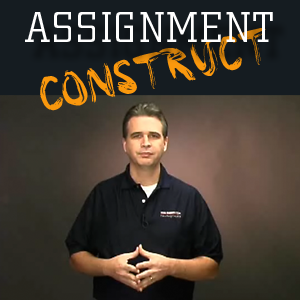
John Harrington - AssignmentConstruct - What We Use

John Harrington - AssignmentConstruct - What We Use

Download on the App Store

John Harrington - AssignmentConstruct - What We Use episodes

  • John Harrington-WHAT WE USE - Hensel 3000 Kit iPod Edition
    Here is a video segment on the Hensel 3000 Kit that we use. Below you will find the transcript of the Video.
    Transcript:
    Hi, I'm John Harrington and we're going to break out and break down the wide variety of equipment we use to deliver images to our clients. Next we are going to show you one of the equipment kits we use when we are traveling on assignment. Each kit is different and has a very specific purpose. So lets take a look.
    When we are working in a large room or just need a ton of light, we rely on our Hensel Tria 3000 to give us the power we need.
    We don't always take this kit with us but when we do, we really need to. One of the things we love about the Hensel Tria 3000 is that it is asymmetrical. AS stands for asymmetrical. The great thing about this is each of these 4 slots is individually controllable by this dial, which will adjust it in 1/10 of a stop increment.
    We can have it trigger an audio signal when the flash has recycled. We can slave it if we are not using the pocket wizards. In addition, we have this slow button here. This slow allows us to put this pack into a household setting an draw lesser amperage and lower recycle times but allows us to minimize the likelihood that we are going to pop a circuit in the house.
    This pack is meant as a secondary kit to our main kits that we take with us. It has in it 2 heads and the power cord that comes with it.
    This pack weighs in at just over 50 pounds. The reason that we weigh these is it is necessary to be within weight when traveling on an airplane.
    In addition to this Hensel Tria 3000, we have a second Hensel Tria 3000 pack right here so that we can take with us 6000 Ws of power when it is really necessary to really light up an industrial space, a big room, and give us a lot of depth of field.
    2 min
  • John Harrington-WHAT WE USE - Hensel 3000 Kit TV Edition
    Here is a video segment on the Hensel 3000 Kit that we use. Below you will find the transcript of the Video.
    Transcript:
    Hi, I'm John Harrington and we're going to break out and break down the wide variety of equipment we use to deliver images to our clients. Next we are going to show you one of the equipment kits we use when we are traveling on assignment. Each kit is different and has a very specific purpose. So lets take a look.
    When we are working in a large room or just need a ton of light, we rely on our Hensel Tria 3000 to give us the power we need.
    We don't always take this kit with us but when we do, we really need to. One of the things we love about the Hensel Tria 3000 is that it is asymmetrical. AS stands for asymmetrical. The great thing about this is each of these 4 slots is individually controllable by this dial, which will adjust it in 1/10 of a stop increment.
    We can have it trigger an audio signal when the flash has recycled. We can slave it if we are not using the pocket wizards. In addition, we have this slow button here. This slow allows us to put this pack into a household setting an draw lesser amperage and lower recycle times but allows us to minimize the likelihood that we are going to pop a circuit in the house.
    This pack is meant as a secondary kit to our main kits that we take with us. It has in it 2 heads and the power cord that comes with it.
    This pack weighs in at just over 50 pounds. The reason that we weigh these is it is necessary to be within weight when traveling on an airplane.
    In addition to this Hensel Tria 3000, we have a second Hensel Tria 3000 pack right here so that we can take with us 6000 Ws of power when it is really necessary to really light up an industrial space, a big room, and give us a lot of depth of field.
    2 min
  • John Harrington-WHAT WE USE - Hensel Tria 1500 iPod Edition
    Here is a video segment on the Hensel Tria 1500 that we use. Below you will find the transcript of the Video.
    Transcript:
    Hi, I'm John Harrington and we're going to break out and break down the wide variety of equipment we use to deliver images to our clients. Next we are going to show you one of the equipment kits we use when we are traveling on assignment. Each kit is different and has a very specific purpose. So lets take a look.
    We use a fair amount of 1500 Ws units as the give off a great deal of power. These are in a medium size Versa Flex case.
    We really like these Tria 1500 Ws packs. One of the great things about them is the adjustability in 1/10 of a stop increment. We have an audible signaling telling us the pack is ready, we can slave it if we are not using pocket wizards, and we have a slow button.
    The slow button allows us to use these in a household setting where the amperage we would be drawing off of the packs is not as high as we might in a business or industrial setting and we risk blowing a circuit in a house. So, by hitting the slow button it does slow down our recycle time but in the end we minimize the likelihood we are going to pop a circuit. There are 3 plug-ins here.
    This is a secondary unit to what we normally take as our main kit. So a 1500 Ws pack just allows us to take that much more power with us. So we just carry this pack with one additional head.
    This unit has just one head and is meant to be complimentary to our main kits. When we need to add another 1500 Ws Tria, we actually have a second Tria pack. So we can divide up 1500 Ws with a pack and a head and another pack and another head.
    2 min
  • John Harrington-WHAT WE USE - Hensel Tria 1500 TV Edition
    Here is a video segment on the Hensel Tria 1500 that we use. Below you will find the transcript of the Video.
    Transcript:
    Hi, I'm John Harrington and we're going to break out and break down the wide variety of equipment we use to deliver images to our clients. Next we are going to show you one of the equipment kits we use when we are traveling on assignment. Each kit is different and has a very specific purpose. So lets take a look.
    We use a fair amount of 1500 Ws units as the give off a great deal of power. These are in a medium size Versa Flex case.
    We really like these Tria 1500 Ws packs. One of the great things about them is the adjustability in 1/10 of a stop increment. We have an audible signaling telling us the pack is ready, we can slave it if we are not using pocket wizards, and we have a slow button.
    The slow button allows us to use these in a household setting where the amperage we would be drawing off of the packs is not as high as we might in a business or industrial setting and we risk blowing a circuit in a house. So, by hitting the slow button it does slow down our recycle time but in the end we minimize the likelihood we are going to pop a circuit. There are 3 plug-ins here.
    This is a secondary unit to what we normally take as our main kit. So a 1500 Ws pack just allows us to take that much more power with us. So we just carry this pack with one additional head.
    This unit has just one head and is meant to be complimentary to our main kits. When we need to add another 1500 Ws Tria, we actually have a second Tria pack. So we can divide up 1500 Ws with a pack and a head and another pack and another head.
    2 min
  • John Harrington-WHAT WE USE - Hensel Porty Kit iPod Edition
    Here is a video segment on the Hensel Porty Kit that we use. Below you will find the transcript of the Video.
    Transcript:
    Hi, I'm John Harrington and we're going to break out and break down the wide variety of equipment we use to deliver images to our clients. Next we are going to show you one of the equipment kits we use when we are traveling on assignment. Each kit is different and has a very specific purpose. So lets take a look.
    Our next case is one of the 3 Hensel Porty Kits we use. We keep them each in a Versa Flex case, which holds them and their accessories quite nicely.
    We like the Porty's because they are 1200 Ws of power, adjustable in tenth of a stop increment digitally here on the pack. As you can see here it's all digitally controlled, really like that capability.
    We can hardwire into the Porty at this connection point if we need to, but as you can see I think its still the factory rubber band around this particular connector. Instead what we prefer to use is going direct into the back of the Porty head using a pocket wizard and a standard 1/4-inch headphone kit.
    Its really nice to be able to use the pocket wizards with these kits, it makes all the difference in the world to be able to move freely and be able to go where you want to go and not be hardwired and connected.
    Using a pocket wizard is just that much better then hardwire because I'm not risking pulling a head over when I've got the hardwire connection into the head or into the pack. So that's the Porty.
    2 min
  • John Harrington-WHAT WE USE - Hensel Porty Kit TV Edition
    Here is a video segment on the Hensel Porty Kit that we use. Below you will find the transcript of the Video.
    Transcript:
    Hi, I'm John Harrington and we're going to break out and break down the wide variety of equipment we use to deliver images to our clients. Next we are going to show you one of the equipment kits we use when we are traveling on assignment. Each kit is different and has a very specific purpose. So lets take a look.
    Our next case is one of the 3 Hensel Porty Kits we use. We keep them each in a Versa Flex case, which holds them and their accessories quite nicely.
    We like the Porty's because they are 1200 Ws of power, adjustable in tenth of a stop increment digitally here on the pack. As you can see here it's all digitally controlled, really like that capability.
    We can hardwire into the Porty at this connection point if we need to, but as you can see I think its still the factory rubber band around this particular connector. Instead what we prefer to use is going direct into the back of the Porty head using a pocket wizard and a standard 1/4-inch headphone kit.
    Its really nice to be able to use the pocket wizards with these kits, it makes all the difference in the world to be able to move freely and be able to go where you want to go and not be hardwired and connected.
    Using a pocket wizard is just that much better then hardwire because I'm not risking pulling a head over when I've got the hardwire connection into the head or into the pack. So that's the Porty.
    2 min
  • John Harrington-WHAT WE USE - Hensel Porty Bi-Tube iPod Edition
    Here is a video segment on the Hensel Porty Bi-Tube kit that we use. Below you will find the transcript of the Video.
    Transcript:
    Hi, I'm John Harrington and we're going to break out and break down the wide variety of equipment we use to deliver images to our clients. Next we are going to show you one of the equipment kits we use when we are traveling on assignment. Each kit is different and has a very specific purpose. So lets take a look.
    This is our primary portable kit. It's also a Hensel Porty in a Versa-Flex case, but what sets this kit apart is that it has a bi-tube head in it. The bi tube head as you can see here, has actually two power sources coming in at the same time, which allows us to plug the porty, these are two extra batteries here, which allows us to plug two different porty packs into the bi-tube at the same time.
    Now this pack is a bit heavy, we'll show you the weight in a second. But this is amazing, because you can get two packs, two 1200-watt second packs, plugged into the same bi-tube at the same time. Having two packs plug into one head is a real rarity and it allows us to put an awesome amount of power into a large softbox, give us a great transfer edge and overpower the sun in an outdoor environment.
    So we pack two packs, each packs has a battery in it. Another battery sits on top. There's a second pack here, a battery sits on top. In addition to the bi-tube head, if something were to go wrong with the bi-tube head, we also have a standard porty head that tucks down into the bottom. All this packs nicely and neatly back into the case and we are ready to go.
    One of the things that we do with all of our cases is weigh them to make sure they can actually get on the flights with us. Here's the Hensel Porty Bi-Tube case, it weighs in at a whopping 70.6 pounds. Seventy pounds for some airlines is just over what they will allow.
    In a situation like that, we would go out and take one of the batteries out and put it into our carry on bags if we had to. But in this case this will all travel on most of the airlines that we fly on.
    3 min
  • John Harrington-WHAT WE USE - Hensel Porty Bi-Tube TV Edition
    Here is a video segment on the Hensel Porty Bi-Tube kit that we use. Below you will find the transcript of the Video.
    Transcript:
    Hi, I'm John Harrington and we're going to break out and break down the wide variety of equipment we use to deliver images to our clients. Next we are going to show you one of the equipment kits we use when we are traveling on assignment. Each kit is different and has a very specific purpose. So lets take a look.
    This is our primary portable kit. It's also a Hensel Porty in a Versa-Flex case, but what sets this kit apart is that it has a bi-tube head in it. The bi tube head as you can see here, has actually two power sources coming in at the same time, which allows us to plug the porty, these are two extra batteries here, which allows us to plug two different porty packs into the bi-tube at the same time.
    Now this pack is a bit heavy, we'll show you the weight in a second. But this is amazing, because you can get two packs, two 1200-watt second packs, plugged into the same bi-tube at the same time. Having two packs plug into one head is a real rarity and it allows us to put an awesome amount of power into a large softbox, give us a great transfer edge and overpower the sun in an outdoor environment.
    So we pack two packs, each packs has a battery in it. Another battery sits on top. There's a second pack here, a battery sits on top. In addition to the bi-tube head, if something were to go wrong with the bi-tube head, we also have a standard porty head that tucks down into the bottom. All this packs nicely and neatly back into the case and we are ready to go.
    One of the things that we do with all of our cases is weigh them to make sure they can actually get on the flights with us. Here's the Hensel Porty Bi-Tube case, it weighs in at a whopping 70.6 pounds. Seventy pounds for some airlines is just over what they will allow.
    In a situation like that, we would go out and take one of the batteries out and put it into our carry on bags if we had to. But in this case this will all travel on most of the airlines that we fly on.
    3 min
  • John Harrington-WHAT WE USE - Laptop Kit iPod Edition
    Here is a video segment on the Laptop Kit that we use. Below you will find the transcript of the Video.
    Transcript:
    Hi, I'm John Harrington and we're going to break out and break down the wide variety of equipment we use to deliver images to our clients. Next we are going to show you one of the equipment kits we use when we are traveling on assignment. Each kit is different and has a very specific purpose. So lets take a look.
    One other thing that goes with us everywhere we go is our laptop. It's in an Incase Satchel, a really nice slim satchel for everything that we have in here. We have an 80 GB portable drive, that's a USB drive. Also in here are firewire cords.
    One of the nice things is when we're at a hotel, we can plug the Airport express into our hotel and we don't have to be tethered to the desk at the hotel. For the airline that's considerate, we can plug this right into the power at our seats, or we can put the cigarette lighter adapter on and use it with a cigarette lighter.
    Here's one of our two firewire card readers. Here's a second firewire card reader. This is the new Lexar Card Reader; this is a SanDisk reader; two different brands, two different technologies, similar functions. This however is the newest one that lets us read the UDMA high-speed cards, which really takes advantage of the firewire 800 throughput.
    A power adapter for the laptop of course, a secondary battery. Here's our Firewire 800, we use a g-tech drive. That's really great because it doesn't require an external power source, although you can use one if you need to. This is our mother of all batteries; it's a MaxPower 90 from SPS. This lets us run the laptop for many more hours than this battery, or the battery in here would let us run it for. Laptop, MacBook Pro, with a Cingular wireless card in there.
    We also carry a VGA adapter so that we can plug our laptop straight into a standard VGA connector for an LCD projector or an external monitor that the client might have.
    A lot of other knick-knacks that we have in here are an extra iPod, some triple A batteries for the headset, and we have the new iPhone iPod headset that's got the microphone built into it. This is the SD card reader. One of the nice things is a little accessory is our ability to split our headphones into two. So if our client sitting next to us, and they want to watch the movie with us, or we have someone who just wants to watch a movie with us whose sitting next to us. This allows us to share our headphones.
    This is a standard firewire to mini-firewire converter, and a backup Bluetooth headset for our phone. A backup pair of headphones for the client who wants to watch the movie with us, but actually doesn't have a headphone set.
    We have a handheld remote so that we can control our laptop remotely, when we're doing a PowerPoint or Keynote presentation. We have a backup, alternate version of a handheld remote. We have our primary Jawbone Bluetooth Wireless headset and our power connector. What's nice about this is it plugs into the laptop and can be recharged via USB. We have a backup connector, so that we can connect the laptop to a regular VGA monitor. We have the ability to charge the iPhone.
    We have a USB JumpDrive that allows us to store critical documents and critical files and applications. In addition, if you are working up in your hotel room and need to actually print out a document that you've got there; you can actually put the document onto the USB JumpDrive. Take it down to the hotel's printer in the lobby or in their business room and print from the USB JumpDrive. And last, but not least, a CF card that's a backup. We always have one extra card sitting in the laptop bag just in case. __Because we rely so critically on our laptops, we also travel with a secondary laptop. This laptop is in a Pelican 1490 Case.

    6 min
  • John Harrington-WHAT WE USE - Laptop Kit TV Edition
    Here is a video segment on the Laptop Kit that we use. Below you will find the transcript of the Video.
    Transcript:
    Hi, I'm John Harrington and we're going to break out and break down the wide variety of equipment we use to deliver images to our clients. Next we are going to show you one of the equipment kits we use when we are traveling on assignment. Each kit is different and has a very specific purpose. So lets take a look.
    One other thing that goes with us everywhere we go is our laptop. It's in an Incase Satchel, a really nice slim satchel for everything that we have in here. We have an 80 GB portable drive, that's a USB drive. Also in here are firewire cords.
    One of the nice things is when we're at a hotel, we can plug the Airport express into our hotel and we don't have to be tethered to the desk at the hotel. For the airline that's considerate, we can plug this right into the power at our seats, or we can put the cigarette lighter adapter on and use it with a cigarette lighter.
    Here's one of our two firewire card readers. Here's a second firewire card reader. This is the new Lexar Card Reader; this is a SanDisk reader; two different brands, two different technologies, similar functions. This however is the newest one that lets us read the UDMA high-speed cards, which really takes advantage of the firewire 800 throughput.
    A power adapter for the laptop of course, a secondary battery. Here's our Firewire 800, we use a g-tech drive. That's really great because it doesn't require an external power source, although you can use one if you need to. This is our mother of all batteries; it's a MaxPower 90 from SPS. This lets us run the laptop for many more hours than this battery, or the battery in here would let us run it for. Laptop, MacBook Pro, with a Cingular wireless card in there.
    We also carry a VGA adapter so that we can plug our laptop straight into a standard VGA connector for an LCD projector or an external monitor that the client might have.
    A lot of other knick-knacks that we have in here are an extra iPod, some triple A batteries for the headset, and we have the new iPhone iPod headset that's got the microphone built into it. This is the SD card reader. One of the nice things is a little accessory is our ability to split our headphones into two. So if our client sitting next to us, and they want to watch the movie with us, or we have someone who just wants to watch a movie with us whose sitting next to us. This allows us to share our headphones.
    This is a standard firewire to mini-firewire converter, and a backup Bluetooth headset for our phone. A backup pair of headphones for the client who wants to watch the movie with us, but actually doesn't have a headphone set.
    We have a handheld remote so that we can control our laptop remotely, when we're doing a PowerPoint or Keynote presentation. We have a backup, alternate version of a handheld remote. We have our primary Jawbone Bluetooth Wireless headset and our power connector. What's nice about this is it plugs into the laptop and can be recharged via USB. We have a backup connector, so that we can connect the laptop to a regular VGA monitor. We have the ability to charge the iPhone.
    We have a USB JumpDrive that allows us to store critical documents and critical files and applications. In addition, if you are working up in your hotel room and need to actually print out a document that you've got there; you can actually put the document onto the USB JumpDrive. Take it down to the hotel's printer in the lobby or in their business room and print from the USB JumpDrive. And last, but not least, a CF card that's a backup. We always have one extra card sitting in the laptop bag just in case.
    Because we rely so critically on our laptops, we also travel with a secondary laptop. This laptop is in a Pelican 1490 Case.
    6 min

About John Harrington - AssignmentConstruct - What We Use

From the publisher's feed

This video series, from highly respected and road-tested photographer John Harrington explains how he packs and travels with his equipment, from cameras to lenses, light stands to softboxes, and even…