
Sign up to save your podcasts
Or

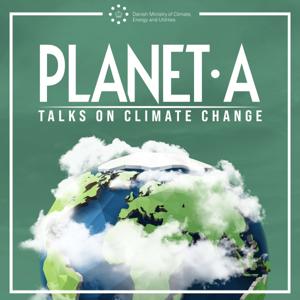

In the 1st episode of Planet A’s fourth season, Dan Jørgensen talks with Professor Joseph Nye of Harvard University.
Professor Nye gained global fame by introducing the term “soft power”, that is the ability of a country to persuade others to do what it wants – without using force or coercion.
In this episode of Planet A, he explains how soft power is particularly relevant to address transnational problems like climate change.
Professor Nye also talks about the increasing importance of exerting “power with” - rather than “power over” - other nations. To him, climate change is an example of a problem that no government can control by working alone – it demands collaboration with other governments.
Furthermore, he argues there are two great power shifts going on in this century.
One is a power shift from Europe and the US to Asia, particularly countries like China and India. The other great power shift is from vertical to horizontal power. That is the power shift from governments to non-governmental and transnational actors, which manifests itself at the COP-negotiations.
However, despite the rising influence of activists and the growing power of social media, nation-states remain the most important actors in the international system.
But we can only stem climate change if nation states strengthen international collaboration about creating common norms, rules and institutions.
 View all episodes
 By Danish Ministry of Climate, Energy and Utilities

4.6
2121 ratings
In the 1st episode of Planet A’s fourth season, Dan Jørgensen talks with Professor Joseph Nye of Harvard University.
Professor Nye gained global fame by introducing the term “soft power”, that is the ability of a country to persuade others to do what it wants – without using force or coercion.
In this episode of Planet A, he explains how soft power is particularly relevant to address transnational problems like climate change.
Professor Nye also talks about the increasing importance of exerting “power with” - rather than “power over” - other nations. To him, climate change is an example of a problem that no government can control by working alone – it demands collaboration with other governments.
Furthermore, he argues there are two great power shifts going on in this century.
One is a power shift from Europe and the US to Asia, particularly countries like China and India. The other great power shift is from vertical to horizontal power. That is the power shift from governments to non-governmental and transnational actors, which manifests itself at the COP-negotiations.
However, despite the rising influence of activists and the growing power of social media, nation-states remain the most important actors in the international system.
But we can only stem climate change if nation states strengthen international collaboration about creating common norms, rules and institutions.

466 Listeners

26,250 Listeners

306 Listeners

401 Listeners

111,948 Listeners

504 Listeners

5 Listeners

2,212 Listeners

464 Listeners
177 Listeners

348 Listeners

433 Listeners

207 Listeners
234 Listeners

28 Listeners