
Sign up to save your podcasts
Or

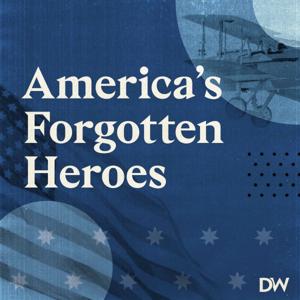

On July 3, 1863, Union forces easily took up a defensive line along a small rise call Cemetery Ridge in the peaceful Pennsylvania crossroad village called Gettysburg. But the extreme far left of the Union line was, in the parlance of the time, “in the air” — meaning it was not anchored to a river or forest or other natural barrier. Defense of the extreme let of the Federal line fell to the 20th Maine Infantry regiment, commanded by a Professor of Rhetoric named Joshua Lawrence Chamberlain. Standing on the crest of a small hill known as Little Round Top, Chamberlain immediately realized that to lose this position would mean that Confederate Artillery would be able to enfilade the entire Union line. The loss of Little Round Top meant the loss of the Battle of Gettysburg, and the loss of Gettysburg would mean the loss of the Pennsylvania capitol at Harrisburg. After the endless series of catastrophes suffered by the Army of the Potomac, the loss of a northern state capital might have been enough to bring Great Britain into war on the side of the Confederacy. Astonishingly, Chamberlain saw all of this very plainly. Robert E. Lee wanted Little Round Top, and launched wave after wave of attacks up the thickly forested hill. By the time of the penultimate charge, Chamberlains men were out of ammunition and reduced to throwing rocks. As his exhausted, bloodied and battered men faced yet another Confederate charge, Chamberlain, acting on instinct, personally led Union bayonets in a counter-charge that saved the position, the battle, and possibly the war.
Learn more about your ad choices. Visit podcastchoices.com/adchoices
Learn more about your ad choices. Visit podcastchoices.com/adchoices
 View all episodes
 By The Daily Wire

4.9
40004,000 ratings
On July 3, 1863, Union forces easily took up a defensive line along a small rise call Cemetery Ridge in the peaceful Pennsylvania crossroad village called Gettysburg. But the extreme far left of the Union line was, in the parlance of the time, “in the air” — meaning it was not anchored to a river or forest or other natural barrier. Defense of the extreme let of the Federal line fell to the 20th Maine Infantry regiment, commanded by a Professor of Rhetoric named Joshua Lawrence Chamberlain. Standing on the crest of a small hill known as Little Round Top, Chamberlain immediately realized that to lose this position would mean that Confederate Artillery would be able to enfilade the entire Union line. The loss of Little Round Top meant the loss of the Battle of Gettysburg, and the loss of Gettysburg would mean the loss of the Pennsylvania capitol at Harrisburg. After the endless series of catastrophes suffered by the Army of the Potomac, the loss of a northern state capital might have been enough to bring Great Britain into war on the side of the Confederacy. Astonishingly, Chamberlain saw all of this very plainly. Robert E. Lee wanted Little Round Top, and launched wave after wave of attacks up the thickly forested hill. By the time of the penultimate charge, Chamberlains men were out of ammunition and reduced to throwing rocks. As his exhausted, bloodied and battered men faced yet another Confederate charge, Chamberlain, acting on instinct, personally led Union bayonets in a counter-charge that saved the position, the battle, and possibly the war.
Learn more about your ad choices. Visit podcastchoices.com/adchoices
Learn more about your ad choices. Visit podcastchoices.com/adchoices

153,248 Listeners
37,339 Listeners

529 Listeners

63,872 Listeners

2,118 Listeners

6,889 Listeners
22,692 Listeners

757 Listeners

29,701 Listeners

28,325 Listeners

505 Listeners

7,788 Listeners

43,834 Listeners

16,058 Listeners

2,316 Listeners

1,651 Listeners

3,885 Listeners

6,883 Listeners

15,494 Listeners

1,536 Listeners

539 Listeners

26,615 Listeners

281 Listeners

588 Listeners

173 Listeners