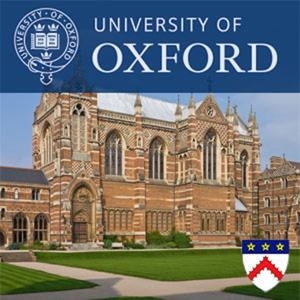
Keble College

Keble College

By Oxford UniversityEducation
Download on the App Store

Keble College episodes

  • A Neandertal Perspective on Human Origins
    Professor Svante Paabo, Director of the Department of Genetics at Max Planck Institute for Evolutionary Anthropology, Germany delivers the ASC Annual Lecture. In 2010, the first draft version of the Neandertal genome revealed that Neandertal have contributed genetic material to present-day humans living outside Africa. Recently, we have completed a genome sequence of high quality of a Neandertal individual and also of a Denisovan individual, representing a hitherto unknown Asian group related to Neandertals. These genomes reveal that up to about 2.0% of the genomes of people in Eurasia derive from Neandertals while about 4.8% of the genomes of people living in Oceania derive from Denisovans. I will discuss what is currently known about the functional consequences of the Neandertal inheritance in present-day humans. I will also describe how the Neandertal genome allows novel genomic features that appeared in present-day humans since their divergence from the Neandertal lineage to be identified and discuss how they may be functionally analyzed in the future.
    51 min
  • Oralising Early Modern Italian Literature
    How and how far did orality play a part in the circulation of literature in early modern Italy? A lecture by Professor Brian Richardson. The literary culture of the period can be seen, in the terms of Walter Ong, as ‘residually oral’, since many kinds of compositions were diffused through the voice, in speech or song, as well as, or rather than, in writing. This paper will consider which kinds of texts might be performed, the occasions on which they were performed in public or in private, the professionals or amateurs who performed them, how and in which varieties of languages they were performed, using evidence from contemporary accounts and from the texts themselves. It will also suggest possible answers to the more difficult question of what the perceived benefits of performance might have been for the performer and the audience.
    58 min
  • Mathematics Aspects of the Planet Earth
    Professor José Francisco Rodrigues, Lisbon/CMAF, delivers the ASC Complexity Cluster Lecture entitled 'Some Mathematical Aspects of Planet Earth' at Keble College. The Planet Earth System is composed of several sub-systems including the atmosphere, the liquid oceans and the icecaps, the internal structure and the biosphere. In all of them Mathematics, enhanced by the supercomputers, has currently a key role through the "universal method" for their study, which consists of mathematical modeling, analysis, simulation and control, as it was re-stated by Jacques-Louis Lions at the end of 20th century. Much before the advent of computers, the representation of the Earth, navigation and cartography have contributed in a decisive form to the mathematical sciences. Nowadays new global challenges contribute to stimulate several mathematical research topics.
    In this lecture, we present a brief historical introduction to some of the essential mathematics for understanding the Planet Earth, stressing the importance of Mathematical Geography and its role in the Scientific Revolution(s), the modeling efforts of Winds, Heating, Earthquakes, Climate and their influence on basic aspects of the theory of Partial Differential Equations. As a special topic to illustrate the wide scope of these (Geo)physical problems we describe briefly some examples from History and from current research and advances in Free Boundary Problems arising in the Planet Earth. Finally we conclude by referring the potential impact of the international initiative Mathematics of Planet Earth (http://www.mpe2013.org) in Raising Public Awareness of Mathematics, in Research and in the Communication of the Mathematical Sciences to the new generations.

    1 hr 1 min
  • Characterisation of Networks
    The ASC Networks cluster visiting researcher Prof. Richard Wilson (Department of Computer Science, University of York) gives a public lecture on his work on networks at Keble College. A characterisation of a network is a number which describes some structural property of the network; a good example is the number of edges. In this talk I will discuss a wide range of characterisations of networks which we have developed at York over the past decade. The inspiration for these comes from diverse areas of mathematics and physics, and I will explore ideas from graph spectra, random walks (classical and quantum), heat diffusion and the connection between prime numbers and networks. These all lead to characterisations which reveal different properties of the networks.
    48 min
  • The Flexible City: overcoming Lock-In and Path-Dependency
    Cities are epicentres of creativity and innovation but are also easily locked into patterns of infrastructure and behaviour that may not serve them best. The Co-Director of the Oxford Programme for the Future of Cities looks at these phenomena and considers ways to enhance the ability of cities to adjust to changes in their natural, political and financial environments.
    51 min

About Keble College

From the publisher's feed

One of the largest of the constituent colleges of the University of Oxford with 410 undergraduate and 235 graduate students. It was the wish of our founders in 1870 to extend access to the University…

More shows like Keble College

Philosophy for Beginners by Oxford University

Philosophy for Beginners

328 Listeners

Approaching Shakespeare by Oxford University

Approaching Shakespeare

328 Listeners

General Philosophy by Oxford University

General Philosophy

70 Listeners

Anthropology by Oxford University

Anthropology

73 Listeners

Reuters Institute for the Study of Journalism by Oxford University

Reuters Institute for the Study of Journalism

8 Listeners

Unconscious Memory by Oxford University

Unconscious Memory

4 Listeners

Aesthetics and Philosophy of Art lectures by Oxford University

Aesthetics and Philosophy of Art lectures

77 Listeners

Theoretical Physics - From Outer Space to Plasma by Oxford University

Theoretical Physics - From Outer Space to Plasma

60 Listeners

Critical Reasoning: A Romp Through the Foothills of Logic by Oxford University

Critical Reasoning: A Romp Through the Foothills of Logic

38 Listeners

The Secrets of Mathematics by Oxford University

The Secrets of Mathematics

41 Listeners