
Sign up to save your podcasts
Or

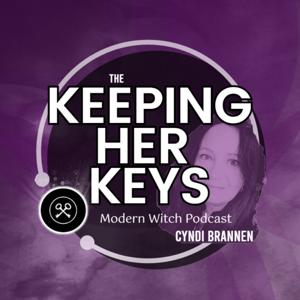


Descend into the mysteries of these enduring goddesses of the deeper world.
"None of the immortal gods or mortal folk heard her cry, nor the Olives shining with fruit— except the daughter of Perses,tender-hearted Hekate, veiled in light, heard from her cave…"- From The Homeric Hymn to Demeter The Homeric Hymns: A Translation, with Introduction and Notes (Joan Palevsky Imprint in Classical Literature) by Diane J. Rayor
"Chthonia (usually pronounced "ka-thon-ee-ah," but also as "thon-ee-ah") is one of Hekate’s most ancient titles. A deity is considered chthonic if they abide in the Underworld, as opposed to ouranic deities, who reside on high. Hekate and Persephone are chthonic queens, while Demeter has strong ouranic characteristics, too. It is Hekate’s chthonic energy that often presents to us when we are at our lowest. This is a symbolic representation of our own "earthiness," an indication that we feel deeply when our internal Underworld calls us to deep healing. Chthonia comes at these moments and especially during autumn, when all is returning to the earth." - from Entering Hekate's Cave by Cyndi Brannen, PhD
You can watch this on The Keeping Her Keys YouTube.
keepingherkeys.com
My take on Imposter Syndrome.
Go gently into this work.
"We experience shame not only through personal invalidation, but also from a culture that devalues our identity. Underneath all of this is always a history of trauma. We have so many wounded among us who carry a great deal of shame. While the initial escape from abusive organizations and individuals often brings respite, unless we acknowledge our shame, we often remain controlled by it. What happens on the individual level is therefore expressed in our communities as a whole. We need to confront shame at both these levels. Shame keeps us silent. We fear that everyone will think we’re idiots or crazy if we speak up. No one will believe us. That's shame talking. Shame is a specific type of fear that's related to having our sense of self violated by others. But this fear is also spread through societal views of what's acceptable. Think of shame as a disease-infected tree that is weighed down with a variety of rotting fruit. In the garden of your life, this tree draws out all your energy and keeps you from nourishing anything beautiful." - from Entering Hekate's Cave (Chapter 10 - Borborophorba).
Get the complete list of the symptoms HERE.
Caliban and The Witch by Silvia Federici
Brené Brown's TED Talk on shame.
I highly recommend reading this article from the Harvard Business Review by Ruchika Tulshyan and Jodi-Ann Burey
If you found this helpful, consider joining The Covina Institute.'
https://keepingherkeys.com/
WATCH this on The KHK YouTube
It is traditional to honor ancestors during Samhain. These can be loving remembrances leading to conversations with them, or more intense healing of our familial line. However you are working with ancestors, may you find connection and comfort.
"We are the embodiment of a thousand dreams, and we stand on top of an eternal bone pile. In a way, we function as Anassa Eneroi over our own lineage. What is shockingly absent from mainstream culture is veneration of the departed. Even Halloween, once a time for connecting with ancestors, has been thoroughly commercialized. Yet still, there is the presence of death in many of our Halloween festivities—from children in cute ghost get-ups to decorations of skeletons. We have a need to connect with death. Intentionally honoring the departed can be a beautiful experience. We can connect with “ancestors of spirit,” those with whom we feel a kindred bond, in spite of a lack of blood ties. This can include writers, celebrities, and other figures. Whatever memories we have of those of our flesh who have departed this world—whether troubling or beautiful, or more likely both—we are a result of their lives." - from Entering Hekate's Cave.
Prayer and Ritual to Hekate For The Dead HERE.
Step into your Head Mistresses' Parlor as we celebrate my favorite time of the year. The Moon takes precedence over the sun, the veil thins, spirits wander through dreams and the streets, and Hekate is ever-near. The most wonderful time of the year.
Let's invoke The Spirit of Samhain with this reading of a story that the moon once told me.
WATCH this reading.
Submerge in the potion found in Hekate's Cauldron, releasing the past wounds and swimming in her mysteries. Perfect for the Samhain Season, when we are often called into her deep mysteries, or anytime we need to connect and heal.
From Entering Hekate's Cave:
This force leads us down a River Road that pours from her cauldron in the heart of her cave. It calls us to the crossroads, where we stand on the bank of this river—a river that is a road, a road that is a river. We see this River Road through the eyes of the soul. And this looping road always leads us back to where we are meant to be. Our souls long to dive deep into this river, but our
shadows may tell us that the water is too deep. It is not. We are strong swimmers.
WATCH this meditation in Covina: The Coven of Hekate.
The next course in the Hekate's Keys Program is now available. Get started with the lessons in The Covina Tradition immediately, start the daily ritual, attend our live gatherings, and more. Start by becoming a Coven Member HERE.
Cyndi starts by talking about experiencing Samhain as a year-round witch, and then shares her thoughts about being The Witch In The Room.
https://keepingherkeys.com/
We're back for a new season exploring our beloved Hekate and her deeper world here at the crossroads, where we're inviting you into The Temple of Good Enough.
Christen, Coyote Mae, Liz and I have a candid conversation about abiding in this temple, covering a wide range of topics from the intersection of being etheric limitless beings that also have physical realities with max capacities, to becoming a tree.
Our invocation for this episode is from Keeping Her Keys: An Introduction to Hekate's Modern Witchcraft by me (Cyndi Brannen), which is a perfectly imperfect guide to walking the crooked path that leads to The Temple of Good Enough.
We Are Good.
We Are Enough.
We Abide in The Temple of Good Enough.
https://keepingherkeys.com/
Join The Temple of Good Enough: The Free Coven For The Podcast (which we call "The Poven")
Thanks so much for being part of the Poven. I'll be back around October 12 with a new season, and some special treats.
To join Covina, go to keepingherkeys.com
"When I’m asked about beginning a relationship with Hekate, my response is always to look to your dreams. Trust me, she’s been trying to get your attention your entire life. Dreams can offer illumination into your own darkness; from aspects you need to heal to long-abandoned desires. They can also be about the external world, providing insight into relationships, situations, and others. Dreams are communications from the unconscious. Their symbols can evoke strong emotions. When we enter the darkness of sleep, we go into Hekate’s world. As we wander in the dreamscape, our physical selves vanish into something more. We walk among archetypes, tread in the web of the universe, and stretch beyond our mortal limitations. It is a sad state of affairs that our culture devalues the importance of dreams." - from Entering Hekate's Cave: The Journey Through Darkness to Wholeness
"Hekate has long been implicated in dream interpretations. Both the magical view that considers dreams to be foretelling and the nineteenth-century mechanistic view that attributes them to waste products of physiological sensations (garbage) show Hekate's influence. When she becomes equated with Nyx (night), as in Spenser and at times in Shakespeare, then dreams become her province and our interpretative ideas reflect her perspectives.
"We may continue this tradition, although in a different manner. Yes, the dream is made of scraps that belong to the Goddess who makes sacred the waste of life, so that it all counts, it all matters. Offering the dreams to "the mysteries of Hekate and the night" (King Lear, Act 1, Scene 1) means giving back the regurgitations that "come up" in dreams without attempts to save them morally or to find their dayworld use. The junk of the soul is primordially saved by Hekate's blessing, and even our trashing ourselves can be led back to her. The messy life is a way of entering her domain and become a "child of Hekate." Our part is only to recognize that their is myth in the mess so as to dispose of the day residues at the proper place, that is, to place them at Hekate's crossroads. Ritually, the garbage was placed at night at a crossroads, so that each dream may lead off in at least three directions besides the one we have come from. Hekate, was has traditionally been represented with three heads, keeps us looking and listening in many ways at once." - James Hillman, The Dream and the Underworld.
Hillman's excellent treatise on dreams argues that we should resist the temptation to make our dreams serve our ego. His strong case for allowing the dream to stay mystical is compelling. We have been programmed to think that dreams are either random neural firings, "garbage," or to try to reduce them into specific interpretations. Dreams do not care that we do such foolish things. They exist with or without our attempts to rationalize them. I urge you to allow your dreams to be what they are for it is in their pure form where the true medicine abides.
Dreams speak the symbolic language of the spirit world. They are archetypal and nonrational. Rarely literal, dreams are the way our unconscious speaks to us. The dreamer within is a star-traveler who has great wisdom to share, if we only listen.
JOIN COVINA
Medea is a challenging companion, who teaches us both what to do, and what not to do. She is central to the practice of Hekatean Witchcraft, representing the healing and destructive power of The Poison Path. She is a central figure in Entering Hekate's Garden, in fact she wrote the introduction. Medea will have her way.
Medea, that mythical sorceress whose magic built a king and then destroyed him. For over 2,000 years she has captivated our attention. Reviled by some for her unspeakable actions, understood by others as a woman robbed of any personal agency. Medea operated in the shadows, often crafting her spells in secret, and she can also be seen as being in the grips of the shadow self. Her longing for her prince, and perhaps power, possessed her above all.
In this episode, Angela Natividad and I explore the themes of Medea, then find examples of her in contemporary society (Amber Heard, for example). We draw from both art and literature to discuss how Medea, as a symbol of the dangerous woman, is entwined with both the systemic disempowerment of women and capitalism. The central question we used was borrowed from Margaret Atwood's introduction to Christina Wolf's contemporary retelling of Medea's story: "Like a tunnel full of mirrors, it both reflects and echoes. The question it asks the reader, through many voices and in many different ways, is: What would you be willing to believe, to accept, to conceal, to do, to save your own skin, or simply to stay close to power? Who would you be willing to sacrifice?"
You can watch this video with closed captioning and view the transcript here:
https://app.searchie.io/watch/AYDazg63NQ
Access the PDF of the slides we used to frame the discussion here: https://keepingherkeys.com/downloads
You can watch this on YouTube. Make sure to subscribe to Keeping Her Keys while you're there.
Join the Crossroads and Keys Online Retreat HERE.
From the publisher's feed

10,517 Listeners

12,669 Listeners

120 Listeners
793 Listeners
343 Listeners

1,029 Listeners
2,849 Listeners

1,813 Listeners
262 Listeners
1,177 Listeners
245 Listeners

2,047 Listeners

1,385 Listeners
1,148 Listeners
347 Listeners