
Sign up to save your podcasts
Or

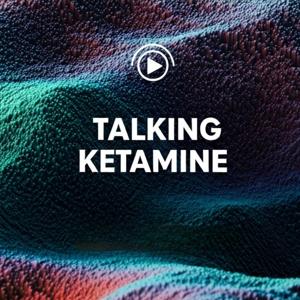

In Episode 56, we explore a fascinating 2026 pharmacokinetics study by Otto and colleagues that completely changes how we view oral ketamine for Treatment-Resistant Depression (TRD). When taken orally, ketamine hits a massive biological roadblock: the liver’s “first-pass effect”. The liver acts as an aggressive tollbooth, metabolizing almost all of the parent drug and transforming it into a high volume of a metabolite called (S)-norketamine before it reaches the wider bloodstream.
Using advanced Pharmacokinetic-Pharmacodynamic (PKPD) modeling, researchers discovered a mind-bending reality. While intravenous ketamine drips rely on the original parent drug to drive the therapeutic high, the subjective experience of an oral pill is almost entirely driven by its metabolite, (S)-norketamine. Because this metabolite is a “clunkier key” with a lower affinity for NMDA receptors, it requires a massive volume to overwhelm the system and produce the necessary psychotomimetic effects.
The study’s simulations reveal a major clinical hurdle: standard oral doses (like 0.2 or 0.45 mg/kg) fall significantly short of matching the proven therapeutic experience of an IV drip. To achieve those same effects, oral doses must be drastically increased to approximately 1.0 mg/kg. We discuss what this means for the future of TRD treatment, the need for new safety monitoring strategies due to delayed absorption, and the unsettling realization that the pills we swallow aren’t always the chemicals that heal us.
Reference:
Otto, M. E., Jacobs, G. E., van Mechelen, J. C., Borghans, L. G. J. M., van Hasselt, J. G. C., & Aulin, L. B. S. (2026). Pharmacokinetics and pharmacodynamics of intravenous and oral (S)-ketamine: Investigating metabolite contribution to subjective effects. British Journal of Clinical Pharmacology, 1-12. https://doi.org/10.1002/bcp.70503
The post Ketamine’s Child appeared first on Talking Ketamine Podcast.
 View all episodes
 By Talking Ketamine

4.3
1111 ratings
In Episode 56, we explore a fascinating 2026 pharmacokinetics study by Otto and colleagues that completely changes how we view oral ketamine for Treatment-Resistant Depression (TRD). When taken orally, ketamine hits a massive biological roadblock: the liver’s “first-pass effect”. The liver acts as an aggressive tollbooth, metabolizing almost all of the parent drug and transforming it into a high volume of a metabolite called (S)-norketamine before it reaches the wider bloodstream.
Using advanced Pharmacokinetic-Pharmacodynamic (PKPD) modeling, researchers discovered a mind-bending reality. While intravenous ketamine drips rely on the original parent drug to drive the therapeutic high, the subjective experience of an oral pill is almost entirely driven by its metabolite, (S)-norketamine. Because this metabolite is a “clunkier key” with a lower affinity for NMDA receptors, it requires a massive volume to overwhelm the system and produce the necessary psychotomimetic effects.
The study’s simulations reveal a major clinical hurdle: standard oral doses (like 0.2 or 0.45 mg/kg) fall significantly short of matching the proven therapeutic experience of an IV drip. To achieve those same effects, oral doses must be drastically increased to approximately 1.0 mg/kg. We discuss what this means for the future of TRD treatment, the need for new safety monitoring strategies due to delayed absorption, and the unsettling realization that the pills we swallow aren’t always the chemicals that heal us.
Reference:
Otto, M. E., Jacobs, G. E., van Mechelen, J. C., Borghans, L. G. J. M., van Hasselt, J. G. C., & Aulin, L. B. S. (2026). Pharmacokinetics and pharmacodynamics of intravenous and oral (S)-ketamine: Investigating metabolite contribution to subjective effects. British Journal of Clinical Pharmacology, 1-12. https://doi.org/10.1002/bcp.70503
The post Ketamine’s Child appeared first on Talking Ketamine Podcast.

43,687 Listeners

7,718 Listeners

46,368 Listeners

29,272 Listeners

16,525 Listeners
1,643 Listeners
14 Listeners
4 Listeners