
Sign up to save your podcasts
Or

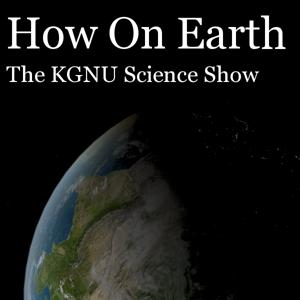


This week on How on Earth, Beth talks with Dr Paul Cohen, a physician-scientist whose research focuses on obesity and metabolic disease. They spoke about his recent study highlighting the link between brown fat and positive health outcomes in cancer, cardiovascular disease, and type 2 diabetes. Their converstiaon starts at about 5 minutes. You can read the research study here.
We speak with CU-Boulder Geneticist Tom Johnson about his ground-breaking research into the genetics of aging and ways to improve lifespan and healthspan. We feature excerpts from Ariel Lavery’s StoryCorps interview with her dad, Tom Johnson, and we speak with Johnson about his recent diagnosis of Lewy Body Dementia.
Executive Producer: Beth Bennett
Sometimes it seems that science and art are completely different worlds but that has not always been the case. There is a long history of artistic scientists and scientific artists. In this edition of How on Earth, we talk about the alchemy of transmogrifying science into theatre.
Our guests include two scientists and two playwrights who collaborated to create plays inspired by scientific research as part of a theatre project produced by the Boulder Ensemble Theatre Company. The production is called “Science Shorts“, which will be streaming the performances online Thursday through Sunday this week, January 21-24. The production will feature readings of four short plays by Colorado playwrights, and four short talks by the local scientists who inspired their work.
Our science guests are geophysicist Dr. Neesha Schnepf and biologist Ashley Whipple, and our playwrights are Nigel Knutzen and Ellen K. Graham. Neesha and Nigel collaborated on creating the play Trinal, which takes three different perspectives on tsunamis and their impact. Ashley’s and Ellen’s play, On The Rocks, follows American pikas and what they have to teach us about resilience in the face of environmental and other stress.
Listen to the show:
(Whole Show) Longer “healthspan” might be why the most popular Non-COVID story in Science Magazine last year involved the body-building supplement alpha-ketoglutarate (AKG), fed to middle-aged mice. Buck Institute of Research on Aging Scientist Gordon Lithgow explains.
Executive Producer: Beth Bennett
Listen to the show:
In today’s show, Beth talks with science writer and journalist Gary Taubes about his new, and more personal book (The Case for Keto) on his experience with the low-carb, high fat or ketogenic diet. He interviewed hundreds of people, physicians, scientists, and ordinary folks, about their experiences on this diet. The keto diet produces consistency weight loss because it circumvents the insulin system, activated by carbs, which promotes fat storage. And yet, this diet also produces good health metrics in terms of cholesterol and other outcome measures. The interview starts at about 9 minutes in.
Executive Producer: Beth Bennett
Listen to the show:
Our lives have been changed by lithium-ion (Li-ion) batteries which are everywhere: in our cell phones, cars, toys, power tools and grid energy storage. Indeed, the 2019 Nobel Prize in Chemistry was awarded to the three scientists who invented and developed them. As the world manufactures more and more Li-ion batteries, what are the challenges and opportunities for recycling them? How can we prevent the batteries from ending up in landfills where the toxic metals inside can leak out? In this episode, we talk with Dr. Zheng Chen, a professor of nanoengineering at the University of California, San Diego, and co-author on the paper “Efficient Direct Recycling of Lithium-Ion Battery Cathodes by Targeted Healing” published a few weeks ago in the journal Joule.
Hosts: Jill Sjong, Joel Parker
Listen to the show:
Scratch & Sniff COVID Test (starts 1:00) CU Scientist Dan Larremore explains how a smell test app might offer an affordable COVID screening that’s way more accurate than a temperature check.
Ice Age BONE Fire (starts 6:00) Archeologist John Hoffecker and local volunteers recreate a Paleolithic “campfire” that used bones as the primary fuel. Volunteers who helped with this project — Josh Steinsiek, Dustin Goodew of Arapahoe Meat Company, Outdoorspeople Lin and Henry Ballard, Amber O’Hearn and Siobhan Huggins.
Engineer Sam Fuqua
Listen to the show:
This week on How on Earth, Beth gives an update on the efficacy, safety, and availability of the mRNA vaccines for the corona virus. You hear from Drs Tony Fauci, Michael Diamond, and Roger Seheult.
Host: Beth Bennett
Listen to the show:
From the publisher's feed

91,018 Listeners
78,398 Listeners

43,827 Listeners

38,012 Listeners

43,362 Listeners
26,829 Listeners

3,386 Listeners
1,642 Listeners
937 Listeners

505 Listeners

6,432 Listeners
366 Listeners

111,865 Listeners

6,375 Listeners

15,904 Listeners