
Sign up to save your podcasts
Or

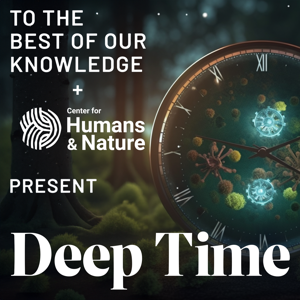

Anthropologist Enrique Salmon formulated the concept of “kincentricity,” a worldview that sees everything around us — plants, animals, rocks, wind — as our direct relative. As Salmon says, “the rain is us, and we are the rain.” In his native Raramuri culture, culture and language are embedded in the mountain landscape of Chihauhau, Mexico. Salmon teaches a class called “American Indian Science,” in which he asks his students to incorporate their personal experiences into their observations about the world. He tells Steve Paulson that any theory of reality must account for lived experience, which pushes against the scientific paradigm that seeks an “objective” understanding of reality.
Human identity cannot be separated from our nonhuman kin. From forest ecology to the human microbiome, emerging research suggests that being human is a complicated journey made possible only by the good graces of our many companions. In partnership with the Center for Humans and Nature and with support from the Kalliopeia Foundation, To The Best Of Our Knowledge is exploring this theme of "kinship" in a special radio series.
To learn more about the Kinship series, head to ttbook.org/kinship.
Original Air Date: March 25, 2022
Guests:
Enrique Salmon
Further Reading:
CHN: "I Want the Earth to Know Me as a Friend"
Never want to miss an episode? Subscribe to the podcast.
Want to hear more from us, including extended interviews and favorites from the archive? Subscribe to our newsletter.
 View all episodes
 By To The Best Of Our Knowledge

4.8
5454 ratings
Anthropologist Enrique Salmon formulated the concept of “kincentricity,” a worldview that sees everything around us — plants, animals, rocks, wind — as our direct relative. As Salmon says, “the rain is us, and we are the rain.” In his native Raramuri culture, culture and language are embedded in the mountain landscape of Chihauhau, Mexico. Salmon teaches a class called “American Indian Science,” in which he asks his students to incorporate their personal experiences into their observations about the world. He tells Steve Paulson that any theory of reality must account for lived experience, which pushes against the scientific paradigm that seeks an “objective” understanding of reality.
Human identity cannot be separated from our nonhuman kin. From forest ecology to the human microbiome, emerging research suggests that being human is a complicated journey made possible only by the good graces of our many companions. In partnership with the Center for Humans and Nature and with support from the Kalliopeia Foundation, To The Best Of Our Knowledge is exploring this theme of "kinship" in a special radio series.
To learn more about the Kinship series, head to ttbook.org/kinship.
Original Air Date: March 25, 2022
Guests:
Enrique Salmon
Further Reading:
CHN: "I Want the Earth to Know Me as a Friend"
Never want to miss an episode? Subscribe to the podcast.
Want to hear more from us, including extended interviews and favorites from the archive? Subscribe to our newsletter.

90,994 Listeners

43,898 Listeners

43,528 Listeners
10,927 Listeners

8,776 Listeners
26,250 Listeners
946 Listeners

370,110 Listeners
10 Listeners
46 Listeners
2,027 Listeners
15,592 Listeners

15,950 Listeners
3,336 Listeners
4,178 Listeners
84 Listeners