
Sign up to save your podcasts
Or

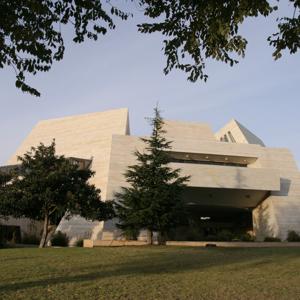


Lekh Lekha | Hearing the Call and Working for God, by Rav Ezra Bick and Rav Yonatan Shai Freedman
God's call is always broadcasting. Why was Avraham the one who heard it?
Avraham's greatness, Rav Ezra Bick and Rav Yonatan Shai Friedman suggest, lay not in what he had already achieved but in hearing God's call and answering it. When he arrived in the Land, the first thing he did was build an altar and call out in God's name. Like the Jews in the Zohar who set aside their troubles for "God's joy," Avraham worked for God, on a journey that never ended.
Mind of a Monotheist | 3 | Lekh Lekha | Egyptian Beauty Bias by Rav David Debow
What does Sarai's beauty in Egypt teach about racism? Rabbi David Debow reads Lekh Lekha.
Rabbi David Debow argues that "Lekh lekha" calls Avraham to leave his land, his kin and his culture, rejecting every kind of determinism, because monotheism begins in freedom. In Sarai's abduction in Egypt, he finds the Torah openly acknowledging, and criticizing, a bias that favors fair skin. The lesson is that a minority can ally with a dominant society without being absorbed, as long as it stays faithful to its own families and people.
Why Give Tzedaka? Ethics as Divine Service, by Rav Ezra Bick and Rav Eli Weber
In this second episode of Talking Machshava ("Talking Jewish Thought"), Rav Eli Weber asks Rav Ezra Bick a question. If love of God and service of God are one and the same, is tzedaka (charity) worth more when it goes to a poor person we dislike?
Sefat Emet | Lekh Lekha | Why Abraham Alone Heard God's Call, by Rav Eli Weber
Why does the Torah never explain why God chose Abraham? Drawing on the Zohar, the Sefat Emet answers that God calls out "Lekh lekha" to all of humanity, but only Abraham listened and acted. Rabbi Eli Weber shows that Abraham's greatness lay in that response. He left home, family and comfort simply because God asked, without even being told where he was going. Would we answer today?
Sefat Emet | Noach | Noach and Avraham: Two Faces of Divine Help, by Rabbi Eli Weber
Everyone needs God's help, Noach and Avraham alike. That is how the Sefat Emet insists on reading the Midrash that contrasts the two. The difference is in the form the help takes. Noach's help was open and miraculous. Avraham's came hidden within nature, earned through his lifelong closeness to God. And history needed a Noach first, to prepare the world for Avraham.
Lekh Lekha | 'VaYirdof ad Dan': The "Dan" Problem, by Rav Yitzchak Etshalom
How can Avraham be described as chasing the kings "to Dan"? Isn't that a double-anachronism?
This lecture explores the geographical mystery of Avraham chasing the four kings "to Dan" in Parashat Lekh Lekha, despite Dan being the name of Avraham's great-grandson. Rabbi Etshalom analyzes various traditional and critical approaches to this anachronism, including the possibility of later editorial naming or the existence of an ancient location by that name. Ultimately, the shiur proposes that the northern territory near Banias was historically recognized as "Dan" as part of a pre-Egyptian tribal settlement scheme, which explains the nomenclature used in the Torah.
Lekh Lekha | The Brit as Relates to Non-Jews, by Rav Binyamin Tabory
Does circumcision apply to gentiles? May a Jew circumcise a gentile? Brit mila has two layers: a physical mitzva and a covenant with God. According to Rambam, the descendants of Ketura are obligated in the physical act. Any non-Jew may be circumcised if he does it sincerely as a mitzva. The covenant itself, kritat brit, belongs to the Jewish people alone. That covenant is linked to the inheritance of Eretz Yisrael and perhaps to peri'a, the completing stage of the circumcision.
Noach | Ever Min Ha-chai, by Rav Binyamin Tabory
The seventh of the mitzvot benei Noach: to whom does it apply?
All humanity must keep the seven Noahide laws. Rav Binyamin Tabory A ger toshav is someone who formally accepts them before a beit din, and that acceptance changes his status. He becomes "commanded" (metzuveh), which is a kind of partial conversion. He may then live in Eretz Yisrael and must be supported by the Jewish community. According to Rashi, rejecting idolatry may even require him to honor Shabbat as testimony to Creation.
Noach | Why Chamas Doomed the World; What Noach Missed, by Rav Ezra Bick with guest Rav Jacob Bernstein
Robbery did not just add to the sins of the Flood generation. It destroyed society, and a world without society cannot stand. Rav Ezra Bick applies this to Jewish unity in Israel today. Rabbi Jacob Bernstein adds that Noach's private righteousness was not enough: Avraham and Moshe became great by standing up for others.
Mind of a Monotheist | 2 | Noach: Shem, Ham and Yefet: Torah's Map of Peoplehood, by Rabbi David Debow
Is the Torah biased? Why is Noach's son Yefet named for beauty? A bold read on race in the Torah.
Monotheism holds that only God is a perfect unity, so a monotheist resists reducing people to a single essence. Reading Genesis 10, Rabbi David Debow shows how the Torah defines every nation by land, language and family, which overlap but can be separated. That complexity, he argues, is the Torah's answer to racial essentialism. It is also why the Torah names a bias toward "fair" Yefet, only to subvert it.
From the publisher's feed
Ranked by our users in the last 21 days

558 Listeners

36 Listeners
649 Listeners

219 Listeners

199 Listeners

1,986 Listeners

234 Listeners

3 Listeners

448 Listeners
1,219 Listeners

3,200 Listeners
146 Listeners

87 Listeners

103 Listeners

905 Listeners