
Sign up to save your podcasts
Or

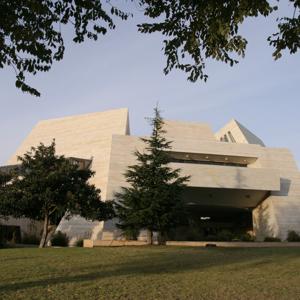


Special | Thoughts about the "Trial of Israel" in The Hague, by Rav Moshe Taragin
As we stand "on trial" in The Hague we are literally living through a prophecy. Fortunately, we know how it ends.
Vaera | The Makkot In Narrative and in Song, by Rav Yitzchak Etshalom
Why are only 7 of the Makkot mentioned in Tehillim 78? Why are a different 7 or 8 listed in Tehillim 105? Although we are all instinctively familiar with "10 Makkot", we have a wide range of approaches to read the story of God's punishment/education of the Egyptians; indeed, in the famous Midrash which appears in the Haggada, as many as 50 Makkot are suggested. Yet in two of the Psalms, the Makkot are adumbrated yet only 7 of them are listed - and not the same 7. In Tehillim 78, כנים (lice), שחין (boils) and חשך (darkness) are omitted. In Psalm 105, the cattle plague (דבר) and boils (שחין) are left out - and the "swarm" (ערוב) may also be omitted. We explore each of these lists, the order of their presentation and the rhetoric of their description to suggest that the author of each of these psalms utilized those Makkot and particular features of each of them to drive home the particular message of his psalm. To that end, we explore the overall theme of each psalm and then suggest how the selected Makkot and their particular order and descriptions fit each of those themes. Source sheet >>Ramban On The Torah | 28 | Vaera, by Rav Eli Weber
How can God suspend Paroh's free will? It seems unfair. The Pasuk וידבר ה' אל משה לאמור is the most repeated Pasuk in the Torah. But what does it really mean? That and more in this week's Ramban al HaParsha!
Kiddush: Principles and Practical Applications, by Rav Dovid Gottlieb
2nd part in a series on The Sanctity of Shabbat, combining questions of both philosophy and halakha. Shiur given to the weekly women's group in Kehilat Ha'Ela.
Archaeology, Epistemology and Orthodoxy, by Rav Yitzchak Etshalom
How far can we, as traditional Jews, dig below the earth to discover meaning in Tanakh?
This lecture was given at Century Village, Boca Raton FL as part of a Scholar-In-Residence weekend. Although the central topic was the positive role of archaeology and related disciplines in aiding our understanding of Tanakh, broader issues such as the reliability of sources, the breadth of informational sources we are willing to gain from in our study of Torah and other related topics.
Source sheet >>
Shemot | The Mystery Behind Moshe's Name, by Rav Yitzchak Etshalom
Is "Moshe" a Hebrew name or an Egyptian name?
We explore the first 10 verses of Shemot 2, detailing the birth of the baby who would prove to be the agent of salvation - his being hidden in the reeds of the Nile, the role of his sister and the princess in saving him and his naming. We review the passage carefully, noting each unusual twist in the text, including unexpected additions and surprising omissions from the story. Along with numerous methodological parenthetic observations, we analyze the Egyptian and/or Hebrew meaning of the name of this baby who ultimately leads Bnei Yisrael from Egypt to Sinai to the east banks of the Jordan. This shiur was given in memory of החבר יחיאל at the Young Israel of Hollywood.
Source sheet >>
Q+A with Rav Asher Weiss
2nd half of a special shiur with Rav Asher Weiss, given to the Bnei Chul, following the Old City Shabbaton, motzaei Shabbat Parashat Shemot 5784
Swords of Iron | Divrei Chizuk, by Rav Asher Weiss
Motzaei Shabbat Parashat Shemot 5784, given to Bnei Chul following the Old City Shabbaton
The Magic and Meaning of Shabbat, by Rav Dovid Gottlieb
First part in a series on The Sanctity of Shabbat, combining questions of both philosophy and halakha. Shiur given to the weekly women's group in Kehilat Ha'Ela.
Shemot | "The Midwives of the Hebrews - And Their Houses?" by Rav Yitzchak Etshalom
Who built houses for the midwives? And why?
In the opening chapter of Sefer Shemot, we are informed about Pharaoh's plan to have the newborn Hebrew male children killed - or are they newborns? This is to be carried out by two Hebrew midwives - or are they Egyptian midwives of the Hebrews? These two, due to their fear of God, refuse Pharaoh's orders and God rewards them by having the nation increase in size. We are then told that since they feared God, "he made houses for them" - ויעש להם בתים. Who made houses? What type of houses? For whom? And to what end? The opinions about each of these unspecified words range broadly among the classic commentators - and we survey that range, explaining the methodological approach of each, with a brief interlude regarding the broader issue of the approach to a text and its impact on its understanding. We then propose a slightly nuanced explanation, based on a combination of insights of several Rishonim as well as the literary structure of the pericope.
Source sheet >>
From the publisher's feed
Ranked by our users in the last 21 days

558 Listeners

36 Listeners
649 Listeners

221 Listeners

200 Listeners

1,986 Listeners

235 Listeners

3 Listeners

449 Listeners

1,218 Listeners

3,202 Listeners
147 Listeners

87 Listeners

103 Listeners

905 Listeners