
Sign up to save your podcasts
Or

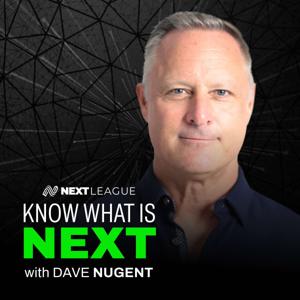


A sports customer once asked Julie Souza and AWS to build a virtual locker room in the metaverse. Instead of taking the order, she asked why.
Julie, whose career has spanned CBS Sports, Sports Illustrated, ESPN, Second Spectrum, and AWS, joins Next League’s COO Becki Wronko Civello to explain why she keeps coming back to the same three questions before any technology decision: Who is this for? What problem are we solving? And what outcome should it actually drive?
Julie also shares where she sees untapped opportunity in sports, why she’s cautious about how the industry adopts AI, and what eight years in local government, the last two as deputy mayor, taught her about showing up and speaking plainly.
In this episode, you’ll hear:
Resources and Links:
Connect with Julie Souza on LinkedIn.
Learn more about Next League on our website and LinkedIn. We are leading sports organizations into the digital future.
Dave’s book is available now! Get your copy of The Business of Sports Technology: How To Make Smart Decisions That Drive Your Organization Forward.
Football across North America, Central America, and the Caribbean is entering a rare moment of opportunity with a World Cup on home soil, growing domestic leagues, emerging national teams, and increasing global attention.
Heidi Pellerano, Chief Commercial Officer at Concacaf, joins Dave to explain what it means to commercialize a confederation made up of 41 member associations operating in dramatically different markets. She shares how Concacaf thinks about creating value across media, sponsorship, ticketing, licensing, and content while ensuring that commercial success ultimately helps strengthen the football itself.
Heidi also reflects on what this World Cup moment could mean for the next generation of fans and players across the region, and what her unconventional path from engineering and defense consulting into sports has taught her about solving complex problems.
In this episode, you’ll hear:
Resources and Links:
Connect with Heidi Pellerano on LinkedIn and learn more about Concacaf on their website.
Learn more about Next League on our website and LinkedIn. We are leading sports organizations into the digital future.
Dave’s book is available now! Get your copy of The Business of Sports Technology: How To Make Smart Decisions That Drive Your Organization Forward.
Money keeps pouring into sports, much of it chasing the same assets: teams, leagues, and media rights. Drew Sheinman, Founding Partner at Brand Velocity Group, is investing around them instead, with a model that gives 10% of his firm’s carried interest to the employees of the companies it buys.
Drew joins Dave to explain how BVG works as an independent sponsor instead of a traditional fund, raising capital deal by deal from institutions, family offices, and athletes. He draws on a career spent on nearly every side of sports, from team ownership and Madison Square Garden to Coca-Cola, the Breeders’ Cup, and Endeavor.
Drew doesn’t see a bubble forming in sports valuations, and covers the categories he’s watching next, from premium hospitality and live events to wellness and longevity. And, he shares what students trying to break into the industry should do beyond sending out hundreds of résumés.
In this episode, you’ll hear:
Resources and Links:
Connect with Drew Sheinman on LinkedIn and learn more about Brand Velocity Group.
Learn more about Next League on our website and LinkedIn. We are leading sports organizations into the digital future.
Dave’s book is available now! Get your copy of The Business of Sports Technology: How To Make Smart Decisions That Drive Your Organization Forward.
A U.S. Open can bring more than 200,000 fans to a golf course with no permanent network, limited infrastructure, and none of the technology you would expect at a major stadium. Anthony Santora, Managing Director of IT at the USGA, joins Dave to explain how his team turns that into a functioning championship operation.
Anthony walks through what happens months before the first fan arrives, from planning the network and monitoring critical systems to deploying hundreds of access points and televisions during a compressed “advance week.” He also explains why the hardest part of championship technology isn’t always the technology itself.
Anthony also discusses how the USGA is approaching AI, why proprietary data is becoming increasingly important, and how they are thinking about digital experiences across championships, fans, and players.
In this episode, you’ll hear:
Resources and Links:
Connect with Anthony Santora on LinkedIn.
Learn more about Next League on our website and LinkedIn. We are leading sports organizations into the digital future.
Dave’s book is available now! Get your copy of The Business of Sports Technology: How To Make Smart Decisions That Drive Your Organization Forward.
NASCAR has spent years experimenting with new platforms, content formats, race environments, and ways to understand its fans. But one of its biggest lessons has been knowing what NOT to change.
Tim Clark, EVP and Chief Brand Officer at NASCAR, joins Dave to talk about the tension at the center of modern fan engagement: evolving how people discover, experience, and interact with a sport without losing the identity that made its most loyal fans care in the first place. He shares how NASCAR is thinking differently about content distribution, gaming, live events, and the value of knowing who its digital fans actually are.
Tim also explains why YouTube has become such an important part of NASCAR’s strategy for reaching younger audiences, how the “Hell Yeah” campaign emerged from a renewed confidence in the brand’s roots, and why traffic alone is becoming a less meaningful measure of digital success.
In this episode, you’ll hear:
Resources and Links:
Connect with Tim Clark on LinkedIn.
Learn more about Next League on our website and LinkedIn. We are leading sports organizations into the digital future.
Dave’s book is available now! Get your copy of The Business of Sports Technology: How To Make Smart Decisions That Drive Your Organization Forward.
Julie Fabsik-Swarts has spent her career on the much less visible side of sports: the funding, governance, safety, officiating, and infrastructure that determine whether athletes and entire sports have the opportunity to succeed.
As President and CEO of the Diving Equipment and Marketing Association, Julie shares her learnings across gymnastics, Olympic and amateur sports, nonprofits, athlete safety, and now scuba diving.
There are very different realities facing smaller sports organizations, and leaders may be simultaneously trying to grow participation, support elite athletes, raise money, manage boards, and make limited resources stretch further.
Julie also explores how technology could reshape scuba diving, the growing challenge of parent behavior in youth sports, and what she has learned about leading sports organizations through periods of change.
In this episode, you’ll hear:
Resources and Links:
Connect with Julie Fabsik-Swarts on LinkedIn and learn more about the Diving Equipment & Marketing Association on their website.
Learn more about Next League on our website and LinkedIn. We are leading sports organizations into the digital future.
Dave’s book is available now! Get your copy of The Business of Sports Technology: How To Make Smart Decisions That Drive Your Organization Forward.
Golf may be one of the most complicated sports to produce digitally and on television. Every championship takes place on a different course, across hundreds of acres, with dozens of players competing simultaneously — and the USGA has to deliver that experience across broadcast, streaming, mobile, and digital products.
Dave Giancola, Senior Director of Global Media at the USGA, joins Dave to talk about how his role evolved from broadcast into a broader global media function spanning both traditional coverage and fan-facing digital products. He shares how the USGA thinks about connecting its 15 national championships, extending the audience beyond the U.S. Open, and using technology to create a more continuous relationship with golf fans throughout the season.
Dave also discusses how the USGA measures digital success beyond raw impressions, why the organization views technology as central to growing the game, and how major events like LA 2028 could introduce new audiences to golf on a global scale.
In this episode, you’ll hear:
Resources and Links:
Connect with Dave Giancola on LinkedIn.
Learn more about Next League on our website and LinkedIn. We are leading sports organizations into the digital future.
Dave’s book is available now! Get your copy of The Business of Sports Technology: How To Make Smart Decisions That Drive Your Organization Forward.
How do sports teams achieve faster alignment, fewer reworks, and digital products that move from idea to launch more reliably?
Bora Nikolic’s views of technology in the sports industry have helped shape many of the fan experiences you see from leading sports properties today. And today, he’s challenging the idea that design is about aesthetics, arguing instead that it’s an execution discipline.
Dave and Bora look ahead at what’s changing, from accessibility, to AI accelerating how teams research, prototype, and align across functions. Bora also shares why the next phase of fan experience will be defined by connected, multimodal journeys that span platforms, environments, and moments that matter to fans.
In this episode, you’ll hear:
Resources and Links:
Connect with Bora Nikolic on LinkedIn.
Learn more about Next League on our website and LinkedIn. We are leading sports organizations into the digital future.
Dave’s book is available now! Get your copy of The Business of Sports Technology: How To Make Smart Decisions That Drive Your Organization Forward.
Learn more about Next League on our website and LinkedIn. We are leading sports organizations into the digital future.
Dave’s book is available now! Get your copy of The Business of Sports Technology: How To Make Smart Decisions That Drive Your Organization Forward.
With WTGL preparing to launch this November, TMRW Sports is scaling a shared-services model built to run team operations more efficiently than teams could on their own, and confronting a structural challenge: how do you build fan affinity for a team with no home arena?
Kara Baker, VP of Team Marketing and Business Operations at TMRW Sports, joins Dave to talk about her multidisciplinary career, how TMBO evolved as teams scaled, why some teams tap into ownership groups' existing infrastructure while others rely entirely on the league, and what she's learned from teams maturing at different speeds.
Kara also discusses the opportunity WTGL creates around women's golf, the international makeup of the LPGA player base, and why the league is betting on player storytelling to build fandom without the benefit of a home stadium.
In this episode, you’ll hear:
Resources and Links:
Connect with Kara Baker on LinkedIn and learn more about TMRW Sports on their website.
Learn more about Next League on our website and LinkedIn. We are leading sports organizations into the digital future.
Dave’s book is available now! Get your copy of The Business of Sports Technology: How To Make Smart Decisions That Drive Your Organization Forward.
What REALLY makes a business worth buying, and what should founders actually optimize for?
In this candid conversation, Dave sits down with longtime friend and former business partner Igor Ulis, partner at Hudson Technology Systems. Igor traces his path from “dumb kid in college” who thought writing code was enough to get rich in the dot-com boom, to building and scaling a global sports technology services company that ultimately sold to Infront.
Dave and Igor get into the mechanics of valuation in the real world — multiples on revenue vs. profit, the importance of cash generation, and why buyers care so much about whether the business can run without the founder in the room.
Igor also explains how services businesses live or die on utilization, pricing discipline, hiring, and the “art and science” of estimating complex projects. They dig into the tradeoffs of taking loss-leader work,why “follow your passion,” “fail fast,” and “work on the business, not in the business” are incomplete clichés, and how to avoid underpricing your value just to win logos.
In this episode, you’ll hear:
Resources and Links:
Connect with Igor Ulis on LinkedIn.
Learn more about Next League on our website and LinkedIn. We are leading sports organizations into the digital future.
Dave’s book is available now! Get your copy of The Business of Sports Technology: How To Make Smart Decisions That Drive Your Organization Forward.
Learn more about Next League on our website and LinkedIn. We are leading sports organizations into the digital future.
Dave’s book is available now! Get your copy of The Business of Sports Technology: How To Make Smart Decisions That Drive Your Organization Forward.
From the publisher's feed
Want to learn more about the most talked about topics and trends in the sports business industry from the sports business executives who run it?
Join Next League’s CEO David…
For more on Next League, visit our website or follow us on LinkedIn.

30,191 Listeners

9,665 Listeners
26 Listeners

150 Listeners

112,171 Listeners

10,102 Listeners

16,143 Listeners
44 Listeners

2,569 Listeners
2,140 Listeners