
Sign up to save your podcasts
Or



R' David Reboh Torah 1 - Shiur 2
R' Reboh describes how Rabbeinu and later Rav Kenig seemed to “create reality” around whatever Torah they were learning, giving the example that while learning Torah Alef in Likutei Moharan (Tinyana) Rav Kenig was unexpectedly taken to meet the rabbis of Montreal because the Torah discusses connecting to all Jews via Gedolei Yisrael. He urges learning a Torah be’emet by knowing its parts clearly, internalizing it until it becomes a unified “ruach,” and living with it through hitbodedut and life changes, as part of a broader view that all Likutei Moharan is one mahalach. The shiur introduces Torah Alef’s themes: Torah brings accepted tefillot and chen, and a Jew should seek and connect to the sechel she’bekol davar, treating events as non-haphazard hints without becoming confused. Stories include interpreting a bird hitting a window as mussar, and Rav Elazar Kanievsky advising an over-literal hint-seeker to first understand Gemara and Rashi to avoid ga’avah and confusion. The world is presented as metaphors rooted in Torah and sefirot, and the “sechel” is described as a great light requiring tzimtzum, associated with Yaakov, bechor, and shemesh.
00:00 Morning Opening
00:21 Torah Shapes Reality
02:16 Living the Torah
04:42 Program and Torah Alef
06:39 Finding Wisdom Everywhere
07:47 Bird Window Lesson
09:21 World as Torah Metaphor
10:23 Sefirot and Human Design
12:49 Everything as Mashal
14:00 Hints and Remezim
14:10 Hints and Free Choice
14:39 When Signs Become Confusion
15:37 Tzadikim and Ruach Hakodesh
17:20 Gemara Lesson on Humility
19:40 Practical Remazim and Mussar
22:30 Sechel Ohr Gadol and Tzimtzum
24:41 Yaakov the Bechor and Chochmah
26:35 Beit Hamikdash Mindset
27:59 Wrap Up and Shabbat Shalom
R' David Reboh Torah 1 - Shiur 1
R' Reboh introduces a new worldwide Likutei Moharan chabura through L’tayen B’torato, emphasizing the kiddush Hashem and achdut of learning together and focusing discussions on Torah Alef, chen, chashivut, and limud Torah. He begins Torah Alef, explaining that through Torah all prayers and requests are accepted and Israel’s chen and importance rise, while currently true chen has fallen and seems to be valued among the nations. He teaches that Torah is “ayelet ahavim ve’ayalat chen,” giving grace to the learner, and that a Jew must seek the sechel and chochmah within every thing and situation to draw close to Hashem. Using stories about Yosef’s chen in prison, a hospital elevator incident, and Baal Shem Tov’s “got junk” episode, he illustrates divine messages in daily events, the concealment of Hashem, sefirot as modes of interaction, and how strong Torah learning provides the “code” to perceive these remazim.
00:00 Launching the Chabura
01:41 Rabba Bar Hana Secrets
03:04 How Rebbe Nachman Teaches
05:31 Torah Accepts Prayers
06:21 Losing and Regaining Chen
09:36 Yosef and the Miracle of Chen
12:07 Seeing Sechel in Everything
15:21 Tzimtzum and Hidden Messages
17:54 Hospital Elevator Story
20:06 Elevator Lesson in Kindness
20:59 Seeing Yourself in Others
21:34 Sefirot and Divine Interaction
23:21 Your Body Mirrors Sefirot
25:13 Baal Shem Tov Got Junk Story
29:07 Messages from a Non Jew
30:13 Snowplow Teshuva Insight
31:17 Elul Border Check Reminder
33:39 Workday as Divine Hints
34:33 Torah as the Code
34:46 Build Seder and Finish Strong
35:16 Closing and Continue Tomorrow
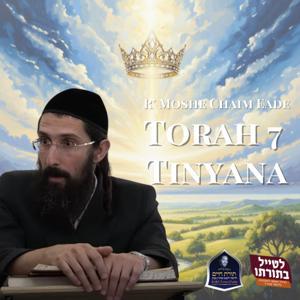
R' Moshe Chaim Eade Torah Alef - Shiur 3
R' Yirmi Ginzburg Torah 1 - Shiur 1
I assert that the Torah will not be forgotten because the Sefer Zohar and the teachings of Rabbi Shimon ben Yochai sustain and restore it. We trace how, after the destruction of the Second Temple, many feared the loss of Torah, yet figures such as Rabbi Akiva and Rabbi Shimon renewed the chain of learning and preserved the tradition. I explain that Rabbi Nachman presents his own teachings as a continuation of that salvific stream and that his teachings, like the Zohar, can lead Klal and individuals out of exile. We distinguish between communal exile and personal exile and show how study of the Zohar and Hasidic instruction can return a person to spiritual freedom and confidence. We invite listeners to engage with these texts and practices as practical means to navigate hardship and to access deeper revelation and growth. I recount the historical rupture and the sustained promise that Torah will not be effaced. I describe the despair after the destruction of the Beit HaMikdash and the dislocation at Yavneh, when sages feared that the Devar Hashem would be lost and people would wander in search of guidance. I explain how voices in the Talmud foresaw a famine of spiritual knowledge and how countervailing testimonies insisted otherwise. I relate how Rabbi Kiva revived Torah study after catastrophe and how that precedent frames our trust that transmission can endure even through calamity. I then articulate the specific claim offered by Rabbi Shimon bar Yochai and the subsequent mystical rationale. I show how the Sefer Zohar is presented as the luminous instrument that will carry Israel out of exile. I recount the teaching that the final letters of a targumic passage conceal the name Yochai, and how the Zohar’s light is said to illuminate the darkness of forgetfulness. I conclude by affirming that, for us, these narratives justify continued attachment to the Zohar and Hasidic exposition as vehicles of resilience and continuity.
Takeaways:
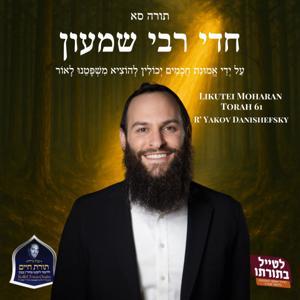
R' Gedaliah Jaffe Torah 1 - Shiur 2
I state the main point: I say we must constantly see the intellect (seichel) in every physical thing and attach each thing back to its divine root. I show this with Yaakov’s ladder and with the phone story to make the idea clear. I explain that histaklus is the mind’s gaze and hiskashrus is the heart’s bond. I teach that Torah study is the way we develop this power and make it real. I urge that we look past the outer form and seek the inner purpose so we can grow spiritually.
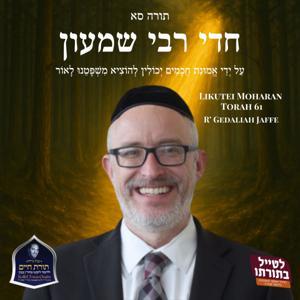
R' Gedaliah Jaffe Torah 1 - Shiur 1
I state the principal point immediately: by commencing the study of Torah Aleph and engaging in earnest Torah learning, we restore the true chein, the spiritual chain, that causes Hashem to accept our tefilos and bakashos. We begin at the very beginning and will learn with the Ota/Batia commentary and the teachings associated with Rabbi Ephraim Portnoy. We distinguish between tefillah as the set liturgical prayers and bakashos as personal requests, and we explain how Torah study elevates and secures both. We teach that in our present exile the true chain has been diminished, and that certain fallen husks, especially klipah nogah, can be elevated through proper learning and intention while wholly impure shells cannot. We conclude that the practical aim is to attach ourselves to Torah and sincere prayer so that our requests will be accepted, and we will next examine the letters and concrete applications of these concepts.
R' Jonathan Rietti Torah 1 - Shiur 1
I state the main point: Rav Nachman teaches that every line of his Torah holds deep layers, and that learning Torah and turning it into prayer restores our spiritual favor and lets us see Hashem in life. I explain that his Torah links all things and that each sentence can be a headline with hidden meaning. We begin Torah Aleph and we will study how to dig into the words and find practical guidance. I emphasize that true learning must become prayer, and that this change makes our petitions accepted. I show Jacob as a model of clarity and tamim who reads God’s voice in daily events, and we will learn how to follow that path. I open the talk by placing Rav Nachmans Torah at the center of our work. I say that we will learn Torah Aleph from the start. I describe Rav Nachmans claim that every line in his words is a headline and a rule. I explain the palace image. I say that small anomalies in the text are deliberate signs. I tell listeners that digging beneath the surface yields hidden treasure. I summarize that Rav Nachman asks us to learn with care and to find layered meaning by close attention and by prayer. I stress that Torah learning must become prayer. I say that turning study into tefilla shows true intent. I offer the practical point that davening and learning together give the eyes to see God in daily life. I end by inviting listeners to test these ideas in study and in prayer and to expect practical change when they do.
Takeaways:
R' Moshe Chaim Eade | Likutei Moharan Torah Alef – Shiur 2: Discovering the Divine Wisdom in Everything
What is the secret of chen, and how does learning Torah transform not only the way others see us, but the way we experience Hashem and the world around us?
In the second shiur on Likutei Moharan Torah Alef, R' Moshe Chaim Eade continues exploring the relationship between Torah, tefillah, and chen v'chashivus—the grace, beauty, and significance that emerge when a Yid reconnects with the neshamah.
We explore the difference between external beauty and true inner beauty, why Torah restores the hidden chen of Klal Yisrael, and how genuine love for Torah allows that beauty to shine outward. Through the examples of Noach finding favor in Hashem's eyes and Yaakov Avinu recognizing the potential for good in Esav, we discover how chen reflects and reveals the goodness hidden within another person.
The shiur then turns to one of Rebbe Nachman's foundational teachings: להסתכל בהשכל שבכל דבר—the obligation to recognize the Divine wisdom, purpose, and message within everything we encounter.
Drawing on stories of tzaddikim and the concept of Hashgachah Pratis, we learn that nothing in our lives is simply random. Every experience, interaction, and challenge contains an opportunity to discover Hashem's presence.
Ultimately, Rebbe Nachman teaches us that the Beis Medrash does not end at its physical walls. Our entire lives can become a place of Torah, where we learn to recognize Hashem in everything and live with the awareness of שויתי ה׳ לנגדי תמיד.
R' Shlomo Karmely Torah Alef Shiur 1 L
What gives our tefillos the power to be answered? What is chen, and how can we develop a deeper sense of favor, grace, and connection with Hashem?
In this shiur on Likutei Moharan Torah Alef, we begin by exploring Rebbe Nachman’s extraordinary understanding of the power of his sefer and its role in bringing the world closer to Geulah.
We then dive into the opening teaching of Torah Alef, where Rebbe Nachman reveals the profound connection between Torah, tefillah, and chen—the special grace and spiritual attractiveness that comes through learning Torah. We explore the difference between genuine chen and superficial attraction, why Klal Yisrael’s true chen has become hidden in galus, and how Torah restores that beauty and significance.
Finally, we begin uncovering one of Rebbe Nachman’s foundational teachings: השכל שבכל דבר—the Divine wisdom hidden within everything we encounter. Through the example of Yaakov Avinu, we discover how learning to recognize Hashem’s wisdom in even the most ordinary experiences can illuminate our lives and transform the way we see the world.
A powerful introduction to discovering the hidden light of Torah, restoring our connection with Hashem, and finding chen in every part of life.
R’ Joey Rosenfeld Torah 1 Shiur 1
Why does Rebbe Nachman begin Likutei Moharan with Torah Alef, and what makes this teaching the foundation for understanding his entire sefer?
In this introductory shiur, we explore Rebbe Nachman’s place in the unfolding revelation of Pnimiyus HaTorah, the unique role of Reb Noson in preserving his teachings, and the deeper significance of learning Likutei Moharan as a living connection to the tzaddik.
Drawing on the teachings of Rav Avraham ben Rav Nachman and other Breslov masters, we discover why Torah Alef serves as an introduction to the entire sefer and how its central themes of Chochmah, Malchus, Torah, and tefillah reveal the purpose of our spiritual journey.
At the heart of the shiur is a powerful idea: the goal of Torah is not simply to elevate ourselves toward Heaven, but to bring the light of Heaven into our everyday lives. Through learning Torah, transforming Torah into personal tefillah, and developing a deeper connection with Hashem, we can restore the chen and chashivus—the beauty, grace, and significance—hidden within ourselves and the world around us.
An introduction to Rebbe Nachman’s vision of Torah as a path toward hope, joy, dveikus, and discovering Hashem’s presence in every part of life.
From the publisher's feed

0 Listeners
0 Listeners
0 Listeners

0 Listeners
0 Listeners
0 Listeners

0 Listeners

0 Listeners
0 Listeners
0 Listeners
0 Listeners
0 Listeners
0 Listeners

0 Listeners
0 Listeners
0 Listeners

0 Listeners
3 Listeners

0 Listeners