
Sign up to save your podcasts
Or



We will traverse the peaks and valleys of five republics, each reflecting France’s evolving spirit and struggles. From revolutionary fervour to imperial ambition, from the trials of war to the triumphs of modern democracy, each republic has contributed to the rich mosaic of France as we know it today.
Join us as we unravel the dramatic narrative of the Five French Republics, where every chapter is a tale of resilience and reinvention. Prepare to be captivated by a story as rich and complex as France itself.
Timecodes
Introduction
05:15 - Establishment of the First Republic
17:38 - The Directorate and the Consulate
25:05 - The short-lived Second Republic
34:47 - The Third Republic - Out of the Ashes, into the Fire
45:11 - The Belle Époque and the World Wars
51:12 - The Fourth Republic - Colonial Crisis
58:45 - The Fifth Republic - Presidential authority
01:04:19 - Conclusion
Relevant Episodes:
Music: Marche pour la cérémonie des Turcs, composed by Jean-Baptiste Lully, arranged and performed by Jérôme Arfouche.
Artwork: La République triomphante préside à la grande fête nationale du 14 juillet 1880, 1880 (Archives nationales, Paris).
Support the show
Reach out, support the show and give me feedback!
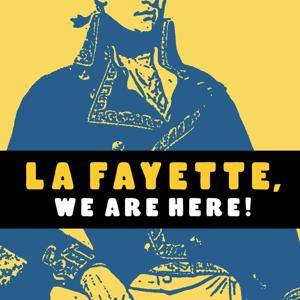
To commemorate the 200th anniversary of La Fayette's grand tour of the USA in 1824, we have a special episode featuring guest Elizabeth Reese. Elizabeth is a public historian whose work focuses on the American Revolution and the Early Republic.
She recently published a book on the famed Marquis' visit to America: "Marquis de Lafayette Returns - A Tour of America's National Capital Region".
Join us as we discuss the circumstances, unfolding, and consequences of this great endeavour.
Timecodes
Introduction
04:23 - Brief overview of La Fayette and why President Monroe Invited Him
15:26 - The Scale of the Tour
21:35 - La Fayette Visits DC
28:33 - Important Events during the Tour
37:17 - The Legacy of the Tour
46:23 - Conclusion
Relevant Links:
Music: Marche pour la cérémonie des Turcs, composed by Jean-Baptiste Lully, arranged and performed by Jérôme Arfouche.
Artwork: La Fayette in 1825, portrait by Matthew Harris Jouett
Support the show
Reach out, support the show and give me feedback!
Music: Marche pour la cérémonie des Turcs, composed by Jean-Baptiste Lully, arranged and performed by Jérôme Arfouche.
Artwork: Jules Verne in 1892, photograph by Charles Herbert
Support the show
Reach out, support the show and give me feedback!
On one side, the Catholic majority, unwavering in their devotion to Rome. On the other, the Huguenots, French Protestants inspired by the teachings of Jean Calvin. Caught in the crossfire of this religious divide was the monarchy, struggling to maintain order amidst growing tension. But their efforts often only fuelled the flames of conflict.
And so, in 1562, the first shots were fired in what would become known as the French Wars of Religion. Over the next three decades, France would be engulfed in a series of bloody clashes between Catholics and Protestants, tearing the nation apart.
Join us as we unravel the intricate tapestry of alliances, betrayals, and power struggles that defined this turbulent period. From the grand halls of royal palaces to the blood-soaked fields of battle, we'll bring to life the key events and personalities that shaped the destiny of France.
Timecodes:
Introduction
05:15 - From Strength to Chaos
17:34 - Instability and Crisis
27:24 - War, War, War!
33:53 - The Saint-Barthélemy Massacre
41:05 - The Eighth and Final War
47:55 - Henri IV - "Paris is well worth a Mass"
52:06 - Conclusion
Music: Marche pour la cérémonie des Turcs, composed by Jean-Baptiste Lully, arranged and performed by Jérôme Arfouche.
Artwork: "St. Bartholomew's Day massacre' by François Dubois (1572)
Support the show
Reach out, support the show and give me feedback!
When we talk about Napoléon, we often talk about battles or politics, but we don't talk nearly enough about the man. Some dismiss him as a proto-Hitler, others adore him as they would a god. But few actually try to crack open the mysteries of the Napoleonic mind. Author Louis Sarkozy did just that, by studying Napoléon Bonaparte and his most important personal activity: his readings.
Louis Sarkozy's upcoming book, Napoleon's Library, is both a fantastic character study and a thoroughly executed research on the emperor's reading habits. It informs us of the importance of his readings, as well as the evolution of his mind throughout the years.
Louis and I had a fantastic discussion regarding Napoléon's character, achievements, failures and legacy. We also threw a few jabs at the 2023 movie by Ridley Scott.
Update from October 2025: my stance on political censorship, the Sarkozy affair in France and this podcast episode: https://bsky.app/profile/lafayettepodcast.com/post/3m2wddsmoos2l
Timecodes:
Introduction
04:13 - Napoléon's Readings
12:55 - From Words to Action
19:06 - From Thinker to Soldier
33:59 - Napoléon's Mythos & Legacy
52:11- Napoléon's Greatest Strengths and Weaknesses
01:01:28 - The 2023 Movie
01:08:11 - Conclusion
Louis Sarkozy's Profile on Instagram: https://www.instagram.com/sarkozy.louis/
Music: Marche pour la cérémonie des Turcs, composed by Jean-Baptiste Lully, arranged and performed by Jérôme Arfouche.
Artwork: Bonaparte, Premier consul, by Jean-Auguste-Dominique Ingres (1804)
Support the show
Reach out, support the show and give me feedback!
We often see history as a succession of dates, events, wars and political machinations. But we should not forget that history is also forged by culture and by art. Art reflects society's values and aspirations, but also helps create them and move people forward. It also elevates us and makes us better in many ways.
Among the many art forms available to us, music is the one that transports us with the greatest strength. It surrounds us, lifts us and takes us to places we didn't know existed. Oh, literature and paintings can do that too, but music is special. It is unique as it can be savoured with our eyes closed.
Let's meet Camille Saint-Saëns and France's music!
Support the show
Reach out, support the show and give me feedback!
For France, the Great War is a serious and deep wound that she partially inflicted on herself. It is painful and has never fully healed. It is something personal, felt by all strata of the nation. From the humblest peasant to the richest industrialist, no layer of French society was spared in the great slaughter that the trenches were. The country itself still bears the scars of battles dating back nearly 110 years. Every city and village in France has a monument to the dead of the First World War, often with a staggering number of fallen soldiers considering the local population. And that's not counting the wounded, the mutilated, the traumatized.
We are not going to go through dates and battles. We are not going to summarize four years of destructive conflict by analyzing every move and strategic decision. Others have done it many times, surely better than me. No, we will focus on the experience of the country of France during those dreadful years from 1914 to 1918.
Timecodes:
Introduction
05:18 - On The War Path
13:22 - The Poilus
26:51 - France at War
42:18 - Life after 1918
48:11 - Conclusion
Music: Marche pour la cérémonie des Turcs, composed by Jean-Baptiste Lully, arranged and performed by Jérôme Arfouche.
Artwork: Fête de L’Alsace-Lorraine le 17 novembre 1918. Les blessés défilent avenue des Champs-Elysées, Paris. Agence Rol, Public Domain (Gallica)
Recommended link: Blueprint for Armageddon, Hardcore History podcast by Dan Carlin
Support the show
Reach out, support the show and give me feedback!
Support the show
Reach out, support the show and give me feedback!
Liberté, égalité, fraternité. This is the French Republic’s motto. Liberty and equality are also in the first article of the "Declaration of the Rights of Man and of the Citizen" of 1789. The French are very proud of that heritage, of France’s struggle during and after the Revolution. They think of their homeland as the cradle of liberty in Europe, as a welcoming and understanding land, ruled by reason and intellect, rather than by prejudice and bigotry. Sadly, those clear and healthy waters of freedom and justice often got muddied over the years.
In the late nineteenth century, France was a wounded country. Her honour had been tarnished in 1870-71 and her population was deeply traumatized by the civil war that ensued. Fears of an enemy, and of traitors, was at an all time high. This very specific phase mixed with an element older than France herself: antisemitism. In 1894, captain Alfred Dreyfus would suffer greatly as a consequence of those elements. Although there are some saving graces, and some might even say a silver lining, this whole series of events really are France’s shame!
Timecodes:
Introduction
03:38 - La Belle Époque
08:48 - Alfred Dreyfus, Jewish French officer
14:28 - Dreyfus Arrested
21:17 - L'Affaire begins
26:07 - J'accuse...!
34:03 - The Rennes Trial
39:20 - Rehabilitation
44:10 - Conclusion
Music: Marche pour la cérémonie des Turcs, composed by Jean-Baptiste Lully, arranged and performed by Jérôme Arfouche.
Artwork: "The traitor: Degradation of Alfred Dreyfus, degradation in the Morland Court of the military school in Paris" front page of the illustrated supplement of the Petit Journal, Sunday, January 13, 1895.
Recommended link: The Siècle podcast by David H. Montgomery, available at http://thesiecle.com/
Support the show
Reach out, support the show and give me feedback!
Support the show
Reach out, support the show and give me feedback!
From the publisher's feed

3,197 Listeners

4,395 Listeners

1,241 Listeners

6,470 Listeners

799 Listeners

8,307 Listeners

517 Listeners

184 Listeners

366 Listeners

64 Listeners

473 Listeners

214 Listeners

493 Listeners

338 Listeners

2,452 Listeners