
Sign up to save your podcasts
Or

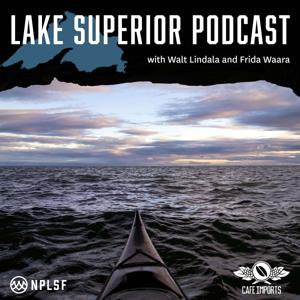


Bats have been called the “Invisible Mammal” primarily because they fly silently and mostly at night. They also roost in dark places, caves or abandoned mines, making them hard to find even in the daylight. For humans, bats aren’t only hard to see, they are hard to understand, yet they play a vital role in our world’s ecosystems and an equally important roll in our agricultural economy. Yet 200 species of bats are nearing extinction. In this episode of the Lake Superior Podcast, Walt Lindala and Frida Waara talk with Winifred Frick, Chief Scientist at Bat Conservation International, to learn more about what is threatening bat populations around Lake Superior.
5 Key Takeaways
Bats Are More Diverse — And Longer-Lived — Than Most People Realize
Winifred Frick notes that bats are “the only mammals that can fly,” and that scientists have “just celebrated the discovery of the 1,500 bat species.” In the U.S. and Canada, she says there are “about 47 different bat species.”
White-Nose Syndrome Has Devastated Bats Around Lake Superior
Frick explains that white-nose syndrome is caused by a fungal pathogen — Pseudogymnoascus destructans (“PD”) — and says it “first emerged…in the winter of 2006, 2007.” She adds that it “has killed millions of bats in its wake” and highlights a “99% decline” in the northern long-eared bat population.
The Fungus Spreads Through Hibernation Sites — Not Just Bat-to-Bat Contact
Frick describes how the fungus grows on bats’ skin (including wings, ears, and muzzle) and can also persist on cave and mine surfaces. She explains bats can pick it up “either by coming in contact with each other” or by contacting “the surfaces where they roost.”
“Fat Bat Project” — A Practical Experiment To Help Bats Survive
Frick explains how white-nose causes bats to burn through fat reserves by arousing too often during hibernation, leading them to “starve to death before spring.” In Michigan’s Upper Peninsula, her team tested using UV lights near mines (including near the Delaware Mine area) to attract insects and boost foraging — what Frick calls “our fat bat project.”
You Can Help Bats By Supporting Habitat, Native Insects, And Conservation Work
Frick points to Bat Conservation International’s “bat gardens program,” encouraging people to plant native plants that support moths and beetles. She also emphasizes advocating for nature protection and supporting organizations funding bat research and conservation actions.
Helpful Links:
Bat Conservation International - batcon.org
The Invisible Mammal Film - doclands.com/film/the-invisible-mammal
Connect With Us:
Lake Superior Podcast Page – https://nplsf.org/podcast
Facebook – https://www.facebook.com/NationalParksOfLakeSuperiorFoundation
Sponsors:
Cafe Imports – Minneapolis-based importers of specialty green coffees since 1993, focused on sustainability. Learn more: cafeimports.com
National Parks of Lake Superior Foundation – Donate to protect Lake Superior’s five national parks: nplsf.org/donate
For some, growing up on Lake Superior carves a deep connection to place, and no matter where life leads, the pull to return to that rugged shoreline never leaves. Patti Baraks knows too well that hold Superior creates. She grew up in Superior, Wisconsin, and although she has lived, worked and raised a family in Texas, she admits, her internal compass always points north toward that mighty lake. As an early childhood education teacher with a passion for poetry, she used that lure to write a children’s book, “A is for Agates, A Lake Superior Alphabet Book”.
In this episode of the Lake Superior Podcast, Walt Lindala and Frida Waara talk with Patti not only about her time in Wisconsin, but also about the motivation and process of producing a children’s book.
If you’d like a copy, or need a perfect Lake Superior–themed Christmas gift, she shares that you can find the book at independent bookstores and libraries around the Lake Superior region. It’s also available online at Itasca Books:
https://itascabooks.com/products/a-is-for-agates-a-lake-superior-alphabet-book-1
Key takeaways
Patti’s Deep Connection to Lake Superior Has Never Faded
Patti Baraks grew up in Superior, Wisconsin, a city she describes as “one of the greatest port cities on Lake Superior.” She explains that Lake Superior shaped every part of daily life — the economy, recreation, and weather — and says the lake “has always had a hold over me that I can’t quite explain.” Even after moving to Texas, she shares that her “internal compass points north” and draws her back every summer.
The Passing of Her Father Motivated Her to Finally Write a Book
Patti says she had “always wanted to be a writer,” but it wasn’t until her father passed away about a year and a half before the interview that she decided she didn’t want “a cloud of regret” about never pursuing that dream. This loss gave her the push to “get out of [her] comfort zone and just go for it.”
Collaboration With Illustrator Lisa Perrin Cosmo Was Central to the Book’s Success
Patti selected illustrator Lisa Perrin Cosmo after seeing an agate painting in her portfolio and feeling immediately drawn to her work. She says Lisa is “local to the North Shore,” “really knows the lake,” and seemed able to “read my mind” when creating the illustrations. Patti calls her artwork “breathtaking” and says the illustrator “paints the best moose.”
Patti Believes Nature-Based Literature Helps Children Explore and Learn
As a former teacher, Patti says that nature-based books encourage kids to get outside, reduce stress, and learn through observation. She describes the outdoors as “the original classroom,” where children discover things independently, ask questions, and engage their natural curiosity.
Connect With Us:
Lake Superior Podcast Page – https://nplsf.org/podcast
Facebook – https://www.facebook.com/NationalParksOfLakeSuperiorFoundation
Sponsors:
Cafe Imports – Minneapolis-based importers of specialty green coffees since 1993, focused on sustainability. Learn more: https://cafeimports.com
National Parks of Lake Superior Foundation – Donate to protect Lake Superior’s five national parks: https://nplsf.org/donate
The first known map of Lake Superior was drawn by Virginian John Mitchell in 1755. Over the centuries, countless records of the shoreline, depths, lighthouses and communities have been published. But now, there’s another map in the works. This one by the United States Geological Survey. In this episode of the Lake Superior Podcast, Walt Lindala and Frida Waara talk with Jamey Jones, Science Coordinator for the USGS’s Earth Mapping Resources Initiatives, or Earth MRI. He shares what this project hopes to accomplish, particularly when it comes to locating the area’s rare earth minerals and contributing to the publicly available data on metals deposits in the Lake Superior region. Tune in to learn more!
Webpage
Connect With Us:
The Gales of November is very real on the Great Lakes, known as the “Month of Storms.”
Some 550 wrecks lie on the bottom of Lake Superior, at least 200 along Superior’s Shipwreck Coast, a treacherous 80-Mile stretch with no safe harbor between Munising and Whitefish Point.
On November 10, 1975, the Edmund Fitzgerald, a 728 foot freighter went down in a storm described as both blizzard and hurricane taking all 29 crew members to their grave. Made famous by the Gordon Lightfoot song, the wreck has remained a mystery for fifty years.
In this episode of the Lake Superior Podcast, Walt Lindala and Frida Waara talk with maritime historian, author and lecturer Fred Stonehouse about that tragic night and what we have learned since her sinking and how her legacy has shaped maritime safety.
Key Takeaways
Connect With Us:
Lake Superior Podcast Page – https://nplsf.org/podcast
Facebook – https://www.facebook.com/NationalParksOfLakeSuperiorFoundation
LinkedIn – https://www.linkedin.com/company/national-parks-of-lake-superior-foundation
Sponsors:
Cafe Imports – Minneapolis-based importers of specialty green coffees since 1993, focused on sustainability. Learn more: https://cafeimports.com
National Parks of Lake Superior Foundation – Donate to protect Lake Superior’s five national parks: https://nplsf.org/donate
Biking in the Superior Country is more than just a way to get around—it’s a way of life. From gravel roads to rugged trails to family bike packing along Big Blue’s shoreline, the region offers two-wheeled adventure in every season. In this episode of the Lake Superior Podcast, Walt Lindala and Frida Waara talk with Josh Rizzo, founder of thenxrth.com—an adventure site dedicated to unpaved cycling across three states--Minnesota, Wisconsin and Michigan’s Upper Peninsula. Josh shares how biking became a lifelong passion, and how he’s started bringing his kids along for multi-day trips. He tells what makes this corner of the world such a rich landscape for two-wheeled travel. Whether you’re a road, gravel, mountain or fat biker, or even just curious about the lure of riding, Josh’s stories are sure to inspire you to hop in the saddle.
Key Takeaways + Notable Quotes:
-A Lifelong Love of Cycling Sparked by Childhood Adventures
“My earliest memories in life were on a bike.”
Josh Rizzo’s biking journey began with childhood rides along the Chippewa River State Trail with his dad and sisters—memories that shaped his passion for exploration and outdoor adventures.
-Why the Lake Superior Region Is a Cyclist’s Paradise
Josh highlights the appeal of the Lake Superior region for cyclists: scenic towns, abundant water routes, and endless opportunities for gravel biking, mountain biking, and bikepacking.
-Bikepacking as a Family Tradition—Even With a 10-Month-Old
Josh and his family embrace adventure by bike—proving that even toddlers can be part of meaningful, challenging, and memorable outdoor experiences.
-Fat Biking Brings All Cyclists Together in Winter
Regardless of their summer biking style, winter unites all cyclists—making fat biking a special part of the community and culture in the Northwoods.
-Thenxrth.com Is a Home for Off-Road Cycling Adventure
Josh created the site to help others explore the region he loves, offering route guides, event listings, and community storytelling for all kinds of cyclists.
-Which State Is Best for Biking? It Depends.
“I think Minnesota has the best gravel biking... Wisconsin owns the crown for fat biking... the Upper Peninsula is the adventure capital.”
Resources:
TheNxrth – Gravel, Fat, Mountain & Bikepacking Routes – https://www.thenxrth.com
Instagram – https://www.instagram.com/the_nxrth/
Facebook – https://www.facebook.com/thenxrth
Connect With Us:
Lake Superior Podcast Page – https://nplsf.org/podcast
Facebook – https://www.facebook.com/NationalParksOfLakeSuperiorFoundation
LinkedIn – https://www.linkedin.com/company/national-parks-of-lake-superior-foundation
Sponsors:
Cafe Imports – Minneapolis-based importers of specialty green coffees since 1993, focused on sustainability.
Learn more: https://cafeimports.com
National Parks of Lake Superior Foundation – Donate to protect Lake Superior’s five national parks: https://nplsf.org/donate
Be sure to tune in to this episode of the Lake Superior Podcast to hear Josh Rizzo share his lifelong passion for biking, what makes the Lake Superior region a cyclist’s dream, and how families of all ages can embrace adventure on two wheels.
Lake Superior is not only the largest of the Great Lakes, but the water quality is also some of the clearest. Yet, historically, the Lake was often a dumping ground for all kinds of debris. "Out of sight, out of mind” was an all-too-common mindset. Don Fassbender, president of Great Lakes Scuba Diving and Lake Preservation, has made it his life's mission to clean up Lake Superior’s underwater world. With volunteers, including fellow divers and kayakers, he estimates 14 tons of tires have been hauled up from Marquette MIchigan's Lower Harbor. In this episode of the Lake Superior Podcast, Walt Lindala and Frida Waara talk with Don about how his mission started and the mysteries he's found below the surface.
Key Takeaways + Notable Quotes:
A Lifelong Passion for Diving Inspired by Jacques Cousteau
“As a young man, I can recall racing home from school just so I wouldn't miss the undersea world of Jacques Cousteau.”
Vintage Diving Equipment Connects Divers More Intimately with the Water
“There's actually less things that can go wrong... Vintage kit would look like a tank, a regulator, some fins, maybe a wetsuit and a mask, and then you're off. No computers, no fancy gauges.”
Tons of Trash are Hidden Beneath Lake Superior
“We removed, what, 14 tons of tires out of Marquette Lower Harbor alone over a period of about five years. And there's still a lot of trash down there.”
Removing Underwater Debris is Complex and Laborious
Heavy items, poor visibility, and underwater hazards make cleanup efforts extremely challenging.
Why Tires are Prevalent in Lake Superior
“Tires were used as boat bumpers for years and years…as weather wears them down…they would just string another one up in its place.”
Community Involvement is Essential for Successful Cleanups
Volunteers on land, in boats, and even kayaks significantly contribute to cleanup missions.
Safety and Equipment Needs Drive Fundraising Efforts
Specialized gear and safety equipment are critical for diver safety and efficiency.
Surprising Finds Beneath the Surface Tell Unique Stories
“One of my favorite finds, a little diamond ring that was tied to a rock with a shoelace.” Every item retrieved from Lake Superior carries its own history, some humorous, some mysterious.
Resources:
Connect With Us:
Sponsors:
Be sure to tune in to this episode of the Lake Superior Podcast to hear Diver Don Fassbender share firsthand experiences from beneath Lake Superior’s waters, the incredible teamwork required for environmental preservation, and how you can help protect the Great Lakes.
"If you didn’t grow it, you’ve got to mine it,” says John Jaszczak, Director and Curator of the A. E. Seaman Mineral Museum in Houghton, Michigan. Since 1838--just after Michigan became a state--geologists and miners have been collecting rock and mineral specimens as the first American Mining Rush began. Since 1855, those specimens were housed at Michigan Technological University, then known as Michigan College of Mines, making it one of the oldest museums not only in Michigan, but the Great Lakes region. In this episode of the Lake Superior Podcast, Walt Lindala and Frida Waara talk with John about the museum origins and what a visitor can find there.
Key Takeaways + Notable Quotes:
The region’s history—from Indigenous use to mining booms to today’s tourism—stems from its globally unique native copper deposit.
“The reason we’re here is because of the geology. And because of copper in particular.”
What began as a teaching collection for Michigan Tech’s School of Mines became a public museum in 1902.
“The collection started in 1885 when the university started offering courses in mineralogy.”
From discovery tales to global expeditions, the museum presents minerals as more than geology.
“Some specimens have scientific stories. Some have personal stories. Some have adventure stories.”
Under ultraviolet light, otherwise ordinary-looking minerals burst into color.
“That’s the part where most people say, ‘Wow, I didn’t expect this.’”
John’s lifelong fascination with minerals led him to volunteer, then direct, the museum alongside his career in physics.
“I started collecting minerals when I was probably five or six years old... and I just loved it.”
From working with scientists around the world to publishing in mineralogical journals, the museum plays an active role in global discovery.
“There's something magical about being the first to describe and name something.”
The Keweenaw’s native copper is on display in museum-quality form that you can’t find anywhere else.
“We have the world’s best specimens of copper. No question about it.”
Resources:
Connect With Us:
Sponsors:
Be sure to tune in to this episode of the Lake Superior Podcast to hear Dr. John Jaszczak share the rich history of Michigan’s native copper legacy, how the A.E. Seaman Mineral Museum became one of the nation’s premier mineral museums, and why its specimens continue to captivate visitors, researchers, and collectors from around the world.
Isle Royale National Park is the Great Lakes Mecca for backpackers. This archipelago of islands is also one of our most remote National Parks so preparing for a visit takes extra planning. In this episode of the Lake Superior Podcast, Walt Lindala and Frida Waara talk with Chris Amidon, Supervisory Park Ranger for Interpretation and Visitor Services. He not only has tips for first-timers, but also has details on some new procedures, particularly when it comes to food storage.
Key Takeaways:
Resources:
Connect With Us:
Sponsors:
Be sure to tune in to this episode of the Lake Superior Podcast to hear Chris Amidon share essential guidance for visitors, the inside story on Artist-in-Residence selections, and the quiet power of a sunrise over Feltman Lake.
Minnesota’s North Shore has been a gathering place for centuries. Whether heading into the Boundary Waters or out on Lake Superior, Grand Marais ranks a favorite Base Camp. While it may be small in population, it’s big in spirit. Life here moves to the rhythms of the woods and waters.
In this episode of the Lake Superior Podcast, Walt Lindala and Frida Waara talk with Sarah Jorgensen-Halberg, longtime resident and owner of Java Moose, the beloved shoreline coffee shop that fuels both locals and visiting adventurers. Her daily weather video connects folks near and far to this Sweetwater Sea town and she shares what it means to live on the edge of wilderness—and how the lake’s powerful sense of place keeps people coming back to Grand Marais.
Key Takeaways:
Notable Quotes:
Resources:
Connect With Us:
Sponsors:
Long before the Keweenaw Peninsula became a destination for hikers, bikers, and Lake Superior rock hounds, it was the stage for a national copper rush. Shortly after Michigan became a state in 1837, Geologist Douglas Houghton was sent to Copper Harbor to explore reports from Native Americans about copper in the region. By 1844, Fort Wilkins was built to be the military base helping to keep the peace as fortune-seekers came to the state’s most northern port.
In this episode of the Lake Superior Podcast, Walt Lindala and Frida Waara talk with Barry James, Upper Peninsula historian with the Michigan History Center, about the fascinating past—and present—of this historic state park. From the 1840s copper rush chaos to Civil War reenactments, as well as lighthouse tours and tales of shipwrecks, Fort Wilkins remains a living classroom with extensive youth programs. Join us as we explore the enduring significance of this frontier fort—and the people working to keep its stories alive.
Key Takeaways:
Notable Quotes:
Resources:
Connect With Us:
Sponsors:
From the publisher's feed
We are made stronger by story and there’s no better source than the continent's largest body of freshwater, Lake Superior. Join hosts Walt Lindala and Frida Waara as they highlight the five…
Brought to you by The National Parks of Lake Superior Foundation (www.nplsf.org).
Theme song: King Whirl by David Huckfelt (www.davidhuckfelt.com).
Photo Credit: David Guttenfelder.
Podcast sponsored by Café Imports, a Minneapolis-based importers of fine, specialty green coffees.
Ranked by our users in the last 21 days
38,012 Listeners

43,362 Listeners

38,702 Listeners
26,160 Listeners
2,509 Listeners

3,644 Listeners

4,005 Listeners

7,165 Listeners
896 Listeners
295 Listeners
3,418 Listeners

8,029 Listeners

8,098 Listeners

10,666 Listeners

155 Listeners