
Sign up to save your podcasts
Or

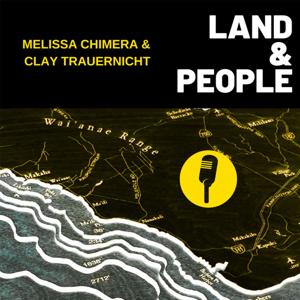


Bonus Episode Season 1: Dr. Clay Trauernicht and Melissa Chimera talk with renowned chanter, dancer, songwriter and educator Kekuhi Keali`ikanaka`ole about the intimate connection between humans and the Hawaiian landscape as practiced in Hawaiian lifeways. Her perspective is that of a descendent from the legendary Kanaka`ole family, most notably her grandmother Edith Kekuhi Kanaka`ole, one of Hawai`i's first educators who made language and dance accessible to all. She talks about connecting conservation science to Hawaiian thought and understanding through her work with Hālau `Ōhi`a and the ways in which we might connect more deeply with the creatures and plants which surround us. Visit https://www.kekuhi.com/ for more information on how you can enroll in programs and learn directly from Kekuhi.
Co-hosts Melissa Chimera and Dr. Clay Trauernicht reflect on Season One of "Land & People"; what they learned, surprising moments, favorite parts of producing the show, and what's next for Season Two.
In this episode, co-hosts Dr. Clay Trauernicht and Melissa Chimera go on-location to the Hamākua coast of Hawai`i Island. They interview Jayson and Alberta Mock Chew and their daughter Kahealani about the history of kalo (taro) farming and the family transition into poi production with their business Mokuwai Piko Poi. Their kalo farming roots go back six generations in Waipi`o Valley, a sacred and highly productive valley that still sustains farmers and residents, some with centuries-old ancestral ties to the land and sea. Kahealani and her parents talk about the hardships, joy and love brought by a life close to the land and how this affects their relationships, livelihoods and outlook on life.
Mike Demotta, curator of living collections for the Hawai‘i National Tropical Botanical Garden (NTBG) on Kaua'i has lived many lives: from being the garden's horticulturalist, a hula kane (male hula dancer), and speaker of `ōlelo Hawai'i (Hawaiian language) to NTBG's curator of both native and introduced plants at the Limahuli Garden and Preserve. Mike speaks to his knowledge of Hawaiian native ecosystems by way of ancient chant and mo`olelo (stories), while painting the picture of remote places like Ni`ihau and Lehua at the the oldest end of the Hawaiian archipelago. He brings us an appreciation for the role of botanical gardens in both education and rare plant restoration.
Native Hawaiian paniolo Lani Cran Petrie manages Kapāpala Ranch founded in 1860 in Ka'u on Hawai'i Island, one of the island's largest remaining ranches where her great-grandfather was a foreman. Having studied animal nutrition at Washington State University, she has also served as the president of the Hawaiʻi Cattlemen’s Association. Lani sheds light on the ecosystem benefits and economic challenges of managing 24,000+ acres of state-leased land for cattle while keeping weeds at bay and providing trails access to the public. She speaks frankly about the negative perceptions of the cattle industry, and its role as an essential food source for the islands especially during crises.
Ted Rodrigues, retired National Park Service animal control and fencing manager built some of Hawai`i's first ungulate (hoofed mammal) exclusion fences in the mid 1980s in Haleakalā National Park. He helped pioneer non-native animal removal through fencing and organized hunting aimed at limiting the damage of goats, pigs and deer in native ecosystems—programs now widely adopted throughout the state. He is the living example of an old-school park ranger versed in everything: facilities and trails maintenance, visitor education, predator and weed control and offers the natural and cultural expertise of having walked and observed all parts of Haleakalā mountain, otherwise known as Kealahele.
Raised on Hawai`i Island, Suzanne Case has worked for forty years in public and private law and conservation as the executive director of The Nature Conservancy in Hawai`i and Palmyra, and most recently as Chair for the Department of Land & Natural Resources. Listen to her unique perspective as one raised in the wilds of Hawai`i Island and how her deep love of place has helped her navigate the legal conflicts, commonalities and moral complexities of natural and cultural resources stewardship, water rights, and public access.
Ed Misaki, retired director of Molokai conservation programs for The Nature Conservancy worked since 1982 on the island where he was born and raised. He faced personal and professional challenges most of us can't imagine. His controversial non-native animal removal programs--aimed at removing deer, pigs, and goats--protects the most fragile upland forests. His story is one of resilience through difficult times, inspired by his love and desire to restore and protect the wao akua (native upland forest, or realm of the gods). Ed demonstrates true community engagement and commitment through the good and bad, and the value of ahupua`a protection in garnering and sustaining broader support.
Brian Naeole, former Field Coordinator with The Nature Conservancy Molokai speaks to growing up homesteading on Hawaiian homelands, hunting, farming, raising pigs, and surfing while restoring native ecosystems on his home island. He describes the hard work that goes into fencing watersheds and removing the non-native animals like pigs, goats and deer that do so much damage to Hawaiian ecosystems within those fences, while at the same time raising livestock on his homestead for food.
Penny Rawlins Martin is one of the first two kānaka maoli (Native Hawaiian) women to sail as a crew member on the first 1976 voyage of the Hōkūle‘a Hawaiian sailing canoe between Tahiti and Hawai‘i, a 2,500 mile journey of her ancestors. She takes us back to the energy of the 1970s during the Hawaiian renaissance where the language, music, dance, voyages and land-back initiatives were being fought for, revived and uplifted. Penny shares with us her many lessons aboard the canoe, namely care for one another through love of the land and concern for its limited resources--now commonly referred to as aloha ‘āina. She brings these historical, social and environmental perspectives to Moloka‘i students through her work with Papahana Kuaola, a non-profit education organization aiming to connect students to culture, place and history with an eye towards a sustainable future.
From the publisher's feed

91,018 Listeners

43,827 Listeners

38,012 Listeners
26,829 Listeners

111,865 Listeners

56,449 Listeners
24,539 Listeners

5,779 Listeners

6,375 Listeners
3,377 Listeners

15,904 Listeners
4,204 Listeners
6,178 Listeners

164 Listeners

12,497 Listeners