
Sign up to save your podcasts
Or

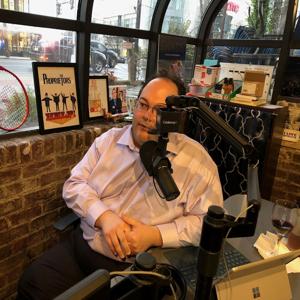


Law & Business Podcast with Wil Jacques
On the new episode of the Law and Business podcast, Wil and Anthony talk about when clients have an idea.
Episode 31 starts with the first words many clients and potential clients have: “I Have an Idea”. What is next in the intellectual property development process? What are the first questions that a potential client is asked in a consultation?
Law & Business Podcast with Wil Jacques
-What is your business plan?
-Is this a product or is this an idea that deserves patent protection?
-We need to do a search. Patents. Patent applications. Journals. Pictures. Videos. Can this invention be found in action?
–Design patents: Ornamentation may be different. The design has to be different, even if the utility is the same as another product.
–Copyright law: Can a product fall under copyright law (for example, a three-dimensional work of art)? This protection is of what is not useful in a product. For example, a lamp that has a statue. So the light bulb is on top of the statue. So there is a portion of the product that is a work of authorship; it is a work of art and would fall under copyright law. But there is also a useful part of the product (the lamp) which does not fall under copyright law.
–Trademark law: Branding and selling a product. Think of a box of Pepperidge Farm cookies. In these mixed boxes of cookies, the company name is a trademark – Pepperidge Farm cookies. However, all of the brands of the cookies are trademarks, also. Be it Milano, Chesapeake, Chessmen, etc. Customers are able to create the relationship of the brand to the product. Trademarks can include color, sounds, shapes.
-Trade dress law: How the packaging of a product matters and creates that relationship to consumers.
Wil and Anthony talk specific examples of intellectual property development and enforcement.
Anthony Verna:
All right, everyone. Welcome to the Law & Business Podcast where we continue with our quest to talk more about intellectual property. It is a journey. I have to say that when I litigate, I know a lot of litigants are looking for that instant response and it’s not an instant response. It’s a long journey. When people file a trademark, they want that instant response, but it’s not an instant response.
It’s a six month journey.
When we file a patent, it’s not an instant response.
Wil Jacques:
I have to agree with you, Anthony. It’s certainly not in the first question that comes out of my inventors’ mouths or can I get a patent? Well, we’ll have to see.
Anthony:
This is Anthony Verna. I’m here with Wil Jacques, patent agent for Verna law. And we’re talking about ideas today. What happens when somebody calls our office and says, “I have an idea”?
Wil:
This is the foundation, this is where it begins.
Anthony:
When a client tells me or potential client tells me, “I have an idea”, I ask what the idea is, I then ask, what’s Your Business Plan? Because ultimately after everything we’re going to talk about, I want a client to be able to say, yes, I want to make money on this and I want to sell it and it’s going to be sold to people A of X ages Y incomes, and they’re going to have a need for this product because enter your reason here.
Wil:
Agreed.
Anthony:
If I don’t hear that, I’m going to try to do some little coaching and counseling so I can get some answers like that. Just to kind of plant ideas in the head. And it’s something that I do with a lot of clients instinctively. Sometimes I’ll just ask, “Are you selling it on your website?”
And they’ll show me the website and they’ll show me their Facebook page. I said, can I take a look at your social? And then I say, “Oh hey, have you thought about doing this on your social? Have you thought about doing this on Facebook, this on Twitter?”
“I mean, why don’t you have x, Y and Z on your website?” I mean, so we’re business people as well as our clients and we want you to be successful in business. So my first question is: What’s Your Business Plan?
And then we get to the intellectual property.
Wil:
Absolutely.
Anthony:
So the thought that we’re going to have, is this a product, is this an idea that deserves patent protection and will, what are some of the highlights that we’re looking for when we say get a patent on this product?
Wil:
I know it’s, it’s something that a lot of people are a little confused about the, and they go, can I get a patent? And I, you know, kind of look at them and I say, well it kind of depends.
Anthony:
See you’re already learning to be a good lawyer.
Wil:
It depends and you can get lost in, you know, should I file a provisional patent versus a non provisional patent and old water plant patents and what are design patents and so on and so forth. And I go, well let’s talk first about what’s Your Business? To kind of reiterate your point. So when the client comes in they say, I have an idea. My first job is to kind of distill that idea into is it something that provides a new obvious utility usefulness to the art in which it’s being placed? It could be a toy, it could be a medical device. What a dispense of a new kind of therapy. It could be a new way of looking at refractory on a, on a phone green. So the question becomes what does it provide? Does it provide something that is useful? And once we kind of get past that, then we want to know, okay, because it’s not either or. It can be both. Do you offer something in terms of a unique design or low
Anthony:
Let me take a step back here because I’m curious about this phrase, the new, the obvious, the utility. When an inventor is looking for a patent in a product or whatever that invention might be, how do we know that it’s new? I know, it’s a loaded, it’s a truly loaded word. But how can we distill what is new under our patents?
Wil:
Most inventors already have an idea of where to go at with this question because when they walked through the door and they call us Anthony, they go, I’ve not seen this anywhere. Yes. Which then forms the basis of the statute and the law that we work under, which is, well, even though you haven’t seen it, does it mean it doesn’t say does it? It doesn’t exist. So what we want to do is to actually search and that search will entail looking at any kind of a reference typically, but I’ll name a few patents. There are published patent applications. It may be journals that describe your invention to some degree. It could even be other non patented literature, pictures, videos, but anything where I see the subject matter of your invention so to speak in action. Okay. Product could be prior art. Hence your idea is not new.
Anthony:
Okay. In doing that patent search you are looking for as many keywords as possible from what a client says isn’t in an invention, but that’s easy to say: Are you looking for concepts? What are you looking for in that pattern?
Wil:
So this is what I’m looking for and actually you, you hit the nail on the head. The, the claims of a patent are essentially come down to unique elements of, of the patent. And then I’ll give a couple of examples. Let me say a prior art reference, be it patent or, or some other kind of documentation may show elements of the invention or elements of, of the idea a, B, and c. But what you’ve come to me with is something that is a, B, c, and d. And what I now have to determine is whether or not d is unique. D obviously sets forth additional elements to your, your claimed invention, to your proposed claimed invention, which in itself may be patentable. Assuming that it’s not obvious. Okay, let me give an example. Racers were invented and this is one that comes straight out of the training course for four patent practitioners. So I have a pencil which was wood with led in it for writing. And then I had an eraser in the old days that sat on the side and when you made a mistake, you picked up your eraser, you erased it. The newness of the invention was to take the elements of the wooden case led, you know, and the eraser and set the eraser on top. And so you can bind elements that already existed. But that is new. Just that simple idea.
Anthony:
In the example that you’re giving, the newness is the joining of two already existing products?
Wil:
It could be, you know, it could be the joining of something that really was discovered. It was a discovery and something we hadn’t known before. The issue is we hadn’t known it before and there was no suggestion that those things should have been put together.
Anthony:
Going back to the law school, the example from my patent law class, one of these classic examples was headphones. There are big gigantic headphones and those big gigantic headphones were in use in recording studios, in Radio Studios, in uh, airplanes, big gigantic headphones.
Then when we started to be able to miniaturize headphones, the patents on the miniaturization were first deemed to not be valid because, there was no difference. All it is is the same thing just small, but there’s a utility in that miniaturization. There’s new in that miniaturization. And of course, obviously there are big improvements in that miniaturization.
Wil:
I’ll tell you one more. One of us to always take into account that, you know, in, in the newness of a thing, you know, a, typically you’re right. Dot size. Doesn’t matter. No joke. Uh, jokes and might to the audience. Yeah. Okay. But what we’re, what we’re getting at is patents also have the element of processes. And so the huge large headphones may have had one way of being manufactured that was totally different from the way that one would manufacturer the smaller miniaturize headsets. Hence, we were looking at a process of bringing this utility into play. The other thing is the components, even though we may say it was just a matter of size, it may not be obvious how to take a mega size, a foam filled headphone and bring it down to something that doesn’t quote unquote cover the air.
Anthony:
Right, but goes into the air.
Wil:
Correct.
Anthony:
Again, new useful utility, potentially patentable.
Now let’s, let’s talk about something that doesn’t have a utility and obviously now we’re talking about a design patent. So apart from a design patent not having utility, when somebody calls and says, I need a design pen, I always wonder how they know that they need a designed pen rather than a utility pad. But what are we looking at in order to get that design patented? The rest of the world doesn’t even call it a design patent.
Wil:
Yes it is. It is. It is truly a a term of art in America, but I think people come to you knowing already that, okay, I’ve seen this action, this enablement, this utility before terms of let’s say it was a fire hydrant or something like that. I’m like, you know, I want to bring the water out and the idea of how we pump and bring water out is not something that is new. However, outside of all the things we’ve invented, how do we screw it? How do we unlock it? How do we get the pressure to move? One may actually have come up with a design that looks different.
Anthony:
What you can say is what’s new and original is the ornamentation.
Wil:
Absolutely. The design is a design for an article that in itself already has some utility, but it is not the utility that we’re after. What we’re after is that new and ornamental design. A sneaker is a sneaker is a sneaker. But let me tell you, we make millions, hundreds of millions of dollars every day through different of sneakers. Why? Because they looked different.
Anthony:
Understood. Completely.
And just to hop on the back of design patents, because copyright law is another area that we want to have our clients look at. And when we talk about the difference between a design patent and what a copyright protects, it’s this, the copyright is protecting any original work of authorship that has been fixed in a tangible medium of expression. And so we can easily say something like say a bike rack that is abstract art. And, and by the way, the, the city of Quebec recently put out a whole bunch of bike racks and they are all pieces of art. So go Google that cause it goes, they’re fascinating to look at. But there’s a utility in each, each of these and cause there are bike racks, but there’s a part of this that is not utility either. And that would be the artwork portion of it. So while you can take your bike, you can take a bike and you can strap it there. So you, would you say that, oh, something like this could easily fall under a design pattern and then the copyright cause there’s an artistic side to it.
So you have the design pan because there’s an ornamentation to something useful, but there’s also an artistic side to it, which is a work of somebody. It isn’t an authorship.
Wil:
Yeah. And just to be clear, what we’re talking about here is, is something that is from today moving forward, because we understand how bike racks work already and so the idea of any other sort of patent is precluded, but the design patent is still available to you if you come up with something that is on a mentally unique. And to your point about the copyrights, it’s one of those things that as a patent agent, I never really understood what was the need for the copyright in addition to the design patent. But you’ve enlightened me, you know, explain it a little bit more.
Anthony:
First off, not everything that qualifies for design. Pat is going to qualify under copyright law and vice versa. I mean there are works that fall under copyright law that are musical works, literary works. Really truly copyright law is about works of authorship and the reason why I’m able to bring up this, this venn diagram that has a sliver that design patents and copyright overlap is because there are going to be some articles that have a useful side and a non useful side and I think the traditional idea under copyright law would be a statue that has a lamp that’s also a lamp and so the light bulb is on top of the statue. I always say that that I grew up with my grandparents who had a lamp that had a statue on, like my parents even had it renovated.
Wil:
I had a grandparent that had a statue with a lamp on top. Exactly.
Anthony: That’s the classic example is that you have a portion of this product that falls under copyright law because there is a statue and then statute was a work of authorship. It’s a 3d visual work, but there’s a part of this that is useful because it’s a lamp. And so in that, you know, in something like that you can make an easy split between what is not useful because the statue is a statue. It’s not useful. Under copyright law, it’s not useful under patent law and you’ve [inaudible] you can see what is useful, the light, right. And so there’s that easy mind split. So when we talk about the bike rack, that’s a little more difficult because it’s more abstract because the bike rack itself, it’s really hard to split the bike rack from the piece of art because it’s one in the same. But there is a work of authorship in a bike rack. So are there options
Wil:
The inventors and idea generators, they might be missing because of this confusion. What sort of advice would you give to them?
Anthony:
I would say it’s a total case by case basis as to whether a product is going to fall under copyright law, going to fall as a design patent or both or both. And that both, I’m going to tell you right now, if I’m drawing a venn diagram that both is a little sliver there. That intersection is not very big. It’s a very, very little slipper because most of the time if something’s falling under copyright law, it’s not useful at all. And even a design pattern requires some kind of usefulness behind it. We’re just filing for the ornamentation behind the product.
Okay, so then here’s a question from the world again, think of it as new, original and ornamental design for a useful article of manufacturer. That’s how you really wanted to define that design patent and the copyright is a work of authorship, but that’s why the bike rack example to me is so helpful here because you can have abstract art, have some kind of usefulness if that’s what you’re looking at because the bike rack can be abstract and you’d still chain your bike to it.
Potentially the exception, you know, and that’s why I talk about things like the lamp because you can easily see in your head, all right, here’s a statue. And then on top of that is a light bulb and a lampshade and you can easily like draw a line in your head.
Wil:
Okay.
Anthony:
There’s The statue and then at some point the statue ends and lamp. Okay. And what’s above the statute because it’s just a light bulb isn’t going to fall under copyright law because it’s useful. It’s a so it’s like, but under that falls under copyright law because it’s a work of authorship.
Wil:
I got it, I got it. Let’s see. Again, one of our clients walks through the door. I have an idea, this is where we start, but in my world I want to get into the minutiae of, of the different types of patents. Let’s just just kinda stick to this idea. The design patent versus the quote unquote trademark or copyrights or copyrights. As you’ve said, there is still prior art, something that would preclude one being able to patent that ornamental design if it had already, quote unquote been invented or it’s already in the public domain and there are ways for it to get their nose timing like one year of you own it, this sort of thing. But in the end of the day, the copyright can’t itself be prior art against my design patent filing.
Anthony:
You threw me a curve ball. I’d say that there’s a chance of it happening. I don’t know for sure if the patent examiner is going to be going through either books that, that have works of art or the Library of Congress filings are huge. And even if, if you as say a copyright owner or you as somebody who’s looking to do research, if you need copies of deposit materials on a library of Congress filing, they’re going to charge you 200 bucks an hour for them to go into their archives. That’s how the library of Congress treats their archives. I don’t necessarily know if a patent examining attorney is going to find that, but from the personally, it’s not something that I’ve ever seen or litigated. But I also want to sit here and say, well, why couldn’t it be prior art? Because it’s there for the public.
Wil:
Yeah. Probably something for us to look at for a future talk with our audience. And I think that’s a good idea. Certainly kind of begs the question of our ability to help you with the business and part of helping you with the business is a strategy for the IEP that you do want to file and properly a budgeting and not just resources of dollars, but resources of time. They still, when you do certain things to make sure that, assuming that this can be prior art, you move that off the table and you get the greatest amount of IP protection possible.
Anthony
Agreed. All right, now we have plenty of podcast episodes on trademarks, but that’s what’s next on the list, right? Here’s a product. That product is going to be sold. Yes. So that means it has to be in the marketplace and that means it has to be branded and where a lot of people get a little bonkers on trademark law is talking about plucking words from the public domain and now it’s no longer in the public domain. But trademark law is all about specific uses outside of some famous trademarks. It’s really about the use of whatever word, phrase, logo design, sometimes a color. We can get into that if you’d like. Sometimes the sound we can get into that if you’d like our used in relationship to certain goods or services. And so that means that what, however this product is going to be branded, however this company is going to be branded and sometimes people come to us before our company has ever formed and that’s perfectly acceptable.
Wil:
Come to us as early as you can. Trademark Law protects the branding of the product and company.
Anthony:
And I always say think of trademarks and branding the way that Pepperidge farm would, and I say this when you’re in the store, go grab a box. In my case, two or three.
Wil:
I’m with you there.
Anthony:
Grab a box of Pepperidge farm cookies and in these mixed boxes of Pepperidge farm cookies, obviously you look at the back and it says Pepperidge farm at the top and it has lists all the cookies, whether it’s Milano, Chesapeake, chessmen, I forget what else there is, but whatever it is, I mean it has seven or eight different types of cookies. All of the cookie names are trademarks. You have the trademark for the company and then each product line is different. They’re all cookies. But each product line is a trademark.
Whether or not it’s registered as a different story, but they’re all trademarks because it’s all branded. It’s all in the stream of commerce. And customers can create that relationship between the name and what the cookie is. And in this particular case with the cookie shape is what the cookie flavor is, what the texture is. That’s every, all of that needs to be a part of the business plan. And that’s the part that I think trips up a lot of people is, is that you want a brand that you can really just kind of think about every product line. That’s the key with a company, every product line. And I don’t care if you do good, better, best philosophy in your pricing and your product lines. I don’t care if it’s like Pepperidge farm and you’ve got cookies and all of these cookies might be a little different.
By the way, speaking of good, better, best, there are Snickers, Milky Way, Three Musketeers. That’s not necessarily a good, better, best kind of quality. But Three Musketeers, is for children because cause it’s the sweetest. Milky Way is less sweet. It was meant for teens and adults. Snickers is least sweetest and also has the nuts in there. That reduces the sugar content as well. That was meant for adults. So again, every product line, different names.
Wil:
I’ll have to check into that. And they got, I thought Snickers were made for golfers.
Anthony:
You ever see kids on the golf course?
Trademark Law, we’re going to do, we’re going to treat this very similarly to patents. We’re going to do a trademark search just like we’re going to do a patent search. We’re going to find out what registrations are there. We’re going to see what application are in the patent and trademark office. We want to see what common law uses of this particular word or phrase are out there. If there is a red flag and that red flag says that there are plaintiffs that could have the ability to sue you and when we’re going to tell you about it, if there are yellow flags, we’re going to tell you about those, those yellow flags and we’re going to say, here are your defenses and here’s how you can work your way around it. In today’s world, doing this trademark search I think is more important than ever because there’s more data than ever and there are more law firms ready to talk to their clients than there have ever been.
And, and there are tools galore for receiving trademark alerts to compare your clients’ trademarks to what is being filed and what’s being registered and you, you need to stay on top of that game in today’s world.
Wil:
Well I don’t want to feel as the, I’m being kind of left out of this conversation getting a little lonely. Sorry my foot. But you said something that you know, suggested to me that maybe I should still confer with the client that walks through the door saying, I have an idea and an idea. Let’s say we’ve already determined me go into the design patent law area, but when I look at trademarks, there’s something else going on other than the name and is there some place within how one defines a trademark that potentially brings in what something looks like? Order design of something. Is there short part of trademarks that deals with that? Absolutely.
Anthony:
In the earlier list, trademarks can include color. Trademarks can include sounds and let me sing for you:
N
B
C
How’d I do?
Wil:
Very good.
Anthony:
Thank you.
That is a sound trademark. That was developed early on. Back when they played those chimes as a way of actually telling their affiliates when a program is actually is beginning or ending a network program.
Trademarks can be shapes.
Sometimes this falls under what we call trade dress law.
Let me explain the difference a little bit. Trade dress law is all about packaging for a product. It’s all about the ability for consumers to look at packaging and understand. It’s a, that’s what the product is. The difference between trademark and trade dress law is that trademark is about the branding and trade dress really is about the packaging. Now we can have nontraditional trademarks like the shape of a product and if you try to make a chocolate product and the shape of a triangle, I’m pretty sure the Toblerone people are going to be coming right after you. And in today’s world, I would say traditionally that would fall under trade dress law because we’re talking about packaging and the shape of a product, but it’s registered as a trademark here in the United States.
Wil:
Very interesting. Almost kind of it brings to mind the Tropicana carton juice carton in which there were utility patents filed because certainly it was able to perform in a chart way. But at the same time there were designed patents that were filed a on those inventions and Annette packaging as well because it looked so different than anything else that that was on the market.
Anthony:
What I would say is, um, look at the fact that Coke and Pepsi had very differently shaped bottles. I’m sure Pepsi has registered the shape of its bottle. I certainly know Coke has registered the shape of its bottles. Trade dress law is about the packaging. It relates to trademark law because in today’s world we’ve started to accept things that were traditionally trade dress, like shapes of bottles, shapes of containers, shapes of products, and allowed them to be registered as trademarks in the US Patent and Trademark Office.
Wil:
So is this a reasonable intersection of uh, the work that you’re doing trade dress and design?
Anthony:
Aabsolutely. Well, I mean if something is trade dress, it can be registered in the patent and trademark office. Absolutely. Absolutely. The question with trade dress, maybe that’s the question we should be for our, uh, for our client. It’s a hard question to answer because frankly, if somebody says, do I need a patent? Do we need a copyright? Do we need a trademark? The answer to all of these questions is yes. All right. From a selfish perspective, the answer is yes. From a realistic perspective, the answer is no. You don’t need any of that. But if you put a product out there and somebody else bigger than you with better manufacturing, then that company is able to make it more cheaply than you. You’re not protected. If somebody starts making knockoffs using your brand, it’s, you know, if you’re, it’s not registered, not as protected as if you are registered.
You have a higher burden to go in. In federal court. If somebody is making copies of your artistic work and you haven’t registered it, you don’t even get to step into federal court until you register it. So, so this isn’t necessarily a need the way, say car insurance is that need. But if you’re looking to build a successful business, your patents need to be protected. Your trademarks need to be registered, your copyright is needed to be registered else. Your ability to stop others from creating your works from using your brands and selling them. Let me give you a quick example because we are running a little longer than that than usual, but it’s only a couple of minutes. But let me give a quick example. We’ve got a toy client and copyrights are filed. The trademarks are filed, fire and trademarks are filed. We’re currently in the, in the middle of doing trademarks and copyrights in the People’s Republic of China because of course that’s where the products are made.
We’ve already had an anti counterfeiting lawsuit for that client. We’ve had an infringement of copyright infringement, a lawsuit for that client because of a similar looking design. And that’s the kind of protection that you want as a part of the business. You want to be able to walk into court and say, “They’re infringing. You know, either we take this all the way or we settle,” and that’s what you want in order to keep your business going. And I can’t recall how many cease and desist letters I’ve sent out for this particular client. That’s what you need from a business or you want that ability to get others out of your way on the parts of, of your business that really truly belong to you.
On that particular note, I think we’re going to call it.
Wil:
Yeah, that was, that was excellent. Thank you, sir.
Anthony:
Good. I’m glad. I’m glad. And for everyone else listening, please don’t forget to rate us on iTunes or wherever you get your podcasts. Don’t forget to subscribe, listen to all of our back episodes. Well, maybe not episode one, two or three, but please let us know back episodes and we will come to you again very soon. Thanks very much for listening.
Wil:
Thanks.
It’s Law & Business Episode 30: The Costs of Litigating.
Law & Business Podcast with Wil Jacques
Wil Jacques, patent agent to Verna Law, P.C., and Anthony Verna, managing partner of Verna Law, P.C. talk about the costs of litigating and the benefits of litigating. They talk about damages in patent infringement, copyright infringement, and trademark infringement cases.
In patent infringement lawsuits, there are two overall theories: Lost Profits and a Reasonable Royalty for infringement.
Since 1952, 35 U.S.C. § 284 has governed the award of damages in patent cases:
Upon finding for the claimant [patent holder] the court shall award the claimant damages adequate to compensate for the infringement, but in no event less than a reasonable royalty for the use made of the invention by the infringer, together with interest and costs as fixed by the court.
Lost Profits
Reasonable Royalty Damages
The term “reasonable royalty” is susceptible of two definitions. The first is an actual licensing rate, to which the patent owner and a licensee would have negotiated and agreed entirely apart from any litigation or damages question. This can be thought of as the “reasonable royalty” used in § 284. This negotiated reasonable royalty is the minimum amount of patent damages the patent owner can recover, equal to what the patent owner would have negotiated as a royalty in the first place. The second meaning of “reasonable royalty” applies whenever the patent owner is unable to prove actual damages (i.e., its lost profits). The money awarded to the patent owner (however it is computed) is usually called a “reasonable royalty.”
Interest and Enhancement of Damages
A patent owner may also obtain relief in the form of collateral assessments, which include prejudgment interest and discretionary enhancement of damages up to three times the amount found or assessed – enhancement may be based on willful infringement or litigation misconduct. (A separate sub-page in this damages website addresses prejudgment interest and post-judgment interest.) In exceptional cases, the court may award reasonable attorney fees to the prevailing party under 35 U.S.C. § 285. Post-judgment interest and most costs are awarded in accordance with non-patent law.
Patent Infringement and Attorney’s Fees: the Conduct Must be Exceptional
A case to review is Edwin Lyda v. CBS Interactive, Inc., No. 16-cv-06592-JSW (N.D. Cal., Jan. 24, 2018). In this situation, Lyda sued CBS for indirectly infringing two patents relating to the voting system used on the show “Big Brother.” In 2015, Lyda sued CBS for direct infringement on the same patents in the Southern District of New York; that case was dismissed with prejudice and the Federal Circuit affirmed. See Lyda v. CBS Interactive, Inc., 838 F.3d 1331, 1339 (Fed. Cir. 2016). Shortly after the Federal Circuit’s decision, Lyda (through counsel) sent CBS a congratulatory letter, noting that the case had taught him what was necessary to avoid a motion to dismiss and asking if CBS was interested in a license under the two patents. Lyda asked CBS to reply by November 18, 2018 but then filed his new complaint in California on November 14. CBS wrote back on November 22, explaining its position that Lyda’s indirect infringement claim was barred by res judicata; Lyda replied that he did not assert and could not have asserted indirect infringement earlier as CBS was not aware the patents at issue before the first suit.
CBS moved to dismiss the claims and the court granted the motion with prejudice. In doing so, the court noted that there was at least a colorable argument Lyda could have argued indirect infringement at the earlier case, citing an unresolved circuit split on whether indirect infringement requires a defendant’s pre-suit knowledge of a patent. The court also noted that Lyda’s position contradicted the record in his first suit against CBS, where he alleged CBS admitted knowledge of the patents as of July 28, 2011 (Lyda filed his first complaint on August 20, 2014).
In concluding that Lyda’s conduct was sufficiently exceptional to merit attorney’s fees, the court focused on two factors. First, it held that the strength of Lyda’s litigating position was “exceptionally weak.” In support of its holding, the court reiterated that Lyda’s indirect infringement claim was clearly barred by res judicata, and that Lyda’s argument to the contrary was contradicted by the record in the earlier litigation. Second, the court held that Lyda had litigated the case in an unreasonable manner by failing to perform pre-suit diligence. Returning to the contradiction between Lyda’s current argument and the earlier litigation’s record, the court noted that had Lyda reviewed his own records, he would have realized his current argument was foreclosed. The court also noted that Lyda had sued a different entity for infringement under the same patent in 2012, so requiring Lyda to pay CBS’s attorneys’ fees would serve as a deterrent as well.
Given Lyda’s substantively weak position and his failure to perform adequate pre-suit diligence, the court granted CBS’ motion for attorneys’ fees, ordering the parties to meet and confer on the specific amount.
This case shows that “exceptional” is still a high bar to meet.
Copyright Infringement
Actual Damages: The first section of the relevant law (17 U.S.C. §504(b)) makes it clear that an infringer can be liable for the actual damages suffered by the rightful owner: “The copyright owner is entitled to recover the actual damages suffered by him or her as a result of the infringement…”
Lost Profits: Here’s the second part of the relevant law we partially quoted in section one: “…and any profits of the infringer that are attributable to the infringement and are not taken into account in computing the actual damages. In establishing the infringer’s profits, the copyright owner is required to present proof only of the infringer’s gross revenue, and the infringer is required to prove his or her deductible expenses and the elements of profit attributable to factors other than the copyrighted work.” That means that a defendant isn’t only liable for your actual damages, he’s liable for the additional profits he made from using a plaintiff’s work – over and above the amount you lost in sales.
Statutory Damages: Statutory damages aren’t automatically awarded in a copyright suit, even to those who have filed properly. The plaintiff has the option of choosing either the actual damages and profit awards we’ve already discussed, or the statutory amounts allowed by law. But not both. Time for the big question: how much? The answer once again is not cut-and-dried. The penalty for innocent infringement may be as low as two hundred dollars. Statutory damages can range from $750 to $30,000 for each work infringed upon (which means one award for the e-book that Snidely stole, not an award for each copy sold). And in cases of deliberate infringement, statutory awards can be $150,000 or even more.
Trademark Infringement:
Section 1117 of the Lanham Act sets out several bases for awards of money relief in trademark infringement, false designation of origin and willful trademark dilution cases, including the following:
1) an accounting of the defendant’s profits;
Here is a lightly-edited transcript of the episode:
Anthony Verna:
Welcome to the law and business podcast. I’m here with Wil Jacques, patent agent from Verna Law.
Wil Jacques:
Yeah, I’m doing very good. Anthony, how are you?
Anthony:
I’m well, thank you. Thanks for taking the time out to speak.
Wil:
I’m always happy to be here with you. We have very engaging, very good conversations. Thanks for today’s engaging conversation.
Anthony:
Today, our topic is litigation. The need to litigate, the cost of benefits of litigating. And, I know that this is a scary topic for a lot of people, I’ve had a few conversations with potential clients not that long ago in which the costs did scare them. So I want to talk about the cost benefit of that.
Wil:
Okay. Well I, I guess I should start out by saying that I’m a little bit afraid of this conversation as well. Anthony, you know, so in full disclosure for our listeners as your patent agent, our listeners should know that I am not an attorney but a registered patent agent. And so, with that said, I am not in any way, not obligated, but I cannot represent you in a court of law, in a litigation matter. That’s my job. But I am here to do diligence into kind of help our clients kind of figure out the proper path is the uh, potentially look to take advantage of this road.
Anthony:
Let’s start on the patent side of life. And I want to talk about damages under all sorts of intellectual property law because I think that is an important first step. Yes. So damages under the patent statute, here’s exactly what the statute says, just so that everybody can be as clear as mud as to damages.
Under the patent statute, upon finding for the patent holder, the court shall award the patent holder damages adequate to compensate for the infringement, but in no event less than a reasonable royalty for the use made of the invention by the infringer together with interest and costs as fixed by the court.
When the damages are not found by a jury, the court shall assess them. In either event, the court may increase the damages up to three times the amount found or assessed. So that like I said, is as clear as mud as to how to calculate that.
Therefore, we’ve come up with a couple theories on the patent side of place. One is what we call lost profits. Lost profits basically means the amount of money that the patent owner lost due to the infringement. Therefore, the patent owner must prove that the infringement caused those lost profits. But if the patent owner cannot make such a proof, the patent owner is entitled to reasonable royalty damages that you get. One or the other. Not both.
Wil:
No, but it’s very interesting that you bring this topic up. So, we talk about damages and your ability to show what you would be old in the event that there was an infringer who stole market share with selling product, that you had a patent that protected yourself, your products really in that market space. I think it’s interesting to note that a lot of the clients that we talk to, Anthony actually don’t produce a product.
Anthony:
That’s true. That does happen.
Wil:
Yes, yes. Now they may own a reasonable, and maybe I shouldn’t use the term reasonable, but they certainly own an asset. It’s an intangible asset. It’s a patent, and that patent does cover the products and services that are being sold in the marketplace that actually infringe on that patent. So I guess if we were to look at those clients, then it’s reasonable royalty .
Anthony:
Under a theory of lost profits, some of the areas that a court would have to look at are lost sales. So if you’re starting at a zero point right, it’s impossible to lose sales so you can’t recover under loss sales. Your lost profits theory could look at price erosion, price erosion damages arise where the patent owner was forced to lower its prices. So again, if you’re at a sale point of zero, you won’t have price erosion unpatented items. A patent owner may seek lost profit on unpatented items. So if there is a multifunction device in the patent covers one feature, the patent owner may seek lost profits for the entire device as well. Again, if you’ve got zero a sales, you can’t get there. There’s also what we call the entire market value. And the entire market value is used to determine if a patent owner can recover lost profits where the patent covers only a feature of a multi faceted device. So the patent owner must prove that the patented feature drives demand for the overall device.
Wil:
Yes, when we tend to look at it again as assisting counsel, we’re trying to determine what damages are. There are a number of things that engineers like myself take into account and even,
Anthony:
But, you’re an engineer with an MBA. Yes. Let’s not forget that that important valuation point.
Wil:
Absolutely.
And not to, kind of, pat myself on the back, that’s the point we wanted to bring about.
Because what we’re trying to do is to say we have a distinguishing feature in a product and you know, to the extent that the distinguishing feature help drive the sales of that product is what we’re trying to determine in order to get to the damages.
What is it that I made or I might’ve made, had it not been for the fact that you were infringing my patent and took that share away from me? It is not as easy a question as what the muddied waters, as you pointed out, may have us to believe. For instance, if I were to say that a, we’re selling brand new, uh, Audi TT, you know, then in the very next year, a patented a feature of that Audi TT is the xenon headlights. It’s then again attributing or going back to your comment about lost market. What did people buy Audi TTs, just because it had this particular feature, these xenon headlights or were, was the manufacturer able to then capture a certain market share or charge a premium? All of these things form or potentially formed the basis for what those damages are and so they must be carefully viewed before one goes out and decides, I’m going to bring a case of infringement against a potential party.
Anthony:
I think that’s actually very important and thoughtful manner because that leads straight into the question of attorney’s fees and the recoverability of attorney’s fees in patent infringement. Because in short, what that’s required is the defendant has to be what we call a willful infringer or a case would have to be what we call exceptional in patent law. So here are some bullet points to think about and in order to recover attorney’s fees, the defendant would have to rely on opinions of counsel that turned out to be incorrect, presenting unreasonable and meritless defenses, selling accused products despite knowing that the products and fringe, so there’s a knowledge requirement there. Continuing to sell infringing products after the patents were found infringed and not invalid. Failing to attempt to design around the patents that are in the suit, accessing confidential information of the pen and by the way, that’s a trade secret misappropriation violation right there, and then engaging in discovery related in any other litigation misconduct, which is of course then an attorney ethics issue rather than even though would come up in damages here if any of those bullet points come up in litigation, that would be the exact opening for a plaintiff being able to recover its attorney’s fees and litigation.
Wil:
Yeah, yeah. I get that. Outside of some of those elements that suggest what might be willful infringement and so therefore you’re entitled to maybe some multiple of damages that would otherwise have been awarded. I want to just put that aside for a second and get to the issue of what is it that your IP, your patent, a patent claims or trademarks, copyrights, what is it that it brought to that product or that product class that can be attributable to that product in terms of dollars and cents? Right. That’s what we’re trying to say is what is it worth, you know, in, in the end of the day, we, at least in the patent world, are able to, uh, take a look at past cases, much like if you were trying to sell your home in a particular neighborhood location, your houses, uh, to, you know, have a certain style.
It has a certain number of features, it has elements in, there may be differences as we look across the entire population. But there’s some common things. And so I guess I’m saying that to get to the fact that we use that of bases and we go places where we can find quote unquote the comps sharp to try to help us. And there are no two patent cases are alike, not at all, or I should say infringement cases are alike. They’re never alike. However, we can at least get into the ball park and have what I find to be more of a hurdle to getting to a reasonable damages or putting reasonable damages in front of an infringing party. And that is some agreement that we are at least in the same ballpark.
Anthony:
Agreed completely. Let’s move on to copyright infringement damages and this is going to sound very similar to what we just said in patent damages because an infringer of copyright is liable for the copyright owner’s actual damages and any additional profits of the infringer. So actual damages, profits or something that we call statutory damages. And statutory damages are basically a flat rate provided by the court. Her infringement. And the key with statutory damages is because it can go up to $30,000 under a regular copyright infringement or up to $150,000 for a willful copyright infringement. And so it’s a very, I would say it’s just flat out whatever number the judge gives. So there’s not much of a calculation there under statutory damages. But again, actual damages and profits are going under the same kinds of calculations that we had discussed before. And then of course what comes to maybe something a little different like say again attorney’s fees. Well we’re looking at again, some kind of extra reason to award attorney’s fees in copyright law. The Supreme Court, uh, recently has said that a copyright infringement court should look at things such as a parties, litigation misconduct for instance, to see if attorney’s fees should be awarded. Because if the defense is being, you know, badgering, if the defense is being stonewalling, if there’s no cooperation between the parties, then that would be an issue.
Wil:
There are people, you know, I understand the statutory, uh, damages or, or calculation of what those damages would be. But is there very comparable, comparable associated with copyright damages? Are there comps? I mean, can I take a look at, you know, if I were to infringe on something that one would comp is the, the buoy bonds?
Anthony:
Well, sure, sure. Like a record collection. I think the music is a very good example because there are lots and lots of examples of people who had copied music and let others download it from their computers or sold it without, you know, any kind of authorization. And you can look up those damages and, you know, public record. So that part is pretty easy to find. So you can make those comparisons. The other issue and I, I recently counsel the client on this is in looking at similar parties. So in other words, is this a defendant that’s been through this before and if the defendant has been through this before, what has the defendant either settled for or had to pay for through jury? Those are a couple of ways of handling this. Chances are in copyright law you will find some kind of comparison, especially with with the industry that you’re in. See, I mean it’s going to be easy to find these cases and find that yes, you can easily get to that company.
Wil:
Yeah. They’re actually a service providers in the patent industry that now collect this kind of data even down to the point where they know venue, they know, uh, say if this was a case that uh, you know it kind of was initiated at the p Tab. All of these kinds of data records are being handed, you know, to allow one to essentially make a decision. Is this comparable or is it not comparable in terms of damage?
Anthony:
Absolutely. Those services are available here. One point I would like to make, cause I make this point every single time I talk about copyright law. If you do not register your copyright, you as a plaintiff are not ever going to get attorney’s fees or statutory damages. Yes. So you must make sure you as a owner of a work of art must take that work of art and register the copyright before any infringement ever happens else you get a lot of damages taken off the table from the very point
Wil:
I think it’s a point that’s almost well worth repeating. There are a number of clients to ask about registering a copyright. Then the client asks, “But don’t I already have a trademark? Don’t I already have copyright?” And I go, “It’s a matter of semantics and definition as to what you have. But you know what is it worth outside of registration? Well, very little.”
Anthony.
Right!
And while your work may be copy written because it’s your idea that is expressed on a medium classic definition of a copyright is that doesn’t mean that you have the right to walk into court because you don’t unless you register and you again, if infringement happens before the registration, you will probably lose those statutory damages and attorney’s fees. So turning to trademark damages just to hit this plaintiff would be entitled to actual damages, any profits earned by the defendant that are attributable to the infringement. And of course, just like we said, actual damages, profits, defendant’s profits. One thing that I do want to say is that sometimes the prevailing plaintiff may recover attorney’s fees in what we call exceptional cases and that’s, that is the definition in the Lanham Act. But as to what is an exceptional case, the infringement can be characterized as malicious, fraudulent, deliberate, willful courts have kind of been shaving down what is an exceptional case in over time. But I would still say that you do have to be careful in a trademark suit because you may not get those attorney’s fees because basically every plaintiff is going into court saying our case is exceptional. And at some point, not every case is exception, even though we don’t really have a good definition of what an exceptional case is.
Wil:
So how do we get to those damages? What do we do? What’s, what’s the process? I think I’m being infringed. I think someone’s out there using, you know, my copyright or you’re using my material, they’re making music. You know, they’re putting my a logo on their tee shirts. We’ve heard it all. But so now you think you, you believe this is happening, you know, how do you get to your damages? Well,
Anthony:
I would say number one will, I think, you know, this is somebody who’s an engineer who has the uh, MBA background as well, who has done a lot of IP valuation. I think you need to first start off with a balance sheet of a business. And this is where I always take my clients and potential clients first. What is your business worth to begin with? That’s number one. And I also look again, number two, has this potential defendant been through an intellectual property lawsuit before? And if so, what have been the damages at the time? So this way I’ve got some kind of Ballpark, especially if the defendant is a bigger company. But I also say, look, you know, if you can’t really tell me how much intellectual property is worth because you don’t know what your goodwill is of your company because you’ve never calculated it because you’ve never registered it, whatever the case might be, you know that’s going to be an issue. But if you can calculate maybe your lost profits just to begin with at a certain point, like you noticed potential defendant was acting and from that point to now your business has gone down, well now you at least begin to see some lost profits in there and you can track that and then you can say, all right, now we’re talking damages. So at least you can make that correlation.
Wil:
Yeah, yeah. I think that’s very similar in the patent world. I mean when we kind of get started and I think this is kind of great to go down this line. I struggle with it, you know, or I should say I contemplate it a lot of times because you know, the value of your patent, maybe the day it’s issued or whatever is worth nothing more actually than the price you paid for it, right? It’s, it’s book value is no more than the effort that it took, including experimentation. You know, your researchers, uh, your patent attorneys, you know, uh, the folks that allowed you to actually get that patent issued, that cost associated with that is the book value of your patent right? Now, having said that, what is really the value of your patent? Well, it’s worth no more than the amount of dollars that it’s able to capture for the product that is being protected by that patent, are defended by that patent, which in itself means that you’re keeping competition out of your market for that particular item.
Anthony:
Right? And look, we all would love to say to our clients, we can get you your attorney’s fees. We would love to sit here and say, yes, we can triple the damages that are awarded, but as you can see the statutes for intellectual property damages don’t always allow that so you have to look at what your business is worth to start with. Sometimes of course you need to understand how big the defendant might be as well and this is a serious issue because look, if the defendant is selling millions more units than you are and that potential defendant really is infringing well now you’ve got a lot of lost profits. Absolutely you can recover. Absolutely. If the defendant is a tiny defendant and has sold 10 units, a hundred units worth the pain of a lawsuit.
Wil:
Actually we bring it up in our conversation right now, but I always start with clients and trying to answer the question whether or not it’s actually worth it. We talk about what the potential damages are. We talk about what your potential recovery might be and are talking now infringement at a assertion versus say carrot based licensing, which we can talk about a little bit later on, but when you’re talking about infringement, r is the recovery, forget the language for a second. Is the recovery of dollars that you’re going to put back into the coffers of your company and back into your investor’s pockets, is it going to be worth it for you to actually bring the case patent litigation is inherently expensive. Yes, and these days, one may have to take on additional hurdles in which you find yourself trying.
Anthony:
Your case at the PTAB is a kind of go-between before you can even get to the courts and having a case in PTAB can be in parallel with a patent infringement case in federal district court. It is a headache that we’re not going to go into depth at all here, but I have heard the chief justice of the PTAB speak back in October and look, it is quite possible to have two cases on one issue running in parallel here in the United States because of the way the pizza up statute is written. And so you’re looking at the potential at that point of the p tab and the Federal District Court ruling in op quite possibly ruling in opposite directions on the validity of a con at the same time. At the same time it has happened. Yes.
Wil:
Now we take off our technical engineering hat, we take off to some degree, maybe our legal hat, not totally, but we certainly need to pull the cap down on our valuation and finance really tight. Now to be able to say with honesty to ourselves, if it’s going to cost me, let’s use an example, a dollar to run this case. Then who’s willing to take the risk of something with a failure rate of more than 40% if my return is only $2 do the math, no finance person would ever suggest that their client take that case. We need to be in the area of 10 to 20 times, maybe more before we start to take that risk and so that’s why even though we’re counseling you in a legal matter, we still need to understand the numbers and reflect on how the process of going through our legal will have ramifications on how the case may or may not prevail in your favor and not meaning your pocket book.
Anthony:
Of course. Yeah, I agree completely is that there has to be a balance and this is something that I just said, every piece of litigation is its own business. Absolutely. Just like every movie is its own business and you need to treat this piece of litigation as a separate business. There is going to be a cost to it. There’s going to be some kind of endpoint and there’s going to have to be some kind of profit made at the end. That also tells us whether you’re going to try to litigate the case to the end if you’re going to try to settle this at some earlier point as well. So I know that we titled this to kind of say, hey, you know cost benefit analysis, so varied and so complex. Oh it is very complex. Obviously in the podcast episode we’re not going to be able to sit here and give some kind of formula cause that doesn’t exist.
Wil:
Well that’s it’s as we said, every case is different in every case turns on the piece of evidence or new news that you discover as you’re moving through the process. Right. We may find that even though we’ve identified an infringer of your intellectual property, it may be more than one infringer and certainly in cases of patents that that tends to happen frequently. And so do you attempt to file suit against each party at the same time. While that may not necessarily be the way you want to handle it, you may choose to, you know, go after one party for certain reasons, be it size, be it, uh, ease of case V at any number of factors and let that a fall hopefully to your positive and then cause a domino effect is you then go seek to license other players in the market. Now with precedents making that easier or you may decide to go the Goliath route in gold, swap the smallest B and keep working your way up the chain. In the end, it all depends on how much am I going to spend and what’s the potential return and what’s the risk on obtaining that return.
Anthony:
I agree with you completely just to end this episode and with a positive thought. If there is a defendant out there or potential defendant that is infringing any of your intellectual property, remember all forms of intellectual property do get you to lost profits somehow. They do get you to a royalty rates somehow or they do get you to a fixed rate per infringement somehow. So maybe they’re not all going to get you to triple the damages. They aren’t all going to always get you to attorney’s fees. But if the value of your business plus whatever kind of estimate you can come up with for the defendant, potential defendant’s sales means that you’re going to recover on some kind of multiplier of what you’re going to spend. It’s probably worth probably every case is different. Every case is different. But that’s the starting point for trying to figure out the cost benefit analysis.
Wil:
And if that doesn’t work, then go out and buy a baseball team.
On Episode 29 of the Law & Business Podcast, Wil Jacques and Anthony Verna talk about copyright infringement, trademark infringement, patent infringement, and some thoughts to avoid infringement.
What one needs to do is to assess the amount of damages that may be awarded because lawsuits can be expensive.
Copyright infringement occurs when a copyrighted work is reproduced, distributed, performed, publicly displayed, or made into a derivative work without the permission of the copyright owner.
Trademark infringement is the unauthorized use of a trademark or service mark on or in connection with goods and/or services in a manner that is likely to cause confusion, deception, or mistake about the source of the goods and/or services.
Patent infringement is the commission of a prohibited act with respect to a patented invention without permission from the patent holder.
Wil Jacques, Patent Agent
Wil discusses the need to understand how a product functions and works and solves problems. That deep dive into the inner workings of a product is the only proper method to draft a patent and understand who may be infringing on that patent.
Counterfeiting is the act of creating a fake. Counterfeit products are fakes or unauthorized replicas of the real product – especially in relation to the trademark and use of the exact, same trademark.
Wil and Anthony also talk about monitoring intellectual property.
Wil Jacques: https://www.linkedin.com/in/wiljacques/
Anthony Verna: https://www.linkedin.com/in/anthonyverna/
Anthony Verna:
Welcome to the Law & Business Podcast. We keep continuing with season two. We’re here with my own patent agent. Wil Jacques, please say hello.
Wil Jacques:
Hello. Good to be here again.
Anthony:
Thanks for making some more time to come on.
Wil:
Always nice to talk with you, Anthony. We have such a great topic. I couldn’t afford to miss this one.
Anthony:
So both you and I have had to deal with infringers and counterfeiters; the possibility of copying in some aspect in our past and our current lives. And what I want to do today is talk about either finding, dealing with infringers counterfeiters and some solutions that you and I have seen throughout our careers.
The first thing I do want to talk about though is defining what infringement is and on a soft IP basis in copyright law infringement is basically an authorized copy of a work that’s protected under copyright law.
That unauthorized copy, it could be made, it could be sold, it could be publicly displayed. Any particular amount of rights that’s unauthorized in a copy, that’s a copyright infringement. Trademark infringement is very similar. Now it’s a little different because in trademark law we do see similar trademarks, not the same and trademark could infringe and certainly there has to be some kind of economic relationship between the plaintiffs’ and defendants’ marks and their products.
We kind of have a formula that we look at to determine if there is infringement, but basically infringe on means similar mark on similar goods and services. And we also have some other trademark thoughts such as trademark dilution, which is somehow harming the value of a famous trademark. So that’s what it is on the softer side of IP, on the harder side of IP, how do you look at similarities in product fest patented and a product that might copy or have some similarities to that?
Wil:
Oh, I got to say that a, you’ve made a comment and I had to laugh first when you talked a little bit about the amount of damages or money that would be there. Certainly this is not a game you want to get into unless there is sufficient dollars on the table, too.
Anthony:
Absolutely right. Make it a worthy effort.
Wil:
But, I would say that, in what we would call the hard IP world, or patents, in particular, we kind of parallel what you do: essentially copying is copying. It is just a little more difficult in the patenting world sometimes to prove that copy because if we’re talking about claims in a pattern and just as it’s hard to me be compared to contracts for each other, it might be difficult to compare to pass to each other because the wording of one path versus the wording of another patent may differ even though two products might be in the same industry.
Anthony:
This is true, and we shouldn’t make the distinction that when we talk about infringement, we’re talking about whether or not there is a product that exists in the market place that is similar to your patent. Theoretically, other creators should not bn infringing, but claims of a patent are supposed to be novel and unique. If there is a product out there that copies, as you say, in any clean, each and every element of that independent claim, infringing that claim. Then you may have basis for saying that that person is quote unquote copying or infringing on your patent by selling that product. At which point it’s, again, an unauthorized copy of a product because there’s a specific claim that that product reproduces.
Anthony:
Yeah, absolutely.
Counterfeiting is the act of taking a company’s exact trademark. Putting it on a product meant to confuse consumers into believing that those consumers are buying a product from that company even though they aren’t.
When we talk about counterfeiting, it’s actually a very specific type of infringement. So I just wanted to make sure that our audience is clear on the two different types of legal actions here. It really does kind of depend on how one’s value is derived, right?
Every particular situation is different. There are plenty of products out there that have multiple intellectual property rights. There are plenty of products that fall under copyright law and also have patents attached to them.
If they’re branded correctly then there’s a trademark attached to it as well. So every product is different. Every situation is different. And certainly when you’re looking at food, chances are you’re going to be dealing with the branding of the food because for a natural product like peas, those would be grown. And so maybe the quality difference is not in what’s grown, but maybe in how they’re stored maybe and how they’re shipped, things like that. There is always something behind that brand to make the value worth.
Wil:
Right. And so just to get back to quote unquote IP elements, patents per se, those things, little things that you spoke about of the very nature of the things we attempt to protect by bypass, we want to protect the composition a little particularly, we want to protect how something behaves, how it works.
Anthony:
And so that’s how we distinguish ourselves and derive some value.
Let’s talk about some solutions in either finding an infringer or a counterfeiter dealing with infringers or counterfeiters. I want to quickly talk about lawsuits here because we’ll talk about lawsuits elsewhere. And the reason why I say quickly is because of course, since we’re a law firm, that’s going to be the number one way of protecting any type of intellectual property rights. And part of the issue here is always going to be a cost benefit analysis. It’s going to be the value of the intellectual property. It’s going to be a part of the value of the business, of the intellectual property. I think we can all agree that lawsuits themselves can be very expensive. And so if anybody who is thinking of filing a lawsuit to enforce any intellectual property rights needs to think about this and have multiple conversations, not just one consultation, but multiple conversations on whether it’s worth the fight and the expense. Do you agree with, with that particular line of thinking?
Wil:
Yes, I do. I agree with that, Anthony, wholeheartedly.
Anthony:
Okay. I’d like to add that when one, when one starts to even think about, and we’ll take this up in another show, but, you have to be willing first of all to bring an opposition or an infringement lawsuit against a party that copies your intellectual property. And then another aspect of that of course is that there’s no moral incentive for one to come to you and say “I’m infringing your patent.” You have to be your own policeman.
Wil:
Correct. And that’s just your initial cost. The other side of the coin is that you have to have the ability to take your case forward and be the police.
Anthony:
That leads us right into the next topic of what we would call monitoring because monitoring is an IP holder basically being its own police force.
Wil:
Absolutely.
Anthony:
Now in today’s world, a lot of this can be automated. We have a service in which our client’s trademarks are monitored and we are alerted to filings in the patent and trademark office. We are alerted to the time when those applications hit third party review in time for an opposition proceeding. We do counsel our clients whenever we get that particular email that that hits and it’s an important feature for us because it says, “Here’s what somebody else is doing now. Is this somebody else a competitor?”
That’s question number one. Is there a direct economic impact between this potential competitor, this potential defendant and you and are the trademarks similar? So we do the same analysis whenever we get that hit in that particular email notice every single day.
Wil:
There are other types of software out there that are excellent for sales and what that means is that they will see what kind of sales are happening on Amazon, on Ebay, on wish on Alibaba, cause trust me, Alibaba has many, many infringing products. All of these particular companies have what I would call an IP review department where you as an IP owner can basically complain about a listing or two listings or 200 listings, whatever the case might be, and state your case for infringement by those particular listings. These, all of these vendors can easily review and maybe even suspend accounts, suspended sales, whatever the case may be to remove infringement from their own listings. Something interesting also happens with the apple app store. Now the apple app store has started to send email notices to any, to any party that receives a complaint against it. So I had a colleague explained that that their particular product has received or they’ve received an email interesting cause their in house counsel. So they received an email and it says Blah Blah Blah party has lodged a complaint against you.
What would be your response to it? And if you can show that you’ve got a registered trademark for so many years and in so many countries and things like that, obviously it’s not going to be a product that will be taken down from the app store. But apple itself has started to get a little proactive, managed to move away of changes.
Anthony:
To your first point, let me mention that it can be somewhat more difficult to police electronically, but it’s not impossible. We’re looking for essentially what you’re looking for, what I call features or those words that describe the products that are actually being sold. There are colored elements described in your patent claim. And so you go out and you can use automated techniques to search for instance product, for certain types of products.
Wil:
One might even, as laborious as it is to do, go out to your neighborhood grocery store or department store and actually look at the back of products and see what they have in them. If for instance, you believe it’s been covered by some sort of a compensation claim, still some of our best sources are to look at standards that have been established by organizations leading organizations like IEEE or the American Society for Chemists. That’s another way that you can monitor products that might be right.
Anthony:
And since you talked about the difficulty in trying to monitor what products might be infringing the patent, it comes to mind that a company like Amazon is very quick to take down listings. When those listings infringe upon a copyright. And mainly that’s because of the Digital Millennium Copyright Act and the safe harbor that a third party listing service has under the DMC. They don’t want to lose that safe harbor provision. And so these companies will take down an infringing copyright product. But when it comes to something a little more difficult, like say a color trademark or a logo trademark or a pat, because of course this is an extra judicial request rather than an actual court order, these companies might be a little more slow to take it down or a little more inquisitive.
Wil:
Well, it depends on their power as well. So one of my clients is not walking around with as many dollars in their bank accounts, as the U.S. Treasury.
Once they catch wind of that or let’s say more than other products, maybe not paying as much attention to whether the products might be infringing, as we kind of move ahead without understanding of whether or not someone is actually infringing on our patent rights, it’s still up to us to bring that to their attention and not expect that it is something that they themselves will come knocking on your door and say, “I think this might be infringing.”
Anthony:
And I think that’s one thing that’s important is, is regardless of what we’re talking about in this, and you and I have our list of notes here, it’s always incumbent upon the IP holder to be proactive.
Wil:
If you’re not proactive, you can’t expect to get any sort of result that at all. You made mention of sites, products taken down, pages being taken down.
But certainly after making a contact to counsel or spending a fair amount of time on a web page. Again, looking for what we do in service to our clients , showing evidence of use. We’re looking for those words, those elements that describe a product that may be infringing our patent. But I have gone back say a week later or so, and that page is no longer there.
Anthony:
That reminds me of an anti-counterfeiting suit that we handled a couple of years ago. And while we did sue, all of the people in New York City who were selling the counterfeit product, we knew that it was coming from China. It was on the website of the factory that was selling it. The second we sued everybody here that that sold it, they had to have picked up the phone and called China because then that factory removed from their website within a month of US filing the lawsuit here in the United States against those who are selling the infringing products. So it does make its way back sometimes when you file those, those lawsuits. And so monitoring is important for monitoring. It’s very important.
There are also some, some technical things and hopefully we’ll get a chance to talk about this in the, in the future.
Wil:
Absolutely. Anthony, the simple, task of making sure that your rights are clear in the patents, only a patent owner in bringing a patent suit by statute. And so sometimes we have groups that will come together and not understand that individually they may be able to act as an example.
Three partners from college: they’re about to run down the road with a new startup idea and each one of them is a contributing inventor in the absence of any other agreement. Also, each is an owner and can go out on their own and do things with the patent that may not necessarily serve the purpose of the intended company that they’re putting together, including being able to go after people who may be copying their invention. So even those little nuances are things that we encourage people to take a look at while they’re monitoring the market. And while they’re trying to make a decision about whether or not to bring the patent lawsuits against a copier.
Anthony:
Let’s think of a couple other non-illegal strategies, maybe more of a business side strategy, but something that that still works.
A couple episodes ago on this podcast, I spoke with John Eastwood of Eiger Law in Taipei and one of his thoughts was that if anybody’s manufacturing in China, you need to make sure that you, as an American company, have boots on the ground and that you have a good relationship with the factory owner.
Basically, you’re teaching somebody how to infringe on your product, that it doesn’t matter whether it’s a copyright, doesn’t matter whether it’s trademark, doesn’t matter if it’s a patent, you’re basically teaching somebody how to infringe if you’re not protecting yourself with some good boots on the ground and having a good relationship with the factory owner.
Your first question is: Do you have a good relationship with the factory owner? And if not, you need to fly to China. If you’re manufacturing there, you need to make sure that that it’s somebody who understands and appreciates the business.
Wil:
I would have to agree with you about other parties.
Let’s say our client, ABC manufacturing partners, we don’t spend a fair amount of time in just building the relationship and just understanding how far that takes your company, in terms of whether or not your manufacturing facility may in fact turn out to be your, competitor. You want to preclude this.
So we have to be very clear, at least in our agreements as it pertains to our own us law and law in the countries which you’re trying to do, business that you’re giving someone is a right to either make, use, sell, export, import, all of the above or some combination of the above. And you have to be very clear about what those things are going to be as you go into the agreement and not try to stipulate those things after the fact.
Anthony:
Excellent points. Well, another interesting way of finding infringers are probably what we would call a copyright trap. But in today’s world, when you can do a trademark traps, you can do a patent trap. It’s effectively having something fake and a product in order to see if somebody is copying the fake portion of it. Traditionally, I’d say a trap in the copyright world would be a map with either fake cities or fake streets on it.
I spoke to a colleague not that long ago who was in house counsel of a company and they recently did fake products and they asked some of their factories is this particular company has multiple factories in China to spec out and build a prototype for a product that this particular company had no intention of building. And uh, because of the, the slight differences in the products that were given to the factories, they were able to figure out obviously, which factory started to make the product and then go put it on Ebay and put it on Amazon. So this way now they knew which factory was actually making the counterfeit products that were not authorized and they were able to pick up the phone and scold that factory. Because, now, here was a product that they had no intention of selling actually being sold.
Wil:
That’s very ingenious by that company. That was totally ingenious.
The net is just somewhat narrow.
When I look at copyright, at trademark, design patents probably come much closer to that.
And you can get claims issued into design patents. Let’s see. They’re not ever intended to be functional shiny patents, but they may mimic certain things that can be shown in a design, wouldn’t be parched from what you said is that these things are not necessarily of a size or form that is very well defined. And so sometimes they may not be picked up very easily in my world in terms of what is infringing or what may not be infringing. And so we still have to rely on in our world those elements, those features in the clean that speak to how things were had they been enabled to execute functionally either by, again by composition, either by the method or processes that are being used. So on and so forth in the patent that you’ve been issued.
Anthony:
Yes. You and I certainly had a, had a few phone calls recently with inventors whose ideas may have been popped me, even though even they may have gotten as far as having their applications published but certainly didn’t, doesn’t look like they’re getting shot in the light.
Wil:
Really, when you look at great ideas, great, great ideas that are derailed because of a couple of missteps, very early in the game, we did this at once. With the proper and right search for prior art, let’s broaden the claims. It saves our inventors a lot.
Anthony:
Agreed. Agreed. Completely. All right, so we will cap this episode right here, but just remember there are lots of different ways of handling infringers or counterfeiters trying to find them, trying to handle them, and don’t be afraid, be creative. That’s certainly something that we love helping businesses with. Trying to find creative solutions to these problems.
In the “Law & Business” podcast, Episode 28, Raj Goel of Brainlink International talks about Operational Maturity in business.
What is Operational Maturity and what are the levels of Operational Maturity (OML)? The difference between the OMLs of businesses depends upon the standardization of the internal and external processes they employ, their competency in the services they provide, and the value they place upon industry investments. A firm with a low OML (level one or two) generally lacks the uniformity of resources and knowledge of operations to run a business effectively.
Businesses with level two OMLs have generally reached a point where processes are more standardized and repeated but complete uniformity has not been achieved.
In this podcast episode, Raj Goel talks about where his business, Brainlink International ranks on the OML chart, what his business did to climb to that level, and what can still be done to grow.
At a level three OML, the business has established an overall consistency throughout the organization and within the services it delivers. The business is capable of developing strategic plans to drive its services as opposed to merely keeping them afloat.
Businesses that have reached the operational maturity of a level four or five have learned to leverage their industries’ products or services effectively. The firm will deliver consistent service and support, a stable business environment, and proactive monitoring of its services or products.
The difference between a level four and a level five business exists primarily in the more mature businesses’ ability to enhance its customers gain a competitive edge within their industries. A firm with a high operational maturity level will act as a trusted provider and a trusted partner for its customers or clients.
Raj Goel also discusses Brainlink’s need for standard operating procedures (SOPs) and how following standard operating procedures helps build efficiencies and helps continue to grow the OML of Brainlink and build the business overall.
Raj Goel, CISSP, is an author, entrepreneur, IT expert and industry leader that specializes in the field of cyber security and privacy law. As founder of Brainlink, Raj has spent more than 20 years developing proven IT solutions for a range of high-profile clients in the financial, construction, architectural and property management industries.
His uniquely developed SOPCulture Process (winner of 2015 SmartCEO’s Culture Award) has changed the way his clients think about documentation by showing them how to develop processes for documentation of each and every task, allowing them to rapidly increase productivity, eliminate redundancies and increase quality of service to their clients.
Here’s a lightly-edited transcript of the podcast episode:
Anthony Verna:
Welcome to the Law & Business Podcast. I am here with Raj Goel from Brainlink International. How are you doing, Raj?
Raj Goel:
I’m doing great. How are you doing Anthony?
Anthony:
I am well, thank you Raj. Why don’t you tell everybody who’s listening about Brainlink?
Raj:
Brainlink is based in New York City and is an IT and cybersecurity consulting firm. We work with hedge funds, construction firms, and fast-growing businesses that are operationally mature/
Anthony:
And I want to get into this topic of operationally mature businesses. You and I were having dinner and we talked about it for a little bit and it was a fascinating topic to me about how a business owner thinks about his or her business. There is a difference between that operational maturity and not having that operational maturity. So why don’t you give me your general thoughts on, on the topic?
Raj:
As far as the beginning, it’s just not my revelation.
General thought: There’s a whole body of business literature that talks about OMs, operational maturity levels, and essentially there are five stages in every business is life cycle, at least the ones that don’t go bankrupt or end.
Initially it starts out with an entrepreneur having a gut feel for the business. You know, whether it’s a one-person law firm or a one-person it firm or a freelance graphic artist and you’re going by gut feel.
Then over time you’d get some contractors, employees and you grow in size. And the next level up is a bit of standardization.
And then you pick your favorite brand of Macs or Windows and software and you’ve got three or four people. Now all of you have to have some sort of standards and that’s where a lot of businesses end up.
Anthony:
At least small ones.
Raj:
Stage three is a formal standardization of processes, SOP fees, how you do everything by checklist and process. And there are no more cowboys and cowgirls left and people get disciplined or sanctioned, including the owner or breaking the rules or going off script unless absolutely necessary.
By stage four, now you’re actually doing things like forecasting, budgets, forecasting revenue and turning into quote unquote a real business.
And level five is what companies like IBM and Microsoft and KPMG and GMR where their development cycles and their forecasting and a future is measured in years or decades. They have lots of processes, they have lots of regulations, they have a system for doing things.
And ultimately that is what transforms a one-man, one-woman business or a hobby with a paycheck into a real company is when it scales beyond one person or the initial founder.
And it survives on its own as ongoing business entity.
Anthony:
Why don’t you evaluate yourself here and where is Brainlink on that particular scale and when did you realize where you were on that scale and how did you move it up?
Raj:
Several great questions. So right now, we are at a 2.5 2.7 rating on a scale of one to five or zero to five.
I only realized where we were recently when I was at a conference for business owners where we talked about OML levels and this whole grid of how you rate yourself. And I went through an assessment but the need to improve operational maturity didn’t start recently. It is something that video’s hard about. Five years ago, uh, we were working with a client, a very well run construction firm and every meeting review, every review meeting I had with the client, CTO or owner was a humiliating, painful experience.
How so I would go, you know, hey, how are things? How did we do? I was expecting, “You guys are okay, they’re doing a great job” or “You guys are, I know your team is really nice.”
What, what I got instead, “Where your guy came in, set up two laptops and the signature is missing on one of them.”
Or, “I was here last week and my printers don’t work and don’t you guys have a process? Don’t you guys have a checklist?”
My initial thought was: Dude, that’s how it works. That’s been the SOP for our company for over 20 years. And that’s just the way our industry behaves. And it was a painful meeting to be in. And I nearly considered severing that relationship because I couldn’t find a way to make this client happy. And after blowing my top and losing my cool and just getting really, really angry.
I spoke to a few friends, including ones who are not in the industry, were not in the it field. And surprisingly, my IT friends are like, yeah, the client’s a fill-in-the-blank, you’ve gotta just fire them.
All my professional friends said, yeah, “The guy’s got a point.” “I really hate my IT guy.” “I really hate my IT girl, you know?”
“I don’t like calling IT because they always suck.”
And that is a damning indictment of my industry in how we run things. And that led to an epiphany of well, siblings, an epiphany. It just led to a frustration. And then I was reading the Economist in December, 2013 issue, if I recall, and met a great sidebar on the great hotels of the world. I love traveling. I love going to great hotels. It’s been a privilege of mine to stay at amazing properties. And in this sidebar, you know, uh, basically a third of a page in the economist had an interview with Bill Marriott Jr.
The secret to their fortune, you know, friends, these multibillion dollar fortune, right? It’s based on simple things like their 88 steps in their how-to-clean-a-room-manual.
Anthony:
Wait, wait, wait, wait, wait, wait, wait. Go on! 88 steps to clean a room!
Raj:
Yes.
Anthony:
I think for the average, I think for the average business owner, I think for the average listener to this podcast, they’re going to hear that and kind of freak out as to what that is.
Raj:
They should.
It was: Are you kidding me?
But then a couple of things clicked in my head, we had some clients in hospitality industry, some on McDonald’s franchises, some on Hilton, and one of them was changing the brand from Hilton to Marriott. And I got talking to them, I said, “You know, what’s the difference? I always assumed that the logo on the stationary logo on the carpet, it was just that, just the logo. No real difference.”
Anthony:
Well, no, no, I can tell it. No, I can tell you that. I know that that’s not the case because when you franchise, you are licensing a business model.
Raj:
I didn’t know that then.
I ended up speaking to this business owner over several drinks and he said, yeah, and I have to put all my people through all this training and it’s gonna be expensive, but it’s required to change the flag. I’m like, really? There’s really that big a difference between that Hilton and Marriott make beds or a vacuum the floors or pour coffee goes. Yeah, everything from the color of a carpets and the color of our walls to how our people greet our guests is in the manual. And my first reaction was, are you bloody kidding me? That’s just ridiculous. But the more I thought about it, it made sense that every great business, McDonald’s, Starbucks, every franchise, every business out there that has survived war than 10 15 years and beyond the founder, all they’re either selling you are their SOPs. When you become a McDonald’s franchise, you go to their burger, you want to become a burger king franchise, you go to Burger King University and what you’re learning is their process and their practices. And that got me thinking we should start documenting our things. And I tried and I went to my team and said, hey, I have an epiphany, a lightning bolt from the heavens. We’re going to write sop. And my entire team looked at me as if I’d spouted a third head in a horn and essentially gave me the proverbial end. The proverbial middle finger.
Anthony:
Yeah. Well, look, my first law firm was just as chaotic. It was a small firm.
The owner of the firm was kicked out of the big firm. I will say that I was told he left.
No, he was kicked out, but he brought his team with him and I saw it and I thought that that was going to have that particular standard. But you know, while the team is there, so this must be good. But man, it was crazy there, there wasn’t a standard of handling clients taking phone calls. There would be times when the secretary would page me in and I’m a first year associate and she’d be like, “Look, we have an irate client and Scott’s on the phone.”
And Scott was always on the phone. And how do you deal with that particular issue?
And Scott would say about every third day, it felt like make yet another iron-clad, a written-in-stone rule.
And then we would all have to follow it. But three seconds after he said it, he totally forgot what he said
So, we had two versions of scheduling software. One actually set up for an intellectual property law firm, but we only had two licenses on it. One for him at one for a paralegal. And we had to go make our own schedule and, and different pieces of software after that. Like, so I understand why when you try to put that together now that there’s now there’s, a bit of latency in the rest of your team.
Raj:
It’s not just latency there. We’re right in that. Okay. How is this not one of other Roger’s crazy schemes that’ll hair-brained screams that’ll blow up and die in 30 minutes or 30 seconds? I think as founders and business owners, we sometimes have the goldfish mentality. I know, I certainly do.
Ooh, shiny object.
And so this idea landed with my team is a giant solid: the buggers of the likes of which we haven’t seen until the recent elections.
And that’s all I’m going to say about that.
So I said okay fine. Um, you know fine. I was not as polite as I thought, uh, as I could have been, but I was traveling a lot. So I ended up riding a couple of SOPs for my marketing admin. Basically. How do we send out a weekly emails? How do we create a monthly newsletter?
The five or 10 things I needed my assistant to do because I was too busy flying and going to conferences to deal with.
Okay. And I figured worst case scenario, she gets 80% accurate. Even 50% is better than my zero, cause I’m not gonna get it done and everything is better than nothing. And I wrote them to her literally as a, as I was sitting in an airport terminal about to catch my flight. You know, a flight got delayed. What else can I do? Gee, write some documentation.
So yeah, I wrote that up, sent it to her, went off of my conference and I came back two weeks later after two different conferences and my jaw hit the floor. She had sent the emails out weekly on time by 11:00 AM on Tuesdays, two weeks in a row.
Uh, one had a typo, which of course only friends made fun of.
The other one was correct.
But other than that, she had done a better job of getting stuff out on time than I had. I said, “Let’s work on a monthly newsletter.” And she actually did a much better job than I did of organizing things because I am the creator and the owner of the company.
It can give free passes to yourself.
She as the employee and not the owner was much more diligent about staying within the lines and following the rules. And about a month later I said, “Hey guys, you know, my marketing admin is doing all great marketing. How about we work on the tech stuff, our real bread and butter?” And the tech team said, “Yeah, that works for marketing. It’ll never work in it because we’re working it operations.”
It’s too important. We’re too smart. Well, I can use dumb. Okay, fine. And then since I was traveling quite a bit, I hired an intern to take some of my technical tasks, which I was responsible for, and I told them what the kids are going to do: here’s a problem that showed up on this server. I’m going to show you how to fix it. Your job is to watch, take notes and write the SOP. And that’s how I trained my intern or didn’t train him, but it’s how I share my intern, how to document my work.
He wasn’t technically qualified to do the work and that was not his job. I was too busy and too expensive to sit there and spend eight hours fighting with the word decree, a documentation. So the happy trick I figured out is, Hey, you got to college kid, you pay him 20 bucks an hour depending on your time and what the prevailing rules are.
We paid our interns. I said, great.
I’m going to lunch. Go to meeting. I’m going to record what I’m doing. You’re going to sit next to me.
He was literally sitting right next to me. I used to go to meeting to record what I was doing onscreen. I talked him through exactly what I was doing and why I was doing it. I said, great. Now go draft some SOPs.
And the first couple were terrible. I was going to say, “I can’t imagine that the procedures themselves matched what you were looking for.”
The first couple were terrible, atrociously bad, but he did get the formatting right. And in a couple of cases, he caught details that I had glossed over because as a neophyte, he brought that amazing worldview of, I don’t know what that means. Let me flag it. And what I’ve learned since then, and there’s something we’ve used with a number of business owners, key executives, is, you know what you’re doing in your business.
You’ve built it.
You know how to do this podcast. You know how to onboard a new client. You know how to file, you know how to do things when you’re training somebody else. Budget time for them to make mistakes, budget time for them to learn the basics and then follow the 80/20 rule.
The Predator Principle applies to get 80% of the topic, right?
It’s worth anything and everything you will pay them. Because if they can spend eight hours to save me one hour of my time, it’s worth it.
There are times when I’ve paid somebody to spend 40 hours to save me one hour of my life. So what other ways has your businesses improved? So the big thing about OML is as you improve your operational maturity level, the kind of clientele you attract in your business with changes.
10 years ago, if you had a pulse on a keyboard, we were chasing you for business. Six years ago, we were looking for well established companies, but still no real market definition. Today we only take operationally mature clients. What does that mean in our construction space? We don’t work with firms that are less than 50 years old. Why? I’m too old to deal with startups.
I love startups. They bring great technology and great products into the world, but they are operationally chaotic. They have no real management and they’re learning on the fly. And that’s great for other firms to take on. We take operationally mature firms where they have proper management, where they have a chain of command, what do they have systems and processes and when they need help and improving that or getting a better return on their investments. And on the financial side, our hedge fund and private equity clients are firms 10,15,20 years old.
Precisely because we like firms that know what they’re doing that are going to be around for awhile. Yeah.
A market dive could take out half of our client base. That’s reality. So it could other events, but as a betting man, I would say clients that have been around for 50-60 years, don’t die in the next bubble. Firms that have been investing for 15-20 years don’t die in the next big plane crash. And those kinds of clients tend to value firms that follow processes and procedures. And as a result our revenues have grown wonderfully. Our profitability is the best it’s ever been and it gives us the ability to hire more expensive staff, work with more expensive vendors and improve our capabilities. The more we improve our operations and our processes, the better the clientele we’re attracting and a better the client that we’re dealing with because people recognize how boys from a safe pair of hands and there’s another a wonderful quote from Paul Defoe, he’s a world expert on OML for it companies.
He’s worked with a lot of large firms and he said, “Operationally mature companies foreign hire. We go after the top 40% of the market where business owners have a need and a budget and a process for getting things done and you leave the 80% of the market to your competition to fight over.”
Why do large companies work with IBM and KPMG? Because large firms are high, operationally mature, they only want to work with other high OML firms. And that makes so much more sense. The more we improve our processes, the more were attracted to firms have good processes and more allergic. I am and we are too chaotic cowboys and cowgirls.
Anthony:
So how does a business start thinking about their own OMLs and improving and where would, where would one start for more information on improving their own??
Raj:
Google, just search for OML or operational maturity levels and depending on the industry, every industry has metrics from experts in the field on what’s up rates in OML one law firm from an OML five law firm for example, or no ml one manufacturing company for an OML five. You know, there’s ISO standards on manufacturing quality control, things like that. And for bringing process into the business, there are three good books I recommend business owners read. Yeah, I know we all get so many book recommendations, but these are effectively our bibles that Brian link a first is get things done. It’s an amazing book and high on how to delegate.
And delegate effectively.
Next is the four hour work week, lousy title, but a great book, a masters level discourse.
Anthony:
Yeah. I think a lot of people think, oh well that means I can only work four hours a week. Once I read that book, and that’s not really quite true.
Raj:
That’s not quite true. But once you read the book and you apply at least some of the tactics and principles, you’ll be amazed at how much more of your life you can delegate to third parties, whether it’s your travel agent, whether it is your considered app or other firms. Nice thing about living in the modern economy is things you consider grunt work and things you don’t want to do. The other people who just are delighted to do that. You know, a couple of good examples. I do a lot of presentations and I battle PowerPoint every single time and I’m not a designer and I’ve wasted so much of my life trying to get the PowerPoint to look right or the graphics to look right. Instead of that, get a site like fiverr.com or freelancer, tell them what I want or what I want done. Give them some time, give them a budget to work with and I come back with great results. You know, one trick I’ve learned in that arena is, so I have a PowerPoint deck that I want to turn into a really nice, surprisingly animated presentation.
Anthony:
Raj:
Very impressive. I just, I don’t have the time to figure out how to make them work and I don’t care too. So I go, here’s my PowerPoint deck. Uh, here’s what I’m looking for. Here’s what I’m not looking for. I don’t want a lot of flashing things. I don’t want a lot of clutter transitions. I want something that’s more like the game of Thrones opening sequence. And unless I can ask a flashback from the 70s and I will hire two, three or four contractors off a Fiverr or freelancer, let them go crazy with it. And then whoever’s stuff I like or I like best, I’ll go, great. I like this or this. From what you did. I like this, this firm, these are the people I paid for. Can you combine these three or four? And then I get what I want. And that would not have been possible had I not read and mastered the four hour work week because it, it really taught me how to break down what I want into tiny bite size instructions other people can follow or the people can comprehend.
Mistake I made and I think a lot of people make early on and when they go to delegation is they try to dump 5,000 item checklists on somebody else. When in reality, when you’re delegating lists, when you’re starting out and you don’t know the person, they don’t know you giving them bite size individual tasks is much more intelligent and saves a lot more sanity. And the third book I recommend, and it’s a book I live by, is checklist manifesto. Um, the goal of anything you’re doing and let go of anything I’m doing is first I figured out how to do it. That’s your first. I figure do I need to do it if I don’t need to do it, delegate it to somebody else and that takes care of 80% of the things that quote unquote I need to get done. The demanding 20% of the things that I only I can do.
Okay. First I figured out how to do it. For example, right before this call, our CRM system upgraded to a new version and they have a fantastic sales funnel module that I haven’t learned. I had not learned before. So on Monday I went to a class with a trainer and learn how to use sales module and in the hour before this interview, I actually went through the sales module, a training that I took on Monday and I started creating the sop on how to put a new lead into this, into the new version of the CRM, how to do a forecasting and then how to look at our sales funnel. Something we’ve never done before as a company and something I would not have done even three months ago. But since I’m building out a sales team for 2018 I’m going to be hiring salespeople.
I can’t have them fly by the seat of their pants. So not at all, but not when it comes to sales. And so I’ve got the sop drafted, my VP of operations and my CFO are looking at it. They probably won’t use it more than once, but they will go through at least once to find any bugs or defects. And as I use that sop more and more to put in all my sales opportunities and my sales funnel, and then I’d go to my team to get, okay, quick, we consider a lead or a prospect are in qualified engage, et cetera. Now the VSOP is done. That’s one less thing I have to do and one more thing, I can go to somebody else in my team and say, here, follow this process. Do it. Are they going to get it right the first time?
Anthony:
Absolutely not.
Raj:
The first two or three times we’ll get things wrong in wonderful. You’re knowing waves, you know they get things wrong in the ways I can’t comprehend or predict. We’re still aligned. I go full proof documentation university builds better false. Uh, so we have learned in our own processing and our budgeting that if I’m going to ask him to do something the first time around, give him extra time because it’s a new platform, it’s a new system, it’s new way of doing things and after that the second, third, fourth, try it. They do a better job than I would myself.
Anthony:
Raj, I can’t thank you enough for taking the time. I don’t want to take much more of your time because you are busy and we’re recording this in the middle of the day and so thank you so much for coming. Once again, tell people how they could find you if they want to ping you on it or any other questions.
Raj:
Raj Goel, g. O. E. L. You can go to brainlink.com B r a I N L I N k.com. If you want to learn more about SOPs and process, I have a blog site called sop culture.com s o p c u l t u r e. Service mark by your friend Mr. Anthony Verna and Verna Law.
So I blog there about how to improve operations and processes and how to do better onboarding of clients and all that jazz. Otherwise, just Google me. There’s 20 million Raj Goels in the world and Google still thinks I am number one.
Anthony:
Hey, I do pretty well under Anthony Verna, so it’s pretty helpful when your top and your own name, I should say. And the person who invented instant replay is an Anthony Verna. So I’m ranking over his family.
Raj, thank you so much for coming and let’s do this again at a later date.
Raj:
Absolutely. I think it was a pleasure. Thank you. Thank you.
In the Law & Business Podcast Episode 26, Australian barrister Ed Heerey helps to compare U.S. and Australian Rights of Privacy and Publicity law and issues.
This is one of the most fun episodes of the podcast. Anthony visits Ed Heerey, an Australian barrister, to discuss Australian rights of privacy and publicity. Anthony and Ed compare famous Australian cases with famous American cases.
Ed Heerey, Barrister, Australia
Australian rights of privacy and publicity are completely judge-made, stemming from Paul Hogan (famous as Crocodile Dundee) suing an Australian company for a parody advertisement that it made.
Here is the original scene from “Crocodile Dundee”:
Here is a terrible advertisement for a shoe company in Australia. But, as one can see, the mise-en-scene is taken from “Crocodile Dundee.”
In this case, the majority of Australian judges found the defendants liable in “passing off.” The relevant
Accordingly, to ask whether the consumer reasoned that the plaintiff had authorized the advertisement was to ask a question which was “a mere side issue.” What mattered was the fact that the consumer wished to identify with the character or personality and was moved “by the desire to wear something belonging in some sense to Crocodile Dundee (who is perceived as a persona, almost an avatar, of Mr. Hogan).” According to the majority, the arousal of such a feeling by Hogan himself could not be regarded as misleading, since “the value he promises the product will have is not in its leather, but in its association with himself.” An unauthorized advertisement, on the other hand, would be misleading since it would lack the valuable association between the product and the celebrity.
This is very similar to the Vanna White case from California. The difference is that there are statutes in California (and in almost all U.S. states). However, the California court similarly ruled for the plaintiff in stating that the advertising (despite not using any aspect of the actual person, just hinting at/parodying the person). Click here for more on that ad campaign from Samsung. Click here for the court’s full decision.
Samsung Ad that Vanna White sued about
These cases provide ripe discussion for debate on the rights of privacy and publicity and how Australian and American courts may appear to treat them similarly or differently. This is a fun episode.
Next time Ed is on the podcast, we’ll be talking about an advertisement featuring former Olympian Ben Johnson in Australia that was banned (and why it would not be in the United States). Here’s that advertisement:
This is our first “Law & Business” podcast episode recorded during the International Bar Association annual convention. This year it was in Sydney, New South Wales, Australia.
With John Rubinstein formerly of Rubinstein Phillips Lewis Smith Ltd. of London, Episode 25 of the “Law & Business” podcast covers differences between the American and British trademark systems and differences in law. One particular example is “The Prince of Comfort” (originally in German) and how it may have a lack of distinctiveness in. John Rubinstein had interesting issues in registering “GQ” as a trademark.
This was John’s first podcast episode ever – and he did a fantastic job. John and Anthony also discuss how other trademarks are registered and how strong, for example, the “Burger King” trademark is. (Please note: In Australia, it’s Hungry Jack’s, so there’s no doubt that the trademark there is arbitrary.)
John’s particular focus is disputes concerning publishing, intellectual property, the media, art, commercial contracts, professional negligence and IT.
Over the years John has applied existing and evolving legal principles to deal with technological developments in IT, electronic media and communications. He has also promoted, and developed an expertise in privacy related law.
John Rubinstein, Rubinstein Phillips Lewis Smith Ltd.
A member of the International Bar Association since 1989, John served as Co-Chairman of the Art and Cultural Property Law Committee from 1998 to 2001. He speaks fluent French and conversational Italian.
Here is a lightly-edited transcript of the podcast episode:
Anthony Verna:
John Rubenstein:
Anthony Verna:
John Rubenstein:
Anthony Vera:
John Rubenstein:
Anthony Verna:
John Rubenstein:
Anthony Verna:
John Rubenstein:
It’s become an interesting battleground between brand registrars and the trademarks registrar who is fighting a rear guard action, using the swing doors of sections three, one B, which is an absolute prohibition. If the mark does not distinguish the goods as belonging to one particular owner, it will be ruled out, and section three one C of the act, which rules out marks which are descriptive of what is being offered.
Anthony Verna:
John Rubenstein:
Anthony Verna:
John Rubenstein:
Anthony Verna:
John Rubenstein:
Anthony Verna:
John Rubenstein:
Anthony Verna:
John Rubenstein:
which was the registration of Burger King, which probably in the United Kingdom would be regarded as straightforward, incapable of registration because it is purely descriptive.
John Rubenstein:
Anthony Verna:
John Rubenstein:
Anthony Verna:
John Rubenstein:
Anthony Verna:
John Rubenstein:
Anthony Verna:
John Rubenstein:
Anthony Verna:
John Rubenstein:
Anthony Verna:
John Rubenstein:
Anthony Verna:
John Rubenstein:
Anthony Verna:
John Rubenstein:
Anthony Verna:
John Rubenstein:
Anthony Verna:
John Rubenstein:
Anthony Verna:
John Rubenstein:
Anthony Verna:
John Rubenstein:
Anthony Verna:
John Rubenstein:
Anthony Verna:
John Rubenstein:
And we had an interesting case and remember I started off with choose your weapons. Yes, there was a Paradelle case which involve the use of the word money hub, but the words money hub for financial and accounting software. And it was opposed and the opponent argued that this was purely descriptive of the function of what was being done by this
Anthony Verna:
Anthony Verna:
John Rubenstein:
Anthony Verna:
John Rubenstein:
Anthony Verna:
John Rubenstein:
John Rubenstein:
John Rubenstein::. So, for this application, yes, it’s what interested gentlemen. That’s very descriptive in some people’s view and you’ve got to have to deal with these sorts of approaches from a hearing officers who have the parameters and grammatic and semantic fineness is not really in their comfort zone.
Anthony Verna:
John Rubenstein:
Anthony Verna:
John Rubenstein:
So, an unregistered mark can stop the launch of a product even though you have applied for registration. And if you haven’t got that registration at the time you launch, then you are vulnerable to being ransomed in my view. I tell the client that you can pay for a Rolls Royce search is still not even guaranteed. My experiences with Spanish agents, they will try to assert the mark’s full file under the, what our equivalent section ten two to trademarks that 1984 that it is a similar mark and sufficiently similar to be able to block the application. Unusually, it involves a negotiation which is rather expensive. So, if you do an online search and you do a company’s register search in your own domestic territory, you can assess a market is as a sort of a first finger in the wind test and then you commit the registration fee. Having done the finger in the wind test, you then are willing to argue that up to the point of opposition. If an opposition appears, you look at it and then your client takes a view whether or not to cut its losses and find another mark or to persist with this one and fight the opposition. s long as you are fairly confident that you can show the distinction between the two marks, you should be okay. But then the emergence of an earlier mark tends to be fatal.
Anthony Verna:
John Rubenstein:
Anthony Verna:
John Rubenstein:
From the publisher's feed