
Sign up to save your podcasts
Or

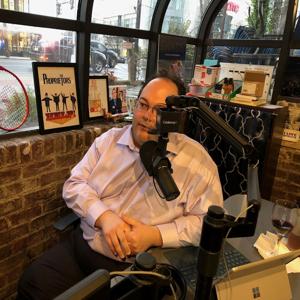


Law & Business – Episode 38 – Anthony sits down with the Rev. Mark Schaefer, the Chaplain of American University. Yes, that means that this episode takes a little different path than the usual episode of the “Law & Business” podcast.
Mark talks about his history from practicing law to being a member of the Methodist clergy. Mark also discusses some of his philosophy and how law and religion relate to each other.
Mark’s book is The Certainty of Uncertainty: The Way of Inescapable Doubt and Its Virtue, published by Wipf & Stock. The book takes a look at our desire for certainty, explores the unavoidable nature of uncertainty, and reveals how embracing uncertainty and doubt is transformative for our selves and for our world. Of course, the book can be found in bookstores and on Amazon.
Rev. Mark Schaefer is the tenth University Chaplain in American University’s history, appointed to the position in September 2016 after having served for 14 years as AU’s United Methodist Chaplain. He is a graduate of Wesley Theological Seminary and is an ordained elder in the Baltimore-Washington Conference of The United Methodist Church. Mark has also been teaching as an adjunct professor in the Philosophy and Religion Department since fall 2006. He has also been a summer instructor in Biblical Greek and New Testament at neighboring Wesley Theological Seminary. Prior to his ecclesiastical career, Mark was a practicing attorney in the District of Columbia and is a graduate of the George Washington University Law School. Mark holds a B.A. and an M.A. in Russian Language and Literature from the State University of New York at Albany. A native of New York State, he was born in Buffalo and grew up in Center Brunswick, near Albany.
Here is the full transcript of the conversation:
Anthony Verna:
Thanks for listening everybody. Welcome to the law and business podcast. We are recording in DC this week at chatter, the only podcast studio restaurant hybrid I’ve ever known. I’m here. Marc, you’re recording. Thanks for recording for us. Yes, we are recording. We’re rolling live right now. Our guest today is the American University chaplain, Mark Schaefer. Mark, thanks for, for being with us. Thanks for having me here. One of the, the most interesting facts about you and the reason why, why I have you here with me is because you used to practice law. Technically, I still do. I still, I still pay my bar dues so I still can hang a shingle outside my office I suppose. But yes, I don’t practice nearly as much as I used to. I mean, this seems like a waste of money if that’s correct. Well, it’s, it’s honestly it’s so that because I know people are going to ask me for legal advice from time to time.
Mark Schaefer:
It’s to avoid committing malpractice by offering legal advice without the license to practice law. And you know, because if ever my family or friends gets into trouble, I want to be able to help them in some meaningful way. So that’s why I keep the license up to date and that way I’ve got that in my back pocket.
Anthony Verna:
So let’s go here. How do you go from practicing law to, to a vocation? I mean, what changed? What, what clicked in your mind? What flipped there? I was going to ask how did I switch sides, which is a little unfair.
Mark Schaefer:
I’m still a lawyer. I take that a little personally, but, honestly it was the intersection of questions of justice that did it. I was working in a law firm here in DC, a smaller practice, with an attorney who is very active in the DC voting rights movement. Um, and so we would have conversations about DC voting rights, about, um, possible solutions to the issue. And one of the things that occurred to me in our conversations was that there had not yet been laid a sufficient moral argument for district voting rights. And that is before you get to the legal and political solutions for how you enfranchise the citizens of the district of Columbia, you have to actually get people to understand that the disenfranchisement of more than half a million American citizens, who are, who pay taxes, who are sent off to fight foreign wars, who are subject to all federal laws and regulations and have no vote in the United States Congress is immoral.
Mark Schaefer:
So I remember thinking, well, there is a role here for the churches and for the communities of faith to get involved. And I had recently become a member at foundry United Methodist here in DC, just a very active, a church in the community. And I went and proposed to them a mission group to advocate for the voting rights as a moral and ethical issue. I said we would avoid coming up with a political solution, you know, statehood, all that. So we will just simply make the case that this is an immoral state of affairs that the church care about. And so they gave me the permission to create that group. We got a number of young adults involved in that. We drafted positions, we had information sessions, and we actually were ultimately able to get the United Methodist Church as a whole to adopt our resolution as a, as an official statement on the issue.
Mark Schaefer:
Um, but when I did that, I started to get noticed in the congregation and people started to invite me to be a part of this effort and that effort. And before long people were saying, have you ever thought about seminary? Have ever thought about the ministry? Um, and to be quite honest, I resisted as long as I could until I came to the realization that, um, the law as much as I cared about it was not fulfilling the vocational part of me. And I guess I had done it because it seemed like a practical thing to do, but I don’t know that it ever really spoken to my heart. And so the ministry became an avenue for that. I think a lot of lawyers have that particular problem as well that there’s a mental aspect of practicing law.
Anthony Verna:
There’s sometimes an emotional aspect of practicing law and as somebody who litigate, um, I can certainly attest to the ups ups and downs on that. And even today, for example, I had a conference call with the magistrate judge and opposing counsel and the other side. And one of the defendants is also a pro se in the, in that representing himself in the case. And emotionally you can go up and you can go down to the matter of of minutes. But ultimately then I hang up the phone and I’m like, well, we’re still sitting in the same position we were a half hour ago. Absolutely nothing has changed. And so I can understand where sometimes practicing law isn’t really all that all that fulfilling. How were you feeling not fulfilled in practice of law?
Mark Schaefer:
You know, honestly, it’s kind of a paradox to me because I was working with a great boss. I found the work interesting. Um, he was a good person to learn from and to work with. Um, we were doing interesting things on the DC level. We were, uh, we had won, uh, an award to draft some legislation to reform our regulatory structure. And I mean, there are all kinds of interesting things that were going on. It was actually starting to make a little money, you know, things like that. Um, I just think that in, in the long run it wasn’t what I was meant to be doing. And there was a part of it did that where my days felt that they were the same. There was a kind of a sameness to sure that it found hard to kind of overcome. Um, but what’s interesting is that when I went into the seminary, it was my legal training that I found helped me the most in deconstructing complex dense theological arguments and, and making ethical cases, you know, making ethical argument. I remember my, a Christian ethics class, our professor said, I don’t even really care what answers you come up with to these questions.
Mark Schaefer:
I just want to understand your processes correct. And all my friends turned and looked at me and said, you’re loving this, aren’t you? I said, this is how I think it’s the process that matters.
Anthony Verna:
And as somebody who’s Catholic, I’m used to get bishops, archbishops and cardinals who are lawyers, or at least have a law degree. And then also, right, also went to the seminary.
Mark Schaefer:
I mean, for centuries it was the same profession. These are the teachers of the law, right? I mean, these are the folks who understood the rules. And in some ways the lawyers in our society occupy the niche of the priesthood. And in an older, more ancient society, you know, they know all the magic words to say, right? They understand the intricacies of the, you know, the mysteries of the temples and to get things done in ways and they occupy that kind of center place in our commerce and social and political life. That would’ve been a priesthood at an earlier age. So I think on some level it’s the same career. I’m just, you know, working in a different organization.
Speaker 2:
So, so what is the, what do you see as a crossover between justice and morality now that you’ve stopped practicing law? Because there are some times when, when practicing law is not necessarily very just, I, I, you know, you and I were having a conversation about copyright law and in the United States, if a one does not have a copyright registered, you can’t even walk into court. Even if somebody is infringing you, worldwide, those statutes are written very differently, right? Like, what’s the justice if, you know, an artist can’t, you know, can’t get recompense for, uh, for somebody else, you know, stealing and swiping ideas.
Mark Schaefer:
For example. Well, it’s from a religious point of view, justice is the equal access to the levers of power. That is, it’s the idea that every single person has the ability to participate in the community, to participate, to have access to the resources of the community, to have access to the influence on the community. The decision making of the community regardless of station, regardless of class, race, gender, sexual orientation, you name it. That, that’s, that’s the basic concept of justice. What a court system does is it’s attempting to provide a, just result within some construct, but that may or may not be the same as what divine justice course. Right. And, and I think that’s, you know, where there is a need for humility in any system of justice is to understand that it is imperfect. Um, I know that there is, there’s a difference between the just result and the true result. Right. Um, for example, if a person gets off, uh, because the state was unable to prove guilt, that is the just result, but it may not be the true result. That person may have actually committed that crime. Right. And which case you have set someone free who is in fact guilty, but in fact guilty and just guilty aren’t the same thing.
Mark Schaefer:
Right? Because you want to the, because the overarching thing is the state does not have the power to remove your liberty without having proved that. That’s the just principle that is upheld by even when a guilty man goes free from a crime that he committed. So I think part of it is also understanding that there are different levels of justice and sometimes the system itself is just even when the result is not. And that is, that’s something to bear in mind as well. So I think, you know, when I look at the questions of morality and justice, it’s about aspiring for that higher level of justice of, of that sort of, where is the system pointing toward? Is it pointing toward protecting the rights of all people or is it pointing toward enshrining the privileges of a few, in which case the individual just results don’t matter as much as where the overall system is, is pointing.
Anthony Verna:
Understood, understood correctly. How does that then apply on your daily life?
Mark Schaefer:
As a minister, well, I think what that means is that I have to be prepared to call out the systems that are unjust, not just simply the results that it’s, it’s, and to help people to understand that for from my perspective and I’m United Methodists or Christian denomination, that from my Christian perspective, Christians are required to speak out on behalf of justice. That means that we are about reforming the very systems themselves. This is an idea known as the Social Gospel, the idea that the gospel is not meant simply to convert individuals but to convert entire communities to being more just more righteous, more equitable. This was a movement that, you know, sought to end a child labor that sought to end, you know, tenement housing that sought to end all manner of social injustices, um, and aimed themselves high that way.
Mark Schaefer:
So I think where my task is is to help people to understand that it is actually part of a, of a living, thriving spiritual life to work for justice on a systemic social level.
Anthony Verna:
And when you talked about starting at at the church and getting that particular ministry off the ground and then you said, well then we got noticed by the entire Methodist church. I would assume that as a lawyer that helped you because there’s has to be a lot of procedure in that. Like no matter what the hierarchy is, you’ve got to deal with rules and you have to deal with the procedure. And that has to like for me, I would say the most frustrating part of litigating is dealing with rules and getting an email like the other day, well these Rule 26(f) initial disclosures don’t follow this. And then, and, and at some point I get, I get frustrated over the rules and then when I joined another organization, I, I tend to go, okay, I already deal with enough rules. So I want to get past the rules here. But, but that has to help you in some aspect.
Mark Schaefer:
I mean the, the church is a rule driven organization. Like anything else. I mean, it’s a human institution. And so we’ve, I mean, the United Methodist Church has a book of discipline, uh, which just sounds harsher than it actually actually is. Um, now that I think about it to outsiders, that might sound a little strange. Um, but the book of discipline is our Constitution. It’s our rule book. It’s our, it’s our statutes and it, you know, there are procedures for how things are done. And so what we do is, so for example, the, the resolution I talked about, that was something we had to get passed by my local congregation and we had to ask them to forward it to the annual conference, which is the regional body. But, and they afforded it to the regional body. And the way we had drafted it said, we call on the United Methodist Church to do, to support, you know, voting rights and sorry. And that language actually meant that that resolution then got automatically forwarded to the general conference because it called on the general church. The resolution itself then went automatically to the national body that meets every four years. And then they adopted it as their position statement.
Mark Schaefer:
So part of it is, you know, just drafting it correctly, drafting it in a way that moves it up through the, through the chain of, you know, authority in the denomination. Um, other parts are knowing how to draft things so that people will be persuaded by the argument, you know, um, not having 18 million where as-is, you know, and having a numb and making, building a case sort of because we start here, that leads us here. That leads us here. I mean there are times when I’ve seen my legal career really influenced the, some of the things I do in the ministry. And then sometimes it actually works the other way around too, which has also been kind of interesting to see how so? Well, so when I was in law school or in seminary, I still had a case that was left over from when I was practicing and we had an appellate level argument. We had oral argument before the DC court of Appeals. And, um, I had taken a couple of homiletics classes by then and had become much more comfortable with sort of a preaching style that told a story. And so rather than get up and just read through my yellow legal pad worth of notes, I told the judges the story of the case, I walked them through it. I made it sort of a narrative that was understandable and amend, even was able to kind of tie it all up in a nice little bow at the end, um, in the way that I would have with a sermon on some level. Um, and I think that that helped tremendously because it made it clear what the points were that I was going for, what the main thrust of the argument was and helped the judges to center what their response ultimately was around the way I had framed it. But I think that’s something that law school doesn’t do.
Anthony Verna:
No, it doesn’t.
Mark Schaefer:
Well, even even a boy, you’re giving me flashbacks to my moot court class and, and my, um, you know, and we’re writing classes and we don’t talk about what the story is. We talk about the formalities, we talk about case citations, we talked about the holding of this case, and then it compares to that case. But on the same token, you don’t focus on telling your client’s story and communicating that right to whoever the here is, whether it’s a judge or a jury. Right? And there’s, there’s something that, you know, while any professional has, right, is that it’s what’s called the curse of knowledge. It’s where you know what you’re talking about. And so you assume other people know what you’re talking.
Mark Schaefer:
You are completely correct about that. And, and I think at that three lawyers in a room and nobody else can can jump into that conversation. And, and so what they are is bored at the two of us right now. Well, I think what happens is, you see, it’s so you’re making a case to human beings though, right? You are making your case to human beings who may or may not understand the intricacies of what you’ve dealt with, especially when you’re talking with a jury. If you can’t translate that into ordinary experience, then what do you then what are you doing? Even, you know, and I think that’s um, you know, that’s a lesson from the preaching side of things is, you know, I can come at you with all the biblical interpretation.
I can explain who king Nebuchadnezzar was and why the Babylonian Empire fell and all this stuff. But if it doesn’t have anything to do with how you might be losing your job this week, right, then what does it matter, right? That’s the, the whole point of this kind of proclamation and I think, and also the advocacy piece and the law is to be able to tell the stories of those who need help telling their stories. Right? That’s why people come to lawyers as they need someone to advocate for them, right. To speak on their behalf. And so if we’re not actually good at the vocal thing at the communicating, then we’re not being good lawyers. And so I, you know, I remember the legal research and writing classes and how they weren’t focused on style or clarity, they were focused on checking those boxes. Right.
Is Everything Blue Book cited correctly at you? You know, did you, I tell the size the period and ebbed, you know, all that kind of stuff. You know, I, I’ve never been able to tell the difference between an italic period and a non italic one. Right. But what you see is that there is too much of an emphasis on the form sometimes with out an emphasis on how that form needs to be used to, to serve the message that’s being made.
Anthony Verna:
Sure. And you know, reminds me recently, I filed a case against Kylie Cosmetics. That’s a matter of public record because I did an interview for it, but recently, my client just sends me all of these news articles and clippings on the story or even YouTube videos about the case. And there are a lot of people out there. And this is the interesting part for those who don’t understand my particular area of law. And I know that intellectual property is very niche and I understand that a lot of people don’t, don’t truly understand it. And seeing videos that say things like, companies sues Kylie Cosmetics for stealing makeup. And it’s like, “No, no, no, no, no, no.” That’s not, it, that’s not it at all. How can lawyers, you know, now that you’ve, you’ve gotten this training from, from multiple professions, how, how can lawyers communicate better, especially when we’re in these, these niche areas? I mean, the general public doesn’t, there is, there is a need for lawyers and ministers and other professionals to communicate better. There is also a need for journalists who can have the time to learn about these professions. Because what I notice is that, um, science and religion have one thing in common is that the articles about both are often incorrect.
Mark Schaefer:
You know, they, they often claim that something has been done that has not actually taken place. You know, oh, the pope changed a policy. No, the pope articulated something that’s been on the books for 700 years or, or scientists have discovered this and now the scientists did nothing of the kind, you know? And so there’s, there’s a lack of basic literacy in the culture about these things. So part of it is that we need more journalists because we need journalists who can actually take the time to focus on in particular fields and become expert in them. But then we also need to, in our professions, recognize that people don’t actually understand what we’re talking about and define and to think carefully about, if I didn’t know anything about this case, how would I explain what happened? You know? And how would I talk about the events that have taken place in ways that make sense to people without any particular knowledge?
Mark Schaefer:
That’s a hard thing to do. I mean, I know that I’ve gone back through the things that I’ve written and said, wow, if I, you know, I don’t know how anyone understood this. It was so clear to me at the time, and now that I read it, I realized it’s completely insider language and insider even ways of framing things. Um, and it’s tough. It takes a lot of training to look at your own stuff and to ask yourself, what would this sound like if I didn’t already know what I was talking about now? And, and I agree with you completely that it is a skill that we’re, that’s hard to grow. Yeah. Very difficult. Since we are running out of time, I will let you plug your book because I think there’s a, I think there’s a big, I think there’s a big intersection there anyway, so, so, so tell everybody about your book a little bit.
Mark Schaefer:
Sure. The book is called The Certainty of Uncertainty, the way of inescapable doubt, and it’s in virtue, and it is meant to address the problems that people have with uncertainty, both those who are, doing everything they can to stave uncertainty off or those who are feeling like they’re drowning in it and that by doing so, they’re doing something wrong in their lives. Uh, the basic argument of the book is uncertainty as a fact of life. And actually it offers us a lot of opportunity for more meaningful life when we embrace uncertainty in doubt than when we try to clamp down on rigid certainties in our thinking and in our belief systems especially. Um, and where I think it intersects is the willingness to admit that you don’t know something actually opens you up to different kinds of relationships and different kinds of conversations than when you feel that you have to be the expert or the authority or have to have all the answers.
Mark Schaefer:
It forecloses the ability, even in this conversation to say, well, what, what might not I understand, what might I misunderstand about this? Or why might I not have considered about the way I’m making this argument? Is it really self-evident or is it possible that there’s a lot of room for interpretation in doubt here? So I think that’s, that’s where they tie together for me.
Anthony Verna:
And, and you know where I see that a lot is when a potential client comes to me for a case and they say, you know, we talk about it and then they say, give me a percentage. I want to, I want a percentage to know what’s my chances of winning. Right. I don’t know the answer. I can sit there and I can make the arguments. I mean, I certainly know when, when somebody has, uh, you know, a losing case for sure. You know, you know, something simple. Well, you’ve never registered your trademark, you’ve never registered your copyright. Um, you’re, you’ve been selling your, your product for three years and you’ve never filed a patent. So, I mean, yes, zero. Right? But I, you know, outside of that, the answer truly is, I don’t know. I can make an argument. My job is I can make an argument to, to the court if I can’t do that, I don’t want, I don’t want to handle your case because it’s not ethically proper.
Mark Schaefer:
Exactly. And I think allowing people to embrace uncertainty also allows them the opportunity to, well, it’s actually, you know, it’s the difference between a kind of a brittle strength and a, and a resilient strength, right? As the brittle strength requires on having everything figured out and everything known in certain and those things snap where they, they crumble like houses of cards when anything is pulled apart. The resilient strength is the one that admits that it doesn’t have everything worked out but commits to the course of actions, right? I don’t know, we might not win this case, but this case is important. So let’s go forward and um, and if it doesn’t work out, we knew that going into it. And so we can rebound, we can try something else, we can do some other course of action. And I think that that’s something we’re not seeing a lot of. In our day and age, we’re seeing a lot of people who are feeling called to kind of entrench into these certainties. And especially in the political arena where it’s just not even possible anymore to admit the other side might have a point. You know, it’s a, you can’t even say, well you know, that idea, it has some merit. We don’t, we don’t agree with it, but it’s not completely out. It’s not, you know, completely out of the blue. We can’t even get to that point because that sounds like being a traitor to your own side by acknowledging the other side might have some, you know, some small foothold in the truth. And I think if we can get to the point where we become comfortable with not having it all worked out, then that allows for greater community and for greater conversation.
Anthony Verna:
And how can, how can people find your book?
Mark Schaefer:
They can find The Certainty of Uncertainty if they are in the DC area. IIt’s at a number of our local booksellers. It’s at um, Politics and Prose. It’s at Kramer Books and it’s available on Amazon and thecertaintyofuncertainty.com or links to other online resellers, including the, uh, the publisher itself with in stock where you can buy copies in bulk at a discounted rate.
Anthony Verna:
You’ve got that, that answer down pat.
Mark Schaefer:
It comes with the territory.
Anthony Verna:
Mark, thank you so much for coming on and, and doing this interview with me.
Mark Schaefer:
You’re very welcome. Thank you for having me.
Anthony Verna:
Thank you.
In Episode 36 of the “Law & Business” Podcast, Anthony and producer Marc Sterne talk about the MillerCoors lawsuit against AB InBev over its “corn syrup” campaign, which started during the Super Bowl. This episode (minisode? miniwebisode?) was recorded at Chatter in Washington, D.C. Thank you, Marc for recording and helping with all the episodes at Chatter.
MillerCoors is suing Anheuser Busch InBev, seeking injunctive and
It’s the latest step in a brewing marketing feud that began during the Super Bowl. Bud Light, in three spots that aired during the game, attacked MillerCoors’ Coors Light and Miller Lite brands by name, noting that those brews use corn syrup.
MillerCoors, in its complaint filed in federal court in Wisconsin, said the ads are meant to deceive beer drinkers into thinking its beers contain corn syrup and high-fructose corn syrup in order to boost sales of Bud Light. Plus, it says the ads dilute its trademarks, which would be in violation of the Lanham Act. MillerCoors seeks a halt to the “false and misleading” ad claims and “willful trademark dilution,” saying that the ads have diluted the goodwill associated with its brands and have damaged the reputation of the brands.
Anthony and Marc discuss the complaint, the false advertising claims, the possible harms to the MillerCoors trademark, and defenses for AB.
“AB’s purported rationale for this campaign, ‘transparency,’ is a classic example of corporate double-speak,” says AB’s complaint.
A predicted defense for AB is going be the plain meaning of the words in the advertisement. AB is saying that its Bud Light is not brewed with corn syrup and that MillerCoors’ Coors Light is. Predictably, AB will just stick with the plain meaning of those words and that consumers should only hear the words in their denotations, and not their connotations, which is what MillerCoors’ lawsuit focuses on.
Smaller businesses need to understand that advertising and the use of a competitor’s trademark do come with risk. Managing the risk is necessary and understanding the limits of what is not a deceptive and not a misleading ad are necessary also.
Anthony Verna:
Welcome to this mini episode of the Law and Business podcast. We’re still recording from Chatter in DC. How you doing, Marc?
Marc Sterne:
I’m doing great. Technically, is this not a mini webisode?
Anthony Verna:
Oh, I see. Okay.
Marc Sterne:
I’m just trying to stay hip man.
Anthony Verna:
I know, I know. Marc, thank you for recording with us. And I know we’ve got a question from the audience.
Marc Sterne:
Yes, we do have a question regarding the lawsuit involving Budweiser, Miller Coors and corn syrup.
Anthony Verna:
Let’s talk about this particular suit for a second because it’s Miller Coors versus Anheuser Busch filed in federal court in Wisconsin and yes, it’s about the no corn syrup ads. So, went from dilly dilly and do you have an impression of that one?
Marc Sterne:
I don’t have it. I do like the ads. I don’t have an impression for the dilly dilly. I hated them to start. And then they grew on me and I was like…
Anthony Verna:
No, I could easily see that because it’s a very, it’s a well-crafted campaign that, of course, has now mutated into a second campaign. And Anheuser Busch even did some really fun things with that ad campaign. Like when there was a trademark infringer on a dilly dilly, Anheuser Busch actually sent a guy in a knight’s outfit and he even opened a scroll and he read aloud the cease and desist letter.
Marc Sterne:
And that’s how you deal with issues.
Anthony Verna:
It was absolutely fantastic. And that turned into a viral video, so you could even find that online, but it’s now mutated from this dilly dilly, but keeping the same characters and it started during the super bowl. And I’m seeing not just the commercials, but also online.
There are a lot of videos on social media as well as billboards. And so other traditional media where these characters now say that that Bud Light is not brewed with corn syrup. And, Coors Light is brewed with corn syrup.
Marc Sterne:
So, in the ads, you’ll see it like the people who come to the castle and say, yes, your majesty, your shipment of corn syrup is here and they’re like, no, that’s not for us. Right. And try Coors. No, they’re filled with theirs. Oh, try Miller. You know, and so yeah, it’s basically saying we don’t use this crap, but these guys do.
Anthony Verna:
Yes. So that’s what the lawsuit is. So, effectively this is a lawsuit for partially false advertising, partially what we call a false designation of origin and effectively hurting the reputation of a competitor’s trademark.
Marc Sterne:
And that doesn’t fall in the area of slander or anything like that?
Anthony Verna:
Correct. It wouldn’t be a defamation or it wouldn’t be a slander or libel issue because we’re dealing with the harm to the actual trademark. Okay. But a lot of what we’re going to say looks like that as well. So in this particular instance, Miller Coors is alleging that some particular facts, one that nobody is actually drinking corn syrup when they’re drinking a Coors Light, even though it is brewed with corn syrup. Two, corn syrup is something that is used in other Anheuser Busch beers. And the complaint lists a whole lot of them. Three.
Marc Sterne:
In other words, you’re accusing us of this and yet you appear to be doing it yourselves, correct?
Anthony Verna:
Correct.
Marc Sterne:
Pot calling the kettle black.
Anthony Verna:
Correct. So, while there is no corn syrup in Bud Light, I think that Budweiser itself has brews with it.
Yes. I believe that Stella Artois brews with it as well. So, there are other beers that do brew with corn syrup.
Marc Sterne:
I think that’s pronounced teller octos. Which was another great ad for the Super Bowl. Sorry.
Anthony Verna:
That’s okay. So, there are beers that are doing it and two the only way that a beer is brewed is with a carbohydrate of some particular aspect. And in this particular case, yes, Bud Light uses a rice, but again, other beers use corn syrup. And that’s not particularly odd. It’s not particularly weird. And I think you said it, but using the word crap, a lot of people think that corn syrup is high fructose corn syrup or is short for high fructose corn syrup. And in fact, high fructose corn syrup and corn syrup are two completely different animals. Yes. They’re related because high fructose corn syrup means that it’s just a corn syrup with extra sugars in it, and a lot of food is made from that.
Marc Sterne:
A lot of food. Yes. So, as we’re finding out a lot of food.
Anthony Verna:
And as somebody who has been following the Keto diet since September and…
Marc Sterne:
Good for you.
Anthony Verna:
Thank you, sir, and has lost weight by the way.
Marc Sterne:
You look great, by the way. You look great.
Anthony Verna:
Oh, thank you. I appreciate that. I can tell you what a reduction in carbs has done for my body shape, so, okay. I get all of this. So, these are the factual claims that Miller Coors is making in its complaint and all of these facts lead up to a confusion or deception in this particular advertising campaign. Anheuser Busch has not filed an answer yet. Answers not ready. They probably will be filed by the time that we post this episode.
But if I’m looking at this from the Anheuser Busch standpoint, they’re going to say no, our words are technically true. Absolutely, your honor. They don’t say that you’re drinking corn syrup. They say that there is no corn syrup in Bud Light. Okay. They don’t say that if you pick up a Coors Light that you are drinking corn syrup. It’s just made with it. Yes. A Bud Light is not going to be talking about the other beers that Anheuser Busch brews in its campaign. So, there’s no mention of that. All of these other implications that Miller Coors is making… Basically, the defense is going to be, we’re not saying any of that. If you look at our words and only our words, they are completely true.
Marc Sterne:
Okay. I get all that. Can I get for a second?
Anthony Verna:
You’re allowed it.
Marc Sterne:
Is the judge allowed to say we get the words technically are true, but the intent and the impression that you’re giving is not what we would call accurate. Are they a little allowable for that kind of discretion or a gray area?
Anthony Verna:
I would say. I would say yes. One is probably the best gray area in advertising laws is what we call puffery and puffery is probably not going to apply here. But puffery is like…
Marc Sterne:
an over inflation of a product’s like what it does.
Anthony Verna:
Correct. So, this is the best beer you’ve ever tasted. How would you ever be able to measure that?
Marc Sterne:
Right. You know I’m looking to sue somebody that sold me sea monkeys in the back of a comic book cause they never built a great civilization like they said they were going to.
Anthony Verna:
There’s probably the best beer in the world.
That’s what Carling, I believe.
Marc Sterne:
Is that what they’re claiming?
Anthony Verna:
That is what their slogan is, yes. So, part of the issues, how do you measure these kinds of things, right? You can’t, so how do you measure the effect of these words on what a consumer looks like? Well, you’ve got to take into effect what the average consumer thinks. And I think where Miller Coors is going to be hammering this particular case is in the angle of what do consumers perceive when they hear these ads and if you’re the plaintiff and any kind of a deceptive advertising lawsuit, this is what you’re going to look at. You’re going to say, well, I get that your words are technically true. But the big issue here is the fact that a lot of people do think that just corn syrup meant high fructose corn syrup.
Marc Sterne:
Yes. I’m one of those people. And I know I’ve heard both terms, but I didn’t differentiate as like, Oh, yeah, it must be the same thing.
Anthony Verna:
No. So, and it’s not. So, I think a lot of people are going to, I think, I think a judge would have to look at that. But the other issue is, is probably intent as well. Are there going to be any interviews out there with any marketing CMOs or other marketing heads in a company that discussed the advertisement a little more. Like if an interview out there where somebody says, yeah, we did this because we know the average consumer doesn’t know the difference between the two. Well, you’ve just dug yourself a hole that’s going to be very difficult to get out of because of that perception.
Advertising lawsuits are about what is deceptive and misleading. And in a case such as this one, you’ve got to look at the deceptiveness, what is misleading, what is left out. And a lot of that goes to then back to the creation of the advertisement. And when you work with a company that’s creating an advertisement, is what is said leaving anything out? And, they’re gonna sit there, they’re going to sit back and they’re going to say no, we left nothing out that says no corn syrup, , Bud Light’s not brewed with corn syrup. This one is brewed with corn syrup. That’s what our campaign says. And that’s all that our campaign says.
Marc Sterne:
Two things come to mind. Okay. First of all, there were hours and hours of discussion more about hours. I mean hundreds of days of conversation about like with legal teams.
You know, all this stuff would be like, yes, can we say this? And so, they’ve done the math on this and they’ve been like, this is going to be fine. I mean, they must have done that and said we’re going to be okay with this.
Anthony Verna:
I think absolutely correct that even if there were I lawsuit, it’s going to cost us X to defend the lawsuit and we’re still going to make Y money because hungering it out because it’s a great campaign. Yes. Right. Absolutely correct. And all right. And like I said, this is like a mutation of the campaign. And if you look at the complaint, it blatantly states the campaign started at the Super Bowl. Well, it used the same characters from a previous campaign as well. So, it already has this face to it that is that people like.
And people have grown to like as well. So even if there’s a monetary issue here where Anheuser Busch has to pay Miller Coors something in some kind of restitution for harming their particular value or stating stuff that is deceptive and misleading in an advertisement. They’ve probably calculated that to still…
Marc Sterne:
Yeah, they must’ve, the bean counters have to dope that out and be like if we do this, we go this route. This is going to be, the positives is going to be, you know, the negatives and all that kind of stuff. It’s amazing that they can calculate that accurately, but they have to, to go down this kind of campaign.
Anthony Verna:
Absolutely. Correct. As a matter of fact, a story from a Dannon, the yogurt company, they came out with Dan Active, which is this probiotic yogurt.
They had the science, to talk about which probiotics they have in the yogurt and what it does and why it’s not different. Other probiotics. And because those do different things to your digestive system. They had all the science planned out. When the FTC came around to fine them for having advertisements that were deceptive, they basically did a calculation. It would cost X to pay the fine. It will cost Y to defend the lawsuit along with paint Z to change our advertising and labeling. Well the fine plus all the changes in their advertising and labeling were less than the cost of the lawsuit. Even though they probably would have won cause, they had the scientific research there. Right. Well they did the calculation and they paid the fine.
Marc Sterne:
That’s amazing.
Anthony Verna:
I know even though there was technically really nothing wrong with the advertising.
Marc Sterne:
Because it’s just the path of least resistance for them.
Anthony Verna:
Exactly. So the bean counters are there…
Marc Sterne:
And the world runs on bean counters. We know that. The other thing that comes to my mind and because I’m of certain age and I’m going to bring you up to my age and say that we grew up in around the same time cause we pretty much did but, and I don’t remember when this happened, but at some point there was a court ruling that said you could name your competitor in advertisements because when I was a kid, it was never Budweiser versus Coors or Miller, it was brand X is terrible, but Budweiser’s the greatest beer ever. It was always brand X or this, that or the other. The company wasn’t named specifically. I want to say it happened in the late seventies, early eighties. Cause I remember when they started happening, I’m like, wow, they just called them out.
Anthony Verna:
And I don’t necessarily know that it was one particular court case, but we’ve had this shifting attitude towards trademarks and advertisements and it goes from either comparing products and frankly, if the comparison is truthful, well then you’re not harming the value of somebody else’s trademark. It’s not false advertising. It’s not deceptive advertising. It’s not misleading advertising. So, there is no cause of action there from, from the line of trademarks…
Marc Sterne:
Unless you’re the inferior product. You say that’s just not nice, man.
Anthony Verna:
Well, it might not be nice, but it’s legal. It’s true. Right. So, we have that attitude and just to keep going with what the shifting attitude looks like. Today we have a lot of advertisements with two brands in them. You might remember the Super Bowl ad from a couple of years ago where it was the Chevy ad with the end of the world and the Twinkies were also a part of it.
Marc Sterne::
Oh yeah, yeah, yeah, yeah, yeah.
Anthony Verna:
Okay. Right. Like a lot of ad agencies were not expecting that. And when the ad exec saw that ad, everybody was shocked. Yeah. I mean, because it’s two brands in one commercial and now you’re seeing that that a lot more with two brands in one commercial because there are more efficiencies between two companies that have no, you know, Hostess and Chevrolet have no particular relationship to each other and they able to play that into something.
Marc Sterne:
Is the area where we see that the most, maybe with movies? Like movies are marketing themselves and they’ll attach themselves to an ad, like a car ad or something like that.
Anthony Verna:
But that seems that that’s a little more traditional because sometimes it goes, it works both ways. Like you’ll see the car in the movies, so there’s the product placement in the movie, and then of course then you have the advertisement as well, so that that’s a little more traditional
Marc Sterne:
Yeah, the Twinkies …. It was like, wow, I didn’t see that coming. Right. Wow. Well that’s, this is a fascinating case, Martin.
Anthony Verna:
Thanks for the question.
Marc Sterne:
Yeah. Well, and you’ve, you’ve helped me and I’m hoping all the listeners out there understand it just a little bit better. Thanks man.
In Episode 35 of the “Law & Business” Podcast, Anthony talks (all by himself) about why a person or business must register a copyright in a work that qualifies under copyright law.
Yes, the Supreme Court recently ruled that a copyright infringement lawsuit can only be instituted after registering a copyright. That blog post was already written.
However, Anthony is all by himself in Episode 35 of the “Law & Business” Podcast in order to discuss all the reasons why one needs to file a copyright and have that registration.
Ease of cataloging, licensing and assigning. This is a thought that not many people have. If a work is registered, then there is a registration number. That number is a simple reference in licensing, use, sale, and transfer agreements.
Damages. Statutory damages require the registration.
Only a person or business who has registered a work with the U.S. Copyright Office before the infringement (or within three months of publication) may receive statutory damages.
Statutory damages are damages that can be awarded by a judge or jury
Statutory damages are awarded “per work” infringed (i.e., each individual copyrightable work, like a single song, book, or photograph). This means that if five songs, or five photographs, are infringed, the copyright owner would be able to recover a statutory damage for each one, for a total of five awards. So statutory damages of at least $750 per work, for five works would yield a minimum (non-innocent) total award of $3,750 ($750 x 5 songs = $3,750) or a maximum (non-willful) award of $150,000 ($30,000 x 5 songs = $150,000).
Awards of Actual Damages in a Copyright Infringement Case.
Sometimes known as compensatory damages, “actual damages” consists of the dollar amount of any demonstrable loss the copyright owner suffered as a result of the infringing activity. This loss may be from lost sales, lost licensing revenue, or any other provable financial loss directly attributable to the infringement.
17 U.S.C. § 504(b) provides: “The copyright owner is entitled to recover the actual damages suffered by him or her as a result of the infringement, and any profits of the infringer that are attributable to the infringement and are not taken into account in computing the actual damages. In establishing the infringer’s profits, the copyright owner is required to present proof only of the infringer’s gross revenue, and the infringer is required to prove his or her deductible expenses and the elements of profit attributable to factors other than the copyrighted work.”
Usually, plaintiffs in infringement actions would
Awards of Infringer’s Profits.
This second form of damages consists of any money made by the infringer as a result of the infringement. These damages are awarded only if they exceed the amount of profits lost by the copyright owner (actual damages) as a result of the infringement.
Here is a lightly-edited transcript of the podcast episode:
Welcome to another episode of the Law and Business podcast.
It’s easy reference to have that registration. Now generally I always say it’s
So, I like that registration for the ease of referral. But also, now we have
It makes perfect sense. That’s what it says. But some courts, they had a minority
So, now you have to have your registration to not just review and refer to it.
So again, you’re going to receive statutory damages when either your
although there’s not really a clear causation between sales and one particular
In Episode 34 of the “Law & Business” podcast, Anthony Verna talks to John Eastwood, a partner at Eiger Law in Taipei, Taiwan. They discuss the issuance of the Trump trademarks in China, if there appears to be any issues outside of the normal issuance of trademarks in China, and what any business moving into China should keep in mind about its trademarks.
Ivanka Trump probably didn’t get special treatment from the Chinese: Based on what John Eastwood has seen, it appears that Ivanka’s trademark applications (which will not have much use for her given that she’s announced that she’s shutting down her brand) were approved in a fairly normal time frame.
The Trump Organization probably did get special treatment, but that doesn’t mean that they shouldn’t have gotten the trademarks: The first part of the case involves the Trump Organization’s application for construction-related services that had languished for something like 10 years of struggles against the weight of several Chinese bad-faith filers who had apparently been using the “TRUMP” name to market all sorts of products.
Now, anybody who’s doing business in China knows that there’s a big industry. Chinese companies and individuals are extremely fast to file for iconic western marks — or even not-so-iconic marks. (Eiger Law and John Eastwood have a lot of clients that are up-and-coming or niche brands, and even they have problems.)
To some folks, it looked suspicious that China approved Trump’s trademark in the first month he was in office as president — it looked bad, like “oh, now you’re president of the United States, here’s your trademark.” This caused folks to worry about there being a breach of the Emoluments Clause, the part of the Constitution (Article 1, Sec. 9, Para. 8), which prohibits federal officeholders from getting anything of value from a foreign state.
Be there also must be an examination at what was happening right before Jan. 2017.
In December 2016, Michael Jordan got good news in a 15-year struggle to get back the Chinese name commonly used to refer to him — “QIAODAN” — from a Chinese company that used the name to sell sports clothing very successfully. Why? Because when Nike started selling Air Jordan products in China, only the English name “JORDAN” got registered by them — they didn’t bother to go for the Chinese name that everybody in China who cares about basketball chose to call him. The lesson for trademark owners is not to skip registering a Chinese name.
In October 2016, C.F. Martin & Co, the nearly 200-year-old company that’s made the iconic acoustic guitars used in blues, country, folk and rock, famous around the world, finally got back its marks after years of pursuing action through official channels. This was a case that had caused profound annoyance and frustration for IP professionals working in China, as it was used for years as an example of the Chinese government allowing a copycat local company to brand-jack a famous American brand. Part of the problem perhaps was that the old measure for “famous mark” protection was whether you were a true household name in China — you couldn’t just be famous within an industry, among musicians or music lovers, you had to be what John Eastwood used to call “Coca-Cola” famous but now could probably say is “Jordan” famous or “Trump” famous. But the trademark law was amended a few years ago to refer more generally to “bad-faith” trademark filings, and that gave some more room for action.
OK, so back to Trump — within a relatively quick period, one can see China clearing away a bunch of these cases on their appeals docket that, frankly speaking, were an embarrassment to the country. And you get them releasing their decision in January 2017 when he’d just become president for that mark for construction services, the one that had been part of the decade-long battle.
So where was the special treatment?
Well, a couple of months later in March 2017, China approved 38 more trademarks that the Trump Organization had applied for the previous year. Now, it is true that trademark registration times are getting better, but that was pretty quick — and it appears that they didn’t go through the same hassles that many trademark applicants go through with the very persnickety, extremely specific (and ever-changing) terms that the Chinese Trade Mark Office deems acceptable. The marks cover everything from golf clubs, hotels, restaurants, insurance, finance and real-estate companies, as you’d expect, but the applications also included some other areas sometimes harder to categorize, including spas, massage parlors, bodyguards and escort services.
But if we go back to the basics of human behavior, what we
Here is a lightly-edited transcript of the episode:
Anthony
John Eastwood:
Anthony Verna:
John Eastwood:
I want to be very careful in how I look at this. And I don’t see necessarily
Anthony Verna:
John Eastwood:
And there was even an a hotel operator who was trying to do a Trump International
Anthony Verna:
John Eastwood:
Anthony Verna:
John Eastwood:
And that, that fame hasn’t always extended to steaks or to certain other
Anthony Verna:
John Eastwood:
John Eastwood:
And, it’s weird, because it was a sound alike for that. Apparently that was one
John Eastwood:
John Eastwood:
Anthony Verna:
John Eastwood:
Anthony Verna:
John Eastwood:
Anthony Verna:
John Eastwood:
Anthony Verna:
John Eastwood:
Anthony Verna:
John Eastwood:
Anthony Verna:
John Eastwood:
Anthony Verna:
John Eastwood:
Anthony Verna:
John Eastwood:
Sitting out there and having local companies camping out on the Trump name. I
Anthony Verna:
John Eastwood:
John Eastwood:
Anthony Verna:
John Eastwood:
Anthony Verna:
John Eastwood:
Anthony Verna:
John Eastwood:
Anthony Verna:
John Eastwood:
Diane Kennedy, CPA, joins Anthony Verna for episode 33 of the Law & Business podcast.
Diane has written a dozen or so books and had the fortune of hitting the New York Times, Wall Street Journal and Business West best seller lists with some of them. That’s even more remarkable because her books are about tax, accounting and investing. They aren’t your typical beach books.
Diane and Anthony talk about the need for corporate structuring and the possibility for licensing within holding and parent-child companies for intellectual property use.
Diane does recommend having holding companies that own IP and fully discusses the asset protection that is in place for the business. Ownership and licensing matter greatly to the tax ramification.
Here is a lightly-edited transcript of the podcast episode:
Anthony Verna:
Diane Kennedy:
Anthony Verna:
Diane Kennedy:
Anthony Verna:
Diane Kennedy:
The average guy who’s got a business and is working hard or trying to build up some real estate investments, they can’t afford the team of experts that the rich have. And yet those same exact legal tax loopholes exist for everyone as a business owner or a real estate investor. So, it’s just simply taking that arcane language and changing it so it’s more accessible to everybody. That’s the idea. By the way, I just turned down a client who had $1.1 billion in assets. So that’s it. And I should say net worth of 1.1 billion simply because he didn’t fit the model. And it’s like, you know, you can hire a lot of really expensive people. You don’t need me, but I want to work with the guys who can’t get the experts or can’t afford them normally. So, these are ways that we can provide you those services most efficiently.
Anthony Verna:
Diane Kennedy:
Anthony Verna:
Diane Kennedy:
So anyway, but that all said you might have different entities you choose now, but in general that same concept is very accurate. I like to have the IP separate from the operating company. There’s a number of reasons for that. One is for asset protection. In essence with IP, you’ve created something of value out of nothing. I mean it, it has very little basis. It’s just your ideas and your systems and I don’t mean to say that’s nothing, but, normally if I want to have a commercial office building, I have to put some money into it. This is an asset that is from your ideas and your hard work. Protect those, keep them separate from your business. Additionally, I run into clients that after they find a system that works really well for them and they’ve got this IP sitting there, then they start thinking, well, it’s not just licensing it to myself, but I might want to license it to others so it becomes other income streams there.
I mean, maybe someday you franchise or maybe it’s just you let people use your ideas, take your idea and spin it into other businesses, other bricks and mortar or take it online and maybe you have a different partner or whatever, there are different businesses and business structures. But the idea is that IP is still held in there and they’re still licensing agreements and there’s an income flow and that’s yours. As far as what kind of entity that’s generally the question that most people are asking me is, what do I hold my IP in? I prefer to hold it in something that’s like an LLC, a limited liability company. The reason for that is that it allows for flow through taxation. So. income or expenses that are made their flow through to your to your personal tax return, which may or may not be a benefit.
But the biggest thing is that if this IP could get big at some point, somebody may want to buy it from you. And if that happens, you created an appreciated asset. And anytime we have an appreciating assets, we don’t want to hold those inside a corporation. All kinds of bad things happen. You’ve got more tax you pay, and then you’ve got this issue of how do I get the money out of the corporation? So, then you have to take dividends. And that’s where we get the whole idea of double taxation and C corporations. So, I prefer just to have the IP sitting in another LLC and having it separate and then make sure you’ve got good agreements back and forth. You know, I’m speaking to a lawyer and talking about asset protection, but the fact is if anybody ever challenges you, you need to make sure you’ve got good paper trails and you treated that like a separate entity.
Anthony Verna:
Diane Kennedy:
Anthony Verna:
Diane Kennedy:
If you get a Subway franchise, what do you have to pay for the use of their systems and there is an amount you’re going to pay for that on a monthly basis. You know there’s probably a marketing amount. That then becomes, okay, if that’s the number we’re going to start using, then what is the value of that future cashflow and from that, that’s where you start to kind of do evaluation. I think that’s a really important question though, not just for how do we make sure our documents now are right, but let’s say for your estate 10 years down the line and you’re looking at, okay, I need to leave this to my heirs. What is the value of this thing going to be? If you don’t establish the way you want it valued, the IRS is going to do it for you when you die and trust me, they’re going to value it as high as they possibly can because they’re trying to going to try to collect some estate tax if you’re close to that number.
So, I don’t have a great answer other than to tell you it’s really important. I think what I would do is look at what is a reasonable royalty payment. And like you said, it’s based on net profits or gross profits or there’s something in the industry for something similar. And then based on that, that’s going to tell us what our income stream’s going to be and then just do a calculation of present value of the future cashflow. And now we’re just talking math. I’m not going to spew that off the top of my head. But there’s formulas that give you that information. And then based on that, you’d have maybe valuation that you reassess every year.
Anthony Verna:
And the first question there is, how much is your IP worth? What I find important here is that if your valuation is way off here at the beginning it’s probably going to be way off down the road.
Diane Kennedy:
Anthony Verna:
Diane Kennedy:
Anthony Verna:
Diane Kennedy:
Anthony Verna:
Diane Kennedy:
Anthony Verna:
Diane Kennedy:
Anthony Verna:
figuring out what the future value is worth and starting those royalty payments from the operating company to the holding company.
Diane Kennedy:
Anthony Verna:
Diane Kennedy:
Outro:
It’s Episode 32 of the Law & Business Podcast.
Anthony Verna and Wil Jacques talk about the possibilities of a provisional patent application (PPA). Many potential clients call asking for a provisional without really understanding that the provisional patent application only gives a one-year extension to the deadline of filing a full patent application.
Law & Business Podcast with Wil Jacques
Pros of a provisional:
Cons:
Anthony:
Okay everyone. Welcome to the Law & Business Podcast. Anthony Verna here with our patent agent. Wil Jacques, how are you doing?
Wil:
Well, very good. Anthony, how are you this evening?
Anthony:
I’m doing well, thank you and hello to all the as well. Thank you for joining us and don’t forget to subscribe and rate if you’re listening on iTunes to the podcast today, we’re talking about a more traditional topic. It’s the provisional patent versus the full-blown patent application. And we’ve certainly had people call us and say, “I want a provisional patent.”
And generally I say to somebody, “Why do you want a provisional?” And usually the answer is, “I don’t know, doesn’t everybody get a provisional?” And the short answer is no. And you need to sort through some, some pros and some cons of the provisional patent application process versus just getting a full blown patent application.
Why don’t we start off with positive check mark or two for the provisional patent application.
Wil:
Well, just as you alluded to, a lot of our clients will come to us and suggest that they want a provisional patent when in fact what they’re asking for is a provisional application for patent, which is kind of different. You know, you know, the nuances are kind of thin for most of our clients. But just so that you know, there’s no such thing as a provisional patent. What there is, is a provisional application for the patent. But that provisional is important because if one is not absolutely sure about all of the, let’s call it modes of operation of a, of my invention or every little detail of my invention, what I may want to do is to get as broad coverage and as much disclosure about what my invention is that I have in my possession right now. And get that on paper and get that file you want to, you know, under first to file, you want to get that into the office and establish your date. So you timestamp.
Anthony:
A couple of things that you said there. One, because we’re in a first-to-file scheme now that started in 2013 for everybody out there who didn’t know that here in the United States first to file, you get to the patent office before anybody else. So number one, a provisional patent counts in a first to file scheme. So that’s one of our positives of that provisional patent application is we get our filing date. And another thing that I want to unpack a little bit is that you said that there’s a focus on disclosing the invention in its full detail. In the provisional patent application. You can prepare an exceptionally detailed application in a provisional patent application without going through the formality of a regular patent.
Wil:
There are quite a few formalities associated with the regular or what we call non-provisional patent application that are not in a provisional patent application. So one of those things would be the level of detail that one may go into. In terms of your full disclosure. It is not necessarily a requirement that you have drawings now. It is recommended that one has drawings in order to fully explain what the invention is. Sometimes you don’t capture it without the drawings, but these are certain formalities that may not be required in the filing of a provisional but still afford you the ability to get a timestamp and to get that date. And I’m sure we’ll talk about the caveats of why we, you know, some of the cons associated with this as well. Get to that. We’ll get to that, but certainly that’s, that’s one of the things you want, you want to be aware of. The one that matters the most is that in a provisional one does not even need to make a claim and that is what is it that I claim to be the invention buck. Don’t confuse it with saying it is not what I have disclosed in that application. It should be there and then you know as patent practitioners we can come back later and formalize the claims.
Anthony:
I don’t want to necessarily call this a a pro or a con, but when you still need to make sure as a, as a drafter of the patent application that that description of the invention is neither too narrow nor too broad as well. I mean there still is an art to drafting the provisional patent application because, and tell me if I’m wrong,
Wil:
If it’s too narrow, converting it to a full patent application is going to be different and difficult. Excuse me. And if it’s too broad, then maybe the examining attorney might not give you the filing date of the provisional application. It’s a fine line. And to some degree as to what is actually been disclosed, it’s typically not to the letter. It May, I think to use the term inference because we have to disclose fully and concise. Yes, clearly understood what our inventions are. But having said that, a molecule that has one spitting at them, it may be representative of a molecule that has multiple spinning atoms in, in a region, you know, and still you’ve disclosed the invention. However, there may be other claims to be made to capture all of the different elements of your invention as you write those claims. But you have this done your job of disclosing that what you may not have done is disclose the best mode of your invention, which is a requirement for your non-provisional and not a requirement for your provisional patent application. And understood. So I call that a positive, but I just wanted to say there still is an art to the provisional patent application. Uh, yes. Okay. So with the fact that that there are less formal requirement to the provisional patent application, I’m assuming the cost of a provisional patent application is going to be less than the cost in fees of a full, a non-provisional patent application. And then is that true for the patent and trademark office filing fees? Oh yes. Okay. I just wanted to make the distinction between the fees.
Anthony:
It depends on the approach of your practitioner.
Wil:
At Verna Law, we try to be as detailed as possible up front and so the cost of your, of your provisional application, depending on the budget of our client, could get too close to what it would be in a regular file application. But that provisional has been prepared to the extent, and I’ll use your term that it could be converted now it’s not recommended to convert. It’s, it’s recommended to Reno to really redraft, you’re not provisional and clean benefit, but you could save 50% or so. You know, let’s just throw out around number on your drafting fees because of the, the less requirements, less attention to too much detail. As far as the US PTO is concerned, your bees are much less as well. And most of that has to do with the fact that it is not examined. Generally speaking, Europe, your provisional application for patent is not examined by the u s PTO.
Anthony:
Now you’d said just said generally speaking, the patent and trademark office will not examine a provisional patent application. Can you name an exception?
Wil:
Well, yeah, yeah. And let’s say in your, in your regular uh, pattern, uh, app application, what we called a non-provisional patent application, you have made a, uh, a claim for the benefit, a written statement in your non provisional application claiming benefit of the priority date or the filing date of that provisional patent application. Then it, again, it is still not examined per se, but the provisional patent application does become available to for the public proceed. And so whether it’s examined or not and the invention is there, we’ve timestamped it, something’s going to get examined. But I think what our real concern is whether or not it’s still a quote unquote held in confidence between the inventor in the patent office.
Anthony:
Does that confidence go away? Is that provisional patent application ever published?
Wil:
No, it is not published, but there is access made to it. So typically after you file a regular patent application, 18 months after your priority date, that application is published. So it is made of public. Uh, they don’t necessarily publish your provisional application, but one has access to it through the files based on the fact that you were regular patent application has been published and you can see the number, therefore you have access to that provisional.
Anthony:
I think that’s an important distinction to make because I think a lot of people go into this process saying, well, I can file the provisional patent application and nobody’s ever going to find it.
Wil:
Well, the other thing, and that’s a true statement, let me say that first, but one thing that we tend not to think about a lot of our inventors more independent, some of the smaller vendors they come in, but they do see a need to want to file internationally. And so provisional applications for patents is strictly a u s function. It does not work the same way around the world. But because of our bars, let’s call it two to patent ability, one is given a certain amount of time in order to file your application in light of certain other, and we’ve talked about those on other shows, but in terms of having your foreign patenting rights preserved, you have to file within 12 months of your national filing in another country.
Anthony:
So if you file in the United States within 12 months, you have to file that invention in the most foreign countries.
Wil:
Right. And you need to check with your patent practitioner, your patent attorney in other jurisdictions to see how it’s calculated. Because frankly, it’s despite the treaties, it is different in every country. So how Canada treats your us provisional patent application is different than how France and to treat it and it’s different than how Japan is going to treat it and it’s different than how Korea is going to treat it. You just need to check with your practitioner in that jurisdiction. You know what we’ve done with our provisional patent applications is we provided an additional year of, quote-unquote patent protection to those filing.
Anthony:
Hey that’s, that’s another, that’s that is another pro. That is another positive check mark.
Wil:
At registration, you’ve got 20 years of, let’s call it quote unquote patent protection. However, because of that benefit, you do not get that in our foreign jurisdictions. And so the clock starts running at the point you filed that provisional patent application.
So I’d say one of the negative check marks for the provisional patent application is that if you’re going internationally, you need to make sure you understand your timing with counsel in each jurisdiction that you plan to file in because they’re going to calculate that provisional filing date differently. Right. And so, so you need to make sure that you understand this, so I’m going to guess that that’s a negative check mark. That is a, I hate to say pros and cons cause boy would have phrase, but anyway, that works. I know. I know. If we’re filing a provisional patent application, I understand that the, that the initial cost feels low, but in reality isn’t a going to be higher because it’s almost as if the inventor needs to pay twice because you’re going to be paying a second USPTO filing fee. You’re going to be paying your attorney or a practitioner multiple times because now you’re going to, you’re going to turn that provisional application into a non provisional application for the extra year of work or extra year of protection. It doesn’t seem like there’s a whole lot of benefit there with the number of extra fees but, it truly depends. Let’s take a look at the current environment. Maybe we even stepped back 20-25 years ago when everything was a sensor, so all manner of memes and sensors were being filed. You know, it may be, to use Steven Johnson’s term, the primordial soup, right? We’re talking about the minds getting together and inventions just kind of flying off the wall. And it’s funny that Oculus was quote unquote invented at the same time by two different people, but they hung together. And so the language was there. Having said that, this what happened during the censors and memes period is happening today, let’s say in AI or in crypto currencies and that’s another matter as to whether or not they’re patentable.
Right about now the environment is, these are the types of patents that are being filed all around the world and particularly at the USPTO. And so when the, I-have-an-idea person comes or the adventure comes to us, it may be that they’re in an environment that’s moving very quickly and they need to get something filed on the books. Now in order to at least attempt to preserve their patent ability position within this environment of my buddy at the University of Pennsylvania is working in the same area and I know they’re going to be filing.
And that brings up the next point, which is if I’m filing this this time sure, sure. But that brings up my next slide. If an inventor is filing a provisional patent application, that provisional patent application, as we said, uh, several times it has some kind of description of the invention. Um, and even if it’s a quick and dirty description of the invention, the, the way you were just talking about it goes hurry up, get it filed. Cause we have to get something on, you know, on the books. It’s, it’s not truly protection for the invention until this entire process is formalized anyway into a non-provisional patent, which sets forth the claims.
And so imagine that a lot of work on the side of the inventor may have been performed. And again, we, we, we recommend you sit and go what your, your patent, uh, practitioner to make a clear determination of this. But in adventure columns and they’ve done a white paper and they have experimental results and they can show tables and they can show other aspects of how the invention is working. They may even have photographs of, of the invention, maybe, you know, something that could at least not be a formalized drawing, but it could be a picture that kind of shows the shows the adventure, those things without going into a lot of formality could be the basis of your provisional, which is why they’re so inexpensive because of time is the issue. Then these things can kind of be put together and vile. In other cases, you may not want to do that, but it depends.
Anthony:
So if somebody is picking up the phone, calling their practitioner and saying, I want to provisional and I’m going to be stubborn about wanting provisional right now, what’s your advice for the right case for filing that provisional application?
Wil:
I need to get it done yesterday.
Anthony:
Okay.
Wil:
And that’s it is it in my mind is the only reason to file the provisional because one understands that it takes a little time to formally and get a patent application drafted properly. There’s a fair amount of back and forth that I actually recommend and should happen between the patent practitioner and the inventor. For instance, I’ve seen pattern, uh, pass list of c and applications that had been from inventors and it’s been, I’ll use the term elegant in that environment.
Where the invention could’ve gone. In other words, they want it to be too perfect about what it is they had discovered it. They ignore the broader impact theory is in such a way that they could have captured more. These are the things that come from sitting down and questioning and taking consideration of the invention.
You don’t have that time – we’re in the AI environment and you think that there are people who are getting close to what you’re doing.
Then let’s get the clock stay out in this. Just get something filed.
Anthony:
Why am I not just, why are we not just doing that for everybody? Because this way you get that you get that filing date
Wil:
Because one is still has the requirement of having maybe a distinct invention.
A disclosure of the invention and in order to properly construct claims, the specification or what we will just refer to the entire application as the disclosure, which could or may or may not include drawings, but it has to have fully describe what it is that your invention does, what it’s made of, how it works. It needs to be there.
Anthony:
There are some websites that say the provisional patent application is a really good idea. If you need to tell investors that you’ve something filed and this way the provisionals filed or you can say patent pending and this is a good way to talk to investors. I know you’ve got practical business experience and this will not, not, not just drafting patents experience. What’s your experience with that set of facts?
Wil:
Well, it used to be a lot easier. Yeah.
Anthony:
Well yes. I know years ago you and I both know that that angel money and VC money isn’t what it used to be. Now we both know that, but at least an inventor can say, well the patent is pending.
Wil:
Yeah, well we can certainly talk about that, but that’s another show in itself as well.
Well let’s say this, there is a colleague of mine always use the term smart money and dumb money and there was a little bit more dumb money, at least with respect to reviewing the statement of I have past or I’ve filed for patents these days. It is well okay, but to some degree investors will want to know what is it that you filed. And so what becomes important is, let’s see, you come, you want to get the provisional file so you can have something inexpensive so that you could run to the nearest bank of crowd funding or other folks and say, yeah, I have a patent filed. Or you know, maybe you wind up on that tech show.
Anthony:
Okay,
Wil
I got a patent filed. Well, is a patent provisional? The first thing I look at is, well, what have you filed? Have you made a sufficient disclosure of the invention and something that’s going to protect what it is we’re trying to sell and prevent others from doing it. Right, because you can’t go back in, add new matter after defined.
Anthony:
Oh sure. And, and I was at a, at a startup convention a couple of years ago. I don’t, I’m sure we’ve talked about this story privately, but person owner of the company comes up to me and says, well yeah, I have a pen. I picked up the phone, I called the patent and trademark office and got an appointment with the attorney at the USPTO and I explained the intervention. And then somebody started infringing. Then I went to a lawyer and the, and the patent lawyer said, sorry this, the claims are so narrowly drafted that this other company is making a version of your invention that is not described in your patent and therefore there’s no infringement. So I get, and I know that you get that the embodiment is truly important and especially when you’re dealing with a full non-provisional patent.
Wil:
That is what we call enablement. And so though this is what the embodiments do, those are what the best mode is intended to do, is to say that I really have command, I really know what my invention is. And to be able to describe that in a way that someone who is as we use the term skilled in the art one who understands this technol technological space would be able to say, yeah, I get that. And that really, really does work. Now again, as we’ve said in previous shows, it doesn’t really matter in some respects that you have a patent in that piece of the patent world doesn’t provide you or provide your, your, your market with something substantial in terms of, of value. And the best way to think of it when, when we have our inventors come in is to say it patent doesn’t give you a right to sell anything.
Anthony:
That’s true. It gives you a right to restrict others. And so the mere fact that you may be able to get a patent on something and so you add a new laser clicker to your pen that is not part of other pens. But if there’s a pen that is patented that you need to go through in order to sell your product, then you are less, we say restricted. You don’t have a freedom to operate in that regard. And so you know, maybe your, your, your patent isn’t worth as much as what you thought it was. All right. So to to wrap up here, well the provisional, in your opinion, the provisional patent application really is for somebody who needs that filing date right away.
Wil:
And I hate to use this term, but I would also add that there may be other specifics around how one would describe other specifics around the invention that one may want to include in a regular application that you may not have at this point in time. A lot of people in fact used the provisionals is a very inexpensive way to be able to go out and see whether or not the invention does have value. So you can file, you can know that you have some protection in place that you can later on come and spend the real money, you know, or a larger sum of money in order to capture that. But you could test it in the market now to see whether or not what you have invented and what you hope to get a patent for that will restrict others. That’s a lot, isn’t it? Will in fact have value. But you’ve done that at, um, you reduce the risk of the amount of money you have to pay upfront.
Wil:
And other than that, sit down with your practitioner, go through the and, and, and get your claims. Absolutely. Okay. Well, thank you so much for spending another half hour. Thanks for the conversation.
Anthony:
All right, and once again, thanks for listening to the lawn business podcast and coming up. We have an episode on cryptocurrency in taxes as well as taxes and placing your IP and parent child, brother, sister subsidiaries, like a mind warmer. [inaudible] thankfully I don’t do taxes. All right, everyone, please don’t forget to rate and subscribe to the Law & Business Podcast. Thanks very much for being with us.
From the publisher's feed