
Sign up to save your podcasts
Or

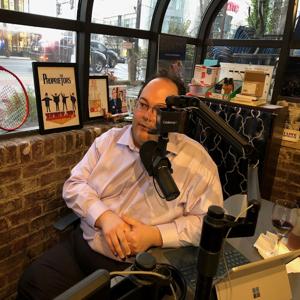


In late June, the Supreme Court struck down the part of federal trademark law that prohibited the registration of “immoral or scandalous” trademarks. The case was called Iancu v. Brunetti, and it was a follow-up to the court’s Matal v. Tam ruling two years ago. In Tam, the justices unanimously ruled that the Lanham Act’s ban on disparaging trademarks was a violation of free speech rights under the First Amendment. In Brunetti, the justices used the First Amendment to strike down another ban: the one on “immoral or scandalous” trademarks.
Mr. Erik Brunetti sought to register the word mark “FUCT,” in connection with clothing. The examining attorney at the United States Patent and Trademark Office (“USPTO”) refused registration under Section 2(a) of the Lanham Act, on the basis that the mark was vulgar, and therefore “immoral” or “scandalous.” The Trademark Trial and Appeal Board (“TTAB”) upheld the examining attorney’s decision on appeal. Mr. Brunetti then appealed the TTAB’s decision to the Federal Circuit. The Federal Circuit requested additional briefing from the parties following the Supreme Court’s decision in Matal v. Tam, 137 S.Ct. 1744 (2017), which held that Section 2(a)’s prohibition on registering “disparaging” trademarks is unconstitutional under the First Amendment. In December 2017, the United States Court of Appeals for the Federal Circuit issued a unanimous ruling declaring unconstitutional Section 2(a) of the Lanham Act, 15 U.S.C. § 1052(a), which prohibits the registration of “immoral” or “scandalous” trademarks.
The issue came down to a key part of First Amendment law: is the
Writing for a 6-3 majority, Justice Elena Kagan concluded that is exactly what the USPTO had been doing in applying the “immoral or scandalous” ban codified in the Lanham Act. Kagan examined the USPTO’s treatment of trademarks related to drugs: trademark examiners rejected “YOU CAN’T SPELL HEALTHCARE WITHOUT THC,” “MARIJUANA COLA,” and “KO KANE.” But they approved “D.A.R.E. TO RESIST DRUGS AND VIOLENCE” and “SAY NO TO DRUGS—REALITY IS THE BEST TRIP IN LIFE.” According to the Court, those decisions are clearly viewpoint-based and, therefore, unconstitutional, even if they are “understandable” because of the trademarks’ potential to offend.
Justice Sotomayor in her dissenting opinion—anticipate a rush to register trademarks containing arguably vulgar, profane, or obscene words and images, with the PTO now powerless to say no. She’s right! This ruling means that trademark registrations are open to any type of language. It’s the Wild West in the dusty, old town of TrademarkVille. What do you want to say about your product? Does your product’s branding have a viewpoint? Registrations at the USPTO now must be open to all, even those marks that will offend. Intellectual Property law seemed to be one area that was stuck in the past, even as technology keeps changing at a rapid pace. Not anymore. Bring on all the words that you may need to cover your ears to hear. They’re registrable.
Trademark law generally does not change. In the last two
How did this happen? A couple of years ago, a band called
The government could determine whether or not a trademark
The other portion of what could be deemed “immoral
So now if your trademark says almost anything you want, as
I don’t really want you to express that viewpoint, but the
The United States Patent and Trademark Office (USPTO) announced on July 2, 2019 a new rule requiring all foreign-domiciled trademark applicants, registrants, and parties to Trademark Trial and Appeal Board proceedings to be represented by an attorney who is licensed to practice law in the United States.
The requirement applies to all trademark applicants, registrants, and parties whose permanent legal residence or principal place of business is outside the United States. These applicants, registrants, and parties are required to have a U.S.-licensed attorney represent them at the USPTO in all trademark matters.
Additionally, U.S.-licensed attorneys representing anyone before the USPTO in trademark matters are required to confirm they are an active member in good standing of their bar and to provide their bar membership information.
“Many other countries worldwide have had this requirement for decades,” said USPTO Commissioner for Trademarks Mary Boney Denison. “We believe that this new rule will help improve the quality of submissions to the USPTO.”
This new rule becomes effective on August 3rd.
Here’s what the USPTO says about it:
“Businesses rely on the U.S. trademark register to make important legal decisions about their brands. In order to maintain the accuracy and integrity of the register, for the benefit of all its users, the USPTO must have the appropriate tools to enforce compliance by all applicants and registrants. We discovered an increasing number of foreign trademark applicants, registrants, and parties are filing inaccurate and possibly fraudulent submissions with the USPTO that do not comply with U.S. trademark law or the USPTO’s rules. Often, these submissions are made with the assistance of foreign individuals or entities not authorized to represent applicants at the USPTO.
Many countries already require local attorneys to represent applicants. A significant number of trademark offices around the world require foreign-domiciled applicants and registrants to obtain local counsel as a condition for filing papers with those trademark offices.”
Frankly, the phrase “possibly fraudulent submissions” refers to the growing number of Chinese submissions to the United States Patent and Trademark Office. One main issue of foreign filings are what we call the “trademark specimen.” The specimen must be an actual picture or photograph of the trademark on advertising or on products. Sadly, many foreign filings contain a computer-generated graphic of what a trademark would look like on advertising or on products. Those computer-generated graphics are insufficient for registration in the USPTO, but many more foreign filings are more suspect of having false trademark specimen than domestic filings.
This new rule means that any foreign person or business must use an attorney licensed in a state in the United States. This does mean more work for attorneys in the United States as those who want to apply for a U.S. trademark will need to seek one out.
Intellectual property and business plans.
You know what a good business plan is, right? A business plan is a description of how you want to build your company. In the business plan, you want to explain what customers you want to target via which marketing channels, what makes you different from competitors, who the management team is, how you are going to make a profit, and what the milestones are for achieving your business plan. So, in a nutshell a good business plan follows the story of your business.
Why do you need a business plan for intellectual property?
Simple.
You want to make money. Intellectual property helps you make money by creating worth in the intangibles of your business. Your inventions are protected by patents. Your brands are protected as trademarks. Your work is protected under copyright law.
Your business plan needs to talk about intellectual property and your intellectual property lawyer needs to know how you’re going to monetize, else your intellectual property will not have the right value or worth.
Hi, I’m Anthony Verna, managing partner of Verna Law,
Yesterday, I had a dinner with a law firm from Brazil. The
Why? Because intellectual property goes hand in hand with,
And you may ask yourself, “That might make sense, but
Let me explain to you, especially on the trademark side,
Show me your business plan because we have to make the
We have to make the enforcement worthwhile if we’re going to
Video blog on trademarks and the craft beverage industry. Intellectual property is important today as there are more craft breweries, distilleries, and wineries than ever before and many similar brands are chosen independently of each other. Also, many of these businesses need to take their IP more seriously in case of a buyout.
Hi, I’m Anthony Verna, managing partner of Verna Law,
You know, some of my favorite clients are my beverage
It’s very important because they think about that end
Why?
We have more breweries. We have more distilleries. We have
And that those numbers just keep growing as states find
And then, in 2017, we had more beverage industry trademark
These numbers keep growing. Bigger companies like Anheuser
And that’s what I really like about all of our small
Why does someone need to register a copyright? It’s quite simple. The statute requires that a potential plaintiff must have a copyright registration certificate before walking into court. The Supreme Court affirmed the plain language of the statute in March 2019. It is also better for the types of damages that a plaintiff in a copyright infringement lawsuit can ask the court for.
Registration Required for a Lawsuit
Registration of a copyright occurs, and a copyright claimant may commence an infringement suit, when the Copyright Office registers a copyright. Upon registration the copyright, however, a copyright owner can recover for infringement that occurred both before and after registration.
Under the Copyright Act of 1976, as amended, a copyright author gains “exclusive rights” in her work immediately upon the work’s creation. 17 U.S.C. §106. A copyright owner may institute a civil action for infringement of those rights, §501(b), but generally only after complying with §411(a)’s requirement that “registration . . . has been made.”
Registration Required for Copyright Damages\
One of the greatest advantages of registering a copyright pertains to the ability to recover statutory damages and attorney’s fees in a successful action. Given that many infringements costs many thousands of dollars to prove in court yet only generate provable damages of minor amount, the inability to collect significant damages and incurred attorney’s fees for infringement of a non registered copyright may make the difference between a successful action or a Pyrrhic victory.
Hi, I’m Anthony Verna, managing partner of Verna Law, P.C.
This past week I had a phone call with the judge and the
Recently as a matter of fact, in March, the Supreme Court
Some judges have accepted that, but the majority of courts
So we had this split in which some judges said the application
This isn’t an ideal situation for a plaintiff if your copyright is being infringed. You need to have that copyright certificate for not just being able to walk into court, but also being able to claim extra damages, which we call statutory damages, which are made by the judge and really are punitive in nature as well as the ability to ask for attorney’s fees.
If infringement happens before a certificate is issued,
In order to actually get into court on a copyright infringement
Being a trademark licensee means that your business is using the trademarks of another business in order to create products that the licensor (the trademark owner) cannot or will not create. This creates a bigger pie for both the licensor and licensee and then the licensee can pay the licensor a royalty to use the trademarks.
Trademark licensing is the process by which a registered trademark owner, called a licensor or proprietor, allows another party, called a licensee, to make and distribute specific products or services under the licensor’s trademark agreement. Trademark licensing is a type of merchandise agreement.
The licensor receives a certain amount of money or royalties, a
The licensee usually creates a trademark licensing agreement, but a licensor can also create this document. Both parties usually agree upon the terms before creating a trademark licensing agreement.
Hi, I’m Anthony Verna, managing partner of Verna Law, P.C.
One of the big issues with licensing is of course you’re
What a lot of people are concerned when they talk to me
What I, always tell clients or potential clients who are
So there’s a bigger pie for you. Yes, you’ll be paying royalties, but in using somebody else’s intellectual property, the goal in that particular case is to make sure that your pie is bigger and their pies. That’s number one.
Number two, does your product fit well? You don’t
Another issue that clients come to me with is the size of,
And the answer to that is sometimes and, again, the only way that you’re going to know that is by sitting down and having those contract discussions. Certainly a lot of people are afraid that that some licensors, like the NFL, are not going to work with them and a lot of sports leagues have programs for smaller, licensees and having smaller businesses so that hopefully those businesses grow.
Why? Because, if those businesses grow, then the licensor’s businesses grow as well. And that’s one very important aspect of finding out if there’s a program for working with small, smaller licensers and this way as your business grows, their business grows as well. Don’t be afraid of minimums. Don’t be afraid of asking. Don’t be afraid of, of taking those steps and, and finding out if that growth is available for you.
I’ve had clients who are worried about having more skews.
Potential Plaintiffs
A trademark search shows
Potential
Alternatively, if a
Analysis of the Trademark
A trademark search reveals how strong your trademark choice is. For example, if there are 50 other similar trademarks in economically related goods/services, then the trademark you chose is particularly weak, especially if the trademark itself is related to the goods/services the mark is to represent.
If a trademark search shows that a trademark is in a crowded field, then it may be better to find a new mark. Fanciful trademarks are stronger and will probably live in a less-crowded field, making them easier to police and enforce.
There are five levels to trademark strength.
Fanciful marks
Arbitrary marks
Suggestive marks
Descriptive marks
Generic marks
Here is a full transcript of the video blog:
Hi there. I’m Anthony Verna, managing partner of Verna Law PC where we focus on intellectual property where we’re a full service firm. Recently I had a referral for a colleague for a potential client and this potential client had not done a trademark search, which reminds me that it’s important to do what trademark search, why? Well, number one, you want to find out what other trademarks are out there in your set of goods and services. In this particular example from this referral, this applicant received a rejection from the patent and trademark office. Why? Number one, the trademark was very similar to another trademark and to the set of goods and services. If it’s exactly the same apparel, in trademark world, the apparel is apparel. Whether you’re making swimsuits or Tuxedos or underwear. All we do is consider apparel to be apparel. So that brings me to my next thought about trademark law, which is we do a trademark search because I don’t want you to fall into love with your trademark.
If we find something out there, I want to be able to make sure one, that you’re able to pivot and change your branding. And two, especially if it’s early enough, you know that you as a company, uh, have that ability to make that pivot. But also if you’re going to file a trademark and you’d get this rejection three, six, nine months down the road, well now as a business, you’ve wasted three, six, nine months of marketing, of advertising, of, of whatever else you are doing instead of now you have to pivot. And that’s part of the real key for doing a trademark search. Yes, it’s more expensive in the beginning. Yes, there’s more work done in the beginning, but what we’re able to do with giving a trademark search before use of a trademark before ever filing that trademark is advice. And that advice is how is your mark going to register?
Is there going to be another, a company out there that can block your mark? Is there a potential plaintiff out there that could possibly see you just for filing a trademark application? And those questions are complex. Those questions required data set. And so I, I want to do that search now and instead of wasting three, six, nine, I’ve even had clients come to me saying that their on their final rejection from the patent and trademark office, what can they do? And at that point, they’ve probably wasted 18 months not being able to get a brand that they fallen in love with. So we’d like to do a trademark search and we urge you not to fall in love with the trademark just in case it’s something that we can’t do. So let’s get data. Let’s start from the very beginning. Let’s counsel you from the very beginning. If you can use that mark in commerce before we ever register again. Anthony Verna Managing Partner of Verna Law, PC.
From the publisher's feed