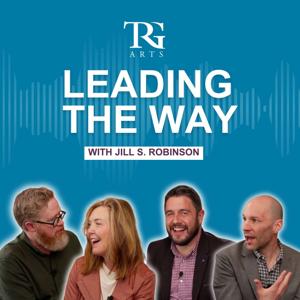
Leading the Way with TRG Arts

Leading the Way with TRG Arts

Download on the App Store

Leading the Way with TRG Arts episodes

  • Are You Building Your Budgets on Hope, or Real Relationships?

    Most arts organizations can tell you their revenue targets. Fewer can name the segments, behaviors and people that will actually deliver them.

    When financial pressure rises, leaders default to revenue buckets: tickets, subscriptions, donations. But as this episode makes clear, those buckets don’t buy tickets. People do.

    This conversation reframes budgeting through a People lens. Revenue is not a line item. It’s the outcome of relationships, shaped by segments including recency, frequency, and behavior over time. When you shift from revenue-based planning to relationship-based planning, you gain clarity: where growth is possible, where risk is hiding, and what must change to hit your goals.

    We explore why annual planning often falls short, how multi-year pipeline thinking changes investment decisions, and what it really means to hold teams accountable for relationship metrics, not just financial outcomes. 

    This episode challenges leaders to move beyond hopeful projections and toward people-driven strategy, so financial plans become proactive, measurable, and sustainable.


    Key Takeaways to Put Into Action:

    • Revenue goals are made of relationships: If you can’t name the segments and behaviours driving your target, you’re probably guessing.
    • You inherit your pipeline, you don’t invent it: Short-term targets are shaped by years of past behavior. Budgeting must reflect that reality.
    • Segmentation is a leadership tool, not just a marketing tactic: New, active, lapsed, multi-buyers - each requires different investment decisions.
    • Multi-year planning reduces risk: Annual planning without pipeline metrics creates financial blind spots .
    • Accountability must connect to ‘people metrics’: Clear ownership of relationship-driven KPIs makes growth achievable, and shared across teams .
    32 min
  • How to Build Demand by Managing the Room, Not Just the Price

    Why Experience, Access, and Perception Drive Audience Behavior
     
    When demand for performances softens or fluctuates, the pressure inside arts organizations intensifies. Leaders feel it in budgets, board conversations, staff morale, and the constant urge to “do something” to influence sales. Too often, that something is discounting, comping, or quietly pulling back on the audience experience.

    This episode challenges that reflex, and re-frames demand not as something organizations either “have” or “don’t,” but as something leaders can actively manage through experience, access, and perception. Demand is rarely at the extremes. Most organizations live in the middle, where leadership decisions matter most.

    We explore how common tactics used to “dress the house” can create long-term consequences: weaker loyalty, diluted pricing power, reduced frequency, and internal misalignment. Rather than chasing sell-outs or using price as a shortcut, this conversation invites leaders to protect the real value of the work by managing access, signaling success, and prioritizing experience so today’s decisions strengthen relationships instead of quietly working against them.

    Key Takeaways to Put Into Action:

    • Demand is something to manage, not wait for: Most organizations already have demand. The question is how leadership decisions shape it over time.
    • Experience matters most when demand feels soft: Pulling back on hospitality and energy sends powerful signals to your most loyal audiences.
    • Access shapes perception before price does: Scale plans, seat availability, and early access influence how audiences interpret value.
    • Comps are currency, not filler: Unmanaged complimentary tickets quietly undermine perceived demand and future behavior.
    • Success is more than a sell-out: Protecting perception and experience builds loyalty, frequency, and long-term revenue.

    For more insights, past episodes, and to sign up for our newsletter, visit trgarts.com/leadingtheway 

    Contact Info:  

    Email [email protected] 

    36 min
  • Leading with Frequency: How Stronger Relationships Build Stronger Futures

    In the arts world, success isn’t just about bringing in new people; it’s about building long-lasting relationships with the ones you already have. The key to sustainability lies not in finding more first-time visitors, but in building strategies to inspire your existing audience to return again and again (and again).

    This episode explores why frequency, or deepening the rate at which customers come back, is the most powerful strategy for arts organizations.

    Key Takeaways to Put Into Action:

    • Are Subscriptions Really Dead? No, but the mindset is. Subscriptions, memberships, CYOs and flex passes all still work when they’re tools for one thing: driving frequency.
    • Prioritize Returning Patrons: Focus on retaining loyal patrons, as they are your most reliable source of long-term success.
    • Recency Leads to Frequency: Get people back sooner; it’s the first step toward loyalty and one of the simplest, most powerful growth levers you have.
    • Build Recurring Revenue: Prioritize audience return rates to create steady, repeatable revenue instead of relying on occasional sales.
    • Organizational Alignment Drives Growth: Align marketing, development, and box office teams to create a unified strategy that nurtures long-term engagement.

    For more insights, past episodes, and to sign up for our newsletter, visit trgarts.com/leadingtheway 

    Contact Info:  

    Email [email protected] 

    49 min
  • The 6 Must-Know Metrics Every Arts Leader Should Track (And Why)

    Arts and cultural organizations have more data than ever before, yet many leaders still struggle to know what to measure… or how to act on it. Too often, we drown in reports, track numbers no one uses, or rely on anecdote instead of evidence. The result? Decisions shaped by habit, instinct, or overload rather than clarity. 

    In this episode, we explore the six must-know audience and revenue metrics that truly matter. Along the way, we unpack why culture and leadership, not technology, is the real barrier to data-driven decision making, why comps don’t build future audiences, and how inflation is quietly eroding per-ticket revenue. 

    This is a call to stop chasing every data point and instead build a culture where focused, actionable metrics drive your strategy. When organizations simplify and align around the right numbers, they can sharpen campaigns, retain more audiences, and grow sustainable revenue. 

    Key takeaways you can act on: 

    • Stop drowning in numbers: Most sales reports don’t matter. Focus on the few metrics that actually impact outcomes. 
    • See the full picture: New, loyal, and lapsed buyers behave differently; if you’re not tracking them separately, you’re probably still guessing. 
    • Retention is everything: New audiences are vital, but they only deliver long-term value if they return. Without retention, acquisition spend is wasted. 
    • Units matter as much as money: Raising prices can make the numbers look good while audiences slip away. Headline revenue isn’t the same as real success.
    • Measure what matters: Conversion and response rates aren’t glamorous, but without them you’ll never know if campaigns are really working.
    • Smart spending fuels growth: It costs money to win and keep audiences. Treat it as investment; cut it, and you put your future at risk.
    36 min
  • The Power of Pricing: Why Arts Leaders Must Move From Fear to Strategy

    Pricing isn’t just a box office task. It's one of the most strategic levers arts organizations have. Yet too often, pricing is treated as an emotional, reactive decision; or worse, an afterthought. 

    In this episode, we unpack why the sector has fallen behind inflation, why the fear of raising prices lingers, and how strategic pricing can reshape both revenue resilience and accessibility. From pandemic-era hesitancy to the misconception that lowering price drives demand, we explore why pricing belongs at the leadership table and what it looks like when data (not gut instinct) drives decisions. 

    This is a call for leaders to move beyond set-it-and-forget-it pricing and instead adopt a discipline of monitoring, testing, and adapting. When pricing is managed strategically, organizations don’t just cover costs; they build relationships and grow loyalty and sustainable income. 

    Key takeaways you can act on: 

    • Pricing is leadership work: The most important financial lever shouldn’t be left to siloed decision-making. 
    • Fear is costing you revenue: Incremental price adjustments prevent the “catch-up sting” of years of inaction. 
    • Demand drives price (not the other way around): Price changes don’t create demand; they should respond to it. When seats aren’t selling, the challenge is awareness and value perception, not the cost of the ticket. 
    • Accessibility and revenue can coexist: Strategic scaling allows organizations to expand affordable access while strengthening income. 
    • Dynamic pricing is about nuance: It means responding to demand in both directions: raising or lowering when data shows it matters. 
    • Stop measuring success by sellouts: Optimize per-ticket revenue and define success by patron behavior, not full houses. 

    For more insights, past episodes, and to sign up for our newsletter, visit trgarts.com/leadingtheway 

    Contact Info:  
    Email [email protected] 

    47 min
  • The Secret to Smarter Campaigns? Segmentation That Aligns Your Teams

    Right People. Right Message. Right Time. Every Time.

    We explore why so many arts campaigns feel fragmented, and how smarter segmentation can fix it. From overlapping messages to audience fatigue, misaligned marketing and development teams are often the root of the problem. But when arts leaders take ownership of segmentation as a strategic discipline, campaigns become clearer, more effective, and easier to manage across departments.

    We unpack the real cost of siloed planning, the difference between data and action, and the shift required to move from seasonal pushes to sustained patron cultivation. With practical examples and sector-specific insight, this episode is a call to rethink how campaigns are planned, how audiences are segmented, and who’s really responsible for making it all work.

    Key takeaways you can act on:

    • Why segmentation is a leadership discipline; not just a data task
    • How shared segmentation creates clarity and avoids duplicated asks
    • The key patron segments every arts organization should define and use
    • How collaboration between marketing and development teams strengthens campaign timing and messaging
    • What smarter campaign planning looks like when driven by patron behavior
    • Simple first steps to improve segmentation and align your teams

    For more insights, past episodes, and to sign up for our newsletter, visit trgarts.com/leadingtheway 

    Contact Info:  
    Email [email protected] 

    46 min
  • Why 75% of First-Time Attendees Never Return (And What to Do About It)

    Three out of four first-time attendees never return. Not because the art isn’t strong, but because the follow-up isn’t built for loyalty. Most arts & cultural organizations are investing in acquisition, but losing the retention game where it matters most: right after the first visit.

    In this episode, we explore why timing trumps intention, where most post-show strategies fall short, and how small shifts in behavior can drive long-term impact. If you're ready to increase the number of your first-time attendees that come back, this is the conversation to start with.

    Key takeaways you can act on:

    • Why the “second date” is the most important moment in retention strategy
    • How recency shapes return behavior
    • Common mistakes organizations make in post-show follow-up
    • The difference between audience experience vs. organizational workflow
    • Simple, actionable tactics to turn first-time visitors into repeat attendees 

    For more insights, past episodes, and to sign up for our newsletter, visit trgarts.com/leadingtheway 

    Contact Info:  

    Email [email protected] 

    46 min
  • What’s the Point of Arts Organizations? Building Purpose-Driven Strategy with Seth Godin

    In this episode of Leading the Way, Jill S. Robinson talks with Seth Godin about strategic leadership in the arts. Together, they explore how cultural leaders can bridge immediate operational demands with long-term vision, embracing adaptability, empathy, and purpose to create meaningful, audience-centered institutions that thrive beyond today's challenges. 


    Drawing on insights from Seth’s lates book This Is Strategy: Make Better Plans the conversation touches on the urgent need for leaders to step out of reactive cycles and into proactive, strategic modes of thinking. They discuss how to define success beyond sellouts, build deeper audience loyalty, and lead with intention; not just passion. 


    For more insights, past episodes, and to sign up for our newsletter, visit trgarts.com/leadingtheway 


    Contact Info:  

    Email [email protected] 

    48 min
  • Creativity as an Asset with Ariel Fristoe

    In this bonus episode of "Leading the Way" with Jill S. Robinson, the spotlight is on Ariel Fristoe, the Artistic Director of Out of Hand Theater, an Atlanta-based theater company renowned for its innovative integration of art, social justice, and civic engagement. The conversation delves into the origins, evolution, and significant impact of Out of Hand Theater since its inception in 2001. Ariel Fristoe shares insights into how the company has distinguished itself by focusing on social issues and working closely with community groups and experts, leading to a unique business model that monetizes artistic skills while addressing pressing societal challenges like racism, poverty, and violence. 

    Significant milestones include the theater's recognition by the New York Times as the best theater of 2020 and the notable growth following this acclaim. Fristoe emphasizes the importance of collaborative programs with various organizations, detailing the expansion of their team and the ambitious vision driving their work. She provides advice to other performing arts organizations on achieving authenticity and broad community engagement by prioritizing partners' goals and focusing on local issues, which can unlock new audiences and sustainability for the arts. 

    For additional resources and to sign up for the podcast newsletter, we invite you to visit our website at leadingthewaypodcast.com. 

    Key Topics & Chapter Markers:     


    • Introduction (00:00:04.010): Jill S. Robinson introduces Ariel Fristoe and talks about the achievements of Out of Hand Theater. 
    • Founding of Out of Hand Theater (00:01:11.640 - 00:02:58.250): Ariel Fristoe shares how the theater was started in 2001 with a focus on social issues. 
    • Business Model Changes (00:04:24.850 - 00:06:21.050): Ariel discusses how the theater evolved, especially in monetizing their work and focusing on combating racism, poverty, and violence. 
    • Educational Impact (00:07:21.790 - 00:10:19.180): The impact on schools and communities through theater programs is highlighted. 
    • Growth from Recognition (00:12:14.270 - 00:14:33.510): Ariel talks about the growth following recognition by the New York Times and others in 2020. 
    • Collaborative Programs (00:15:08.450 - 00:15:35.390): All programs involve collaboration with various organizations, Ariel emphasizes. 
    • Team Expansion (00:16:03.010 - 00:19:07.550): Details on how the team has grown since 2018, including their roles and the ambition driving them. 
    • Team Satisfaction (00:20:40.590 - 00:21:11.260): Ariel reflects on the satisfaction with her team's work and their passion. 
    • Future Goals (00:22:24.750 - End): Ariel discusses her vision for Out of Hand Theater to become national leaders in arts and community collaboration. 
    • Advice to Arts Organizations (00:23:33.230 - 00:26:43.000): Ariel advises arts leaders on prioritizing partners' goals to gain authenticity and broader engagement. 
    • Challenges in Theater (00:26:43.000 - 00:29:26.390): Ariel talks about the challenges in theater, especially around racial and equity issues, and suggests focusing on local issues to engage audiences. 
    • Closing Thoughts (00:29:26.390 - 00:30:27.590): Jill thanks Ariel for the insightful discussion, highlighting the potential of art to improve communities 


    Contact Info:    

    [email protected]  

    32 min
  • New Models for Connection in Classical Music with Marna Seltzer and Dasha Koltunyuk

    In this bonus episode of "Leading the Way" with Jill S. Robinson speaks with Marna Seltzer and Dasha Koltunyuk from Princeton University Concerts. Explore how they're reshaping the classical music landscape through groundbreaking initiatives designed to connect deeply with audiences in a post-pandemic world. From the serene blend of music with meditation to the powerful Healing with Music series, discover how they're pioneering new pathways to engage, inspire, and heal. 

    This episode isn't just about music; it's about community, innovation, and the relentless pursuit of relevance in a rapidly changing world. Learn about their strategies for audience growth, the embrace of social media to capture unique concert experiences, and the vision for the future of classical music. With insights on building trust and community, adapting to digital advancements, and maintaining core values, this conversation is a beacon for anyone looking to make a lasting impact in the arts. 

    For additional resources and to sign up for the podcast newsletter, we invite you to visit our website at leadingthewaypodcast.com.     


    Key Topics & Chapter Markers:     


    1. Podcast Introduction [00:00:01.930]: Introduction to the podcast, guests Marna Seltzer and Dasha Koltunyuk, and their work at Princeton University Concerts. 
    2. Adapting to Change [00:01:35.670]: How Princeton University Concerts is evolving with new approaches to arts and culture. 
    3. Pandemic Impact [00:02:01.690]: The significant effects of the pandemic on the arts and the necessity for new planning and thinking. 
    4. Music's Importance [00:04:45.050]: Discussion on the enhanced appreciation of music during the pandemic. 
    5. Innovative Programs [00:06:39.620]: Introduction of new programming, including music with meditation and the Healing with Music series. 
    6. Audience Growth [00:07:04.230]: The increase in events, subscribers, and efforts to engage a broader audience. 
    7. Healing Series [00:09:42.410]: Details on the Healing with Music series and its goals. 
    8. Audience Diversity [00:12:45.600]: The variety in audience demographics and how different programs attract different groups. 
    9. Community Building [00:15:23.670]: Reflections on the importance of building trust and community before and after the pandemic. 
    10. New Initiatives [00:18:53.550]: Introduction of unique initiatives like pre-concert speed dating to foster community. 
    11. Intergenerational Values [00:21:38.510]: Discussion on shared values across different generations within the team. 
    12. Post-Pandemic Adaptation [00:23:11.150]: Adapting to the post-pandemic world with new perspectives and digital savviness. 
    13. Social Media Engagement [00:24:48.420]: How social media initiatives like "sound bites" have enhanced audience engagement. 
    14. Future Vision for 2040 [00:27:08.150]: Dasha Koltunyuk's outlook on the future of classical music and its universal appeal. 
    15. Classical Music Resilience [00:28:53.440]: Marna Seltzer reflects on the longevity and future challenges of classical music. 
    16. Demographic Changes [00:32:37.810]: Discussion on how future demographic and community changes might influence classical music engagement. 
    17. Building Community Values [00:34:21.730]: The podcast concludes with thoughts on shared creativity values and lessons from Princeton University Concerts' experiments in community engagement. 


    Contact Info:    

    [email protected]

    36 min

About Leading the Way with TRG Arts

From the publisher's feed

Leading the Way explores the biggest questions facing today’s arts and cultural leaders: how to grow revenue, deepen audience relationships, and lead confidently through uncertainty. Join TRG Arts CEO…