
Sign up to save your podcasts
Or

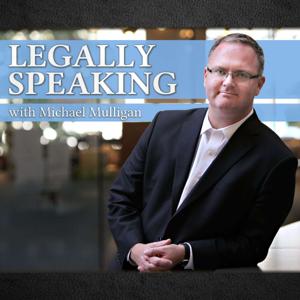


In British Columbia, the Crown Counsel Association negotiates wages, salary hours or work, and working conditions for Crown Counsel.
In 2018, the BC government decided to have Crown Counsel, rather than the police, conduct bail hearings at night and on weekends.
Rather than negotiating with the Crown Counsel Association, the BC government made a unilateral decision to have Crown Counsel work evenings and weekends, claiming that the Attorney General had the power to do this under the Attorney General Act that says the Attorney General can "preside over" the Ministry of the Attorney General.
The Crown Counsel Association grieved this decision, and an arbitrator concluded the government didn't have the authority to act unilaterally or attempt to negotiate with individual Crown Counsel: it had to negotiate the change with the hours Crown Counsel was required to work.
Rather than negotiating, the government appealed the Arbitrator's decision through a judicial review.
The judge on the judicial review found that the arbitrator's decision was transparent, intelligible, justified and reasonable and so upheld it and ordered the government to pay costs to the Crown Counsel Association.
In addition to attempting to bypass collective bargaining with Crown Counsel, the provincial government is also engaged in litigation with the provincial government lawyers who are not Crown Counsel. After these lawyers voted to join a union, the government passed legislation forcing them into a different union they did not want to belong to.
A neighbour dispute over a fence and access to repair it is also discussed on the show.
After several years of refusing to permit access to their property for the purpose of repairing a fence, the neighbour on whose property the fence was located obtained an order pursuant to section 34 of the Property Law Act to permit them to access the neighbour's property for the purpose of maintaining the fence.
This section of the Property Law Act permits a judge to order access to property for the purpose of repairing a building, structure or improvement on adjourning land when the consent of the owner of the adjoining land is refused or cannot reasonably be obtained.
The judge concluded that this section of the act, which was added in 2018, was applicable and that it also allowed the order to permit access on an ongoing basis without the need for repeated court applications.
Finally, on the show, the BC Court of Appeal upheld the eviction of a tenant as a result of them installing a dishwasher without permission and, more significantly, covering a smoke detector up with a cardboard box.
Section 47 of the Residential Tenancy Act permits a tenant to be evicted if the tenant has "seriously jeopardized the health or safety or lawful right of another occupant of the landlord and put the landlord's property at significant risk."
The Court of Appeal rejected the tenant's argument that they had a right to time to fix the problem.
Follow this link for links to the cases discussed.
Many professions such as doctors, engineers, and architects are regulated to ensure that people providing services to the public are properly trained and competent to practice. The need for this is clear: you want to ensure people receive good medical care and the buildings and bridges don't fall down.
The regulation of lawyers has this objective as well: you want to know that you're getting competent legal advice when you hire a lawyer.
Because lawyers are often engaged in work that is in opposition to the wishes of the government it is also important that the regulation of lawyers is independent of the government.
If you hire a lawyer to defend a criminal case, prevent the government from apprehending your children, challenging the validity of a law, or pursue indigenous rights, you do not want the lawyer to be concerned about the professional consequences of acting in opposition to the government's wishes.
This independence is under threat in British Columbia as a result of a proposal to "modernize" the Legal Profession Act in such a way that the provincial government would be able to appoint an increased number of the benchers (directors) that govern the Law Society.
As discussed on the show, the government's immediate motivations to take greater control include a wish to avoid providing adequate funding for legal aid services by creating a system of paralegals with less training than lawyers to provide legal services for the poor.
The issue of adequate legal aid funding has been pursued by the Law Society for many years.
BC is the only province in Canada that imposes a special tax on legal services. The tax was introduced by an NDP government in 1992.
When the tax was introduced it was done for the express purpose of funding legal aid.
Quickly, however, the tax started collecting more money than the government was providing for legal aid and the extra funds were diverted to general revenue.
The government now diverts more than half of the funds collected pursuant to the special tax while dramatically underfunding legal aid services.
The diversion of tax revenue from legal aid has resulted in various challenges by the Law Society including a vote to censure a past Attorney General.
A history of the funding of legal aid in BC, the special tax, and the disproportionate impact the diversion of revenue from the special tax has had on women can be found here.
The government proposal has met with opposition from the Canadian Bar Association, the Victoria Bar Association, the Law Society, and others.
As discussed on the show, one of the elected benchers from Victoria, Paul Pearson gave up his position because he works as Crown Counsel and concluded he couldn't effectively oppose the government initiative while also working for the provincial government.
His statement outlining the import of what has been proposed can be found here.
Follow this link for a transcript of the show and links to the legislation discussed.
Get ready to plunge into the riveting world of legal complexities as we welcome Michael Mulligan, a seasoned barrister and Solicitor, to our podcast. Packed with insights and thought-provoking perspectives, we'll unravel the collateral consequences of committing an offence and the intricate aspects of third-party records in criminal cases. Mulligan guides us through the maze of evidence collection, especially in scenarios where the police don't possess the evidence, as in the case of a prison assault video. We also delve into the privacy concerns surrounding the people featured in such videos.
Moving on, we dive headfirst into the challenging terrain of the prison disciplinary process. Mulligan sheds light on the current system where a standard of "probably" is adopted while punishing inmates, a practice that could be at odds with the constitutional right of presumption of innocence until proven guilty. We debate the fairness of this system, especially for inmates awaiting trial while presumed innocent. To add to the mix, Mulligan paints a vivid picture of the realities of prison life, underscoring how this environment influences legal proceedings. Buckle up for this intense exploration of the legal intricacies within the prison system!
Follow this link for a transcript of the show and links to the cases discussed.
Who says law and property rights can't be riveting? Brace for a legal deep dive unravelling the complexities of the Short Term Rental Accommodations Act in British Columbia. It's not every day you get to compare it to governmental property seizure, but we dare to tread those intriguing waters. We pick apart the legal precedents for compensation in cases where the government appropriates property and delve into the Supreme Court of Canada's ruling in the Annapolis Grouping v. Halifax Regional Municipality case. And that's just the tip of the iceberg!
We also discuss building permits, how court decisions are interpreted, and even explore the Canlii website for a dose of free case law knowledge. This episode is a must-listen for anyone keen on property rights and the intricacies of the law!
Follow this link for a transcript of the case and links to the cases discussed.
Join us this week where we'll be opening the vault of Canada's legislative past with legal expert Michael Mulligan. Trust us, you won't want to miss this deep dive into the controversial British Columbia Heroin Treatment Act of 1979. Together, we'll unravel the context of the Opioid Crisis of the late 70s and today, investigating the eerily similar circumstances and sobering statistics of both times.
In the episode, we'll have a healthy debate about the implications of the Heroin Treatment Act. By dissecting the act, we'll see the jurisdictional challenges it presented and the public's resistance against mandatory treatment. Not to mention the fascinating parallels between the current Mental Health Act and the Heroin Treatment Act.
But hold your horses; we won't stop there! We'll be shifting gears to discuss the impact of prolonged delays in civil cases, specifically centred around employment disputes. We'll examine two unique cases, both revolving around dismissed employees. You'll hear about their fight for severance pay under the Employment Standards Act and the repercussions of these extended delays on their case outcomes. Whether you're a history aficionado or a legal enthusiast, you're in for an insightful ride as we navigate through Canadian legal history and today's legal hurdles.
Follow this link for a transcript of the show and links to the cases discussed.
Do you feel like you’re reading a different language when you look at legal documents? You’re not alone. We’ve brought in legal expert Michael Mulligan to decipher Bill 34, the Restricting Public Consumption of the Legal Substances Act, and it’s not what you’d expect. This piece of legislation doesn't public drug use anywhere unless someone is first asked to stop by a police officer. Mulligan also sheds light on the process and consequences of seizing substances discovered during these encounters.
But we're not just decoding legal jargon today. We’re also unwrapping the little-known tort of misfeasants in public office and how it’s interpreted by the Supreme Court of Canada. Mulligan walks us through a real-life case of a man hindered by political interference despite crossing all the T’s and dotting the I’s for his run-of-the-river hydro project. This incident serves as a vital reminder that the law should always be upheld, and decisions should be made with fairness and objectivity. This isn't your everyday legal discussion, so get ready to dive into the fine print!
Follow this link for a transcript of the show and links to the cases discussed.
Strap in for a thrilling conversation with Barrister and Solicitor, Michael Mulligan, as we navigate the tricky terrain of family law and indigenous governance. Curious about how the court defines a 'spouse' and how that affects child support? We dissect a case of a former stepfather, compelled to shoulder significant monetary responsibilities for three children, despite the fluctuating nature of his relationship with their mother. Listen as Michael enlightens us about how the BC Family Law Act interprets 'spouse', a definition that might surprise you.
Ever wondered how adoption laws work in British Columbia? We delve into a unique case of a teenager yearning for adoption by his stepmother, and the hurdles he faces due to his biological mother's refusal. To top it all, we also scrutinize a controversial case involving a Canadian First Nations band council charged with misconduct. We discuss allegations of breach of fiduciary obligations, the band's counter-argument, and the broader implications of this case for indigenous communities. This is a rollercoaster ride through some high-stakes legal cases and their wider impacts. So, tune in for some thought-provoking discussions on family, identity, and justice.
Follow this link for a transcript of the show and links to the cases discussed.
This week on Legally Speaking with Michael Mulligan:
Before the introduction of mandatory no-fault ICBC insurance in May of 2021, if someone was killed in a motor vehicle accident, the deceased's family could sue the person responsible for the accident to receive compensation for at least the financial loss of a loved one.
This typically occurred when the person killed had financially supported their children or partner.
In the first case discussed, the parents of a 17-year-old Korean boy who was killed in a car accident were awarded $327,000 based, in part, on expert evidence of the Korean tradition of hyodo duty.
This tradition, which is particularly applicable to the eldest son, was a legal obligation in Korea until the 1990s. It contemplates reciprocity and repayment to parents for the sacrifices they have made and meeting the expectations of parents’ wishes concerning care and old age.
The boy was killed three months before he graduated from high school. While going to school, he worked long hours in his parent's restaurant without a salary and broadly assisted his parents, who spoke limited English.
The judge who decided the case permitted hearsay evidence concerning the boy’s specific statements concerning his concern and care for his parents.
Because the boy’s parents weren’t financially dependent on their son at the time he was killed, the ICBC no-fault insurance system would only have paid for a funeral, grief counselling, and $16,256 in compensation.
One of the profoundly unfair parts of the ICBC no-fault system is that any compensation for lost earning capacity when someone is injured or killed is based on what the person earned at the time of the accident. If, for example, someone is a student when they are injured or killed, any compensation for their inability to work is based on how much they were earning as a student and not what they would have earned once they graduated and started working.
Also, on the show, a case involving First Nations challenging the mineral exploration legislation in BC is discussed.
The Mineral Tenure Act in BC permits people to file a mineral claim over unclaimed Crown land and search for minerals there.
If minerals are found before there could be any commercial mining occurs, further government approval is required.
The First Nations argued that they should be consulted before allowing people to search for minerals.
The First Nations argued that their constitutional rights were violated and that the BC Declaration on the Rights of Indigenous Peoples Act, which attaches a copy of the United Nations Declaration on the Rights of Indigenous People, required additional consultation.
The judge hearing the case concluded that the BC Declaration on the Rights of Indigenous Peoples Act did not create any new legal rights that could be enforced in court but instead set out a government commitment to reconciliation.
Despite this, the judge determined that while the Mineral Tenure Act was not unconstitutional, the government is required to set up a system to consult with First Nations before issuing a mineral claim. The judge allowed the provincial government 18 months to set up a system to facilitate this.
Finally, a case involving an unsuccessful attempt by the BC Legislative Assembly to prevent special constables at the legislature from forming a union based on a claim of parliamentary privilege is discussed.
Follow this link for a transcript of the show and links to the cases discussed.
Buckle up for a wild ride as we navigate the intricacies of some fascinating legal cases on Legally Speaking with Michael Mulligan. He's a barrister and solicitor at Mulligan Defence Lawyers.
First up, a woman, her guinea fowl, and a bylaw that isn’t as black and white as it seems. Discover how this fascinating case hinged on the interpretation of the bylaw and whether guinea fowls are considered poultry, fowl, or exotic birds. Spoiler alert: they're not what you think!
With no time to waste, we discuss two cases involving cannabis retailers on First Nations Reserves. Listen as Michael breaks down the lawsuit where retailers accuse the province of negligence and misrepresentation. Can the province be held responsible for the retailers' losses, or is the relationship too tenuous for a negligence claim to stick? Finally, we discuss an indigenous man who was evicted from his home on the Squamish Nation Reserve without compensation for establishing a marijuana dispensary and other violations of housing policy.
Follow this link for a transcript of the show and links to the cases discussed.
This week on Legally Speaking with Michael Mulligan:
An analysis of various policy proposals the BC United Party issued concerning the criminal justice system.
The proposals include hiring additional police and Crown, ending the decriminalization of drugs, funding body cameras for all police, opening more courts, and pursuing civil claims against people who traffic drugs that cause death.
Follow this link for a transcript of the show and link to full policy details.
From the publisher's feed

433 Listeners

408 Listeners
209 Listeners

210 Listeners
76 Listeners

36 Listeners
67 Listeners
104 Listeners

85 Listeners

449 Listeners
50 Listeners

114 Listeners

8,429 Listeners

34 Listeners

47 Listeners