
Sign up to save your podcasts
Or

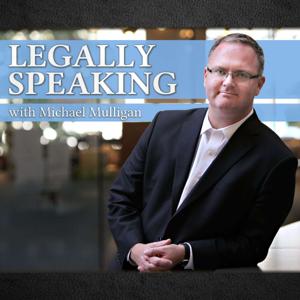


This week on Legally Speaking with Michael Mulligan:
Following 7 days of hearings, with 79 pages of notices of application, responses to applications, and pleadings, 13 affidavits totalling more than 500 pages, 67 authorities, and over 90 pages of written submissions, a BC Supreme Court Judge has concluded that the District of Central Saanich did not have authority, pursuant to its Tree Protection Bylaw, to prevent a farmer from clearing trees to expand their farm.
The judge concluded that while municipalities have some authority to regulate tree removal, the Community Charter, which delegated this authority to municipalities, does not permit such bylaws or regulations to prevent trees from being removed to the extent necessary to permit a property owner from engaging in “development to the density permitted” by applicable zoning.
The District of Central Saanich argued, unsuccessfully, that the words “development” and “density” should be narrowly construed so as to apply only to the construction of homes or buildings.
The judge hearing the case concluded that the terms “development” and “density” include more than the construction of homes or buildings and that these terms include things such as the development of a farm to increase crop yields.
As the property owners pointed out, and the judge accepted, one cannot farm in a forest.
Also on the show, a case involving a vulnerable, elderly, woman who signed away her home as part of an unconscionable purchase and sale agreement is discussed.
The woman, who was 84 at the time of trial, was persuaded to sign a transfer of her home after she had moved into an assisted living facility. The sale agreement said that the woman would receive $485,000 but the terms of the sale provided that no payments would be made for 24 months and then, over between 20 and 40 years, she would be paid from profits of a proposed winery.
Two of the people involved in the purchase took the woman to a notary, rather than a lawyer, to have the home transferred.
Unlike lawyers, notaries don’t provide legal advice.
This notary made no inquiries about the transaction, made no inquiries about the relationship between the woman and the men who brought her to the notary's office, made no inquiries about the woman’s capacity, did not recommend legal advice, and made no notes.
The notary charged $50 and executed the document transferring the woman’s home to the would-be wine company.
At trial, the judge found that the notary had breached even the duty of care the notary owed the elderly woman and ordered that the notary pay the woman for the home.
The BC Court of Appeal agreed that the notary had breached his duty of care but found there was insufficient evidence for the trial judge to have concluded the woman would not have signed the paperwork to transfer her home even if she had been told that she should obtain independent legal advice before signing the transfer papers.
The case is a cautionary tale about the risk of harm to vulnerable people when significant transactions occur without proper legal advice.
It’s not likely a coincidence that the men involved in the unconscionable purchase of the home took the woman to a notary to execute the transfer, rather than a lawyer who would be expected to make further inquiries and offer the woman legal advice about what she was being asked to sign.
Follow this link for a transcript of the show and links to the cases discussed.
This week on Legally Speaking with Michael Mulligan:
A University of Victoria instructor pleaded guilty to criminal contempt for blocking a road by chaining himself to a log.
Other people who had been convicted in similar circumstances have been sentenced to a period of probation with 100 hours of community work service.
Following the man's arrest, his bag, containing $1605 of his camping gear, was “repeatedly run over by a road grader”.
Judges can consider the “collateral consequences” of a charge when determining an appropriate sentence.
As a result, the man’s sentence was ordered to complete only 70 hours of community service: an effective reduction of $53.50 / hour for the run-over camping gear.
Also, on the show, statutory exemptions from paying municipal property tax are discussed.
In British Columbia, municipalities determine their budget and set mill rates for different kinds of property. The mill rates are multiplied by every $1,000 in property value, as determined by BC Assessment.
Because of how this system works, the amount of tax payable by each property owner depends on the relative value of properties and how many properties there are to distribute the tax burden.
Section 220 of the Community Charter includes a list of kinds of properties that enjoy a statutory exemption from paying any property taxes. They include hospitals, schools, graveyards, and property owned by the provincial government. It wouldn’t be sensible if municipalities could impose very high property taxes on the legislature building, for example.
Section 220 (h), however, exempts property owned or leased by religious organizations from paying any municipal tax. The result of this statutory exception is that all other property owners in a municipality are required to pay more in property tax to subsidize religious organizations that are paying nothing.
In addition to the unfairness of requiring all other property owners to subsidize religious organizations, the exemption may be inconsistent with section 2 (a) of the Charter, which provides for “freedom of conscience and religion”. This section has been interpreted to include freedom from being required to engage in religious activity.
In a case called R. v. Big M Drug Mart Ltd., the Supreme Court of Canada held that the Lords Day Act, which required businesses to be shut on Sunday, contravened section 2 (a) of the Charter. This compelled business owners who were not religious or who worshiped on days other than Sunday to close or pay a fine.
There would be a compelling argument that requiring property owners to pay higher property taxes to subsidize religious organizations is unconstitutional.
Finally, on the show, a new BC Court of Appeal decision expanded the scope of how judges should interpret section 718.2(e) of the Criminal Code. This section provides that when sentencing someone, a judge should consider all available sanctions other than imprisonment “with particular attention to the circumstances of Aboriginal offenders.”
The court reduced a sentence from 5 years to 4 years in jail for a Métis man convicted of aggravated assault for an unprovoked stabbing.
The accused in the case had a horrific childhood, primarily because of his non-indigenous stepfather.
The Court of Appeal concluded that the man had a “significantly reduced level of moral blameworthiness” and had no difficulty inferring that “Canada’s colonial history and assimilationist policies played a role in bringing Mr. Kehoe before the court.”
Follow this link for a transcript of the show and links to the cases discussed.
This week on Legally Speaking with Michael Mulligan:
In response to political pressure resulting from public disorder and random assaults of strangers, BC Premier Eby announced several policy changes, including some amendments to the Crown Counsel Policy Manual concerning bail.
Much of the social disorder and irrational, random assaults of strangers in urban centres are rooted in the increase in homeless people suffering from mental illness and drug addiction.
In 2012, after many years of downsizing, a large mental hospital called Riverview was closed. It was decided that it would be more humane to treat people suffering from mental illnesses in the community rather than in an institutional setting.
Unfortunately, adequate community treatment for mental illness was never provided.
As a result, many hundreds of people suffering from profound mental illnesses are now left homeless and untreated. At its peak, in the 1950s, more than 4,500 patients lived at Riverview hospital.
Some of the policies announced by Premier Eby are likely to be helpful. One announcement was for additional funding to create more secure hospital spaces for people who are determined to be mentally ill, in need of treatment, and who are a danger to themselves or others.
Unfortunately, to blunt political claims that the social disorder and random attacks on strangers are the results of failing to seek the detention of people once there are arrested and charged with a criminal offence, changes to the Crown Counsel Policy Manual were also announced.
The Crown Counsel Policy Manual is intended to provide direction to Crown Counsel to ensure consistent principled decision-making when conducting criminal prosecutions.
The changes were intended to make the relevant policies sound tougher.
Unfortunately, many of the changes imply that Crown Counsel was not considering relevant things when making decisions on bail. That has not been the case.
In addition, to the extent that the changes create the impression with the judiciary that when Crown Counsel is seeking someone’s detention, it is being done for political reasons rather than because of a reasoned conclusion that detention is appropriate, the changes to the policy may undermine the seriousness with which such submissions are received.
Also, on the show, two new pieces of legislation intended to address a housing shortage are discussed.
Bill 44, the Building and Strata Statutes Amendment Act, 2022, will eliminate the ability of strata corporations to restrict the rental of strata units. It will also eliminate all age restrictions for strata properties, except for 55+ buildings. The changes intend to increase the number of available rental units.
For people who own strata units they do not occupy themselves, the elimination of all rental restrictions will subject owners to an extra “vacancy tax” if the units are not rented. Before the legislation, owners could avoid the vacancy tax if they were not permitted to rent units due to strata rental restrictions.
Bill 43 – the Housing Supply Act, will permit the provincial government to set targets for municipalities to permit more housing to be constructed. If targets are not being met, the legislation permits municipal records to be examined and, ultimately, the provincial government to amend zoning bylaws and issue construction permits.
Follow this link for a transcript of the show and links to the legislation discussed.
This week on Legally Speaking with Michael Mulligan:
British Columbia has had inadequate legal aid funding for family and poverty law cases for many years.
In 1992 the NDP government imposed a special tax on legal services to fund legal aid. Anyone who hires a lawyer pays this special 7% tax that applies to no other professional services.
In 2002 the Liberal government of the day cut legal aid funding by 40% but kept the tax in place. The result was dramatic cuts to family and poverty law services and legal aid clinics across the province being closed. The government did, however, keep the special tax in place.
This has disproportionately impacted women and indigenous people who relied more heavily on the services that were eliminated.
By 2017 the special tax on legal services was raising more than $210 million per year.
By 2022 only $108.6 million of the funds collected by the special tax was being provided to Legal Aid BC.
Rather than stopping the diversion of funds raised by the special tax on legal services, the government has proposed having paralegals, rather than lawyers, assist with family law and other matters for the poor.
This has been resisted by the Law Society, which is the self-government body that regulates lawyers.
One of the core obligations of the Law Society is to ensure that the public is protected by ensuring people providing legal services are properly qualified.
Having unsupervised paralegals providing family law services is a concern because family law can be very complicated, and mistakes can impact important things such as child custody, spousal and child support.
In an attempt to force the use of paralegals, the provincial government has issued an Intentions Paper which proposes giving the government more control over the Law Society by decreasing the number of elected Benchers and increasing the number of Benchers appointed by the government.
Law Society Benchers are similar to a board of directors.
This proposal is of significant concern because the legal profession needs to be independent of the government. After all, lawyers often oppose the government.
Until November 18, 2022, an online survey is open concerning the government’s proposals.
Also, on the show, the Supreme Court of Canada has determined that judges are permitted to impose harsher sentences than what is being requested by the Crown; however, they are required to advise the parties they plan to do this and permit the opportunity for further submissions.
The SCC distinguished cases where there was a disagreement on when the sentence should be from cases where there is a joint submission.
For joint submissions, a judge must do what is requested unless it is so inappropriate that it would bring the administration of justice into disrepute.
Finally, a judicial recount from the municipal in Port Moody is discussed.
The initial machine vote count resulted in a two-vote difference between the two candidates. Feeding some of the ballots through the vote-counting machine resulted in a slightly different result. A further machine recount identified six ballots the courting machine was having trouble reading.
When these ballots were looked at, the intention of the voters was clear. The result of counting the votes property was a tie. Pursuant to the Local Government Act, the tie was resolved by a random draw.
The candidate who was initially two votes behind won the random draw and became the council member.
Follow this link for a transcript of the show and links to the cases discussed.
This week on Legally Speaking with Michael Mulligan:
All too often, people with serious mental illnesses end up in the criminal justice system when they are not afforded adequate and sustained medical treatment.
In a case discussed on the show, a man who had suffered from multiple mental health issues since he was eight years old was charged with assault with a weapon and aggravated assault after he attacked a relative and an elderly neighbour one day after he was released from jail.
The man suffered from a range of mental health issues, including schizoaffective disorder, bipolar disorder, neurological impairment, traumatic brain injury and the toxic effect of extensive and severe substance use.
For many years he had been convicted of various criminal offences. He was repeatedly incarcerated. He would receive some treatment, be released, re-offend, and go back to jail.
The man first began hearing voices at age 17. He believed that the devil Lucifer had stalked him. He had twice carved “666” into his arm as part of these beliefs and then scratched the numbers out with deeper cuts as he would subsequently become afraid that he could not go to heaven while bearing the marks. For years he believed that by drinking his urine, he could keep evil spirits away. He would also keep feces beneath his bed to trap evil spirits so that he could flush them away.
He attacked an elderly neighbour and his cousin the day after being released from jail because he believed Lucifer had told him they had sexually abused others. He believed that he was an angel working to protect victims of sexual assault.
The elderly neighbour suffered cigarette burns, facial bruising, a broken jaw, and several broken teeth.
The case is a tragic example of the inadequacy of long-term, secure mental health treatment facilities in British Columbia. The legislation to do this exists in the form of the Mental Health Act. What is not available are sufficient, secure, long-term treatment resources.
Putting someone like this man into jail does little to address his lifelong mental health needs and does not protect the public for any longer than each jail sentence.
In the case discussed, the man was initially unfit to stand trial. This means he couldn’t understand basic things, such as the nature of the proceeding.
After seven months of intensive mental health treatment, he was determined to be fit to stand trial.
Then, with the assistance of a lawyer, he admitted that he had committed the offences. The only issue for the judge was whether he should be found not criminally responsible as a result of a mental disorder (NCRMD).
An NCRMD finding can occur when someone is suffering from a mental disorder that prevented them from knowing what they did was wrong at the time.
The judge hearing the case, concluded that the man was NCRMD. As a result, he will remain in a secure mental health facility indefinitely unless he is no longer determined to be a danger.
Also, on the show, an application to unseal documents relating to the investigation of the murder of a Victoria realtor by the name of Lindsay Buziak in February of 2008 is discussed. The application was denied on the basis that the judge concluded the investigation was still active after 14 years and that permitting public access to the material could result in others being placed at serious risk of physical harm.
Follow this link for a transcript of the show and links to the cases discussed.
This week on Legally Speaking with Michael Mulligan:
In the context of a judicial review of a decision to compel a patient to continue to receive antipsychotic medication against her will for many years, the difference between bail in a criminal case and involuntary treatment pursuant to the Mental Health Act is discussed.
In most circumstances, when someone is arrested for a criminal offence, there is a presumption that they will be released on bail pending their trial.
If people who were accused of criminal offences were routinely held in jail before having a trial, the presumption of innocence would have little practical meaning.
The right not to be denied bail without just cause is not only specified in the Criminal Code but is also a constitutional right.
The circumnutates in which someone can be kept in jail without having been found guilty of a criminal offence are where it is necessary to 1) ensure the person will attend court for their trial, 2) for the protection or safety of the public or 3) to maintain confidence in the administration of justice.
In most cases, when the police arrest someone, they decide it’s appropriate to release the suspect with whatever conditions they believe are appropriate to ensure the person will attend court and not pose a safety risk.
Common conditions would include things like reporting to a bail supervisor, not possessing weapons, not having contact with specified individuals, or attending to specified locations.
It is not lawful to hold someone in jail without a trial or to impose bail conditions for other reasons. Bail conditions, in a criminal case, cannot be imposed to punish an accused, to enforce the treatment of a mental health or addiction issue, or to encourage someone to plead guilty by making them wait in jail for a long time to have a trial.
Because the right to bail is constitutionally protected and central to the presumption of innocence, it is not subject to being changed into a mechanism to force people who are mentally ill or addicted to drugs to get treatment.
There is, however, an alternative system which is premised on helping people who suffer from mental illness and are a danger to themselves or others. This system operated pursuant to the BC Mental Health Act.
When a police officer believes someone is suffering from a mental disorder and is a danger to themselves or others, they can arrest the person and bring them to a hospital for treatment.
If a doctor concludes that someone is suffering from a mental disorder and requires supervision of care in a designated facility to protect the person or others, they can require them to remain for treatment for up to 48 hours.
If someone is to be kept longer than 48 hours, a second doctor must agree that involuntary treatment is necessary. With the approval of a second doctor, a patient can be kept for up to a month.
Beyond a month, there is a process to review the need for continued involuntary treatment. That involves a tribunal made up of a doctor or retired doctor, a lawyer, and a member of the public.
To work, however, the mental health system requires additional resources, including facilities to house and treat people who are determined to need involuntary, secure treatment.
Given the large number of homeless people who are suffering from mental illness and concurrent substance abuse disorders, additional resources of this kind would be much more effective than waiting for such people to commit a criminal offence and then trying to use the criminal bail system to keep them in jail before trial.
Follow this link for links to the cases discussed.
This week on Legally Speaking with Michael Mulligan:
A dispute over the adoption of a dog named Maddie ended up in court after the woman who “rescued” and sold her tried to get her puppies back to sell.
The dispute involved a woman in Port Alberni who has a business selling dogs that the judge concluded was misrepresented to be a registered non-profit organization called Ziggy’s Rescue.
A family purchased Maddie from the woman for $600 and signed a document entitled Foster and Adoption Contract.
The contract specified that Maddie needed to be spayed, but it turned out she was pregnant, so this wasn’t possible until the puppies were born.
When the woman who was operating Ziggy’s Rescue found out that Maddie was pregnant, she insisted that she get the puppies because she wished to sell them. The woman showed up at the home of the family that purchased Maddie and was screaming, “puppy thieves,” called the police, and yelled, “we will bury you” at the family.
The woman operating Ziggy’s Rescue ultimately sued the family in small claims court, seeking $5,000 in “lost revenue” and to get Maddie back.
The judge hearing the case, concluded that the woman operating Ziggy’s Rescue was not a reliable witness. He found that she had misrepresented that she was operating a non-profit organization when she was operating a business. The judge asked the woman if she declared her income, and she responded, “not at this time,” and that “we will get caught up.”
The judge concluded that various terms in the Foster and Adoption Contract were unreasonable and unenforceable. He also concluded that Maddie’s best interest should be a consideration when interpreting the contract on the basis that “we need to recognize that dogs, and other pets, are not simply “things” like a chair or a car.”
The judge concluded that “The time has come for Maddie to finally know she is in her forever home and that the defendant’s family are made whole.”
Also, on the show, a case involving BC Mink Breeders is discussed. In 2021 the BC government decided that mink farming should be phased out in the province by 2025 based on the risk they pose to public health. There was evidence that mink could catch and transmit COVID-19 and a concern that this could result in a dangerous mutation of the virus.
The Mink Breeders are challenging the decision, alleging that it was unreasonable. To do so, they are seeking access to the evidence considered by the provincial cabinet. The provincial government did not want to disclose this information.
The judge hearing the case concluded that while the concept of public interest immunity can be used to keep sensitive and confidential documents secret, it was not absolute. As a result, the government has been ordered to provide an affidavit detailing what documents it wished to keep secret and on what basis public interest immunity was being claimed for each of them so that the judge can decide what should be disclosed.
Finally, on the show, a case involving a small strata corporation and permission to cross a deck to get to a set of stairs leading to a backyard is discussed.
Follow this link for a transcript of the show and links to the cases discussed.
This week on Legally Speaking with Michael Mulligan:
In response to criticism from mayors and others, a report entitled A Rapid Investigation into Repeat Offending and Random Stranger Violence in British Columbia was prepared.
The authors of the report, a retired deputy police chief, and an academic, found that in 2021, while there had been a 7.55% reduction in the non-violent crime severity index in British Columbia, there had been a 4.32% increase in the violent crime serenity index.
Part of this was the result of apparently random assault of strangers. In Vancouver, offences of this kind increased by 35% in 2021.
The report concluded that most suspects in these offences had been apprehended previously under the Mental Health Act.
The Mental Health Act permits people to be apprehended and held for involuntary mental health treatment when someone is determined by doctors to be a danger to themselves or others. Predicting this is, of course, difficult and available resources are inadequate.
The report explains some of the history of treatment for people with mental illness in British Columbia. Between 1913 and 2012 there was a facility called Riverview Hospital, located in Coquitlam. It provided treatment for people with mental illness in a secure setting. By 1956, there were 4,300 patients living at Riverview.
Riverview was closed in 2012 and the theory was that psychiatric treatment would become “community based”.
Unfortunately, there have not been sufficient resources provided for community based psychiatric care.
As a result, people with serious mental illness and, frequently, drug additions have ended up homeless or living in temporary shelters.
In 2017 BC Corrections concluded that 75% of people admitted to provincial jails had a mental illness and or a substance use disorder.
The report concluded that the property and violent crime committed by people who are suffering from mental illness and drug addiction could not be meaningfully addressed by longer jail sentences. They concluded that while people who are in jail for longer would prevent them from committing crimes while they are incarcerated, this would only result in a potential “small gain” because the people would eventually be released with the same mental health challenges.
Even if was effective, there is insufficient capacity in jail. All 10 provincial jails in British Columbia had an average of 2,500 prisoners in 2021.
This is approximately the number of people who died of drug overdoses in the same year: 2,224.
In 1956, when there were 4,300 patients in River View, the population of BC was less than 1.4 million. As of 2022, the population is more than 5.2 million.
Many of the recommendations in the report involve the urgent need for additional treatment capacity for people with mental illness and drug addiction. These include the need for Crisis Response and Stabilization Centres, where people could receive immediate help. Such facilities would allow people to walk in for help without long waiting periods. They would also provide the police or paramedics somewhere to take people for immediate help.
The report also suggests that assistance for people on a voluntary basis is created, consideration should also be given to a system of involuntary treatment.
An interesting submission by the BC First Nations Justice Council was released, along with the main report. That submission is critical of some of the report’s recommendations and points out the massive overrepresentation of indigenous people in the justice system, and the systemic reasons for this.
Follow this link for links to the report and legislation discussed.
This week on Legally Speaking with Michael Mulligan:
In 2008 the age at which someone can consent to sexual activity was raised from 14 to 16.
Some exceptions permit people younger than 16 to consent to sexual activity with someone close in age. A 12- or 13-year-old can consent to sexual activity with someone who is less than two years older. A 14- or 15-year-old can consent to sexual activity with someone who is less than five years older.
The close-in-age exceptions do not apply if the other person is in a position of trust or authority towards the complaint or if the complaint is in a relationship of dependency or exploitation with them.
It is also a defence to a charge of sexual assault based on an inability to consent because of age, where the accused person mistakenly believed the complaint was old enough to consent, assuming the accused person took all reasonable steps to confirm the age of the complaint.
What “all reasonable steps” will amount to will depend on the circumstances. If someone looked to be 50 years old, nothing but looking at them would likely be sufficient. If, on the other hand, the complaint looked young and was attending an elementary school, all reasonable steps might include checking ID and making multiple independent inquiries to confirm the person’s age.
In the case discussed, a woman who was 24 or 25 years old at the time engaged in sexual activity with a boy who was, in fact, 15 years old but, according to the accused, claimed to be 18 years old.
The judge hearing the case convicted her on the basis that she needed to make inquiries to confirm the boy’s stated age beyond asking him how old he was.
The woman, who had no criminal record, and was deemed a low risk of reoffending, was sentenced to 5.5 years in jail.
The judge found it would be unfair to male offenders convicted of a similar offence if the woman received a lower sentence than would have been imposed on a male. The judge further concluded that the fact the woman had a 6-year-old son or that she had been sexually assaulted as a child were not reasons to reduce the sentence.
Also, on the show, a case involving the suspension of two elected school trustees is discussed.
The school board in question had 9 members who were divided into two factions on many issued. The majority faction had 5 members and the minority 4.
The majority faction of the board concluded that two members of the minority faction had engaged in a “workplace bullying” of school board employees by statements at meetings and online postings that would cause the employees to be “humiliated or intimidated.” As a punishment, the majority purported to suspend the two members and did not permit them to attend meetings.
The judge hearing the case concluded that the school board had no authority to suspend elected members from attending meetings. She concluded that the School Act, which governs school boards, was a complete code setting out when an elected member could be suspended, and there was no implied authority to do so for other reasons.
Finally, on the show, a case involving a dismissed human rights complaint is discussed. The complainant was fired from his job as a student advisor at the University of BC because he had been using a dating app for gay men to meet people, including 20 university students.
While the student advisor believed that he was discriminated against because of his sexual orientation, he did not have evidence to support this contention. The Court of Appeal concluded that a “mere possibility [of discrimination] … cannot be enough to require a hearing.”
Follow this link for links to the cases discussed.
This week on Legally Speaking with Michael Mulligan:
Non-pecuniary damages are compensation for personal injury losses that have not required the outlay of money. The purpose is to compensate injured people for pain, suffering, disability, inconvenience, and loss of enjoyment of life. They are also referred to as compensation for pain and suffering.
Such damages are distinct from pecuniary damages for things such as lost income, the cost of care or special damages for things like the cost of medication or medical equipment.
In 2002 the BC Court of Appeal, in a case called Brisson v. Brisson, decided that juries shouldn’t be given instructions from the trial judge with respect to what range of non-pecuniary damages should be awarded. The idea was that this should be left for the jury to decide based on the evidence rather than having judges influence this.
When a judge is deciding on the amount of non-pecuniary damages, they would consider how much has been awarded in previous cases to achieve some measure of consistency.
Another factor is that, in 1978, the Supreme Court of Canada, in a series of cases often referred to as the trilogy on damages, capped non-pecuniary damages at $100,000. The purpose of the cap was to reduce the cost of car insurance. The cap has increased in accordance with inflation but remains in place. The maximum amount that can be awarded in catastrophic cases is now approximately $400,000.
Because juries are given no instructions about the cap or what has been awarded in previous cases, it is not uncommon for there to be appeals when a jury award is higher than in similar cases or above the cap.
In the case discussed on the show, a jury awarded a single mother who was injured in a car accident $350,000 in non-pecuniary damages as a result of injuries that persisted for at least ten years, which caused ongoing pain, the loss of ability to physically care for her children or run a daycare business.
On appeal, two of the court of appeal judges hearing the case reduced the award to $250,000. A third judge would have reduced the award to $200,000 while criticizing the lack of guidance provided to the jury.
The public policy question this all raises is who should decide how much compensation is appropriate: juries or judges.
In BC, because of the change to ICBC no-fault insurance, there is no longer any compensation for pain and suffering at all. Someone who is injured would only receive reimbursement for financial losses. Had the injury in the case discussed occurred now, the badly injured mother would have received no compensation other than for her pecuniary losses.
Also, on the show, another split decision from the BC Court of Appeal is discussed. In this case, the court was reviewing a trial judge’s decision in a sexual assault case not to permit evidence about prior sexual activity to be considered.
The case involved a married couple who were in the process of separating after the husband told his wife that he was having an affair. The wife claimed that the husband sexually assaulted her when they were living in separate bedrooms in the home. She told the police that they had engaged in consensual sexual activity the day before the allegation. At trial, she claimed that there had been no sexual activity for two weeks prior to the assault.
One of the Court of Appeal judges found that the accused husband should have been permitted to ask questions about the inconsistency. Two other judges disagreed. As a result of the split decision, the husband will be allowed to appeal to the Supreme Court of Canada.
Follow this link for links to the cases discussed.
From the publisher's feed

433 Listeners

408 Listeners
209 Listeners

210 Listeners

76 Listeners

36 Listeners

67 Listeners

104 Listeners

85 Listeners

449 Listeners
50 Listeners

114 Listeners

8,429 Listeners

34 Listeners

47 Listeners