
Sign up to save your podcasts
Or

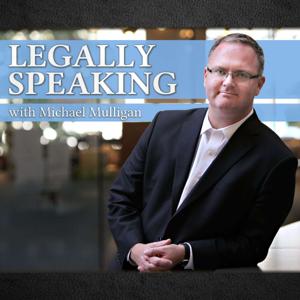


Fentanyl trafficking sentences in BC just got a major overhaul. The BC Court of Appeal has mapped out clearer sentencing guidelines, creating a three-tier system that reflects the devastating impact of the deadly opioid crisis. Street-level dealers now face 18 months to 3 years, mid-level traffickers 4-7 years, and wholesale distributors 8-15 years behind bars. The Court emphasized this framework still allows judges to tailor sentences to individual circumstances, but makes clear that the gravity of fentanyl trafficking demands serious consequences. With over 14,500 British Columbians having lost their lives to toxic drugs in just eight years, the justice system is responding with a structured approach to punishment.
At Simon Fraser University, academic freedom and freedom of association collided when faculty members challenged their own Faculty Association's resolutions on Gaza. The controversial statements narrowly passed but sparked a legal battle under the Societies Act. The case highlights a fascinating tension - what happens when you're required to belong to an organization that takes political positions you fundamentally oppose? The court ultimately allowed the Faculty Association broad latitude in its activities, continuing a precedent that permits professional associations to venture beyond their core employment-related purposes. This ruling affects anyone in Canada who must maintain membership in unions or professional organizations.
We wrap up with a constructive dismissal case that seems straight out of a comedy sketch - except it was all too real for the employee involved. A 63-year-old comptroller was given notice of termination but required to keep working for eight months while being gradually replaced by someone actually named "Mr. Bean." Adding insult to injury, the employee was relocated to an interior office without air conditioning (at an air conditioning company!). The court recognized these cumulative actions created an intolerable work environment, awarding 15 months' severance and confirming employers cannot circumvent termination obligations by making work conditions unbearable.
Have questions about how these legal developments might affect you? We'd love to hear your thoughts on these fascinating intersections of law and everyday life. Subscribe to catch our weekly legal insights and join the conversation about how our justice system continues to evolve.
Follow this link for a transcript of the show and links to the cases discussed.
When does a driving mistake become a crime? The latest Court of Appeal ruling tackles this haunting question through the case of a driver who missed a red light, causing a collision that killed an 18-month-old child and seriously injured the father. Despite the devastating outcome, the court upheld the driver's acquittal on dangerous driving charges, drawing a careful distinction between tragedy and criminality.
The case illuminates the legal threshold for dangerous driving in Canada. Unlike provincial traffic violations, criminal dangerous driving requires a "marked departure from the standard of care of a reasonably prudent driver." This distinction carries enormous consequences in BC's no-fault insurance system, where criminal convictions can leave drivers personally liable for millions in damages with no insurance coverage. The ruling affirms that momentary lapses in attention, while potentially catastrophic, don't automatically cross into criminal territory.
Also examined was a fascinating estate case spanning nearly four decades. When a terminally ill woman created her will in 1984, she couldn't have anticipated her modest $50,000 home would be worth $1.2 million by the time her partner died 37 years later. The court had to determine whether her children should receive half the original value or half the current value—ultimately ruling that the original value prevailed. Finally, we explored how "unexplained wealth orders" in civil forfeiture cases can force individuals to account for suspicious assets like million-dollar properties and cash hoards that don't match their declared income.
These cases remind us how legal decisions shape lives in profound ways, whether determining criminal liability for split-second errors, interpreting decades-old intentions, or requiring explanations for suspiciously acquired wealth. Subscribe to our podcast for more insightful legal analysis that makes complex Canadian law accessible and meaningful.
Follow this link for a transcript of the show and links to the cases discussed.
The foundation of property ownership in British Columbia faces a potential earthquake with the landmark Cowichan Tribes decision. After what may be Canada's longest trial—spanning over 500 days—the judge delivered an 800-page ruling that could fundamentally alter who truly owns land throughout the province.
Michael Mulligan breaks down this complex legal battle by explaining the collision between two powerful forces: BC's Torrens property system and Aboriginal title claims under Section 35 of the Constitution. The Torrens system provides what legal experts call "indefeasible title"—conclusive proof of ownership registered with the government that enables secure property transactions and mortgage lending. But the judge has ruled that Aboriginal title is "a prior and senior right to land" that can exist simultaneously with registered property ownership, potentially superseding private property rights despite the Torrens system's guarantees.
The implications are profound. If Aboriginal title claims—which cover virtually the entire province, often with overlapping claims from multiple Indigenous groups—can override registered property ownership, what happens to homeowners who've worked their entire lives to pay for their properties? The economic consequences could be equally severe, as mortgage lending depends on the certainty of ownership. As Mulligan observes, the legal system ultimately depends on public acceptance: "If I tell you that the house you worked for and paid for is no longer yours, I don't know that that's generally going to be accepted." With BC already announcing its intention to appeal, this case will likely progress through higher courts, where judges must balance constitutional obligations to Indigenous peoples with maintaining a functional property system. Listen now to understand what's at stake for every property owner in British Columbia.
Follow this link for a transcript of the show and links to the cases discsused.
A fascinating exploration of justice, liberty, and the limits of government power unfolds through three recent BC legal cases. When a minimum-security prisoner at William Head was caught embracing a senior correctional officer, the warden's decision to transfer him to a higher-security facility backfired spectacularly. The BC Supreme Court ruled the decision "unreasonable," highlighting how even prisoners retain certain liberties that can't be arbitrarily removed. The judge particularly noted the warden's failure to address the significant power imbalance between the inmate and staff member – a consideration that might have led to very different outcomes had gender roles been reversed.
Border security technology stars in our second case, where sophisticated imaging detected 64 kilograms of cocaine hidden in the wall of a semi-trailer truck cab. The driver's claim of being a "blind courier" unraveled when experts testified that the elaborate hidden compartments would have cost upwards of $60,000 and taken weeks to install – an investment no one would make only to hand the vehicle over to an unwitting driver. The case reveals not only the sophisticated methods of drug detection at the border but also provides expert confirmation that cocaine primarily flows northward from Central America through the US into Canada, contradicting certain political narratives about cross-border drug trafficking.
Our final case demonstrates the limits of property rights in Canada as BC mink farmers lost their final appeal against the government's pandemic-era decision to permanently shut down their industry. Unlike the United States, Canada offers significantly less constitutional protection for private property, allowing governments broad regulatory powers without triggering compensation requirements. Whether you're concerned about prisoner rights, border security, or government regulation of business, these cases illuminate the delicate balance between individual liberties and state authority in Canadian society. What other industries might face similar regulatory challenges in the future?
Follow this link for a transcript of the show and links to the cases discussed.
Frustrated by an airline refusing compensation for your delayed flight? You might have more power than you think. Legal expert Michael Mulligan walks us through a fascinating Civil Resolution Tribunal case where passengers successfully challenged WestJet's weather-related excuses and secured $1,000 each in compensation. By gathering evidence showing other airlines operating during the supposedly problematic conditions, these passengers demonstrated how everyday Canadians can effectively navigate the Air Passenger Protection Regulations through BC's accessible online tribunal system.
The conversation shifts to judicial impartiality with a cautionary West Vancouver demolition dispute. When a judge ordered a fire-damaged house demolished, no one realized she had previously advised the municipality on that very case before her appointment to the bench. This oversight led the Court of Appeal to cancel the injunction, highlighting the critical importance of judicial independence and the challenges judges face in identifying conflicts without the robust database systems used by law firms.
Perhaps most eye-opening is the revelation about what your modern vehicle knows and remembers about your driving. Event data recorders in today's cars capture crucial information during accidents - your speed, whether you were wearing a seatbelt, and if you applied the brakes before impact. In a groundbreaking decision, a court determined that this extracted data constitutes a "thing" rather than a "document" under criminal code provisions, requiring police to obtain judicial permission to retain it when no charges have been filed. This legal distinction reinforces important protections against indefinite police retention of digital evidence.
Whether you're planning air travel, wondering about judicial ethics, or simply curious about what your car might reveal after an accident, this discussion offers valuable insights into how our legal system addresses everyday challenges in an increasingly technological world.
Follow this link for a transcript of the show and links to the cases discussed.
What happens when legal formulas, charge approval standards, and competing legitimate needs collide with real human lives? Today's deep dive examines three significant cases that reveal the profound human impact of our justice systems.
The Hockey Canada sexual assault trial verdict brings crucial lessons about the presumption of innocence and the value of detailed judicial reasoning. Unlike jury trials that provide no explanation, this judge-alone trial delivered a comprehensive analysis of why all the accused were acquitted. The judge methodically explained finding the complainant neither credible nor reliable, citing multiple conflicting statements and video evidence contradicting later allegations. This case powerfully demonstrates why we cannot start from assumptions of guilt when allegations are made, regardless of how emotionally charged the circumstances might be.
Meanwhile, a shocking Civil Resolution Tribunal decision exposes the harsh reality of ICBC's no-fault insurance system. A driver suffering permanent vision impairment after being rear-ended received zero compensation because his "floating pink blob" injury—though permanent and debilitating—didn't fit neatly into the mandatory mathematical formula. This case starkly illustrates how dehumanizing rigid regulatory systems can be when they fail to account for individual circumstances. Those ICBC rebates come at a steep cost: significantly diminished rights for accident victims.
Finally, a Songhees Nation land dispute reveals painful competing needs. Elderly mobile home residents face eviction and potential homelessness as the Nation reclaims land to address severe housing shortages for its members. Despite decades of paying property taxes, the court found these residents have no special protections since provincial mobile home regulations don't apply on reserve lands. Both sides have legitimate needs, yet our legal framework offers no elegant solution.
These cases remind us that behind every legal decision are real people facing life-altering consequences. How do we balance competing rights? When should human judgment override mathematical formulas? What protections should our justice systems provide? Listen now to explore these essential questions about justice in our communities.
Follow this link for a transcript of the show and links to the cases discussed.
The boundaries of judicial authority in Canada have been redrawn by a groundbreaking Supreme Court ruling that empowers judges to conduct murder trials without juries—even when prosecutors object. This remarkable case emerged from the early pandemic when COVID-19 made traditional jury trials nearly impossible. A defendant, unwilling to face further delay, requested a judge-alone trial, but prosecutors refused consent. The Supreme Court ultimately sided with the trial judge who proceeded anyway, establishing that protecting a defendant's right to timely justice can override prosecutorial preferences.
This ruling fundamentally reshapes our understanding of what falls within a prosecutor's untouchable "core discretion" versus what judges can override to protect Charter rights. Legal scholars are now watching closely to see how this precedent might extend to other prosecutorial decisions previously considered untouchable.
Property rights received equal attention through a fascinating case where a regional district built what the court bluntly called an "ugly dam" on part of a 157-acre ranch property in the Kootenays. Though only a small portion of land was taken, it transformed a pristine natural lake into an artificial-looking reservoir with an unsightly rocky dam. The court awarded the owner $340,080 in compensation, reinforcing the principle that the government must pay not just for land taken but for how the taking diminishes a property's overall market value.
Most controversial is the Nanaimo murder case, challenging Canada's mandatory 25-year parole ineligibility period for first-degree murder. A man who brutally killed someone with a baseball bat argued that, without the now-eliminated "faint hope clause" (which once allowed parole reviews after 15 years), this sentence constitutes cruel and unusual punishment. Though the judge found the elimination of this clause unconstitutional, the offender still received the full 25-year parole ineligibility due to the brutality of his crime.
These cases collectively demonstrate how our legal system constantly balances competing interests—public safety against individual rights, government needs against property ownership, and societal punishment against constitutional protections against cruelty.
Follow this link for a transcript of the show and links to the cases discussed.
Ever wondered what happens when one party drops 4 million documents on their opponent in a lawsuit? Michael Mulligan explains the fascinating legal concept of an "impermissible document dump" through the lens of a billion-dollar dispute over the North Shore Wastewater Treatment Plant. The case reveals how modern litigation handles vast electronic records and when providing mountains of documents crosses from thorough disclosure to litigation obstruction.
The contrast couldn't be greater when we shift to a dispute over sofa cushions that need "fluffing." When purchasers discovered their $4,400 sofa required constant maintenance despite requesting one that was "solid and not floppy," they sought a full refund seven months later. The judge's decision offers a perfect example of how consumer protection laws balance remedies against practical realities. While the customers couldn't return a seven-month-used sofa for a full refund, they did receive $500 for the "inconvenience and distress" of cushion maintenance – a small but meaningful victory.
Perhaps most illuminating is our examination of what constitutes a "marriage-like relationship" under BC law. When a woman claimed two separate periods of cohabitation (18 months and 22.5 months) should qualify her as a spouse entitled to property division and support, the court had to determine if discontinuous periods could be combined. The judge's 39-page decision dissecting the intimate details of their relationship highlights the challenge of applying family law to complex human connections. The ruling that periods must be continuous serves as a critical warning about the unexpected legal implications of your living arrangements. This case demonstrates why clarity in relationship status matters and raises questions about whether our current approach to defining common-law relationships serves those it aims to protect.
Follow this link for a transcript of the show and links to the cases discussed.
What happens when a sophisticated scammer steals over half a million dollars in Bitcoin through a phone company's security failure? And more importantly, can you even take them to court?
The answer is more complicated than you might think, as we explore in this eye-opening legal examination of consumer rights in the digital age. A British Columbia resident fell victim to an elaborate fraud when someone impersonated a Rogers technician, convinced a retail employee to enable screen sharing, and accessed the Rogers customer database. After extracting personal information, the scammer performed a SIM swap and drained the victim's cryptocurrency account, assets that later appreciated to a staggering one million dollars.
When the victim attempted to sue Rogers, they encountered the hidden trap of arbitration clauses—those pages of legalese we all scroll through and accept without reading when setting up our services. Despite recent changes to BC consumer protection laws specifically banning these clauses, the court ruled in favor of Rogers on a fascinating technicality involving "retroactive" versus "retrospective" legislation. We break down this crucial distinction and explore how legislative language can determine whether consumers have access to justice.
The episode also examines a compelling Vancouver assault case that showcases the notorious unreliability of eyewitness identification. Despite a police officer's "100% certainty" about identifying a suspect from security footage, the court wasn't convinced, particularly when the officer failed to notice the suspect's distinctive "benzo gait," a hunched walking style common among drug users in the Downtown Eastside. This case provides a powerful reminder of why confident witnesses don't necessarily make reliable ones.
Whether you're concerned about protecting your digital assets or fascinated by the evolving landscape of consumer rights, this discussion offers valuable insights into how our legal system struggles to keep pace with technological change. Have you read the fine print in your service agreements? After hearing this, you might want to.
Follow this link for a transcript of the show and links to the cases discussed.
What happens when a child's life depends on a medication that costs nearly a million dollars per year? In this eye-opening conversation with Michael Mulligan of Mulligan Defence Lawyers, we take a deep dive into the tragic case of nine-year-old Charleigh Pollock from Langford, who suffers from the rare genetic disorder Batten disease.
Mulligan walks us through the complex web of legislation governing medication coverage in British Columbia, revealing the stark truth about how these life-or-death decisions are made. Despite common misconceptions about universal healthcare, the reality is that medication funding falls under provincial jurisdiction through the Pharmaceutical Services Act. For expensive drugs treating rare conditions, the process involves a Drug Benefits Council making recommendations, but final decisions rest with government ministers and are primarily financial rather than medical.
The most troubling aspect of Charleigh's case is that she had been receiving the $844,000-per-year treatment for some time before funding was abruptly discontinued. This withdrawal of established treatment raises serious legal questions that distinguish her situation from initial denials of coverage. Mulligan discusses a current groundbreaking case moving through BC courts that might provide a legal pathway forward, exploring potential arguments around negligence, Charter rights regarding cruel and unusual treatment, and judicial review of administrative decisions.
What emerges from this discussion is a sobering reality: when politicians claim they "shouldn't interfere with medical decisions," they're being disingenuous. The system is explicitly designed to make politicians the final arbiters of these treatments after doctors make their recommendations. The criteria for deciding which children receive life-saving medications are, at their core, about money, raising profound questions about how we value human life in our healthcare system. Listen in and consider what changes might be needed to create a more just approach to rare disease treatment in Canada.
Follow this link for a transcript of the show and links to the cases and legislation discussed.
From the publisher's feed

432 Listeners

408 Listeners
208 Listeners

213 Listeners
77 Listeners

36 Listeners

67 Listeners

102 Listeners

86 Listeners

447 Listeners

50 Listeners

114 Listeners

8,428 Listeners

33 Listeners

46 Listeners