
Sign up to save your podcasts
Or



Send us Fan Mail
Why are we given natural talents? Are we meant only to perfect what we already do well, or is there something else we should develop?
Seuseungnim says our natural gifts are only part of what we need. A person may become highly accomplished in a field and still lack the wider understanding needed to use those abilities wisely.
He describes a 70 percent and 30 percent principle: we can develop much of our capacity through our own work, but the rest comes through relationships. The people who enter our lives often have experience in the areas where we are lacking. That is why humility and respect matter.
Real questions. Deeper understanding. Wisdom for life.
More lectures: https://jungbub.us
Send us Fan Mail
Why can years of study still lead to disappointment, resentment, and doubt when life does not go the way we hoped?
Seuseungnim addresses the hidden expectations that can grow while we study. We may believe that because we are studying sincerely, our wishes should be fulfilled. Wanting something beyond what our present level and situation can support, he says, is itself a form of greed.
Rather than chasing what we want, he teaches us to develop ourselves within the circumstances already in front of us. Receiving opportunity or responsibility before we are ready can create even greater trouble. The focus, then, is on noticing our habits and preparing ourselves. When disappointment turns into doubt, we can examine the expectation that produced the resentment.
Real questions. Deeper understanding. Wisdom for life.
More lectures: https://jungbub.us
Send us Fan Mail
What should we actually write in a gratitude journal? And how can the practice become more than a list of pleasant things?
Seuseungnim says a gratitude journal should be simple and sincere. There is no need to sound impressive, or to force the feeling. We can record what we genuinely feel, even if that means writing that we have not yet found what we are grateful for.
The greater gratitude, he explains, comes when we are given the chance to learn something we did not know. Knowledge, relationships, and even difficult experiences can become conditions for developing ourselves. When we begin to see our lives this way, gratitude is no longer limited to comfort or good fortune.
Real questions. Deeper understanding. Wisdom for life.
More lectures: https://jungbub.us
Send us Fan Mail
Can you be humble and confident at the same time? Or does becoming more humble mean holding yourself back?
Seuseungnim says humility and confidence are not opposites. They deal with different parts of life. Confidence is the willingness to step forward, take action, and challenge yourself so that you can grow. Humility concerns how we relate to other people.
Some people are naturally bold. They may make mistakes and fail along the way, and those experiences can still become part of their development. The problem arises when we misunderstand humility and suppress our confidence in order to appear modest. True humility does not require us to make ourselves smaller or hesitate to step forward.
Real questions. Deeper understanding. Wisdom for life.
More lectures: https://jungbub.us
Send us Fan Mail
What does it really mean to respect another person? Is respect something we can simply decide to practice, or does it begin with something else?
Seuseungnim challenges a usual idea of respect with a surprising line: "Don't try to respect other people." True respect, he says, begins by acknowledging people as they are, including their strengths, weaknesses, and different paths.
Rather than looking down on those who think or live differently, we can approach them as someone seeking to understand. Even difficult people can show us something about ourselves and about society. He also talks about genuine discussion: listening and exchanging ideas, instead of trying only to prove that we are right. Respect, in this sense, is not something we force.
Real questions. Deeper understanding. Wisdom for life.
More lectures: https://jungbub.us
Send us Fan Mail
Can someone lack humility and still live comfortably, become successful, and enjoy material wealth? If so, why is humility necessary at all?
Seuseungnim offers a surprising answer: you do not have to force yourself to be humble. True humility is not created by trying to appear modest. It develops as we study, grow, and come to understand how people and society work.
Much of the prosperity humanity has experienced, he says, came with conditions provided by Nature. Having wealth, position, or knowledge also brings a responsibility to use what we have been given properly. When we do not understand that, what looks like success may not last. Humility, then, is not a rule imposed from outside. It can appear naturally as understanding grows.
Real questions. Deeper understanding. Wisdom for life.
More lectures: https://jungbub.us
Send us Fan Mail
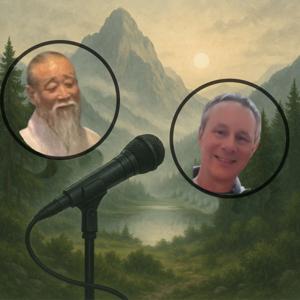
Questions for the Master explores the questions that touch every part of our lives—relationships, family, work, money, self-esteem, jealousy, attachment, happiness, and personal growth.
People from all walks of life bring their real questions and struggles to Master Cheon Gong, whom his students call Seuseungnim, or Great Mentor. As a Korean teacher, Seuseungnim offers a deeper perspective on why difficulties arise in our lives, what they may be teaching us, and how we can grow through them.
Through the teachings of Jungbub, Seuseungnim explains the principles of human relationships, society, and Grand Nature in practical ways that can be applied to everyday life.
Each episode begins with a question—sometimes deeply personal, sometimes universal—and invites us to look beyond the problem itself to discover a deeper understanding of our lives and circumstances.
These lectures have been carefully translated, proofread, and dubbed into English so that Seuseungnim's teachings can be shared with listeners around the world.
Real questions. Deeper understanding. Wisdom for life.
Send us Fan Mail
What is the right way to respond when someone praises us? Is saying, "I was just doing my job," really an expression of humility?
Seuseungnim says that when someone offers praise, our first response should be simple and sincere: "Thank you." True humility does not mean denying what we did, or pretending it was nothing. It means recognizing that we never accomplish something entirely on our own. Coworkers, opportunities, and the situation around us all play a part.
Words of thanks also need to be genuine. Saying "It was all thanks to everyone" means little if we are only repeating what sounds modest. Sincere appreciation, he teaches, is different from a performance of humility.
Real questions. Deeper understanding. Wisdom for life.
More lectures: https://jungbub.us
Send us Fan Mail
What does it really mean to cherish another person? Is it giving them what they need, being useful when they are struggling, or simply being kind?
A listener admits that although Seuseungnim often teaches us to cherish the people who come into our lives, they still do not understand what that means in practice.
He explains that cherishing someone is not mainly about special gestures or giving material things. It begins with how we treat the people and relationships that come to us: with sincerity, care, and genuine effort. Meaningful relationships, in this view, are built naturally over time.
Real questions. Deeper understanding. Wisdom for life.
More lectures: https://jungbub.us
From the publisher's feed
Questions for the Master explores the questions that touch every part of our lives: relationships, family, work, money, self-esteem, jealousy, attachment, happiness, and personal…
People from all walks of life bring their real questions and struggles to Master Cheon Gong, whom his students call Seuseungnim, or Great Mentor. As a Korean teacher, Seuseungnim offers a deeper perspective on why difficulties arise in our lives, what they may be teaching us, and how we can grow through them.
Through the teachings of Jungbub, Seuseungnim explains the principles of human relationships, society, and Grand Nature in practical ways that can be applied to everyday life.
Each episode begins with a question: sometimes deeply personal, sometimes universal, and invites us to look beyond the problem itself to discover a deeper understanding of our lives and circumstances.
These lectures have been carefully translated, proofread, and dubbed into English so that Seuseungnim's teachings can be shared with listeners around the world.
Real questions. Deeper understanding. Wisdom for life.