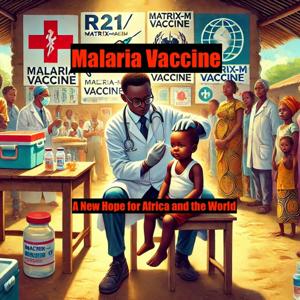
Malaria Vaccine

Malaria Vaccine

Download on the App Store

Malaria Vaccine episodes

  • Malaria Vaccines Gain Momentum Across Africa, Offering Hope in the Fight Against the Deadly Disease
    In a significant development in the fight against malaria, several African countries, including Mali, have recently launched or expanded their malaria vaccine programs, marking a crucial step forward in combating this debilitating disease.
    In Mali, the rollout of the R21/Matrix-M malaria vaccine began on April 25, coinciding with World Malaria Day, in the commune of Kalaban-Coro near Bamako. This initiative is part of a broader effort to protect children from the pervasive threat of malaria, which remains the primary reason for medical consultations, hospital admissions, and deaths among children under five in the country. The vaccine will be deployed in 19 priority health districts across five regions and will target children aged 5 to 36 months, following a five-dose vaccination schedule. This approach complements existing prevention tools such as seasonal malaria chemoprevention (SMC) and the use of insecticide-treated mosquito nets, as recommended by the World Health Organization (WHO)[1].
    The R21/Matrix-M vaccine is one of two malaria vaccines that have been prequalified by the WHO. The other is the RTS,S vaccine, which was prequalified in July 2022, while the R21 vaccine received prequalification in December 2023. These prequalifications ensure the safety and quality of the vaccines. By early April 2025, 19 countries in Africa were already offering these malaria vaccines as part of their childhood immunization programs and national malaria control plans. Additional countries are expected to introduce and scale up these vaccines throughout 2025[2].
    The demand for these vaccines is high, with at least 30 African countries planning to integrate them into their childhood immunization programs. The availability of two safe and effective vaccines has ensured sufficient supply to meet this demand, benefiting children in areas where malaria is a major public health risk. For instance, Uganda recently launched the largest malaria vaccine introduction to date, aiming to prevent at least 800 cases of severe malaria among children every day and alleviate the financial burden on families[2][4].
    The introduction of these vaccines comes at a critical time, as global progress towards malaria elimination targets is currently off track. Despite significant reductions in malaria-related mortality in Africa—from 808,000 in 2000 to 580,000 in 2022—challenges such as climate change, drug-resistant strains, and new mosquito variants threaten this progress. The scaling up of malaria vaccines is seen as a key strategy to enhance global malaria elimination efforts[5].
    In summary, the recent rollout and expansion of malaria vaccine programs in Africa represent a significant milestone in the battle against malaria. With the support of local communities, health workers, and religious leaders, these vaccines are poised to make a substantial impact on reducing the burden of malaria, particularly among vulnerable children.
    This content was created in partnership and with the help of Artificial Intelligence AI.
    4 min
  • Malaria Vaccine Breakthroughs: Saving Lives Across Africa
    In recent developments, the fight against malaria has seen significant advancements, particularly with the ongoing rollout and clinical trials of malaria vaccines.
    As of early April 2025, the introduction of malaria vaccines into routine childhood vaccinations has been well underway. Nineteen countries have already implemented the vaccine sub-nationally, with Uganda being the latest and marking the largest malaria vaccine introduction to date. This makes Uganda the 19th country in Africa to incorporate the malaria vaccine into its immunization campaigns[4].
    The vaccines in question, RTS,S and R21, have been prequalified by the World Health Organization (WHO) and have demonstrated substantial efficacy in preventing malaria in children. Both vaccines have been shown to reduce malaria cases by more than half during the first year after vaccination, with a fourth dose in the second year of life prolonging protection. In areas of highly seasonal transmission, when given seasonally along with seasonal malaria chemoprevention, these vaccines can reduce malaria cases by up to 75%[3].
    The impact of these vaccines is expected to be high, with tens of thousands of young lives potentially saved each year through their widespread implementation. The WHO emphasizes that the highest public health impact is achieved when these vaccines are used in combination with other recommended preventive, diagnostic, and treatment strategies tailored to the local context[3].
    In addition to the ongoing rollouts, there are also ongoing clinical trials aimed at further enhancing malaria vaccine efficacy. For instance, a clinical trial announced in late April 2025 is seeking 22 healthy volunteers aged 18 to 45 to test an experimental malaria vaccine's ability to protect against infection. This trial is part of the continuous effort to improve and expand the arsenal against malaria[1].
    Gavi, the Vaccine Alliance, has also been instrumental in supporting these efforts, with 25 countries approved for Gavi funding to implement malaria vaccine programs as of April 2025. This financial support is crucial for scaling up the vaccination programs and ensuring they reach the most vulnerable populations[2].
    Overall, the recent news highlights the significant progress being made in the fight against malaria through the development, testing, and implementation of effective malaria vaccines. These efforts are poised to make a substantial impact on public health, particularly in regions with high malaria transmission.
    This content was created in partnership and with the help of Artificial Intelligence AI.
    3 min
  • Malaria Vaccines Rapidly Expanding Across Africa, Offering Significant Protection
    In the ongoing battle against malaria, recent developments have marked significant milestones in the rollout and effectiveness of malaria vaccines, particularly over the past few days.
    As of early April 2025, the introduction of malaria vaccines has expanded to 19 countries, with these vaccines being integrated into routine childhood vaccinations. Uganda has been at the forefront of this effort, launching the largest malaria vaccine introduction to date, making it the 19th African country to do so[3].
    The vaccines in question, RTS,S and R21, have been prequalified by the World Health Organization (WHO) and have demonstrated substantial efficacy in preventing malaria in children. Both vaccines have been shown to reduce malaria cases by more than half during the first year after vaccination, with a fourth dose in the second year of life prolonging protection. In areas with highly seasonal transmission, when given seasonally along with seasonal malaria chemoprevention, these vaccines can reduce malaria cases by as much as 75%[2].
    The impact of these vaccines is expected to be high, with tens of thousands of young lives potentially saved each year through their widespread implementation. The WHO emphasizes that the highest public health impact is achieved when these vaccines are used in combination with other recommended preventive, diagnostic, and treatment strategies, tailored to the local context[2].
    To further optimize the rollout of these vaccines, an Africa-Europe partnership has launched the Optimizing Malaria Vaccine Uptake (OPT-MVAC) consortium. This project aims to support the implementation of malaria vaccines in 14 Central and West African countries, ensuring better uptake and effectiveness of the vaccines[4].
    Additionally, Gavi funding has been approved for 25 countries to support the malaria vaccine rollout, highlighting the global commitment to combating this disease[1].
    These recent developments underscore the progress being made in the fight against malaria, with a multifaceted approach that includes vaccination, along with other control measures such as insecticide-treated nets (ITNs) and robust case management. As the rollout continues and expands, there is growing optimism about the potential to significantly reduce malaria-related illnesses and deaths, especially among children in high-risk areas.
    This content was created in partnership and with the help of Artificial Intelligence AI.
    3 min
  • "Malaria Vaccine Breakthroughs: Expanding Rollout and Promising New Candidates"
    In the ongoing battle against malaria, several recent developments have marked significant strides in the implementation and enhancement of malaria vaccines, particularly over the past few days.
    As of late April 2025, three countries have either launched or are set to launch malaria vaccine introductions, highlighting the expanding reach of these life-saving immunizations. This rollout is part of a broader effort to integrate malaria vaccines into childhood immunization programs, with an additional eight countries forecasted to introduce these vaccines in 2025, bringing the total to 25 endemic countries[1][3].
    To support this rollout, an Africa-Europe partnership has launched the Optimizing Malaria Vaccine Uptake (OPT-MVAC) consortium. This initiative aims to enhance the implementation and uptake of malaria vaccines in 14 Central and West African countries. The project is designed to address logistical, financial, and social barriers that might hinder the effective distribution and administration of these vaccines[2].
    On the vaccine development front, a new blood-stage malaria vaccine candidate, RH5.1/Matrix-M, has shown promising results. In a phase 2b clinical trial, this vaccine demonstrated 55% effectiveness in preventing clinical malaria over six months. Unlike the previously approved RTS,S/AS01 and R21/Matrix-M vaccines that target the pre-erythrocyte stage of the malaria parasite, RH5.1/Matrix-M targets the blood stage, offering a complementary approach to malaria prevention. The trial also indicated high levels of immune response and good tolerance among participants, with only mild adverse events reported[5].
    The introduction of this blood-stage vaccine candidate is seen as a significant advancement, as it targets a different stage of the parasite life cycle, potentially offering more comprehensive and durable protection against malaria. This development is particularly encouraging for regions in Africa, where malaria remains a major public health challenge[5].
    As the global community continues to harness the power of immunization to combat malaria, these recent developments underscore the commitment and progress being made towards a malaria-free future. With ongoing vaccine rollouts, new vaccine candidates, and collaborative international efforts, the fight against malaria is gaining momentum.
    This content was created in partnership and with the help of Artificial Intelligence AI.
    3 min
  • Groundbreaking Malaria Vaccines Offer Hope, but Climate Challenges Persist
    As the world prepares to mark World Malaria Day on April 25, 2025, under the theme "Malaria Ends with Us: Reinvest, Reimagine, Reignite," significant advancements and challenges in the fight against malaria have come to the forefront.
    One of the most promising developments is the emergence of highly effective new malaria vaccines. A recent breakthrough involves a single-dose malaria vaccine that offers an unprecedented 90% protection against the disease. This vaccine represents a major leap forward in malaria prevention, especially given that current vaccines, such as the RTS,S/AS01 (Mosquirix) and the R21, provide only modest and short-lived protection, particularly in infants[2].
    Another vaccine, targeting the late-liver-stage antigens of the malaria parasite, has shown an efficacy of 89% in clinical trials. This vaccine uses genetically attenuated (GA) Plasmodium falciparum parasites that invade liver cells but do not progress to blood-stage infection, allowing the immune system to generate robust humoral and cellular immune responses. This approach is seen as a promising alternative to existing vaccines and could significantly enhance malaria eradication efforts[4].
    Despite these advancements, the global fight against malaria is facing new challenges. Rising global temperatures are contributing to an increase in malaria cases in various regions. In the eastern Indian state of Odisha, for example, malaria cases have been surging since 2022, with health experts attributing this trend to the lack of mosquito nets and the impacts of climate change. The warmer and wetter conditions are allowing disease-carrying mosquitoes to thrive and expand their ranges to higher altitudes and more northern latitudes[5].
    The World Health Organization (WHO) has reported an estimated 263 million malaria cases in 83 countries in 2023, resulting in 597,000 deaths. This upward trend highlights the urgent need for continued investment and innovation in malaria prevention and treatment. The WHO, along with the RBM Partnership to End Malaria and other partners, is emphasizing the need to "Reinvest, Reimagine, Reignite" efforts to combat malaria, underscoring the importance of new tools like these highly effective vaccines in the global strategy to eradicate the disease[1][3].
    This content was created in partnership and with the help of Artificial Intelligence AI.
    3 min
  • New Malaria Vaccine Breakthrough Overshadowed by Funding Cuts and Looming Crisis
    In recent developments, the global fight against malaria has seen both promising advancements and daunting challenges, particularly in the context of vaccine development and funding cuts.
    A significant breakthrough has been announced with the introduction of a single-dose malaria vaccine that offers unprecedented protection. As reported on January 8, 2025, this vaccine has shown a remarkable 90% efficacy rate, marking a substantial leap forward in the prevention of this deadly disease[2].
    However, despite this medical breakthrough, the ongoing struggle against malaria is complicated by financial and logistical hurdles. In Africa, where malaria remains the deadliest disease, accounting for 95% of the estimated 597,000 malaria deaths worldwide in 2023, recent aid cuts have severely impacted anti-malaria efforts. The Trump administration's decision to terminate 90% of USAID's foreign aid contracts has left local health officials in a state of crisis. Dr. Jimmy Opigo, who heads Uganda's malaria control program, highlighted the critical need for continuous supplies of anti-malarial medicines and insecticide-treated bed nets, which are now dwindling due to the terminated contracts[5].
    The consequences of these aid cuts are dire. Modeling by the Washington-based Malaria No More indicates that just one year of disruption in the malaria-control supply chain could result in nearly 15 million additional cases and 107,000 additional deaths globally. This has prompted urgent calls for the Trump administration to restart these life-saving programs to prevent outbreaks from spiraling out of control[5].
    As the world prepares to mark World Malaria Day on April 25, 2025, under the theme "Malaria Ends with Us: Reinvest, Reimagine, Reignite," the importance of sustained funding and innovative solutions like the new single-dose vaccine is underscored. Despite the challenges, vaccines being rolled out in parts of Africa, though imperfect, are expected to continue with the support of a global vaccine alliance[1][5].
    In summary, while the new single-dose malaria vaccine represents a beacon of hope, the immediate future of malaria control is clouded by funding uncertainties and the potential for a significant rise in cases and deaths, especially in Africa. As global health authorities and organizations rally to address these issues, the need for continuous investment and support in anti-malaria efforts remains paramount.
    This content was created in partnership and with the help of Artificial Intelligence AI.
    3 min
  • Groundbreaking Malaria Vaccine and Treatment Breakthroughs Offer New Hope
    In recent developments, the fight against malaria has seen significant advancements, particularly with the malaria vaccine and new treatment discoveries.
    In Kenya's lake region, the implementation of the malaria vaccine has yielded promising results. Since 2019, when Kenya became one of the first countries to participate in the Malaria Vaccine Implementation Programme (MVIP), the vaccine has been instrumental in reducing malaria-related mortality and disease severity among children. According to Ochieng Gumbo, the Lake Region Economic Block (LREB) Health Pillar lead, the vaccine, combined with other existing malaria interventions, has led to a noticeable drop in all-cause mortality among children. Hospital statistics show a reduced prevalence of severe malaria cases, with vaccinated children having higher chances of survival even if they contract the disease[5].
    The vaccine's success is also attributed to the community health promoters who have been crucial in creating demand and ensuring timely vaccinations. Edith Anjere, the Vihiga County Expanded Programme on Immunization Coordinator, noted that vaccine acceptance has improved significantly over time, and the county is now working to ensure a steady supply of the vaccine to protect the entire eligible population[5].
    Apart from vaccination efforts, researchers are also making strides in developing new treatments to combat malaria. A recent study by scientists at the Geisel School of Medicine at Dartmouth College and the Canadian Light Source at the University of Saskatchewan has identified a compound, IMP-1088, that targets the malaria-causing parasite *Plasmodium vivax*. This compound binds to an enzyme called N-myristoyltransferase (NMT), which is essential for the parasite's lifecycle. The advantage of this approach is that some NMT inhibitors have already been tested for other diseases, potentially reducing toxicity and development costs[1].
    Another breakthrough comes from researchers at Case Western Reserve University School of Medicine, who have discovered a new target for fighting drug-resistant malaria. The team found that a cholesterol-managing protein called PfNCR1 is crucial for the survival of the *Plasmodium falciparum* parasite. By using a compound known as MMV009108 to block this protein, the researchers aim to disrupt the parasite's ability to control its cholesterol levels, potentially leading to its death. This discovery is seen as a significant step forward in developing new malaria treatments that the parasite may find difficult to develop resistance to[2].
    As the global community marks World Malaria Day on April 25, 2025, under the theme "Malaria Ends with Us: Reinvest, Reimagine, Reignite," there is a renewed call to action to accelerate progress towards malaria elimination. The World Health Organization emphasizes the need to reinvest in proven interventions, reimagine strategies to overcome current obstacles, and reignite collective efforts to end malaria. Despite p
    This content was created in partnership and with the help of Artificial Intelligence AI.
    4 min
  • Malaria Vaccines Revolutionize Africa's Fight Against the Deadly Disease
    In recent developments, the fight against malaria has seen significant progress, particularly with the rollout of malaria vaccines across Africa.
    As of January 2025, nearly 10 million doses of the malaria vaccine have been delivered to Africa during the first year of routine immunization. This initiative, led by the Gavi vaccine alliance, has expanded beyond the initial pilot countries of Ghana, Kenya, and Malawi to include 14 additional countries, starting with Cameroon in January 2024. The vaccine, primarily the RTS,S vaccine and more recently the R21/Matrix-M, has shown promising results. In the pilot phase from 2019 to 2023, more than two million children were vaccinated, resulting in a substantial reduction in severe malaria illness and hospitalizations, as well as a 13% drop in mortality[1][2][4].
    The World Health Organization (WHO) has recommended both the RTS,S and R21/Matrix-M vaccines for use in children living in areas with moderate to high malaria transmission. These vaccines have been proven to reduce uncomplicated malaria by about 40%, severe malaria by 30%, and all-cause mortality by 13%[2][4].
    The rollout has been particularly impactful in high-burden countries like Cameroon, where malaria claims over 13,000 lives annually and accounts for nearly 30% of all hospital consultations. Early results from Cameroon have shown reduced deaths among children under five, highlighting the vaccine's potential to transform lives in these regions[1].
    Africa bears the brunt of the global malaria burden, accounting for approximately 94% of global malaria cases and 95% of related deaths. In 2023, there were 263 million reported malaria cases, with more than half of the deaths occurring in Nigeria, the Democratic Republic of Congo, Niger, and Tanzania. Children under five are disproportionately affected, accounting for about 76% of all malaria deaths in Africa[1][5].
    Despite these challenges, there is optimism. The WHO's recommendation of the malaria vaccines has led to significant funding commitments from global health organizations such as Gavi, the Global Fund to Fight AIDS, Tuberculosis and Malaria, and Unitaid. These efforts aim to protect an additional 13 million children this year and a further 50 million children from 2026 to 2030[1][4].
    However, ongoing challenges include mosquito resistance to insecticide-treated nets, antimalarial drug resistance, and the spread of new mosquito species like *Anopheles stephensi*. These issues underscore the need for continued investment in malaria research and innovation to accelerate progress towards malaria elimination[3][5].
    In the lead-up to World Malaria Day, experts and advocates have emphasized the importance of sustained funding and bold approaches to combat the disease. Krystal Birungi, an entomologist from Uganda, recently called for increased funding to combat malaria, highlighting that despite progress, the disease remains a significant public health threat, particularly in Africa[5].
    This content was created in partnership and with the help of Artificial Intelligence AI.
    4 min
  • Malaria Vaccine Breakthroughs Offer Hope for Vulnerable Children in Africa
    In recent developments, the global fight against malaria has seen significant advancements, particularly with the implementation and expansion of malaria vaccination programs.
    As of April 2025, Uganda has launched the largest malaria vaccine introduction to date, targeting 1.1 million children under two years in 105 high- and moderate-transmission districts. This initiative, supported by Gavi, the Vaccine Alliance, UNICEF, the World Health Organization (WHO), PATH, and CHAI, marks Uganda as the 19th African country to integrate the malaria vaccine into routine immunization. The R21/Matrix-M malaria vaccine, administered in four doses, is expected to prevent at least 800 cases of severe malaria among children daily and ease the financial burden on families by reducing treatment costs[3].
    The R21/Matrix-M vaccine, recommended by the WHO in October 2023, has shown high efficacy in reducing symptomatic cases of malaria by 75% in areas with highly seasonal transmission. It also demonstrates good efficacy when given in an age-based schedule, with a 66% reduction in cases over 12 months following the first three doses. This vaccine is seen as a vital tool in bridging the demand-and-supply gap for malaria vaccines, complementing the existing RTS,S/AS01 vaccine[4].
    The WHO's recommendation of the R21/Matrix-M vaccine follows the success of the RTS,S/AS01 vaccine, which was recommended in 2021. Both vaccines have been shown to be safe and effective in preventing malaria in children, with the RTS,S/AS01 vaccine reducing clinical malaria by 39%, severe malaria by 30%, and all-cause mortality by 13% in children under five years old[2].
    Despite these advancements, the global burden of malaria remains significant. In 2023, there were an estimated 263 million malaria cases and 597,000 related fatalities worldwide, with the WHO African Region shouldering the heaviest burden. Countries such as Nigeria, the Democratic Republic of the Congo, Tanzania, and Niger account for over 50% of all malaria deaths globally[1].
    The ongoing efforts to combat malaria are also highlighted by the recent expert briefing on World Malaria Day, hosted by the Johns Hopkins Bloomberg School of Public Health. The briefing emphasized the need for continued and sustained funding for malaria control, elimination, and research, given the complex challenges posed by the disease, including drug resistance, insecticide resistance, and the impact of the COVID-19 pandemic[5].
    In summary, the introduction and expansion of malaria vaccines, coupled with ongoing research and global health initiatives, represent a critical step forward in the fight against malaria, particularly in high-burden countries in Africa. These efforts aim to protect millions of children and move closer to a malaria-free future.
    This content was created in partnership and with the help of Artificial Intelligence AI.
    4 min
  • "Malaria Vaccines Offer Hope, but Challenges Persist on the Road to Elimination"
    As the world prepares to mark World Malaria Day on April 25, 2025, under the theme "Malaria Ends with Us: Reinvest, Reimagine, Reignite," recent developments and challenges in the fight against malaria have come into sharp focus.
    Despite significant progress in reducing malaria cases and deaths over the past few decades, global efforts to eliminate the disease have stalled in recent years. The World Health Organization (WHO) reports that in 2023, there were an estimated 263 million new malaria cases and 597,000 malaria deaths globally, with the WHO African Region bearing the heaviest burden, accounting for 94% of malaria cases and 95% of malaria deaths[4][5].
    A key component in the renewed push against malaria is the deployment of malaria vaccines. The WHO has recommended the use of two malaria vaccines, RTS,S/AS01 and R21/Matrix-M, for the prevention of *P. falciparum* malaria in children living in malaria-endemic areas. These vaccines have shown promising results, reducing malaria cases by more than half during the first year after vaccination and providing significant protection against severe malaria and all-cause mortality[2][4].
    The RTS,S vaccine, which was first recommended by the WHO in October 2021, has already been rolled out in several countries and has substantially reduced malaria illness and deaths in young children. The R21 vaccine, recommended in 2023, has similar efficacy and is expected to have a high public health impact. Both vaccines are safe, efficacious, and highly cost-effective, especially when used as part of a comprehensive malaria control strategy[2][4].
    As of early April 2025, 19 countries have introduced these vaccines sub-nationally as part of routine childhood vaccinations, with plans for further scale-up throughout the year. The global health community, including Gavi, the Vaccine Alliance, has committed to making these vaccines more affordable, with many Gavi-supported countries paying as little as $0.20 per dose[4].
    However, challenges persist. The COVID-19 pandemic, armed conflicts, ecological disasters, and climate change have disrupted malaria control efforts and shifted the geographic distribution and transmission patterns of the disease. Additionally, drug resistance in the malaria parasite and insecticide resistance in mosquitoes continue to pose significant threats to current control strategies[3][5].
    To address these challenges, the WHO and its partners are emphasizing the need for increased investment in malaria control and elimination programs. The theme for World Malaria Day 2025, "Malaria Ends with Us: Reinvest, Reimagine, Reignite," calls for a re-energization of efforts at all levels, from global policy to community action. This includes advocating for increased funding, promoting innovative strategies, prioritizing country ownership, and engaging communities in health decision-making[5].
    In a recent expert briefing hosted by the Johns Hopkins Bloomberg School of Public Health, experts highl
    This content was created in partnership and with the help of Artificial Intelligence AI.

    4 min

About Malaria Vaccine

From the publisher's feed

In the heart of a bustling research lab at Oxford University, Dr. Sarah Johnson peered intently into her microscope. For years, she and her team had been working tirelessly on a project that could change the lives of millions. Their goal? To create a vaccine that could finally put an end to one of humanity's oldest and deadliest foes: malaria. Sarah's journey had begun years earlier when, as a young medical student, she had volunteered in a rural clinic in Burkina Faso. There, she had witnessed firsthand the devastating impact of malaria, particularly on children. The image of a mother cradling her feverish child, helpless against the parasites ravaging the little one's body, had stayed with her ever since. "We're close," Sarah muttered to herself, adjusting the focus on her microscope. "I can feel it." And indeed, they were. After years of painstaking research, countless failures, and glimmers of hope, Sarah and her team had developed a vaccine they called R21/Matrix-M. It was a mouthful of a name, but it held the promise of saving countless lives. Meanwhile, in a small village in Ghana, Kwame sat outside his home, swatting at mosquitoes in the evening air. His young daughter, Ama, lay inside, her small body wracked with fever. Malaria had struck again, as it did every year when the rains came. Kwame had lost his eldest son to the disease three years ago. Now, as he listened to Ama's labored breathing, he prayed for a miracle. Little did he know that halfway across the world, that miracle was taking shape in the form of a tiny vial of vaccine. Back in Oxford, Sarah's team received the news they had been waiting for. The results from their latest clinical trial were in, and they were nothing short of remarkable. The R21/Matrix-M vaccine had shown an efficacy rate of up to 77% in young children who received a booster dose. "This is it!" Sarah exclaimed, her eyes shining with excitement as she shared the news with her team. "We've done it!" But what exactly had they done? How did this tiny vial of liquid manage to outsmart a parasite that had been outwitting humans for millennia? The secret lay in the vaccine's clever design. It targeted a specific protein found on the surface of the malaria parasite called the circumsporozoite protein, or CSP for short. Think of CSP as the parasite's coat – by teaching the body's immune system to recognize and attack this coat, the vaccine effectively stopped the parasite in its tracks before it could cause harm. But the R21/Matrix-M vaccine had another trick up its sleeve. It included a special ingredient called an adjuvant – Matrix-M. This adjuvant worked like a megaphone for the immune system, amplifying the body's response to the vaccine and making it more effective. As news of the vaccine's success spread, it reached the ears of world leaders and health organizations. In boardrooms and government offices, plans were set in motion to bring this life-saving vaccine to those who needed it most. Ghana, Nigeria, a