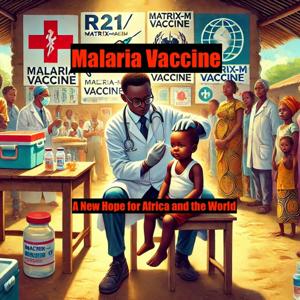
Malaria Vaccine

Malaria Vaccine

Download on the App Store

Malaria Vaccine episodes

  • Malaria Vaccines Offer Hope, but Challenges Remain in the Global Fight
    In the ongoing battle against malaria, several significant developments have emerged in recent days, highlighting both the progress and the challenges in combating this debilitating disease.
    The World Health Organization (WHO) is currently hosting the 27th meeting of the Malaria Policy Advisory Group (MPAG) from April 8-10, 2025. This virtual meeting is a crucial platform for global health experts to discuss and formulate policies aimed at reducing malaria incidence and advancing towards its elimination. The meeting comes at a time when malaria control efforts are facing numerous challenges, including extreme weather events, conflict, and economic stresses, which have stalled progress in many endemic countries[1].
    A key focus of these efforts is the implementation of malaria vaccines, which have shown promising results. The RTS,S/AS01 (RTS,S) malaria vaccine, recommended by the WHO in October 2021, has been instrumental in reducing malaria cases. This vaccine has been shown to reduce uncomplicated malaria by about 40%, severe malaria by 30%, and all-cause mortality by 13% in children. A second vaccine, R21/Matrix-M, was approved by the WHO in 2023 and has also demonstrated high efficacy, particularly in highly seasonal malaria settings[2][4].
    Both vaccines have been integrated into routine childhood immunization programs in several countries. As of December 2024, 17 countries in Africa have introduced these vaccines, and additional countries are expected to follow suit in 2025. The rollout has been supported by GAVI, which has established a co-financing policy to make the vaccines more affordable, with many countries paying as little as $0.20 per dose[4].
    The impact of these vaccines is significant, with modelling estimates suggesting they could prevent up to half a million child deaths over 12 years if scaled up to all GAVI-eligible countries. The vaccines are particularly effective when given seasonally in areas of highly seasonal transmission, reducing malaria episodes by up to 75%[2][4].
    In addition to vaccine implementation, other initiatives are underway to enhance malaria control. For instance, a training course in data analysis for genomic surveillance of African malaria vectors, jointly conducted by the Malaria Genomic Epidemiology Network (MalariaGEN) and the Pan-African Mosquito Control Association (PAMCA), is set to begin on April 2, 2025. This course aims to equip scientists and public health professionals with the skills to analyze genomic data for surveillance of *Anopheles* mosquitoes, a critical component in malaria vector control[3].
    As the global community prepares to mark World Malaria Day on April 25, 2025, under the theme "Malaria Ends with Us: Reinvest, Reimagine, Reignite," there is a renewed call to action. The campaign, promoted by the WHO and the RBM Partnership to End Malaria, emphasizes the need to re-energize efforts at all levels to accelerate progress towards malaria elimination. Despite significant gains sin
    This content was created in partnership and with the help of Artificial Intelligence AI.
    5 min
  • Malaria Vaccine Rollout Accelerates in Uganda, Promising Significant Reduction in Cases
    In the ongoing fight against malaria, significant developments have emerged in the past few days, particularly regarding the rollout and impact of malaria vaccines.
    On April 2, 2025, Uganda launched the largest malaria vaccine introduction to date, targeting 1.1 million children under two years old in 105 high- and moderate-transmission districts across the country. This initiative, supported by Gavi, the Vaccine Alliance, UNICEF, the World Health Organization (WHO), PATH, and CHAI, marks Uganda as the 19th African country to integrate the malaria vaccine into its routine immunization program[3].
    The vaccine being administered is the R21/Matrix-M malaria vaccine, given in four doses at 6, 7, 8, and 18 months. This vaccine has been shown to be safe and effective in preventing malaria in children, with trials indicating it reduces malaria cases by more than half during the first year after vaccination. The vaccine is expected to prevent at least 800 cases of severe malaria among children every day and ease the financial burden on families by saving them approximately UGX 15,000 per case that would have been spent on treating severe malaria[3].
    This rollout is part of a broader global effort to combat malaria. The WHO has recommended two malaria vaccines for use in children living in areas with moderate to high malaria transmission: the RTS,S/AS01 and the R21/Matrix-M vaccines. Both vaccines have been prequalified by the WHO and have demonstrated significant reductions in malaria cases and deaths. The RTS,S vaccine, for instance, has shown a 39% reduction in clinical malaria, a 30% reduction in severe malaria, and a 13% reduction in all-cause mortality in children[2][4].
    The introduction of these vaccines is coordinated by Gavi, which provides financial support for the procurement, transport, and rollout of the doses. As of December 2024, 17 countries in Africa had introduced these vaccines as part of their childhood immunization programs, with additional countries planning to follow suit in 2025. The demand for these vaccines is unprecedented, but the availability of two safe and effective options is expected to meet this demand, potentially saving tens of thousands of young lives every year[4].
    The theme for World Malaria Day 2025, "Malaria Ends With Us: Reinvest, Reimagine, Reignite," underscores the need for continued investment, innovation, collaboration, and commitment in the fight against malaria. This theme aligns with the efforts of organizations like the SMC Alliance, which has been supporting national malaria control programs in rolling out seasonal malaria chemoprevention (SMC) campaigns, protecting millions of children in endemic settings[1].
    These recent developments highlight the significant progress being made in malaria prevention and control, emphasizing the critical role of vaccines and comprehensive control strategies in reducing the burden of this disease.
    This content was created in partnership and with the help of Artificial Intelligence AI.
    4 min
  • Pioneering Malaria Vaccines Offer Hope: RTS,S and R21 Vaccines Revolutionize the Fight Against Deadly Disease
    In the ongoing fight against malaria, significant advancements and recent developments have marked a new era in the global effort to combat this debilitating disease.
    At the forefront of these developments is the malaria vaccine, with two vaccines, RTS,S and R21, now recommended by the World Health Organization (WHO) for widespread use. The RTS,S vaccine, also known as Mosquirix, was the first to receive a WHO recommendation in October 2021. It is administered in four doses to children between 5 months and 17 months, with the first three doses given monthly and a booster dose at 15-18 months. This vaccine has shown efficacy of about 40% against malaria cases and 30% against severe malaria, and it has been proven to reduce all-cause mortality by 13% in children[2][4].
    More recently, the R21 vaccine, which is similar to RTS,S but potentially more cost-effective, was prequalified by the WHO in December 2023. Both vaccines have demonstrated substantial reductions in malaria cases and deaths in children. In highly seasonal transmission areas, these vaccines can prevent up to 75% of malaria episodes when administered seasonally[4].
    The rollout of these vaccines is well underway, with 17 countries in Africa having introduced them into their childhood immunization programs as of December 2024. Additional countries are expected to follow suit in 2025. The demand for these vaccines is unprecedented, but the availability of two safe and effective options is expected to meet this demand, potentially saving tens of thousands of young lives annually[4].
    The introduction of these vaccines is part of a broader strategy to reinvigorate malaria control efforts. Despite significant progress since the late 1990s, which saw an estimated 2.2 billion cases and 12.7 million deaths prevented, progress has stalled in recent years. Malaria still claims an estimated one life every minute, primarily in the WHO African Region. The WHO and its partners are advocating for increased investment in malaria control and elimination programs, emphasizing the need to reinvest in proven interventions, reimagine strategies to overcome current obstacles, and reignite collective efforts to accelerate progress towards ending malaria[5].
    On World Malaria Day 2025, themed "Malaria Ends with Us: Reinvest, Reimagine, Reignite," the global community is being called upon to re-energize efforts at all levels, from global policy to community action. This campaign aims to promote innovative strategies, prioritize country ownership, and engage communities in data-driven approaches to tackle the evolving challenges in malaria control[5].
    In summary, the recent news highlights the critical role of malaria vaccines in the fight against this disease. With the RTS,S and R21 vaccines now in use and more countries set to introduce them, there is renewed hope for reducing malaria-related illnesses and deaths, especially among children in high-burden areas. The global community is being urged to mainta
    This content was created in partnership and with the help of Artificial Intelligence AI.
    5 min
  • Uganda Launches Large-Scale Malaria Vaccine Program, Leading the Fight Against a Deadly Disease
    In a significant milestone in the global fight against malaria, Uganda has launched a large-scale malaria vaccine introduction, marking a historic step in the country's efforts to combat one of its deadliest diseases.
    On April 2, 2025, Uganda's Ministry of Health, supported by GAVI, the Vaccine Alliance, UNICEF, the World Health Organization (WHO), and other partners, initiated the routine immunization program for the R21/Matrix-M malaria vaccine in Apac District, northern Uganda. This launch is part of the largest malaria vaccine roll-out to date, targeting over 1.1 million children under two years old in 107 high and moderate malaria transmission districts across the country[1][5].
    The R21/Matrix-M vaccine, which will be administered in a four-dose schedule at six, seven, eight, and 18 months of age, aims to protect children from severe malaria and death. This vaccine has been shown to reduce overall child mortality by 13% and significantly decrease severe malaria hospitalizations in studies conducted in Ghana, Kenya, and Malawi[1][2].
    Uganda is among the countries most heavily burdened by malaria, ranking third globally in malaria cases and seventh in malaria-related deaths. In 2024, the country recorded over 10.9 million malaria cases, resulting in 3,582 deaths, with 16 Ugandans dying from malaria every day, 10 of whom are children under five years old[1].
    The introduction of the malaria vaccine is part of Uganda's broader Expanded Programme on Immunization (UNEPI), which now includes 14 vaccines protecting against various diseases. The Ministry of Health emphasizes that while the vaccine is a crucial tool, it should not replace other malaria prevention measures such as insecticide-treated mosquito nets, indoor residual spraying, and environmental control efforts[1].
    The roll-out has been facilitated by significant support from international partners. UNICEF has procured and airlifted 3.5 million vaccine doses, with 2.278 million already distributed to the targeted districts. GAVI has provided essential financial support for the procurement, transport, and roll-out of the doses, and WHO has offered guidance and technical assistance to ensure the successful implementation of the program[1][5].
    This initiative underscores the global commitment to combating malaria. The WHO has recommended two malaria vaccines for use in children living in moderate to high malaria transmission areas: the RTS,S/AS01 vaccine and the more recently approved R21/Matrix-M vaccine. Both vaccines have been shown to be safe and effective in reducing malaria cases and deaths among children[2][5].
    As Uganda embarks on this significant health initiative, it sets a precedent for other countries in the region to follow, highlighting the importance of integrated malaria control strategies that include vaccination, vector control, and case management. This launch marks a major step forward in Uganda’s commitment to eliminating malaria and saving thousands of young lives.
    This content was created in partnership and with the help of Artificial Intelligence AI.
    4 min
  • Uganda Launches Routine Malaria Vaccination to Safeguard Children's Health
    In a significant milestone in the global fight against malaria, Uganda is set to launch the routine immunization of the R21/Matrix-M malaria vaccine, marking a historic day in the country's efforts to combat one of its deadliest diseases. The launch, scheduled for April 2, 2025, will take place at Booma Grounds in Apac District, with President Yoweri Kaguta Museveni presiding over the national event.
    Malaria remains a major health crisis in Uganda, which is among the 11 countries contributing to 70% of the global malaria burden. In 2024, Uganda recorded over 10.9 million malaria cases, resulting in 3,582 deaths, with 16 Ugandans dying from malaria every day, 10 of whom are children under five years old. The disease is responsible for 30-40% of outpatient consultations, 20% of hospital admissions, and 10% of all hospital deaths in the country[1][5].
    The R21/Matrix-M malaria vaccine, approved by the World Health Organization (WHO), will be administered in a four-dose schedule at six, seven, eight, and 18 months of age. This vaccine is designed to protect children under five years old from severe malaria and death. The rollout will begin in 107 high-malaria transmission districts and is expected to cover over 1.1 million children under two years old. The initiative is supported by GAVI, the Vaccine Alliance, with co-financing from the Government of Uganda, and facilitated by UNICEF, which has procured and airlifted 3.5 million vaccine doses, with 2.278 million already distributed to targeted districts[1][5].
    Studies in Ghana, Kenya, and Malawi have shown that the R21/Matrix-M vaccine reduces overall child mortality by 13% and significantly decreases severe malaria hospitalizations. The vaccine works by triggering the immune system to prevent the deadliest malaria parasite, *Plasmodium falciparum*, from infecting and multiplying in the liver[1][2].
    Uganda's Ministry of Health, led by Minister Dr. Jane Ruth Aceng, has emphasized that while the vaccine is a crucial tool, it should not replace other malaria prevention measures such as insecticide-treated mosquito nets, indoor residual spraying, seasonal malaria chemo-prevention, and environmental control efforts. The vaccine is part of Uganda’s broader Expanded Programme on Immunization (UNEPI), which now includes 14 vaccines protecting against various diseases[1][5].
    The launch in Apac District is part of a larger national effort, with other districts, including Adjumani, also introducing the vaccine into their routine immunization programs. In Adjumani, the vaccine will be launched at Adjumani General Hospital, targeting both nationals and refugees. Local health officials have highlighted the vaccine’s potential to reduce malaria-related illness and death, improving the quality of life for residents[3].
    GAVI has played a pivotal role in coordinating the global malaria vaccination program, providing financial support for the procurement, transport, and rollout of doses. Uganda is the 19th African
    This content was created in partnership and with the help of Artificial Intelligence AI.

    4 min
  • Malaria Vaccine Breakthrough: 90% Efficacy Achieved, Global Initiatives Gaining Momentum
    In the ongoing battle against malaria, several recent developments have marked significant milestones, particularly in the realm of vaccine development and global health initiatives.
    One of the most promising updates comes from a new study released just days ago, highlighting the efficacy of a novel malaria vaccine, PfSPZ-LARC2. Developed by researchers from Sanaria and the Seattle Children’s Research Institute’s Center for Global Infectious Disease Research, this single-dose vaccine has demonstrated a remarkable 90% protection against controlled human malaria infection. This breakthrough is achieved through advanced genetic engineering, where two key parasite genes, *Mei2* and *LINUP*, are deleted to prevent the parasites from progressing beyond the liver stage, thus ensuring the vaccine recipients remain safe and symptom-free[4].
    This new vaccine builds on the progress made with existing malaria vaccines. As of now, two malaria vaccines, RTS,S/AS01 and R21/Matrix-M, are recommended for use in children living in areas with moderate to high malaria transmission. These vaccines, while effective, offer a reduction in uncomplicated malaria by about 40%, severe malaria by 30%, and all-cause mortality by 13%. The World Health Organization (WHO) recommended the RTS,S/AS01 vaccine in October 2021, followed by the R21/Matrix-M vaccine in 2023, marking significant steps in the fight against malaria[2][4].
    Global health leaders continue to emphasize the importance of sustained funding and unified efforts to combat malaria. At the 79th United Nations General Assembly, African leaders urged immediate action to prevent the catastrophic impact of reduced malaria funding, warning that a reduced Global Fund replenishment could lead to 137.2 million more malaria cases and 337,000 additional deaths[1].
    In addition to vaccine advancements, various regional initiatives are gaining momentum. The African Leaders Malaria Alliance (ALMA) has been instrumental in promoting malaria prevention and treatment, with recent initiatives including the establishment of youth corps in South Sudan and Malawi to tackle the disease. ALMA also congratulated Egypt on its WHO malaria-free certification, highlighting the progress made in certain regions[1].
    Similarly, in the Asia Pacific region, the Asia Pacific Leaders Malaria Alliance (APLMA) is driving efforts towards malaria elimination. Nepal is making strides towards achieving its 2030 goal of malaria elimination, and Cabo Verde was recently certified as malaria-free by the WHO. These achievements underscore the multi-faceted approach required to eliminate malaria, including innovative technologies, community engagement, and robust health policies[3].
    As the global community continues to grapple with the challenges of malaria, these recent developments offer a beacon of hope. With ongoing research, increased funding commitments, and collaborative efforts, the goal of a malaria-free world seems more achievable than ever.
    This content was created in partnership and with the help of Artificial Intelligence AI.
    4 min
  • Breakthrough Malaria Treatments Offer Hope for Elimination in High-Risk Regions
    In recent developments, the fight against malaria has seen significant advancements, particularly in the realm of preventive measures and vaccine development.
    In northwestern Kenya, a pilot program has yielded promising results in reducing the burden of malaria. The program, which involved community health promoters administering preventive doses of antimalarial drugs to children under 5 in Turkana County, has cut cases of seasonal malaria by 70 percent among children in its first year. This initiative, part of a broader strategy known as seasonal malaria chemoprevention, is endorsed by the World Health Organization (WHO) for areas prone to seasonal malaria outbreaks. Led by researchers from Duke Global Health Institute and Moi University, the project has garnered support from various partners, including Catholic Relief Services and the Turkana County government. The success of this program has prompted Kenyan health officials to consider expanding it to other counties[1].
    On the vaccine front, there have been notable updates. Currently, two malaria vaccines are recommended for use in children living in areas with moderate to high malaria transmission. The RTS,S/AS01 vaccine, approved by the WHO in 2021, and the R21/Matrix-M vaccine, approved in 2023, have shown efficacy in reducing uncomplicated malaria by about 40%, severe malaria by 30%, and all-cause mortality by 13%[2][4].
    A recent breakthrough has come with the development of the PfSPZ-LARC2 vaccine, a genetically engineered malaria vaccine that has demonstrated 90% protection against controlled human malaria infection after a single injection. Developed by researchers from Sanaria and the Seattle Children’s Research Institute’s Center for Global Infectious Disease Research, this vaccine uses advanced genetic engineering to delete key parasite genes, ensuring the parasites replicate in the liver but do not progress to the blood stage, thus preventing malaria symptoms and transmission. This vaccine is undergoing further clinical trials in 2025 to assess its safety and efficacy across diverse populations[4].
    These advancements align with the WHO's broader goals outlined in the Malaria Vaccine Technology Roadmap, which aims to develop and license malaria vaccines with at least 75% protective efficacy against clinical malaria by 2030. The roadmap also includes developing vaccines that reduce transmission and human malaria infection, enabling elimination in multiple settings through mass vaccination campaigns[2].
    As malaria continues to be a significant public health threat, especially in regions like sub-Saharan Africa and South-East Asia, these developments offer hope for more effective prevention and control strategies. The ongoing research and implementation of these vaccines and preventive programs underscore the global commitment to combating this debilitating disease.
    This content was created in partnership and with the help of Artificial Intelligence AI.
    4 min
  • Malaria Resurgence in Congo: Outbreak Sparks Urgent Response and Vaccination Advancements
    In recent weeks, malaria has resurfaced as a significant public health concern, particularly in northwest Congo, where a surge in malaria cases has prompted extensive investigations and response efforts.
    In the Equateur province of Congo, health officials are grappling with an outbreak that has resulted in over 1,000 reported cases and at least 60 deaths since late January. The World Health Organization (WHO) has been at the forefront of these efforts, conducting detailed epidemiological and clinical investigations to determine the cause of the illnesses. While malaria, a mosquito-borne disease prevalent in the region, is the primary suspect, other causes such as flu and typhoid are also being considered[1].
    The outbreak was first detected in the village of Boloko after three children who ate a bat died within 48 hours. The village of Bomate, approximately 200 kilometers from Boloko, has been the hardest hit, with 98% of the cases and 86% of the deaths recorded there. Tests have shown that 54.1% of patients in the Basankusu health zone tested positive for malaria, aligning with the symptoms reported, which include fever, body aches, chills, and other severe health issues[1].
    Despite the challenges posed by remote locations and limited access to medical supplies, the WHO and local health authorities are working to provide medical care and investigate the root causes of the outbreak. The lack of medication in local hospitals has forced some families to seek private supplies, highlighting the need for urgent and sustained support[1].
    In the broader context of malaria control, significant advancements have been made in the development and deployment of malaria vaccines. The WHO has recommended two malaria vaccines, RTS,S/AS01 and R21/Matrix-M, for use in children living in areas with moderate to high malaria transmission. These vaccines have shown substantial efficacy in reducing malaria cases, severe malaria, and all-cause mortality in children. The RTS,S vaccine, for instance, reduces clinical malaria by 39%, severe malaria by 30%, and all-cause mortality by 13%[2][4].
    The rollout of these vaccines is well underway, with 17 countries in Africa having introduced them into their childhood immunization programs as of December 2024. Additional countries are expected to follow suit in 2025, with the aim of saving tens of thousands of young lives annually. The availability of these vaccines is expected to meet the high demand, especially with the support of global health organizations like GAVI, which has established a co-financing policy to increase affordability[4].
    These efforts underscore the ongoing commitment to combating malaria, a disease that remains a major public health threat, particularly in sub-Saharan Africa. As research continues to develop more effective vaccines and treatments, the immediate response to outbreaks like the one in northwest Congo remains crucial in saving lives and controlling the spread of the disease.
    This content was created in partnership and with the help of Artificial Intelligence AI.
    4 min
  • Malaria Vaccines Revolutionize Global Health: RTS,S and R21 Offer Promising Solutions
    In recent developments, malaria continues to be a significant public health concern, particularly in regions with high transmission rates. Over the past two days, several key updates have emerged regarding both the disease itself and the progress of malaria vaccines.
    In the Democratic Republic of Congo (DRC), a deadly outbreak has been confirmed to be caused by malaria. According to the National Public Health Institute, tests have verified that the disease is responsible for the deaths of 52 people and has affected nearly 200 others. This outbreak highlights the ongoing need for effective malaria control measures in such regions[1].
    On a more positive note, significant strides have been made in the development and implementation of malaria vaccines. The World Health Organization (WHO) has recommended two malaria vaccines, RTS,S/AS01 (RTS,S) and R21/Matrix-M, for widespread use in children living in areas with moderate to high malaria transmission. These vaccines have shown substantial efficacy in reducing malaria cases and related mortality.
    The RTS,S vaccine, developed by GlaxoSmithKline Biologicals, was the first to receive a WHO recommendation for widespread use in October 2021. It has been shown to reduce clinical malaria by 39%, severe malaria by 30%, and all-cause mortality by 13% in children. The R21 vaccine, approved by the WHO in 2023, has similar efficacy and is particularly effective in highly seasonal malaria settings[2][4].
    Both vaccines have been integrated into routine childhood vaccinations in several countries. As of December 2024, 17 countries in Africa have introduced these vaccines as part of their national malaria control strategies. Additional countries are expected to follow suit in 2025, with at least 30 African countries planning to include the malaria vaccine in their childhood immunization programs[4].
    The rollout of these vaccines is expected to have a high public health impact, with modelling estimates suggesting that they could prevent up to half a million child deaths over 12 years if scaled up to all GAVI-eligible countries. The vaccines are also highly cost-effective, with GAVI supporting their introduction through an exceptional time-limited co-financing policy that makes the vaccines affordable, with many countries paying as little as $0.20 per dose[4].
    The availability of two safe and effective malaria vaccines has alleviated concerns about vaccine supply, ensuring that there will be sufficient doses to meet the high demand. This dual-vaccine approach is expected to significantly reduce malaria cases and deaths, especially in regions where the disease is most prevalent[4].
    In summary, while malaria remains a critical health issue, as evidenced by the recent outbreak in the DRC, the advancement and widespread implementation of malaria vaccines offer a promising solution. The ongoing rollout of RTS,S and R21 vaccines is poised to save tens of thousands of young lives annually, marking a significant step fo
    This content was created in partnership and with the help of Artificial Intelligence AI.
    4 min
  • Breakthrough Vaccines Revolutionize Malaria Fight: Cutting-Edge Developments and Global Impact
    In the ongoing battle against malaria, significant strides have been made, particularly with the advancement and implementation of malaria vaccines. Here are the latest developments:
    Malaria, caused by Plasmodium parasites, with *Plasmodium falciparum* being the most severe, continues to pose a critical challenge to global health. The disease is intricately linked with climate change, public health inequities, and complex parasitic infection dynamics[1].
    A major breakthrough in malaria control has been the approval and rollout of two malaria vaccines: RTS,S (Mosquirix) and R21 (Matrix-M). The World Health Organization (WHO) recommended the RTS,S vaccine for widespread use in children living in areas with moderate to high malaria transmission in October 2021. This vaccine has shown substantial efficacy, reducing uncomplicated malaria by about 40%, severe malaria by 30%, and all-cause mortality by 13% in clinical trials[2][4].
    More recently, the WHO approved the R21/Matrix-M vaccine in 2023, which has also demonstrated high efficacy and safety. Both vaccines have been prequalified by the WHO, ensuring their safety and quality. In phase 3 clinical trials, both vaccines reduced malaria cases by more than half during the first year after vaccination, a period when children are at the highest risk of illness and death. A fourth dose given in the second year of life prolongs this protection[4].
    As of December 2024, 17 countries in Africa have introduced these vaccines as part of their childhood immunization programs, with additional countries planning to follow suit in 2025. The rollout is supported by GAVI, which has established a co-financing policy to increase affordability, allowing many GAVI-supported countries to pay as little as $0.20 per dose for either vaccine[4].
    The implementation of these vaccines is part of a broader strategy that includes vector control measures such as insecticide-treated nets and indoor residual spraying, as well as early diagnosis and treatment of cases. The WHO emphasizes that the highest impact is achieved when these vaccines are used in combination with other preventive, diagnostic, and treatment strategies tailored to the local context[2][4].
    Despite these advancements, challenges persist. World Malaria Day, observed on April 25, highlights the ongoing struggles and the need for continued innovation and equity in malaria responses. The WHO and its partners are focusing on addressing barriers to health equity, gender equality, and human rights in malaria responses. The African Region remains the most heavily affected, with rural populations and vulnerable groups such as pregnant women, infants, and children under five years of age being disproportionately impacted[3].
    The global community is working towards the goal of zero malaria, with initiatives like the "Zero Malaria Starts with Me" movement and the Global technical strategy for malaria 2016-2030. Innovations in vaccine delivery, diagnostics, and other to
    This content was created in partnership and with the help of Artificial Intelligence AI.
    4 min

About Malaria Vaccine

From the publisher's feed

In the heart of a bustling research lab at Oxford University, Dr. Sarah Johnson peered intently into her microscope. For years, she and her team had been working tirelessly on a project that could change the lives of millions. Their goal? To create a vaccine that could finally put an end to one of humanity's oldest and deadliest foes: malaria. Sarah's journey had begun years earlier when, as a young medical student, she had volunteered in a rural clinic in Burkina Faso. There, she had witnessed firsthand the devastating impact of malaria, particularly on children. The image of a mother cradling her feverish child, helpless against the parasites ravaging the little one's body, had stayed with her ever since. "We're close," Sarah muttered to herself, adjusting the focus on her microscope. "I can feel it." And indeed, they were. After years of painstaking research, countless failures, and glimmers of hope, Sarah and her team had developed a vaccine they called R21/Matrix-M. It was a mouthful of a name, but it held the promise of saving countless lives. Meanwhile, in a small village in Ghana, Kwame sat outside his home, swatting at mosquitoes in the evening air. His young daughter, Ama, lay inside, her small body wracked with fever. Malaria had struck again, as it did every year when the rains came. Kwame had lost his eldest son to the disease three years ago. Now, as he listened to Ama's labored breathing, he prayed for a miracle. Little did he know that halfway across the world, that miracle was taking shape in the form of a tiny vial of vaccine. Back in Oxford, Sarah's team received the news they had been waiting for. The results from their latest clinical trial were in, and they were nothing short of remarkable. The R21/Matrix-M vaccine had shown an efficacy rate of up to 77% in young children who received a booster dose. "This is it!" Sarah exclaimed, her eyes shining with excitement as she shared the news with her team. "We've done it!" But what exactly had they done? How did this tiny vial of liquid manage to outsmart a parasite that had been outwitting humans for millennia? The secret lay in the vaccine's clever design. It targeted a specific protein found on the surface of the malaria parasite called the circumsporozoite protein, or CSP for short. Think of CSP as the parasite's coat – by teaching the body's immune system to recognize and attack this coat, the vaccine effectively stopped the parasite in its tracks before it could cause harm. But the R21/Matrix-M vaccine had another trick up its sleeve. It included a special ingredient called an adjuvant – Matrix-M. This adjuvant worked like a megaphone for the immune system, amplifying the body's response to the vaccine and making it more effective. As news of the vaccine's success spread, it reached the ears of world leaders and health organizations. In boardrooms and government offices, plans were set in motion to bring this life-saving vaccine to those who needed it most. Ghana, Nigeria, a