
Sign up to save your podcasts
Or



Send us Fan Mail
Twenty-fourth Sunday in Ordinary Time, Cycle B
Link to Mass Readings
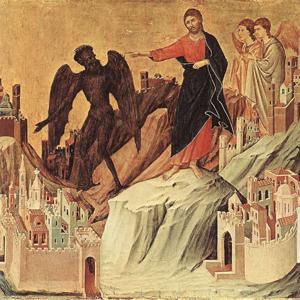
Link to Cover Art
Send us Fan Mail
Twenty-third Sunday in Ordinary Time, Cycle B
Link to Mass Readings
Link to Cover Art
Notes: I made a mistake with the recorder and the initial 3 minutes are missing. I think the essence of the homily is still in tact in the recording above.
HOMILY OF HIS HOLINESS BENEDICT XVI
Church of the Charterhouse of Serra San Bruno
Sunday, 9 October 2011
Venerable Brothers in the Episcopate,
Dear Carthusian Brothers,
Brothers and Sisters,
I thank the Lord who has brought me to this place of faith and prayer, the Charterhouse of Serra San Bruno. In renewing my grateful greeting to Archbishop Vincenzo Bertolone of Catanzaro-Squillace, I address this Carthusian Community, each one of its members, with deep affection, starting with the Prior, Fr Jacques Dupont, whom I warmly thank for his words, while I ask him to communicate my grateful thoughts and my blessing to the Minister General and to the Nuns of the Order.
I am first of all eager to stress that this Visit of mine comes in continuity with certain signs of strong communion between the Apostolic See and the Carthusian Order, which became apparent in the past century. In 1924, Pope Pius XI issued an Apostolic Constitution with which he approved the Statutes of the Order, revised in the light of the Code of Canon Law. In May 1984, Blessed John Paul II addressed a special Letter to the Minister General, on the occasion of the ninth centenary of the foundation by St Bruno of the first community at the Chartreuse [Charterhouse] near Grenoble. On 5 October that same year my beloved Predecessor came here and the memory of him walking by these walls is still vivid.
Today I come to you in the wake of these events, past but ever timely, and I would like our meeting to highlight the deep bond that exists between Peter and Bruno, between pastoral service to the Church’s unity and the contemplative vocation in the Church. Ecclesial communion, in fact, demands an inner force, that force which Father Prior has just recalled, citing the expression “captus ab Uno”, ascribed to St Bruno: “grasped by the One”, by God, “Unus potens per omnia”, as we sang in the Vespers hymn. From the contemplative community the ministry of pastors draws a spiritual sap that comes from God.
“Fugitiva relinquere et aeterna captare”: to abandon transient realities and seek to grasp that which is eternal. These words from the letter your Founder addressed to Rudolph, Provost of Rheims, contain the core of your spirituality (cf. Letter to Rudolph, n. 13): the strong desire to enter in union of life with God, abandoning everything else, everything that stands in the way of this communion, and letting oneself be grasped by the immense love of God to live this love alone.
Dear brothers you have found the hidden treasure, the pearl of great value (cf. Mt 13:44-46); you have responded radically to Jesus’ invitation: “If you would be perfect, go, sell what you possess and give to the poor, and you will have treasure in heaven; and come, follow me” (Mt 19:21). Every monastery — male or female — is an oasis in which the deep well, from which to draw “living water” to quench our deepest thirst, is constantly being dug with prayer and meditation. However, the charterhouse is a special oasis in which silence and solitude are preserved with special care, in accordance with the form of life founded by St Bruno and which has remained unchanged down the centuries. “I live in a rather faraway hermitage... with some religious brothers”, is the concise sentence that your Founder wrote (Letter to Rudolph “the Green”,
Send us Fan Mail
Twenty-second Sunday in Ordinary Time, Cycle B
Link to Mass Readings
Link to Cover Art
Send us Fan Mail
Twenty-first Sunday in Ordinary Time, Cycle A
Link to Sunday Mass Readings
Link to Cover Art
A Vision of the Future Church
by Pope Emeritus Benedict XVI
(Excerpted from a talk in 1969 before he was pope)
From the crisis of today the Church of tomorrow will emerge—a Church that has lost much. She will become small and will have to start afresh more or less from the beginning. She will no longer be able to inhabit many of the edifices she built in prosperity.
As the number of her adherents diminishes, so she will lose many of her social privileges. In contrast to an earlier age, it will be seen much more like a voluntary society, entered only by free decision.
As a small society, it will make much bigger demands on the initiative of her individual members. Undoubtedly it will discover new forms of ministry and will ordain to the priesthood approved Christians who pursue some profession.
In many smaller congregations or in self-contained social groups, pastoral care will normally be provided in this fashion.
Along-side this, the full-time ministry of the priesthood will be indispensable as formerly.
But in all of the changes at which one might guess, the Church will find her essence afresh and with full conviction in that which was always at her center: faith in the triune God, in Jesus Christ, the Son of God made man, in the presence of the Spirit until the end of the world.
In faith and prayer she will again recognize the sacraments as the worship of God and not as a subject for liturgical scholarship.
The Church will be a more spiritual Church, not presuming upon a political mandate, flirting as little with the Left as with the Right.
It will be hard going for the Church, for the process of crystallization and clarification will cost her much valuable energy. It will make her poor and cause her to become the Church of the meek.
The process will be all the more arduous, for sectarian narrow-mindedness as well as pompous self-will have to be shed.
One may predict that all of this will take time. The process will be long and wearisome as was the road from the false progressivism on the eve of the French Revolution—when a bishop might be thought smart if he made fun of dogmas and even insinuated that the existence of God was by no means certain—to the renewal of the nineteenth century.
But when the trial of this sifting is past, a great power will flow from a more spiritualized and simplified Church.
Men in a totally planned world will find themselves unspeakably lonely. If they have completely lost sight of God, they will feel the whole horror of their poverty.
Then they will discover the little flock of believers as something wholly new. They will discover it as a hope that is meant for them, an answer for which they have always been searching in secret.
And so it seems certain to me that the Church is facing very hard times.
The real crisis has scarcely begun. We will have to count on terrific upheavals. But I am equally certain about what will remain at the end: not the Church of the political cult, which is dead already, but the Church of faith.
She may no longer be the dominant social power to the extent that she was until recently; but she will enjoy a fresh blossoming and be seen as man’s home, where he will find life and hope beyond death.
Send us Fan Mail
Solemnity of the Assumption of the Blessed Virgin Mary Vigil, Cycle B
Link to Mass Readings
Link to Cover Art
Send us Fan Mail
Nineteenth Sunday in Ordinary Time, Cycle A
Link to Sunday Mass Readings
Link to Cover Art
Send us Fan Mail
Eighteenth Sunday in Ordinary Time, Cycle B
Link to Readings
Cover Art: “MULITPLICATION OF THE LOAVES AND FISHES” BY TRÈS RICHES HEURES (15th Cent.)
Send us Fan Mail
Sixteenth Sunday in Ordinary Time, Cycle B
Link to today's reading
Link to Cover Art
Send us Fan Mail
Fourteenth Sunday in Ordinary Time, Year B
Link to Sunday Mass Readings
Send us Fan Mail
Thirteenth Sunday in Ordinary Time, Year B
Link to Sunday Mass Readings
Link to Cover Art: Raising of Jairus Daughter by Ilya Repin, 1871
From the publisher's feed

4,981 Listeners

152,879 Listeners

4,016 Listeners

6,760 Listeners

33,418 Listeners

39,402 Listeners
184 Listeners

15,911 Listeners
28 Listeners

10,601 Listeners

158 Listeners