
Sign up to save your podcasts
Or



Send us Fan Mail
Throughout history, people have reported hearing voices, seeing visions, and experiencing realities that others couldn't perceive. Were they prophets, mediums, or experiencing something psychology is still working to understand?
In this episode, we explore schizophrenia, ghost stories, spiritual experiences, simulation theory, and the fascinating ways humans interpret reality.
What if the real question isn't whether ghosts exist... but how much of reality we're actually able to see?
🎙️ Have a story that challenged your understanding of reality? Send it to [email protected] for a chance to be featured in a future episode of A Glitch in the Matrix. 🖤👁️
Support the show
Send us Fan Mail
How does one person gain enough influence to reshape another person’s identity, beliefs, and behavior?
In this episode of Psycho Babble, Sarah and Crystal examine Charles Manson, the formation of the Manson Family, and the psychological manipulation that contributed to the murders committed by members of the group. They explore how cults create a sense of belonging, isolate followers, reward obedience, discourage independent thought, and gradually turn influence into control.
The conversation also examines coercive control, cognitive dissonance, group conformity, personality traits, drug use, and the role LSD may have played in increasing suggestibility and intensifying the group’s distorted beliefs. Most importantly, the episode remembers the victims and separates psychological understanding from justification.
Support the show
Send us Fan Mail
What if the things people keep seeing… aren’t just stories?
In this episode, we explore cryptozoology—the study of animals not yet proven by science—and why people across different places continue to report the same kinds of creatures. From Bigfoot to Skinwalkers, we examine the psychology behind these experiences, how perception shapes belief, and why some “myths” in history have proven real.
So, the question isn’t just do these creatures exist…
It’s why we keep seeing them.
Support the show
Send us Fan Mail
In this episode of Psycho Babble, Sarah and Crystal explore the psychology and systemic failures surrounding Jeffrey Dahmer. Focusing on control, awareness, and missed warning signs, this episode examines how proximity does not guarantee safety—and how institutions, perceptions, and biases can shape whether intervention occurs.
This is not a story about a monster.
It’s a story about what happens when warning signs are seen but not acted on.
Trigger Warning:
This episode discusses violence, trauma, and sensitive topics involving harm to others. Listener discretion is advised.
Support the show
Send us Fan Mail
Have you ever survived something that should have killed you?
A car crash you narrowly avoided.
A fall that somehow ended differently than it should have.
A moment where time seemed to slow… and you walked away alive.
In this episode of Glitch in the Matrix, we explore the unsettling theory of quantum mortality, the idea that every time we face death, reality may split into parallel timelines, and our consciousness continues in the version where we survive.
But if that’s true… what happens to the versions of us that didn’t?
Through psychology, philosophy, and the strange experiences many people report after near-death moments, we dive into the unsettling possibility that survival may not always be as simple as luck.
In this episode, we explore:
• The Many-Worlds interpretation of quantum physics
• The psychology behind “I should have died” experiences
• Why near-death events can make reality feel different afterward
• How the brain processes trauma and survival
• Why folklore has long described crossing between worlds
Whether quantum mortality is literal or simply a way the human mind processes survival, it raises one haunting question:
If you survived your last close call… did another version of you not make it?
🎙 Share your story
Have you ever experienced something that felt like a glitch in reality?
A close call, a strange coincidence, or a moment where the world suddenly felt… different?
Send your story to [email protected], and it may be featured in a future episode.
Support the show
Send us Fan Mail
In the premiere episode of Psycho Babble, Sarah and Crystal explore the psychology behind Ed Gein, the man who unknowingly shaped the face of modern horror. Rather than focusing on shock value, this episode examines how identity collapse, isolation, attachment trauma, and untreated mental illness can fracture a person’s sense of reality.
Through the lenses of nature vs. nurture, Freud’s Oedipus Complex (and why it’s controversial today), and modern DSM-5 frameworks, the hosts unpack how psychology understands Gein’s behavior differently now than it did in the 1950s. The conversation also critiques how film, television, and shows like Monster dramatize true crime — and where those portrayals exaggerate or miss the psychological truth.
This is not a story about a monster; it’s about what happens when reality breaks, and no one intervenes.
As part of the Marionette Dolls Podcast universe, Psycho Babble blends thoughtful psychology, cultural critique, and ethical storytelling to help listeners understand how harm happens — not just what happened.
Trigger Warning for This Episode
This episode contains discussions of violent crime, murder, grave desecration, psychological trauma, mental illness, and systemic failure. While descriptions are non-graphic, the subject matter may be distressing or emotionally challenging for some listeners.
Listener discretion is advised. If at any point the content feels overwhelming, please pause, skip ahead, or step away—your mental well-being matters.
All psychological analysis in this episode is retrospective and speculative, intended for educational and entertainment purposes only, not diagnosis or professional advice.
Support the show
Send us Fan Mail
https://marionettedolls.buzzsprout.com
Episode 1 – Season One: Before We Had the Language
In this episode, we go back to where it all began. Season One of My Strange Addiction introduced the world to behaviors that were framed as shocking, bizarre, and dangerous. But watching it through today’s lens, we see something very different: people trying to cope, connect, regulate, and survive in a world that didn’t yet have the language for what they were experiencing.
Together, we break down each case using modern psychology and cultural understanding. We explore the difference between harmless habits, context-dependent behaviors, and truly harmful coping mechanisms. We talk about sensory regulation, attachment, identity expression, trauma responses, and how technology and community have changed the way we understand “strange” behavior.
This isn’t about judging the people on the show. It’s about examining the framing, the language, and the era that shaped how their stories were told. Many behaviors once labeled as addiction are now recognized as self-soothing, identity exploration, or nervous system regulation. Others deserved medical and psychological support, not spectacle.
We also discuss how culture has shifted:
This episode is a cultural time capsule and a psychological reframe.
Not everything strange is harmful.
Not everything harmful is strange.
And curiosity will always heal more than judgment.
⚠️ Trigger Warning & Disclaimer:
This episode discusses unusual habits, mental health topics, and behaviors that may be unsafe if attempted. Please do not try or recreate anything discussed. This content is for educational and cultural commentary only. We are not providing medical or psychological advice, and we are not offering diagnoses or treatment recommendations.
Support the show
Send us Fan Mail
Back-to-school season brings more than new backpacks and fresh supplies; it can also bring big feelings for kids and parents alike.
Sarah and Crystal talk about first-day nerves, attachment and separation, fitting in, bullying, academic pressure, neurodivergence, IEPs and 504 plans, and the financial and emotional stress parents carry while trying to help their kids adjust.
🎒 A rough first day does not mean a rough year, and needing support does not mean anyone is failing.
Helpful Resources:
Back-to-School Tips: https://www.healthychildren.org/English/ages-stages/gradeschool/school/Pages/back-to-school-tips.aspx
Bullying Support: https://www.stopbullying.gov/
IEP Resources for Families: https://sites.ed.gov/idea/parents-families/
Mental Health Crisis Support: Call or text 988 or visit https://988lifeline.org/
Marionette Dolls Podcast 🎪🖤 — Pulling back the curtain on the human mind.
Support the show
Send us Fan Mail
Sarah and Crystal are back with a life update and podcast reset after missing two episodes. Sarah shares about grief, a new narcolepsy diagnosis, medication changes, chronic pain, and learning to pace herself while starting an intensive grad school season.
They also pull back the curtain on podcasting as a passion project: the costs, the behind-the-scenes work, Buzzsprout, subscriptions, and why having a podcast does not automatically mean making money.
It’s honest, funny, a little messy, and very human. Because sometimes you have main-character energy… but your body, budget, and schedule are still running on side-quest capacity.
Content note: grief, medication side effects, serotonin syndrome, mania symptoms, narcolepsy, chronic pain, and mental health.
Support the show
Send us Fan Mail
This week, Sarah and Crystal descend into the strange, whisper-filled world of ASMR. Why do some people drift off to sleep listening to tapping, page turning, and soft voices, while others feel irrational rage, discomfort, or the overwhelming urge to throw their headphones into the nearest wall?
We explore the history of ASMR, what researchers think is happening in the brain, the connection to relaxation and sleep, and why certain sounds and visuals can trigger fear, disgust, sensory overload, or even phobias. From misophonia and medical fears to trypophobia, personal space, awkward roleplays, and the psychology of why one person's comfort is another person's nightmare, we're pulling back the curtain on one of the internet's most misunderstood phenomena.
Listener Warning: This episode contains discussions of phobias, needles, medical procedures, trypophobia, sensory triggers, misophonia, anxiety, and other topics that may be uncomfortable for some listeners. No triggering sounds are played, but they are discussed throughout the episode.
Want to learn more?
• ASMR Research Review: National Library of Medicine ASMR Study
• ASMR and Mood/Relaxation Research: More Than a Feeling: ASMR Research
• Understanding Phobias: NHS Phobias Guide
• Phobia Self-Help Information: NHS Inform Phobia Guide
Because sometimes a whisper feels like a lullaby... and sometimes it feels like a threat. 🎪🖤
Support the show
From the publisher's feed
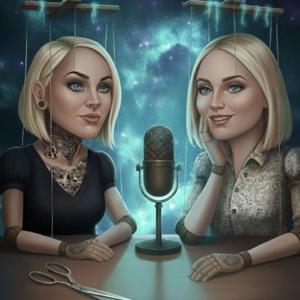
The Marionette Doll represents the delicate balance between control and surrender. This symbol mirrors the experience of those shaped by trauma and the process of reclaiming agency over one’s…
In childhood, the marionette can embody the feeling of being pulled by invisible strings of emotions, expectations, or circumstances beyond our control. Each string reflects an external influence: family, society, fear, or survival instincts that guided us before we could guide ourselves. The wooden frame, fragile yet enduring, symbolizes the resilience we carry even when we feel manipulated or voiceless.
Yet, there is a beauty within the marionette, too. When the strings move in harmony, the doll dances; it becomes expressive, graceful, and alive. In this light, the marionette also represents the healing potential: the process of learning which strings to cut, which to keep, and how to move with intention rather than compulsion. It is the story of regaining authorship of transforming from being controlled to becoming the choreographer of one’s own movements.
Marionette Dolls explores these themes through honest conversations about mental health, trauma, and recovery. It’s about acknowledging the strings that once controlled us and, together, learning how to move freely again.