
Sign up to save your podcasts
Or

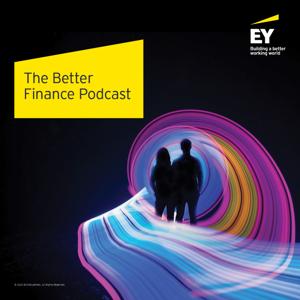

In this episode of the Better Finance podcast, Myles Corson welcomes Brian Tomlinson, ESG Reporting Managing Director at Ernst & Young LLP and Ariel Babcock, Head of Investment Stewardship at Fidelity Investments and formerly Head of Research for FCLT Global, a not-for-profit organization that develops research and tools to drive long-term value creation.
FCLT's research of short- and long-term business strategies has found that the pressure for quick projects and fast payoffs may trigger poor outcomes and investment value erosion. In fact, short-termism is experiencing some market pushback due to the constraints it places on decision-making relative to longer-term investments.
It seems clear that short-termism does constrain companies' appetite for investing in environmental, social and governance (ESG), primarily due to ESG's inherent medium- to long-term (often times decades long) payoff. ESG investments may be minimized or cut entirely to hit short-term earnings goals, possibly undermining shareholder rights as a result. Particularly in turbulent economic environments where companies tend to hoard capital, long-term goals may be weakened or overthrown.
The views and opinions expressed are those of the individuals and do not reflect the official policy or position of EY or any other organization.
© 2023 Ernst & Young Global Limited
 View all episodes
 By EY
By EY

4.8
5555 ratings
In this episode of the Better Finance podcast, Myles Corson welcomes Brian Tomlinson, ESG Reporting Managing Director at Ernst & Young LLP and Ariel Babcock, Head of Investment Stewardship at Fidelity Investments and formerly Head of Research for FCLT Global, a not-for-profit organization that develops research and tools to drive long-term value creation.
FCLT's research of short- and long-term business strategies has found that the pressure for quick projects and fast payoffs may trigger poor outcomes and investment value erosion. In fact, short-termism is experiencing some market pushback due to the constraints it places on decision-making relative to longer-term investments.
It seems clear that short-termism does constrain companies' appetite for investing in environmental, social and governance (ESG), primarily due to ESG's inherent medium- to long-term (often times decades long) payoff. ESG investments may be minimized or cut entirely to hit short-term earnings goals, possibly undermining shareholder rights as a result. Particularly in turbulent economic environments where companies tend to hoard capital, long-term goals may be weakened or overthrown.
The views and opinions expressed are those of the individuals and do not reflect the official policy or position of EY or any other organization.
© 2023 Ernst & Young Global Limited

32,078 Listeners

4,346 Listeners
2,173 Listeners
377 Listeners

1,650 Listeners

170 Listeners

2,161 Listeners

1,048 Listeners
173 Listeners

641 Listeners
225 Listeners

6,060 Listeners

669 Listeners

160 Listeners

183 Listeners