
Sign up to save your podcasts
Or



Send us Fan Mail
An underappreciated story that is sometimes overshadowed by 1930's "One Trip Abroad," "The Rough Crossing" first appeared in the Saturday Evening Post on June 8, 1929. It was based on the Fitzgeralds' own experiences on a transatlantic voyage a few months earlier when their vessel hit bad weather and passengers soothed their oceanic anxieties by hitting the bar. In this case, the crossing serves as a correlative for the troubled marriage between playwright Adrian Smith and his wife Eva, both of whom are tempted by infidelity as they ride of the waves of modern change. As with many modernist stories based upon the experience of a passenger voyage, the Atlantic crossing becomes a space for loosening up one's identity and moral inhibitions and exploring suppressed indulgences---something that comes at a great price, as Adrian and Eva learn. "The Rough Crossing" was essential to the eventual development of Tender Is the Night, which is another reason it hasn't received the attention it deserves. Yet it's a surprisingly racy story for the Post, and one that deserves attention.
Send us Fan Mail
F. Scott Fitzgerald's fantasy about a man born at seventy who ages backwards has become one of his most famous short stories, thanks in no small part to a certain 2008 movie starring Brad Pitt that was, honestly, kind of wishy-washy. The story has more recently been adapted into opera and is about to debut as a New York musical, although the plot bears only a superficial resemblance to Fitzgerald's. (Same for the movie). The question for Fitzgerald fans is whether the premise packs a more significant punch that the actual plot or characters. First published in the May 27, 1922 issue of Collier's, "Benjamin Button" can feel more like a conceit than a fully realized short story, with many of its episodes emphasizing the joke over the humanity. That said, the story offers some important insights into Fitzgerald's feelings for the South (it begins in pro-Confederate Baltimore before "devolving" into the 1920s) and, of course, his lifelong obsession with youth. Curious? Give "Benjamin Button" a try!
Send us Fan Mail
Published in Esquire in September 1937, "The Long Way Out" could possibly be the best F. Scott Fitzgerald short story nobody has ever paid attention to---not even seasoned scholars. Set in a sanitarium, the plot involves a traumatized woman who every day gets ready for a visit from her husband, who never arrives because, as the hospital staff has decided they won't tell her, he has died in a car wreck. Clearly based on Zelda's long and torturous institutionalization for schizophrenia, this story is indicative of the late style the writer developed to meet the grittier, more condensed demands of Esquire, the new men's magazine that paid him a paltry $250 per vignette but kept his name in print. Even though Robert and Kirk didn't recognize the story when they drew it from the slush pile, "The Long Way Out" has quickly become one of their favorite Fitzgerald stories.
Send us Fan Mail
While we're editing our next episode (out before the end of the month!), we're very excited to share this adaptation of Fitzgerald's "The Dance," which first appeared in Red Book exactly 100 years ago. Although not widely known, "The Dance" is important for two reasons: it's Fitzgerald's most overt attempt at a murder mystery and his most direct confrontation of race, including the lynching crisis of the era. In this episode, students at the Bentley School in California under the direction of their English and history teachers, Dr. Richard Gabri and Dr. Destiney Linker, dramatize the story while calling attention to the composition process that conceals a major clue to the meaning. We saw this presentation at the American Literature Association in May 2026 and absolutely loved this approach to creative pedagogy. Congratulations to the students: Jude Marietta, Niko Schenk, Cookie McManus, Evelyn Van Huysse, Evan Sobel, Ezra Graham, Olivia Bussey, and Isaac Lloyd, who recorded this version of their presentation especially for us. And congrats to Dr. Gabri and Dr. Linker for the opportunity to witness these talents in action.
Send us Fan Mail
Published December 17, 1927 in the Saturday Evening Post, "A Short Trip Home" is most notable as one of a handful of supernatural short stories F. Scott Fitzgerald published throughout his career. Indeed, the Post almost declined the story because they weren't keen on tales of specters, wraiths, or apparitions, but ultimately they couldn't resist his prose. In this tale, a St Paul college boy, Eddie Stinson, takes it upon himself to protect local girl Ellen Baker from a mysterious man named Joe Varland---who appears to be from another dimension. We explore this story in the tradition of spoooky tales from Poe to Henry James while examining Fitzgerald's love of trains and the Midwest. Although not a famous story, "A Short Trip Home" demonstrates how adept Fitzgerald was when he decided to take on a specific genre in popular fiction.
Send us Fan Mail
Published in the Saturday Evening Post on March 3, 1928 "Magnetism" tells the story of an "accidental" Hollywood star, George Hannaford, whose life is beguiled by celebrity and the pitfalls of fame. And by pitfalls we mean all the women who have fallen under the sway of his charisma, or what kids today call "rizz." There's George's wife, who resents his handsome mug; his costar, who's fighting off a powerful attraction to him that may cost him his marriage; his Mexican maid, who would love a little la cucaracha in the kitchen with him; and, most dangerously, the studio script girl whose fantasies lead her convict brother to hatch a plot to bilk George. Wildly overstuffed with plot, "Magnetism" is Fitzgerald's most overt attempt at exploring the "IT" factor that separates the stars from us normies. Inspired by Fitzgerald's infatuation with Hollywood ingenue Lois Moran, the story is a blueprint for the author's preoccupation with charm, which will become a central theme of Tender Is the Night in 1934. We explore how charisma, sex appeal, and "IT" emerged as cultural phenomena in the early 20th century and how this story critiques the very notion of star power.
Send us Fan Mail
Published in the 21 July 1934 issue of the Saturday Evening Post, "No Flowers" is one of Fitzgerald's Great Depression stories that teaches a lesson about the frugality and humility many mainstream American outlets felt were necessary to survive the economic devastation of the decade. At first glance, the story can seem frivolous or even silly compared to the proletarian fiction pouring from the pens of more radical writers. A young woman, Marjorie, struggles to accept that she lives in "the tin age," as opposed to the golden age her mother, Amanda, enjoyed as a teenager. And what makes it a tin age? Her boyfriend, Billy Johns (no relation to Billy Joel, although we try our best to force one), not only can't afford a corsage for the prom they're scheduled to attend, but due to the austerity dictates of the time, aren't allowed. The story contrasts Marjorie's moral challenges at the dance to those of her mother and her grandmother, Lucy, both of whom have melancholy experiences at their own proms that challenge their ethical sensibilities. As its strangely renunciatory title suggests, "No Flowers" is an anti-romanticist story that explores the struggles of the post-jazz generation to find some purpose in maturation in a world that seems to have lost all sense of fun. It's not a great story by any means, but as we argue, even the most expendable of Fitzgerald stories have interesting ideas.
Send us Fan Mail
After a year's sabbatical planning the April 2025 Gatsby Centennial and the Fitzgerald Society's June 2025 accompanying conference, Master the 40 is back with a discussion of Fitzgerald's quintessential flapper story "The Offshore Pirate." Originally published in the May 29, 1920 issue of The Saturday Evening Post, this delightful trick-ending tale tells the story of an importunate young girl, Ardita Farnam, who is kidnapped by a self-described jazz musician-turned-pirate, Curtis Carlyle, who embodies Ardita's notion of romance as a daring spectacle or all-out pageantry. Full of snappy patter and vivid illustration, the story conveys all the sass and satire of Fitzgerald's fondness for the so-called "rising generation" in revolt against elders' stuffy Victorianism. Most interesting here, though, is Fitzgerald's complex ambivalence toward jazz and the way the story can be read as a parody of the self-made man tradition. As we celebrate this story, we can only add that it is good to be back! By the way, we created via AI our opening music using Fitzgerald's lyrics from the story. Proof the AI can't replace real musicianship!
Send us Fan Mail
Imagine F. Scott Fitzgerald in the afterlife, some thirty-six years after his premature passing, discovering to his dismay that the cheesiest TV producer ever has copped the title to a little-known short story of his and turned it into a landmark of cultural kitsch. That's the premise of this episode, in which we dissect the creepiest story Fitzgerald ever wrote, called, unfortunately "The Love Boat." Yes, we'll soon be making another run of endless Isaac and Gopher jokes as we explore this tale of a man who consoles his mid-life crisis by crashing not one but two (!) high-school proms. You read that right: creepy! The story actually takes its title from a famous 1920 ballad from the Ziegfeld follies, but why let that stop us from going off on an Aaron Spelling jag. Come aboard! We're expecting you!
Send us Fan Mail
Published in the August 27, 1932, issue of the Saturday Evening Post, "What a Handsome Pair!" clearly reflects F. Scott Fitzgerald's dour view of marital relationships amid the relapse that took Zelda to the Phipps Clinic in Baltimore. The story of two couples, Stuart and Helen Oldhorne and Teddy and Betty Van Beck, "Pair!" insists that for men to enjoy domestic contentment they must pick wives who will not compete with them in their chosen métier. In other words, not exactly a feminist story! Fitzgerald perhaps exposed a little too much anger here that Zelda had completed her novel, Save Me the Waltz, in two months that spring while he was just then kicking Tender Is the Night into gear after seven years of delay. Beyond the gloomy portrait of marriage, the story is notable for weird elements: it is set a generation earlier than the author's own era, and there are some strange intimations of proto-Ice Storm couples' hanky panky---which makes its appearance in the conservative Post even more head-scratching. Not a great story---but a curious one!
From the publisher's feed
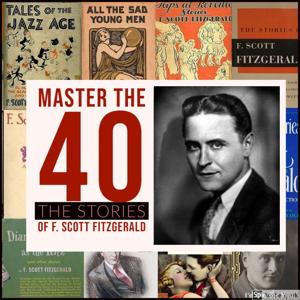
In 1929 F. Scott Fitzgerald wrote Ernest Hemingway that because his short stories now earned $4000 a pop he was "an old whore" who had "mastered the 40 positions" when "in her youth one was…

111,845 Listeners