
Sign up to save your podcasts
Or



Send us Fan Mail
For our tenth episode we explore a short story we think falls just outside of the Top 10: October 11, 1930's "One Trip Abroad," which totally blows anything else in that issue of the Saturday Evening Post out of the water. Many critics considered it Fitzgerald's second greatest story about expatriation after "Babylon Revisited," which was written right on the heels of this masterful depiction of marital disillusionment and moral drift. The story came at a desperate time: following Zelda's June 1930 entry to Les Rives des Prangins in Switzerland Scott needed to crank out a story roughly every six weeks to pay for her $1,000-a-month treatment (that's $12k today). The pressure produced some of his best work, but unfortunately he repurposed portions of "Abroad" for Tender Is the Night, which is why this story wasn't republished in Taps at Reveille, despite its excellence. As Nelson and Nicole Kelley drift from North Africa to Italy to Monte Carlo to Paris, they find themselves besieged by the placelessness and purposelessness of expatriation. Fitzgerald touches on great themes of ethnocentrism and Orientalization, especially in the opening section set in Algeria, and captures the sense of retreat Switzerland's clinic culture offered weary travelers. We explore these and other issues, including his use of the doppelgänger or double that gives the story a Gothic edge. "One Trip Abroad" is an underappreciated masterpiece that dramatizes how even when writing under financial pressure Fitzgerald could tap his genius for melancholy.
Send us Fan Mail
Some critics have dismissed this story of a man who escapes his worldly woes by fleeing his office to return to his small-town, rundown origins as "pure trash," but we uncover some historical reasons it should be of interest. First, "John Jackson's Arcady" was the last short story Fitzgerald wrote in April 1924 before departing for the Riviera to write The Great Gatsby. As such, it has some intriguing overlap with the novel. Second, although not republished in a collection until 1979, the story enjoyed a curious afterlife as an elocution text for aspiring high-school orators (and Rotarians). But third and most importantly, the story's closing scene in which John Jackson discovers just how much the world appreciates the good deeds he's done may just be---oh heck, we'll go on a limb and say we're ninety percent certain it is---the inspiration for Frank Capra's It's a Wonderful Life, starring (of course!) Jimmy Stewart. We explore that tantalizing connection, as well situate the story in the very popular 1920s' genre of the "revolt from the village." We also ask why "Arcady" is the rare sympathetic portrait of an American businessman at a time when nonfiction bestsellers such as Bruce Barton's The Man Nobody Knows (1925) proclaimed Jesus the quintessential entrepreneur. Along the way, after figuring out how to pronounce "Arcady," we quiz each other on famous Jacksons, from Stonewall to Tito to Luscious.
Send us Fan Mail
Our eighth episode focuses on the shortest short story Fitzgerald ever published, "The Lost Decade," which clocks in at only 1,100 words, making it Depression-era kin to today's flash fiction. Appearing in Esquire in December 1939 (exactly one year before the author's death), "Decade" is a haunting masterpiece of intimation and mood: eminence grise Matthew J. Bruccoli summed it up perfectly when he called it "elliptical." Told from the perspective of a New York City newspaper "call boy," Orrison Brown, the story focuses on an architect, Louis Trimble, who wanders the metropolis seeking to reestablish contact with the fleeting sights and sounds of real life. Not until the end of the piece do we learn Trimble is newly sober after an entire decade in an alcoholic stupor. The story's stoic tone is a perfect metaphor for both Fitzgerald's and America's struggle to survive the psychic shocks of the 1930s. We compare "The Lost Decade" to other representations of alcoholism in Fitzgerald's fiction, exploring what in the story is new, and we connect its New York setting to a stirring nonfiction ode to Gotham Fitzgerald penned only a few years earlier, "My Lost City."
Send us Fan Mail
Our first episode of 2021 examines a story that has been completely ignored both by fans and scholars: August 17, 1929's "At Your Age." The lack of interest is curious for a couple of reasons. For starters, this tale of a fifty-year-old bachelor, Tom Squires, confronting age-inappropriate behavior as he chases after a debutante thirty years his junior was the submission that earned Fitzgerald his peak price of $4,000 per story from The Saturday Evening Post. His agent, Harold Ober, even called it the best story FSF had ever written. That's not true, of course, but we owe "At Your Age" a debt of gratitude given that the hefty raise it occasioned inadvertently inspired the title of this podcast: it was after that $4,000 milestone that Fitzgerald wrote the famous letter to Hemingway calling himself an "old whore" who had mastered the forty positions popular fiction demanded of authors. But "At Your Age" is also important because it explores from a mature perspective the albatross that clung to a writer who made teenage petting parties famous: the idea that he was so obsessed with remaining young that he never grew up. We put both Tom Squires's obsession with Annie Lorry and Fitzgerald's own age consciousness in a cultural context, exploring many of the crazy, often fraudulent remedies designed to stave off the waning vigor and potency that supposedly mark the midlife. From facelifts to monkey gland injections, the Jazz Age was obsessed with staying forever young; while "At Your Age" may lament the aging process, it critiques the undignified, foolish ways men in particular have pursued what William Butler Yeats called the "second puberty"---including what from a post-Philip Roth perspective we would consider the rather icky attraction to younger women.
Send us Fan Mail
Hot on the heels of David Fincher's Mank, a hotly disputed retelling of the origins of Citizen Kane, we explore F. Scott Fitzgerald's own take on the rise of Orson Welles. In the final year of his life, without income from Hollywood studios or loans from his longtime agent, Harold Ober, Fitzgerald supported himself by cranking out seventeen short stories about the Hollywood hack Pat Hobby, which he sold to Arnold Gingrich's Esquire for $250 each. (Five of the stories appeared posthumously). The most historically interesting of the series is May 1940's "Pat Hobby and Orson Welles," which pokes fun at Old Hollywood's fear and trepidation at the arrival in Tinseltown of the wunderkind notorious for his 1938 War of the Worlds broadcast. Fitzgerald's story appeared in print just as Herman Mankiewicz completed a 267-page doorstop draft called American, which Welles shortly shaped into a withering assault on William Randolph Hearst that ensured we would never hear the name "Rosebud" the same way again. The filmmaker that the hapless scrapper Pat Hobby must contend with has thus not yet made the most celebrated movie in American cinema. Rather, Welles is known for the extravagant contract RKO offered him in 1939, including a $150,000 salary and authority over the final cut. Strangely enough, what gossip columnists are most curious about is the boy wonder's newly grown beard, which threatens old-timers like Pat as much as the changes to the studio system his arrival augurs. As we discuss the legacy of the Pat Hobby stories and their relationship to The Love of the Last Tycoon, the Hollywood novel left incomplete by Fitzgerald's premature death in December 1940, we debate auteur theory, the Hollywood production process that Fitzgerald at once loathed and idealized through his adoration of Irving Thalberg, and the creative parallels that have saddled Fitzgerald, Welles, and Mankiewicz with the troublesome label "genius."
Send us Fan Mail
For reasons you have to tune in to discover, November 15 is an important day for at least three Fitzgerald diehards. So to celebrate we're offering a special bonus episode featuring our first ever special guest: James L. W. West III, the mastermind behind the Cambridge Edition of the Works of F. Scott Fitzgerald. From 1995 to 2019, Jim singlehandedly produced sixteen of the eighteen volumes that establish FSF's standard texts employing those alchemical arts known as textual editing. For our conversation, we dissect another of Fitzgerald's all-time greatest short stories, "The Rich Boy," which appeared in Red Book in January and February 1926 and went on to kick off All the Sad Young Men that same year. The story dissects the sense of superiority that at once drives Anson Hunter and yet leaves him leading a lonely life when he cannot commit to either the doomed Paula Legendre or Dolly Karger. We ask whether this story is an indictment of the rich in general or an anatomy of one aloof man. We also explore how the story's most famous line ("Let me tell you about the very rich. They are different from you and me") stereotyped its author, most notably when Ernest Hemingway appropriated it to insult Fitzgerald by name in "The Snows of Kilimanjaro" (1936). We also test Jim's patience by forcing him to play a game of "Flapper or Not a Flapper?", quizzing his name recognition of Fitzgerald heroines. Finally, we learn that like Ludlow Fowler, the friend who inspired "The Rich Boy," Jim once found his life fodder for a novel. When he declines to name it for us, we make hunting it down our new mission.
Send us Fan Mail
In this episode we nibble on a Fitzgerald comedy so light it could be meringue. Granted, the storyline of a harried husband who slips his wife a Mickey Finn of a sleeping potion so he can finish an important advertising campaign is probably today more of a wake-up call than the high-concept rib-tickler audiences in 1924 read it as. We explore how "Gretchen's Forty Winks" fit into the March 15 issue of the Saturday Evening Post where it appeared alongside forgotten fiction with titles like "Bumbums in Boxes." Such fluffy disposable short stories, we suggest, are akin to the innocuous sitcoms of our youth. We also reveal how the story parodies the 1920s' work/life balance movement, with antagonist George Tompkins embodying some of the sillier self-fulfillment initiatives of the times while protagonist Roger Halsey preaches a Calvin Coolidge-like gospel of productivity. We also delve into how Gretchen's flirtation with George reflects Fitzgerald's own anxieties about his wife's friendships with other men. Finally we trace the curious afterlife the story enjoyed in storytelling clubs and amateur theatricals. While no one will mistake the Halsey family's adventures in rapid-eye movement for great art, Fitzgerald did choose it to close his third story collection, All the Sad Young Men, and it received surprisingly high marks from reviewers. At the end of the day "Gretchen's Forty Winks," we insist, is far from a snooze---instead, it's a real sleeper!
Send us Fan Mail
Most fans agree that "May Day" is among Fitzgerald's all-time greatest stories: certainly Top 10, arguably Top 5, quite possibly No. 2 behind only "Babylon Revisited." Some might even argue that this ambitious "novelette," first published in The Smart Set in July 1920 when its author was all of twenty-three, tops that most-anthologized, most-ubiquitous of Fitzgerald's short fictions. Based on real-life riots that erupted in New York City on May 1, 1919, this panoramic political tale pits four separate duos in intersections of restless violence and spoiled privilege: the dissatisfied debutante Edith Bradin and her brother Henry, the editor of a socialist newspaper; the failed artist Gordon Sterrett and the working-class woman, Jewel Hudson, who bribes him into marriage; the drunken Yale grads Philip Dean and Peter Himmel, who dub themselves Mr. In and Mr. Out as they trash elite restaurants and hotels; and Gus Rose and Carrol Key, two demobilized World War I vets who beat socialists bloody on the street. Critiquing both the proliferating Red-Scare neuroses and consumer opulence that inaugurated the Jazz Age, "May Day" finds Fitzgerald experimenting with naturalism, a style he adopted to curry the favor of The Smart Set's co-editor, H. L. Mencken. We dissect the historical background, examine the literary affinities, and celebrate the political insight and artistic ambition.
Send us Fan Mail
Our second episode looks at one of the most obscure of Fitzgerald's 178 stories, "I Got Shoes." Published in 1933, this eighth-to-last of the author's 60+ contributions to The Saturday Evening Post tells the story of a proud actress, Nell Margery, who schools both her adventurer boyfriend and a daffy gossip columnist on the meaning of professionalism. Critically ignored, the tale appeared on the heels of a vicious marital therapy session in which Fitzgerald vainly excoriated his wife, Zelda, over her efforts at writing, including her play, Scandalabra, which Baltimore's Junior Vagabond Players were soon to stage to a disastrous reception. We read the story against the backdrop of his resentment toward amateurism, explore its connections to the Little Theatre movement and modern ideas of celebrity, and question its curious borrowing of the name of a famous African American spiritual for its title. Along the way we talk about Robert's own newfound fame after his recent profile in The Guardian and Kirk thanks copyright laws for preventing him from torturing audiences with the Veggie Tales version of the gospel classic.
Send us Fan Mail
As F. Scott Fitzgerald's debut novel, This Side of Paradise, becomes a Jazz Age rage in 1920, the Chicago Tribune invites the twenty-three-year-old writer to contribute an original short story to its Blue Ribbon Fiction Sunday section. The result is "The Lees of Happiness," published that December on the heels of his first story collection, Flappers and Philosophers. Although Fitzgerald collected "Lees" in his second story collection, Tales of the Jazz Age (1922), it remains widely overlooked. Our debut episode delves into the main themes and character types in this tale of romantic devotion and sacrifice, exploring its peculiar obsession with dirt, rompers, and biscuits. We also discuss intriguing tastemakers of the day such as Burton Rascoe and Edward J. O'Brien, noting how wrong they were in their estimation of FItzgerald, and delve into the scandalous relationship between Tribune publisher J. M. Patterson and fiction editor Mary King.
From the publisher's feed
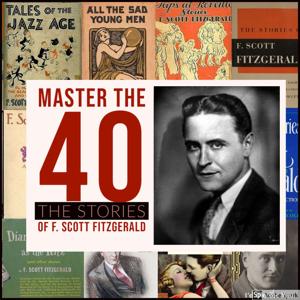
In 1929 F. Scott Fitzgerald wrote Ernest Hemingway that because his short stories now earned $4000 a pop he was "an old whore" who had "mastered the 40 positions" when "in her youth one was…

111,766 Listeners