
Sign up to save your podcasts
Or

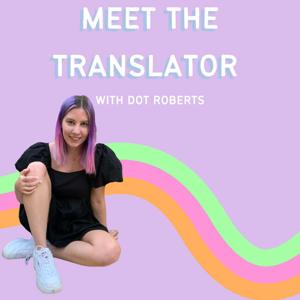


Welcome to the first episode of season 2!
In this new season, I'll be chatting to translators about the different areas of translation they work in, and what better way to start than with audiovisual translation?
As an audiovisual translator myself, I was super excited to be joined by fellow audiovisual translators, Lisa d'Alfonso and Chloe Stout, to discuss what we do.
In this episode, we talk about what audiovisual translation is, what we love (and don't love) about it, the software we use, how we deal with challenges, the differences between working with agencies and direct clients, and of course, we share plenty of tips for anyone thinking of branching into subtitling.
If you want to get in touch with any of us with comments or further questions, you can contact Lisa on LinkedIn or via email, you can contact Chloe on LinkedIn, Instagram or via her website, and you can contact me on LinkedIn, Instagram or via my website.
Thank you to Chloe and Lisa for joining me on this episode and thank you to Pippa Williams for the podcast jingles.
If you have any comments or questions about the podcast, send an email to [email protected].
Can You Manage?
In this episode, I'm joined by production director Alex Collot, who talks about his management experience in a translation company.
Alex tells us what his job entails, what he loves about it, and what the process of a translation project looks like. He also offers some advice for anyone who is thinking of becoming a project manager and has some great tips for freelance translators who work with or want to work with translation agencies.
If you want to get in touch with Alex, you can find him on LinkedIn and you can also check out Collot Baca Localization via their website here.
Thank you to Alex for joining me on this episode and thank you to Pippa Williams for the podcast jingles.
If you have any comments about this episode, send an email to [email protected].
PhDo You or Don’t You? Find out about Silke Lührmann’s experience of her translation PhD in this episode of the Meet the Translator podcast series.
From the application process to deciding on a title for your thesis, Silke talks in depth about her PhD experience and her personal research. She explains what a PhD is and what it entails, why she chose to do a PhD, and how she came up with her topic and also shares some great tips, such as how to find the right supervisor for you. Silke also answers all the questions you sent in.
If, after listening to this episode, you have more questions for Silke or simply want to get in touch, find her on LinkedIn here.
Thank you to Silke for joining me on this episode and to everyone who sent in questions. Thank you to Pippa Williams for creating the podcast jingles.
If you have any comments about this episode or questions about translation project management for the next episode, send an email to [email protected].
The Interpreter’s Output is the perfect episode for anyone interested in interpreting. Learn along with me as I chat to Sabrina Sbaccanti about her experience as a professional interpreter.
In this episode, we find out what interpreting is and what an interpreter’s life looks like. Sabrina shares the challenges that come with her job, as well as the rewards, and the changes that the pandemic has brought. Sabrina’s love for interpreting is clear throughout, from the way she talks about her favourite jobs, to the great advice she shares for budding interpreters. This topic received the most questions to date, so it’s a long episode, but it’s certainly one worth listening to.
You can find out more about Sabrina on her website, sabrinasbaccanti.com, and get in touch with her via Instagram or LinkedIn by searching ‘Sabrina Sbaccanti’.
These are the books that Sabrina recommends for new interpreters:
Thank you to Sabrina for joining me on this episode, to Pippa Williams for creating the jingles and to everyone who sent in questions and comments.
If you have any feedback or questions about a PhD in translation for the next episode with Silke Lührmann, please send an email to [email protected].
The Best Things in Life are Freelance is an episode all about freelance translation. I am joined by freelance translator, Valentina Alia, who tells us about her experience.
In this episode, we find out Valentina’s journey to becoming a freelance translator and why she chose this job. We also hear about her day-to-day life, the best and worst bits about being a freelance translator and how things have changed in 2020. Valentina offers some great advice to anyone who is thinking of becoming a freelance translator and together, we answer the questions you sent in.
You can find out more about Valentina, subscribe to her newsletter and get in touch with her via her website, valentinaaliatranslator.com or on LinkedIn by searching ‘Valentina Alia’. Her new course, Translation for the Fashion Industry, will be available soon on TranslaStars.
Thank you to Valentina for joining me on this episode, to Pippa Williams for creating the jingles and to everyone who sent in questions and comments.
If you have any feedback or questions about interpreting for the next episode with Sabrina Sbaccanti, please send an email to [email protected].
Translator in the House is all about in-house translation. In this episode I chat to Julia Landry about her experience working as an in-house translator.
We find out how and why Julia became an in-house translator, some of the positives and negatives of in-house translation, what a typical day in the life of an in-house translator looks like, the difference between in-house and freelance translation and how things have changed during the pandemic. Julia also has plenty of advice for anyone thinking of becoming an in-house translator and at the end of the episode, she answers some of the questions you sent in.
You can find out more about Julia Landry and get in touch with her via her website, jltranslationservices.com or on LinkedIn by searching 'Julia Landry'.
Thank you to Julia for joining me on this episode, to Pippa Williams for creating the jingles and to everyone who sent in questions and comments.
If you have any feedback or questions about freelance translation for the next episode, please send an email to [email protected].
In MAstering Translation, the first episode of Meet the Translator, I chat to Chris Drew about our experiences studying an MA in translation.
We talk about what we studied and how our course worked as well as the key knowledge we gained, what we wish the degree had taught us and any tips we have for those looking to study an MA in translation. We also hear the experiences of other translators and answer some of your questions at the end.
You can find out more about Chris Drew and get in touch with him via his website, www.cdrewlanguagesolutions.co.uk.
Thank you to Chris for joining me on this episode, to Pippa Williams for creating the jingles and to the translators who sent in their experiences, Tomáš Řádek, Chloe Stout, Nicole Fenwick, Stephanie Hancox, Katie Wright, Lawrence Chaventré and Catherine Castling.
A transcript of the episode is available at www.dotrobertstranslation.com/podcast thanks to Chris Drew.
Welcome to Meet the Translator! This is a short introduction to let you know what the podcast series is all about and what to expect in the first episode.
From the publisher's feed
The podcast where we catch up with translator pals, learn new things, and keep up with the industry. Hosted by freelance subtitle translator, Dot Roberts.
48 Listeners