
Sign up to save your podcasts
Or

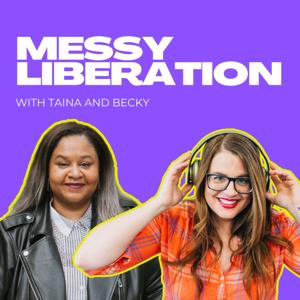


Want to keep the conversation going? Dr. Carter is joining us for a live author Q&A inside the Messy Liberation Circle. Bring your questions, your stories, and your trickiest “was that racist?” moments: https://messyliberation.com/community/
What do you actually do when someone you love says something racist? On this episode of Messy Liberation, hosts Becky Mollenkamp and Taina Brown talk with social psychologist and DEI practitioner Dr. Evelyn R. Carter, author of Was That Racist? How to Detect, Interrupt, and Unlearn Bias in Everyday Life. They dig into why so many well-meaning people freeze instead of confronting racism, why speaking up is everyone’s responsibility (especially white folks), and the deceptively simple question that can disarm bias in the moment.
In this episode, we get into:
• Why “it’s not my place” is a cop-out, and why people outside a targeted group are often heard more when they call out bias
• Treating that pounding heart and churning stomach as a signal to engage, not flee
• The gap between the 80% of people who say they’d speak up and the 25–33% who actually do (plus a hand-washing detour on “moral hygiene”)
• What Dr. Abdul El-Sayed’s viral exchange with “Tommy” teaches us about staying calm and asking questions
• Why “What makes you say that?” beats preparing for a debate
• Confrontation as a practiced skill, and the difference between being kind and being nice
• How white people speaking up can create “places of rest” for people of color
• Why 98% of confronting happens with friends, family, and acquaintances, not strangers
• “What about racism against white people?” Racial bias vs. racism, explained
• Separating personal morality from systemic racism so we can actually do the work
Timestamps
00:40 – Monthly author Q&As coming to the Messy Liberation Circle
01:18 – Why Dr. Carter wrote Was That Racist?
02:48 – “Is it my place?” Speaking up when it’s not your lived experience
07:07 – Toxic individualism and the “not my business” mindset
08:49 – Listen to your body: discomfort as a call to engage
11:02 – 80% say they’d speak up; only 25–33% do
13:37 – The Abdul El-Sayed vs. “Tommy” video
18:44 – Confronting bias is a skill: kind vs. nice
21:24 – Confronting is about relationship: the 98% vs. 2% finding
24:40 – Why online arguments skew to the extremes
28:44 – Racial bias vs. racism
30:28 – How anyone, of any race, can uphold white supremacy
32:22 – Separating morality from systemic racism
Resources Mentioned
• Was That Racist? How to Detect, Interrupt, and Unlearn Bias in Everyday Life by Dr. Evelyn R. Carter
• Messy Liberation Circle, including the upcoming author Q&A with Dr. Carter
• Yes and Otherwise conversation with Dr. Carter
• Dr. Abdul El-Sayed responds to “Tommy”
🎤 JOIN US IN THE FEMINIST PODCASTERS COLLECTIVE
On this Indigenous Peoples’ Day episode of Messy Liberation, Becky Mollenkamp and Taina Brown start with the “where are you really from?” question and follow it into who gets to look and who gets looked at. Taina, who is Afro-Latina with Taíno roots, explains the difference between race and ethnicity, what separates Latin from Hispanic, and why self-identification is a form of resistance. It’s an intersectional feminist conversation about objectification, colonialism, and letting people name themselves.
In this episode, we get into:
Timestamps
Resources mentioned:
🎤 JOIN US IN THE FEMINIST PODCASTERS COLLECTIVE: http://feministpodcastcollective.com/
Content warning: This episode discusses SA and r*pe culture.
Becky Mollenkamp and Taina Brown of Messy Liberation unpack the Cornell sexual assault case, the group chat of 50-plus men who joked about it, and the rape culture that made it possible. This intersectional feminist conversation covers victim blaming, fraternity culture, consent, and why staying silent when your friends say harmful things makes you complicit. It also covers how misogyny hurts men too.
In this episode, we get into:
• Taina's trip to Iceland for the Wicker premiere, and why the film's nameless characters make it a feminist fable without being Barbie-style feminism
• The pneumonic plague case in Russia: why panic isn't the answer, and why access to antibiotics should be universal
• The Cornell case: what to call it, and why "rapist" sounds like a job title
• Fraternity culture, hazing, and why consent under duress isn't consent
• Kendall Francis speaking out at LSU, and campus-wide warnings to "stay home" instead of telling men not to rape
• Why men need to stop talking about "training their daughters" and start calling out their friends
• How misogyny hurts men: male sexual assault, shame, and the cycle of harm
• The group chat as a permission structure, and complicity in the Nolan Wells case
• Asking vs. demanding: liberal feminism, "hearts and minds," and why willful ignorance is violence
• White educators, unconscious bias, and why "no one's paying me to learn" is an excuse
Timestamps
00:00 – Taina's back from Iceland: the Wicker premiere at the Reykjavik International Film Festival
07:01 – Pneumonic plague in Russia: why we'll (probably) be okay
15:20 – The Cornell case and what to call it (content warning)
21:13 – Fraternity culture, hazing, and consent under duress
24:09 – Kendall Francis and the LSU case
27:05 – Victim blaming: she's allowed to drink, and she's allowed to say no
31:35 – Misogyny hurts men: sexual assault, shame, and silence
37:15 – The 50 in the group chat: permission structures
41:08 – Nolan Wells and why the getaway driver is complicit
44:53 – Asking vs. demanding: MLK, Malcolm X, and liberal feminism
51:38 – White educators and unconscious bias
53:51 – Why we keep having heavy conversations (and a note on consent from the Hasan Piker episode)
55:19 – Join us: the Messy Liberation Circle and our free October 15 event
Resources mentioned
• "More Salt Than Diamond" by Aline Mello: https://bookshop.org/a/93627/9781524871024
• Previous episode: "Is Violence Part of Liberation? Breaking Down Hasan Piker, MSNow, and Palestine": https://messyliberation.com/hasan-piker-palestine/
• Free October 15 author event with Aline Mello: https://taina-m-brown.myflodesk.com/messy-lib-open-house
• Messy Liberation Circle: https://messyliberation.com/community/
🎤 JOIN US IN THE FEMINIST PODCASTERS COLLECTIVE: http://feministpodcastcollective.com/
On this episode of Messy Liberation, Becky Mollenkamp and Taina Brown share their feminist origin stories: how each of them came to see the white supremacist capitalist patriarchy, and what unlearning and relearning has looked like since. Taina talks about getting fired from her evangelical church and finding intersectional feminism at a women's college. Becky traces her path from "we don't see color" white feminism to Ferguson, bell hooks, and coming out as pansexual.
In this episode, we get into:
Timestamps:
Resources mentioned:
🎤 JOIN US IN THE FEMINIST PODCASTERS COLLECTIVE: https://feministpodcastcollective.com/
On this episode of Messy Liberation, Becky Mollenkamp and Taina Brown break down the viral Clock It interview where Symone Sanders Townsend pushed back on Hasan Piker for comparing US police-brutality protests to Palestinian resistance. They dig into what violence actually is, including poverty, discrimination, and state-sanctioned deprivation, why the nonviolence stories we're taught about MLK and Gandhi are incomplete, and how holding a marginalized identity doesn't exempt anyone from upholding the system.
In This Episode:
01:17 – The viral Clock It interview with Hasan Piker
02:41 – Hasan's argument: resistance to systemic violence always gets labeled differently
03:47 – Holding a marginalized identity doesn't exempt you from upholding the system
04:34 – The role of violence in revolutions and liberation movements
07:44 – Taina: "I'm tired of talking about this" (and why she's talking about it anyway)
08:20 – State-sanctioned violence becomes invisible because it's normalized
11:51 – "Have they never read Freedom Is a Constant Struggle?"
12:40 – US cops and campus security trained by the IDF — Taina's grad school at Georgia State
13:14 – George Floyd and the knee on the neck we all watched
14:55 – Liberal ≠ progressive: corporate media and who funds it
15:35 – The Hundred Years' War on Palestine and being done with "I don't know enough" as an excuse
17:07 – The disconnect between your identity and your understanding of liberation
18:13 – Gandhi, MLK, and the version of history taught inside a tiny bubble
19:41 – Respectability politics: be peaceful, be presentable, mind your tone
22:26 – Why the powers that be always negotiate with the most moderate voice in the room
23:30 – The one-hero narrative and how it dissolves collective action
27:16 – The myth of the perfect agitator
29:01 – Democrats vs. Hasan Piker, and the all-or-nothing loyalty test
35:03 – Ask yourself: what do you actually know about Hamas, and who told you?
38:36 – Public education as the system's most reliable tool
42:22 – To be clear: this isn't a call to violence, it's a call to understand what liberation involves
44:14 – Why "why?" is the most important question you can ask
46:35 – The rape-culture parallel: why didn't you fight back, why did you fight back
49:06 – Wrap-up and a real question for listeners
Resources Mentioned
• Hasan Piker on Clock It: https://www.youtube.com/watch?v=U4lZ0SwPDEs
• Critique of Clock It episode: https://www.youtube.com/watch?v=7CX3YshKpjE
• "The Hundred Years' War on Palestine" by Rashid Khalidi: https://link.amazon/B0bhg6Uic
• "Freedom Is a Constant Struggle" by Angela Davis: https://link.amazon/B029YDKo7
• "Original Sins: The (Mis)education of Black and Native Children and the Construction of American Racism" by Eve L. Ewing: https://link.amazon/B06y22SH7
🎤 JOIN US IN THE FEMINIST PODCASTERS COLLECTIVE: http://feministpodcastcollective.com/
On this episode of Messy Liberation, hosts Becky Mollenkamp and Taina Brown break down Macklemore's public firing from Ed Sheeran's tour after he said "Free Palestine" on stage — and use it to dig into celebrity complicity, white feminism, and the real difference between Zionism and Judaism. From Robert Kraft's stadium pressure campaign to AIPAC's grip on Democratic politics to the actual cost of speaking out against genocide, Becky and Taina unpack what it looks like to choose a side when neutrality was never on the table.
In This Episode, We Get Into:
Timestamps:
Resources Mentioned:Pink's statement:
🎤 JOIN US IN THE FEMINIST PODCASTERS COLLECTIVE: http://feministpodcastcollective.com/
Becky Mollenkamp and Taina Brown break down what actually makes a group of people a community — not just a paid membership or "safe space" buzzword. On this episode of Messy Liberation, they unpack why comfort and safety get conflated (especially by white women), why "we don't talk politics here" silences the most marginalized voices in a space, and what harm repair and restorative justice look like when done right. Plus: the stories of the best communities they've ever been part of, from a virtual event where a host let Resmaa Menakem rest mid-talk, to a nonprofit that gave staff the day off after a police shooting, to the friends who took Taina in when she was homeless.
Timestamps:
0:00 – Intro & follow-up from last episode
0:34 – Why "community" became a business buzzword
1:14 – Defining community: shared vision & culture-making
4:46 – Trust, "ride or dies," and the buzzword of "safe spaces"
7:07 – Feeling held vs. feeling safe
9:00 – Why community isn't about being safe for everyone
9:57 – Privilege, comfort, and what "safe" really means
11:23 – True crime, privilege, and the illusion of safety
12:06 – White women's tears: confusing comfort with safety
14:02 – "We don't talk politics here" and who gets silenced
18:19 – Threats to privilege vs. threats to safety
18:56 – 2016 & 2020: white coaches shutting down callouts
24:29 – Harm repair and restorative justice, set up front
28:18 – Communities that got it right: affinity spaces & chosen family
33:04 – Taken in when homeless: a story of real community
34:52 – Black spaces vs. white spaces: the difference in care
38:35 – The Resmaa Menakem story: modeling collective care live
43:29 – A nonprofit that gave everyone the day off
47:05 – The FEO community: emotional labor, race & accountability
54:51 – Recap: discomfort isn't unsafe, and harm repair matters
57:25 – Outro
• "My Grandmother's Hands" by Resmaa Menakem: https://amzn.to/4r3bsMh
• Rooted Global Village: https://rootedglobalvillage.com/
🎤 JOIN US IN THE FEMINIST PODCASTERS COLLECTIVE: http://feministpodcastcollective.com/
On this episode of Messy Liberation, hosts Becky Mollenkamp and Taina Brown get real about climate grief, doomscrolling, and the nihilism that creeps in when disaster feels endless, sparked by the catastrophic Nepal glacier flood and reports of billionaires building bunkers to escape the mess they helped create.
Becky and Taina dig into the difference between staying informed and staying trapped in trauma, why our brains keep replaying footage that hurts us, and how community, agency, and joy become acts of resistance when the world feels like it's on fire. They close with a tribute to Dolly Parton and what her life proves about choosing love over hate.
In This Episode, We Get Into:
• Why the Nepal glacier flood hit so hard, and the "disaster movie" desensitization that makes real catastrophe feel unreal
• Billionaires building underground bunkers (complete with jails) instead of fixing the climate crisis they're profiting from
• The nihilism spiral: "what's the point" thinking and how it shows up differently before and after having kids
• The real difference between being informed and being engaged, and where that line gets crossed into doomscrolling
• Why our brains compulsively replay traumatic footage, and what that has to do with control and anxiety
• Survivor's guilt vs. privilege guilt, and how proximity to suffering (without living it) shapes our response
• The "crazy-making" feeling of watching people deny climate change in real time, and why that's a form of gaslighting
• Divesting from harmful systems vs. reducing our reliance on them, and what to do with the time and energy that frees up
• Surrender vs. submission: how accepting what you can't control can actually restore a sense of agency
• Why joy and grief can coexist, and why withholding joy doesn't prove you care more
• A tribute to Dolly Parton: her wealth given away, her quiet support of Black Lives Matter and the trans community, and what she proves about hate being a choice
Timestamps:
00:00 – Cold open: Becky's Care Bear mug and "which Care Bear are you"
02:51 – The Nepal glacier flood and why it feels almost unreal to watch
04:16 – Doomscrolling, repeated imagery, and the nihilism it triggers
05:14 – Billionaire bunkers (yes, with jails) and what that says about who's "prepared" for collapse
07:45 – Becky turns it over to Taina: restoring some faith in humanity
08:06 – Taina's approach to news consumption and staying "informed without engaged"
09:45 – Unpacking the real difference between informed and engaged
11:25 – How having kids changes the emotional weight of climate anxiety
12:47 – The compulsion to doomscroll and rewatch disturbing footage
16:30 – Why our brains keep seeking control through repetition
19:05 – Survivor's guilt vs. guilt born of privilege
20:00 – Divesting from harmful systems vs. reducing our need for them
21:32 – What you do with the space once you stop doomscrolling
22:25 – The "crazy-making," gaslighting feeling of climate denial
26:10 – The privilege of being disappointed by people in power
27:56 – Community as the antidote: who's in your corner
29:03 – Finding agency in the small, controllable things
31:07 – Surrender vs. control, and coming back to the present moment
33:50 – Acceptance vs. submission — the difference that matters
35:13 – Resilience as a practiced, ongoing skill, not a one-time fix
35:55 – Giving yourself permission to feel joy without guilt
37:52 – Dolly Parton's "rainbows and rain" quote and finding light in the dark
41:00 – Dolly's legacy: $600M given away, support for BLM and trans employees decades early
44:44 – Why Dolly is proof that hate is a choice
45:50 – Closing thoughts and sign-off
🎤 JOIN US IN THE FEMINIST PODCASTERS COLLECTIVE: http://feministpodcastcollective.com/
On this episode of Messy Liberation, hosts Becky Mollenkamp and Taina Brown break down two viral advertiser fails (Callaway Golf's domestic-violence "joke" ad and Target's minstrel-show-evoking Halloween costume) to unpack what happens when corporate rooms lack real diversity and accountability. Through an intersectional feminist lens, they dig into DEI backlash, golf's history of racial and gender exclusion, the limits of individual boycotts, and why values that "blow with the wind" were never values at all.
In This Episode, We Get Into:
• A heartfelt tribute to Dolly Parton and what her life and legacy meant to both hosts
• The Callaway Golf ad that turned domestic violence into a punchline — and the immediate backlash from women online
• Target's clown/ghost Halloween costume and its uncomfortable echoes of minstrel-show imagery
• Why "diverse hires" without power or context don't actually prevent harm
• The difference between real values and values that shift with politics or profit
• Golf's long, ugly history of excluding women and Black golfers, and what the current participation numbers really show
• Whether corporate apology tours ("this doesn't reflect our values") mean anything at all
• The limits of individual boycotts vs. collective political power
• What small business owners can actually do differently (hint: it's not a fancy DEI program)
• Drones, robot armies, and what stripping empathy from warfare has to do with stripping humanity from marginalized people
Resources Mentioned:
• OpenSecrets.org
• Democratic Socialists of America (DSA): dsausa.org
• Working Families Party: workingfamilies.org
🎤 JOIN US IN THE FEMINIST PODCASTERS COLLECTIVE: http://feministpodcastcollective.com/
Feminist coaches and hosts Becky Mollenkamp and Taina Brown unpack Hayden Panettiere's death and what it reveals about America's total failure to support new mothers. They dig into postpartum depression, postpartum anxiety, and the maternal mental health crisis this country refuses to treat with any real structural support — and why that failure hits hardest along lines of race and class.
In This Episode, We Get Into:
• Hayden Panettiere's death, her public struggle with postpartum depression, and what her story reveals about how the entertainment industry treats mothers' mental health (including Neutrogena quietly dropping her as a spokesperson)
• Becky's own experience with postpartum anxiety, and why "bouncing back" after birth is a myth nobody should be selling
• Why postpartum screening in the U.S. is basically a checkbox on a form — and why that leads to massive underreporting, especially among Black and Latina mothers who have real reason to fear losing custody
• The Britney Spears comparison and the impossible bind mothers are put in: too involved is controlling, too little is neglect
• The age gap and power dynamics in Hayden's relationship, and how that context matters without villainizing anyone
• Why childcare costs in America are a structural crisis, not a personal budgeting problem
• How Europe's midwife home visits, paid leave, and universal pre-K show what real support could look like — and why the U.S. keeps moving backward instead
• The difference between "making it work" and actually thriving as a parent
• Taina's take on evangelicalism, moral hierarchies, and how "empathy is a bad word" rhetoric on the right traces back to Puritan control, not religious freedom
• A call to action: what real, tangible community care looks like after someone gives birth or after someone dies — not just showing up once, but showing up for months
🎤 JOIN US IN THE FEMINIST PODCASTERS COLLECTIVE: http://feministpodcastcollective.com/
From the publisher's feed

6,447 Listeners