
Sign up to save your podcasts
Or

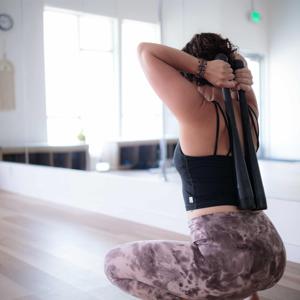


This short breathing exploration is designed to help you feel a little more at ease in your hips, low back, and pelvic floor—without forcing a stretch or trying to “fix” anything.
Working from hands and knees, we play with gentle pelvic movement, first finding the tailbone, then the pubic bone, and eventually allowing both to travel together. From there, the breath becomes the guide: inhaling into the space between the pubic bone and tailbone, exhaling softly, like blowing out birthday candles.
What I love about this position is how adaptable it is. Propping yourself up, shifting your knees or hands, or favoring one side can dramatically change where you feel space and expansion. These small adjustments offer a way to explore whereyour breath wants to go, rather than telling it where it should go.
If you’re feeling stiff, compressed, or just a little disconnected from your pelvis, this is an easy place to start. Move slowly, stay curious, and notice what gives you the most space today.
(Video above — you may want a couple of blankets or pillows nearby.)
Hello — it’s Jen 👋
This is the third and final part of our little hanging series, and today we’re linking the hands and the core for a more powerful lift.
Instead of relying on your fingers to grip the bar, wrap your thumbs underneath and imagine both sides of your hands spiraling toward each other — the pinky side rotating into the bar, and the thumb side rotating toward the pinky side. You’re creating a strong, connected surface with the “balls of your hands” rather than clenching from your fingertips.
From that strong connection:
• Pick your knees up toward your chest• If that feels good, pull yourself slightly toward the bar at the same time• Notice how coordinating the actions of the hands and knees helps you lift with more ease ✨
Try it a few times and pay attention to how the grip changes the experience of hanging.
If this series has been helpful, I’d love if you like, share, or pass it along to someone who might enjoy it. Thank you for practicing with me! 🤸♀️💛
Feeling coordinated isn’t about everything moving together — it’s about each part of you knowing when to support and when to move.
This short hip sequence uses a dowel (or a broomstick) to help you find directional support through your foot while allowing your hip to rotate freely. It’s simple, but it reveals a lot:
* Where do you place pressure into the ground?
* Can your hips move while your foot anchors?
* Does rotation feel smooth or stuck?
Try it:
📍 Step one foot forward and slightly out to the side📍 Place the dowel to the outside edge of that foot📍 Lightly lift the balls of your foot away from the ground — shifting pressure back📍 Reach the dowel forward as your hips go back📍 Pivot, place one hand on the floor, rotate, and rise back up📍 Return and repeat a few times
Take your time. Notice what changes each repetition.
If this feels different or unfamiliar… great. That means you’re learning.
🎥 Watch the video above to follow along.
—
If you find these practices helpful, you can:💬 Leave a comment — what did you notice in your hips or feet?🧡 Share the post with someone who might enjoy exploring their movement
See you next time for more mindful strength and coordinated movement.
— Jenn
This short, accessible sequence grew out of a session with a client who was struggling to relax and fall asleep. Her usual techniques—breathing, meditation, “trying harder” to rest—weren’t helping. So instead, we explored something different: using tactile input, gentle movement, and subtle coordination challenges to redirect attention out of the head and back into the body.
You’ll begin with a simple full-body scrub to wake up tactile receptors and remind your system where you are in space. From there, you’ll move into a light heel-lift and squat pattern that anchors awareness through the pinky-toe edges of the feet. Then you’ll add a quiet arm-sweeping rotation and a small, deliberate nose circle—each one designed to create just enough focus to settle your nervous system without stimulating it.
Nothing here is strenuous. Everything here is oriented toward grounding, reorienting, and giving your mind something gentle and embodied to attend to.
If you ever find yourself restless or unable to sleep, this kind of short reset can help you shift your internal state and return to bed with more ease.
If you try it, I’d love to hear what you notice.
Hi everyone — it’s Jenn.
This week on Body, Mind, Movement, we’re continuing the hanging theme from last week’s video. If you haven’t watched that one yet, I recommend starting there; it covers a few subtle adjustments that can make hanging feel so much more accessible.
Once you’ve played with those ideas, today’s exploration adds a small but surprisingly powerful progression: pulling your knees toward your chest while you hang.
The exercise looks simple, but the internal coordination behind it is where the magic happens. As you hang, try imagining your pelvic floor gently lifting upward. Pair that with the wrap of your thumb and pinky around the bar, and even the lengthening of your pinky toes. You can play with initiating the pelvic floor lift before the knee pull or as you lift your legs—notice which version feels more supportive.
If you want to add a touch more strength or a hint of a lever shape, imagine pushing the bar down toward the floor. Your body will naturally want to tip back, giving you a feel for the mechanics behind more advanced skills.
Give it a try, stay curious, and see how your body organizes around these subtle cues.
If this was helpful, please like, share, or subscribe—your support helps this work reach more movers.See you next time.
Hello, friends — it’s Jenn. 👋
Today’s exploration is a simple but surprisingly informative little drill pulled straight from the ideas in my upcoming book, Spinal Intelligence. It’s one of those movements that looks almost too subtle to matter… until you actually try it and notice what shifts.
🌿 A Small Rotation, A Big Awareness Shift
Begin seated on one hip in a loose figure-four shape. Place your hand on the floor beside you.
From here, the invitation is to press through your hand and gently rotate it toward the pinky side. This tiny rotation creates a ripple effect up the arm and into the ribs. As you rotate your hand, see if you can sense your ribs lifting and moving away from the floor, as though they’re spiraling back.
If you place your free hand on your ribcage, you’ll feel that subtle rotation — a quiet but clear change in orientation.
Then switch to the other side:Ground your opposite hand, rotate toward the pinky edge, and notice how the weight shift follows. Your hands and your hips become your anchors, the points that support and organize every small transition.
This isn’t about doing a big, dramatic shape.It’s about feeling how rotation, weight shift, and grounding work together.
🌬️ Why This Matters
These kinds of micro-movements teach your body how to coordinate rotation without forcing it. They help you feel how the spine responds when the hands anchor, how the ribs guide direction, and how small shifts can support bigger movement patterns.
This is the heart of Spinal Intelligence:using awareness to understand how your body moves, supports, and organizes itself.
Thank you, as always, for exploring with me. If you enjoy these practices, it truly helps when you like, share, or subscribe — and keep an eye out for Spinal Intelligence, arriving early 2026.
Until next time,Jenn 🌿
Shoulder shrugs might seem simple—but done with awareness, they can become a surprisingly rich exploration of connection and coordination.
In this short video, I break down how to approach shoulder shrugs on a bar (or rings, or other hanging setup) with intention. You’ll play with three ideas:
* The upward lift of the pelvic floor — imagining it reaching toward the ceiling as you pull the bar down can create a sense of lightness.
* The length of the pinky toes — thinking about exposing the outer edge of your foot toward the floor helps connect the lower body to the line of effort.
* Balanced pressure through the thumb and pinky sides of the hand — “rolling” both into the bar helps integrate the shoulders, arms, and grip.
Each variation offers a slightly different feel, reminding us that even simple movements can teach us something new when approached with curiosity and attention.
🎥 Watch the full exploration above.
If you try it, notice what changes when you shift your focus. Do you feel more connected, lighter, or more stable?
— Jenn
This short exploration is all about transitions — how you move to the floor and from the floor with awareness and ease.
You’ll start standing, then step, drape, and rotate as you lower yourself down, finding your way back up through the same path. The movement is simple but surprisingly rich: it challenges coordination, weight shifting, and how you receive support through your hands and feet.
Try it slowly. Notice how your body adapts as you move between vertical and horizontal space. Let the floor be a place of exploration, not just a destination.
Watch the full video here.
This exploration comes straight from my upcoming book, Spinal Intelligence. It’s a simple exercise that helps you sense how the hands connect to the arms, shoulders, and core — and how the breath supports that connection.
You’ll need a yoga block for this one. By alternating which hand presses into the block and which lifts away, you’ll feel subtle shifts through the torso. Add breath — inhaling as you press, exhaling as you return — and the movement becomes more fluid and integrated.
You can play with two versions: one where your waistband stays still and one where it moves freely. Each offers different feedback about stability and awareness. Neither is better — they simply reveal different aspects of how your body organizes movement.
Give it a try, notice what you feel, and let curiosity guide your practice.
Watch the full video here.
This short exploration brings awareness to the subtle lines of connection that run through the body—specifically from the armpits to the hands, and from the inner groin through the knees to the ankles.
Begin seated, hands behind you, and notice how the orientation of your fingers changes how your shoulders and chest feel. From there, play with reaching your knees forward to lift the hips, feeling how the arms support you.
Then, shift attention to the inner lines of the legs—imagine threads running from groin to knee to ankle. As you lift one foot, sense how maintaining that inner connection changes the effort. Finally, combine both: press through the arms, lengthen through the front of the body, and move with a sense of continuity from your shoulders to your feet.
This is a simple, playful way to explore how your limbs and center communicate with one another. You may notice new connections—or rediscover old ones.
🎥 Watch the full video above.
–––Body, Mind, Movement explores awareness, coordination, and the relationships between parts of the body. If you enjoy these explorations, consider subscribing or sharing with someone who loves to move mindfully.
From the publisher's feed