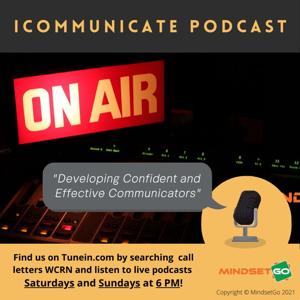
MindsetGo iCommunicate Podcast

MindsetGo iCommunicate Podcast

By MindsetGo PodcastBusiness
Download on the App Store

MindsetGo iCommunicate Podcast episodes

  • ICommunicate Podcast #110: Transparency - Pros and Cons
    Why is transparency such a difficult line to toe in the workplace? In this episode of ICommunicate, MindsetGo President Mark Altman discusses solutions to common problems relating to transparency. How do we know if we are oversharing? How do we know when we need to be more proactively communicative? What is the motivation behind transparency? How should we handle it internally compared to with our clients? Segment 1: When we decide to be fully transparent, what is our end goal? Why do we choose to be fully transparent sometimes and not other times? When should we employ authentic communication? If the stakes are high, how can we be authentic while still being empathetic?Segment 2:How do we navigate transparency with clients? How do we navigate internal transparency? When is being too transparent detrimental to our team? What is our process for making decisions regarding transparency? Segment 3: Why are we reacting to problematic situations instead of preventing them? Is your internal communication contributing to confusion? How can we make sure our internal communication delivers clarity? How can we nail down a return on investment for training when it comes to improving internal communication? Segment 4:What’s the difference between transparency and oversharing? It feels as though we’re riding a razor-thin line, how can we be successful with our levels of communication and transparency? How can you effectively communicate amongst various generations in your workplace?
    47 min
  • ICommunicate Radio Show #56: Self-Advocacy
    Know yourself, know your needs, and know how to get what you need. In this episode of ICommunicate, MindsetGo President Mark Altman discusses overcoming the fear of judgment and learning strategies to advocate for ourselves. Segment 1: We all know that advocating for ourselves can be beneficial, but what’s stopping us? What internal and external factors make us feel uncomfortable standing up for ourselves? How can we advocate for ourselves without worrying about judgment from others? Segment 2:Often when faced with conflict, we tend to react emotionally -- but what happens when we take a step back and break down the problem? What is the recipe for self advocacy, and how can I implement it into my own life? How can your internal voice make or break the process of self advocacy? Segment 3: Now that we’ve worked up the courage to have the conversation, how can we adapt on the fly to get what we need? How can lessening our ask increase our chances for getting leeway? Once you’ve advocated for yourself, what are the next steps to ensure that you get the results that you need? Segment 4: What’s the worst thing that could happen when we advocate for ourselves? We’re judged. How do we balance the risk-reward of asking for a second opinion? How do motivation, fears, and benefits factor into our decision to advocate?
    48 min
  • ICommunicate Radio Show #174: Performance Reviews
    How can we take the burden out of the performance review process? In this episode of ICommunicate, MindsetGo President Mark Altman dives into the topic of performance reviews. If we’re assigned to give the reviews, how can we maximize their effectiveness and avoid resentment from the person we’re reviewing? Segment 1: What prevents a leader from giving effective performance reviews? Is our feedback and evaluation process feeding into a negative review experience? It starts with word choice. How can word choice and emotional agility transform our performance review strategy and results? Segment 2:Why do we have rating systems in performance reviews? What’s the point of a 1-5 scale if we can’t agree on what goes into it? How can we install a rating system that’s fair for both the leader and the employee? What are the best ways to get to the root causes of why an employee is struggling in certain areas? Segment 3: How can we proactively set expectations to ensure performance reviews don’t blindside anyone? What’s the key to preventing conflict, as opposed to resolving conflict? Why are misinterpretation, hurt feelings and resentment so common when it comes to performance reviews, especially surrounding compensation? Segment 4:Why do you care what your team members think of you? What is a “360” review process and why has it transformed these interactions for the better? How can we be more receptive to feedback? How can being more receptive to feedback transform our attitude and productivity?
    43 min
  • ICommunicate Radio Show #173: Success Templates for Motivation and Confidence
    What’s your template for success? In this episode of ICommunicate, MindsetGo President Mark Altman and his 16-year-old son Cole Altman discuss why success templates are THE essential tool to help people of all ages build and sustain confidence and motivation. Segment 1: When you’re evaluating your performance, whether it be in the workplace or in personal projects, can you accurately identify what you did well? How can creating our own success template reshape the way we prepare for future challenges? How should we respond when we default to a negative response when evaluating ourselves?Segment 2:If we can’t establish standards and expectations when evaluating ourselves, how can we expect to properly assess the performance of other people? When we’re not meeting our own expectations, how can we pinpoint the root cause of the issue?Segment 3: It’s one thing to take a compliment at face value, but another to dig deep into why the person giving the feedback felt that way about your performance. How can we create a positive feedback process in order to give consistent and meaningful assessments? Why is it important that we understand the root cause of somebody’s feedback?Segment 4: Have you ever considered why we only seek feedback after doing something bad? How can asking for feedback in positive and negative situations improve your success template? What is the elephant in the room technique, and how can we use it to generate honest and meaningful feedback from our peers?
    45 min
  • ICommunicate Radio Show #171: Conversation Expectations And Simultaneous Thoughts
    Have you ever been disappointed by the outcome of a conversation? In this episode of ICommunicate, MindsetGo President and Founder Mark Altman, discusses the importance of setting expectations prior to conversations, confronting and managing our emotions, and the conundrum many human resources professionals experience when balancing the roles of advocating for employees and protecting their company from risk. Segment 1: Knowing what to communicate, when to do it, and how to execute the conversation should be the most honed skill in a leader’s toolbox. What is the most effective way for a leader to keep their teams and clients in the loop? What are the expectations that we subconsciously hold against somebody before we have an important conversation with them? Segment 2:Why is it worth speaking up or starting a conversation if I don’t get my way in the end? When you voice a concern with someone, or express a want or need, what are you expecting from that person in return? What is psychological safety and how can we maintain it in the workplace and everyday conversations? Segment 3: As leaders, we’re bound to be presented with an idea from our team that we don’t necessarily agree with or plan to act on. How can we express that without hurting your employee in a way that detriments future conversations? How can we make our emotions and expectations clear without making our employees feel as though they are not a priority?Segment 4:Leaders are often so busy worrying about their teams that they forget to make time for self-reflection. How can being kind to ourselves facilitate improvements professionally and personally? What does a kind conversation with oneself sound like, and what should we expect the outcome to be?
    50 min
  • ICommunicate Radio Show #170: I Accept Change
    In this episode of ICommunicate, MindsetGo President and Founder Mark Altman is joined by Michael Ferguson to discuss how embracing change leads to a more positive and productive company culture, encouraging feedback from employees, and monitoring the engagement level of our teams.Segment 1: What can often prove more difficult than changing a habit is recognizing what needs to be changed in the first place. How do we know when something about our attitude or behaviors needs to change? What awareness can we gain from taking the time to self-reflect on our own actions and productivity? Segment 2:With only so much time in a day, we’re faced with the daunting task of deciding what takes priority and what gets pushed to the wayside. Where should team engagement be on that list of priorities, and how can we fit the time into our schedule to check in on them? How do we shift our attitude around team engagement check-ins from tedious and time consuming to productive and fulfilling?Segment 3: One of the most difficult aspects of change is embracing a new mindset rather than just viewing it as “necessary.” How can sharing challenges with our kids help to teach them about empathy and the process of problem-solving? Why should leaders be excited about the opportunity to meet with their teams and check in on their engagement?Segment 4: Far too often, company culture is an aspect of a leader’s job that isn’t prioritized nearly as much as it needs to be. How can we ensure that people within our teams are communicating and engaging with one another, including remote workers? How can productivity be negatively affected when we don’t prioritize company culture?
    49 min
  • ICommunicate Radio Show #169: Speaking Your Truth: Quiet Quitters
    In this episode of ICommunicate, MindsetGo President and Founder Mark Altman, discusses the biggest boundary for leaders; Getting people to speak their truth. Learn how to have difficult conversations to truly understand and improve the engagement level of team members. Segment 1: What we’ve come to understand after living through a pandemic is that a leader’s greatest weakness is uncertainty. When we are feeling uncertain about a particular issue, how should we be shifting our mindset to meet people where they’re at and collaborating on solutions? What are the greatest core competencies of leadership, and how can we be certain that we possess them?Segment 2:Leaders -- how are you contributing to a culture where people feel comfortable speaking up for what they want and need? What process can we utilize when engaging in a conversation about feedback to ensure that expectations are clear and agreed upon? How can asking for permission to give feedback shift the culture of your workplace positively? Segment 3: Have you taken the time to consider the warning signs of a quiet quitter? Could you even recognize them if you saw them? Why should leaders be treating emotions as valuable information rather than simply an obstacle to productivity? What questions should we be asking our team to test their level of engagement?Segment 4: How do past life experiences factor into an employee’s ability to be honest with their leaders? How can we use empathy to confront our team on their comfortability within the workplace? Before we can have conversations with our team regarding their honest feelings and opinions about their experiences in the workplace, we have to dismantle the biggest boundary of them all: vulnerability.
    47 min
  • ICommunicate Radio Show #168: Courageous Conversations
    In this episode of ICommunicate, MindsetGo President and Founder, Mark Altman, helps viewers navigate through the jungle that is conversation intelligence. Learn the art of setting expectations, creating channels to receive and deliver meaningful feedback, and responding to excuses or criticism.Segment 1: Assertiveness is a critical aspect of leadership communication when engaging with and influencing peers or direct reports. Learn the downside when leaders don’t take the time to diagnose problems correctly the first time? When your team falls short of expectations, what prevents you from approaching the issue from a different angle? How can we eliminate hesitation and fear, so we stop putting off difficult, but crucial conversations? Segment 2:Listening is constantly praised as a critical aspect in communication, yet we often only open our ears to what we want to hear. What’s the difference between listening to understand and listening to respond, and how can that impact our sphere of influence? What are the three necessary ingredients for productive, effective conversations? Segment 3: Without taking the precaution to ensure that you will have control over the flow of a conversation, the discussion could easily get derailed and end up becoming unproductive. How can we direct the flow of feedback in order to prevent ourselves from wasting time talking about things that needlessly extend conversations? Why is it essential to approach these conversations using empathy as a tool of influence?Segment 4: Leaders are put to the test when a conversation doesn’t go as planned based on their ability to respond and not react or get triggered. How should we respond to employees when they make excuses or deflect conversations?
    44 min
  • ICommunicate Radio Show #167: Why Are People So Difficult?
    In this episode of ICommunicate, Company Founder Mark Altman discusses what traits we tend to associate with “difficult” people, as well as how we can approach these individuals with a lens of curiosity in order to suspend judgment, collaborate on agreeable behaviors, and create an inviting workplace culture. Segment 1: As a result of the pandemic, we’ve all developed our fair share of habits that we know to be counterproductive and inefficient. At what point do we consider our colleagues in the workplace to be “difficult,” and what stigmas surround that? How can we uncover the root causes of these behaviors and iron them out in a manner that isn’t accusatory?Segment 2:Complaints are often spurred by unfulfilled expectations -- but how often are those expectations clearly defined on all ends? How does our learned social etiquette alter our perspective on non-stated expectations? How can those expectations be helpful or harmful on a day-to-day basis, and how can we ensure that our team is aware of the standards that they are being held to?Segment 3: Leaders -- how often do you consider the qualities that make an effective coach? How do small details in communication, such as tone, word choice, and body language, make a difference in the way you are able to influence people when trying to change their habits? What is the difference between internal and external curiosity, and how can distinguishing the two help us to relay expectations in a clear and productive way?Segment 4: We don’t take enough time to consider the many components of a conversation and how to effectively control the flow of a dialogue. How can we approach conversations around habit or behavior change without coming across as judgmental or accusatory? How can we discern somebody’s motivation from their fear, and how do we educate them on the importance of that difference?

    42 min
  • ICommunicate Radio Show #166: We Are All Salespeople
    In this episode of ICommunicate, Company Founder Mark Altman is joined by Chill Executive Officer of LEAD, Kyrah Altman, to discuss how nonprofits can generate leads through intrinsic motivators, differentiate from other organizations through vulnerability, and remain self-reliant for funding, all without diminishing their value or sacrificing their mission.Segment 1: When people think of nonprofit organizations, one of the biggest questions that come to mind is: how do we sustain success through self-reliance? How do we convince people that donating money towards a nonprofit is a worthwhile investment? How can salespeople serve human needs as opposed to selling a service?Segment 2:Every sale begins and ends with a story -- one of hope, determination, passion, and eventual triumph. How can we relay these stories to potential leads in a way that demonstrates the value of our product and our team, ultimately influencing their decision to do service with us? How does unconditional vulnerability affect a client’s perception of our business? Segment 3: Running a nonprofit organization becomes especially difficult given how rapidly employee wants and needs are developing -- nonprofits can’t always keep up with the benefits that people expect. What can nonprofits do to make potential employees understand the intrinsic value of working for them? How can nonprofits handle and build off of rejection without altering their mission? Segment 4: Although nonprofits tend to shy away from the same tactics that salespeople use, it is still essential for them to educate people on what makes them unique and valuable. How can nonprofits offering up free samples of their product or service generate clients without diminishing the value of the organization? How can we stay determined through failure and know when to adjust our differentiators?
    48 min

About MindsetGo iCommunicate Podcast

From the publisher's feed

Welcome to the iCommunicate Podcast where we develop the mindset and provide communication strategies to foster confidence, emotional intelligence, as well as organizational, team, or personal…