
Sign up to save your podcasts
Or


Why do so many of us feel busy all day, yet struggle to point to the meaningful work we actually completed?
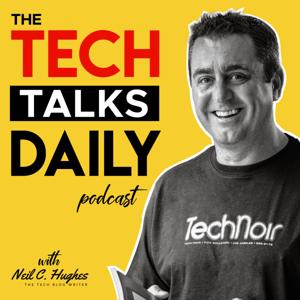
In this episode of Tech Talks Daily, I sit down with Tomás Dostal Freire, CIO of Miro, to unpack a challenge that quietly drains modern organizations. Tomás brings experience from companies like Google, Netflix, and Booking.com, and now leads both IT and business acceleration at Miro. His focus is simple but ambitious. Move beyond AI experimentation and rethink how work itself gets done.
We explore new research revealing that for every hour of creative work, employees lose up to three hours to meetings, admin, emails, and maintenance tasks. That ratio is more than an inconvenience. It affects decision-making speed, employee satisfaction, and ultimately a company's ability to compete. Tomás argues that future candidates will choose employers based on how much unnecessary internal work they are expected to tolerate. In other words, reducing busy work is quickly becoming a talent strategy.
One of the biggest culprits? Context switching. With dozens of browser tabs open and information scattered across tools, teams spend more time stitching together fragments than making decisions. Tomás describes how duplication of work, outdated systems, and a lack of shared context quietly erode momentum. AI, he believes, should not create more noise or another standalone tool. It needs to be embedded where collaboration already happens.
We discuss the difference between single-player AI moments, where individuals use tools in isolation, and multiplayer AI collaboration, where shared context allows teams to move faster together. At Miro, this philosophy has shaped what they call an AI Innovation Workspace, a shared canvas where human insight and AI assistance coexist in real time.
Tomás also shares practical advice for leaders who want to reclaim creative time. Start by identifying tasks you dislike doing that could easily be handled by someone junior. That list often reveals what AI can already automate. Then focus on building transferable skills like cognitive agility and first-principles thinking, rather than chasing every new tool.
If you are wrestling with burnout, fragmented workflows, or wondering how AI can genuinely improve collaboration without overwhelming teams, this conversation offers a grounded, optimistic perspective. And yes, we even add a Beatles classic to the Spotify playlist along the way.
 View all episodes
 By Neil C. Hughes
5
200200 ratings
Why do so many of us feel busy all day, yet struggle to point to the meaningful work we actually completed?
In this episode of Tech Talks Daily, I sit down with Tomás Dostal Freire, CIO of Miro, to unpack a challenge that quietly drains modern organizations. Tomás brings experience from companies like Google, Netflix, and Booking.com, and now leads both IT and business acceleration at Miro. His focus is simple but ambitious. Move beyond AI experimentation and rethink how work itself gets done.
We explore new research revealing that for every hour of creative work, employees lose up to three hours to meetings, admin, emails, and maintenance tasks. That ratio is more than an inconvenience. It affects decision-making speed, employee satisfaction, and ultimately a company's ability to compete. Tomás argues that future candidates will choose employers based on how much unnecessary internal work they are expected to tolerate. In other words, reducing busy work is quickly becoming a talent strategy.
One of the biggest culprits? Context switching. With dozens of browser tabs open and information scattered across tools, teams spend more time stitching together fragments than making decisions. Tomás describes how duplication of work, outdated systems, and a lack of shared context quietly erode momentum. AI, he believes, should not create more noise or another standalone tool. It needs to be embedded where collaboration already happens.
We discuss the difference between single-player AI moments, where individuals use tools in isolation, and multiplayer AI collaboration, where shared context allows teams to move faster together. At Miro, this philosophy has shaped what they call an AI Innovation Workspace, a shared canvas where human insight and AI assistance coexist in real time.
Tomás also shares practical advice for leaders who want to reclaim creative time. Start by identifying tasks you dislike doing that could easily be handled by someone junior. That list often reveals what AI can already automate. Then focus on building transferable skills like cognitive agility and first-principles thinking, rather than chasing every new tool.
If you are wrestling with burnout, fragmented workflows, or wondering how AI can genuinely improve collaboration without overwhelming teams, this conversation offers a grounded, optimistic perspective. And yes, we even add a Beatles classic to the Spotify playlist along the way.
1,290 Listeners

537 Listeners

1,657 Listeners
1,093 Listeners
626 Listeners

1,030 Listeners
301 Listeners

345 Listeners

228 Listeners
208 Listeners
508 Listeners

136 Listeners

347 Listeners

63 Listeners
682 Listeners
0 Listeners
0 Listeners
0 Listeners
0 Listeners

0 Listeners
0 Listeners
0 Listeners