
Sign up to save your podcasts
Or

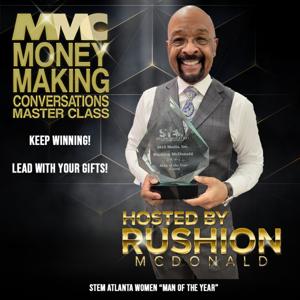


Listen and subscribe to Money Making Conversations on iHeartRadio, Apple Podcasts, Spotify, www.moneymakingconversations.com/subscribe/ or wherever you listen to podcasts. New Money Making Conversations episodes drop daily. I want to alert you, so you don’t miss out on expert analysis and insider perspectives from my guests who provide tips that can help you uplift the community, improve your financial planning, motivation, or advice on how to be a successful entrepreneur. Keep winning!
Two-time Emmy and Three-time NAACP Image Award-winning, television Executive Producer Rushion McDonald interviewed Dr. Justin M. Lee.
Purpose of the Interview
Key Takeaways
Early Career & Education
Social Media as a Business Tool
Financial Literacy & Homeownership
Real Estate Process
Pooling Resources for Wealth
Amazon DSP Opportunity
Construction Business
Personal Background
Notable Quotes
On embracing discomfort:
“I learned to embrace the uncomfort and make it one of my biggest strengths.”
On social media:
“You have to make your business look the same way online as in person.”
On financial literacy:
“Real estate is always going to be good debt. Bad debt is the Macy’s card.”
On collaboration:
“Pooling resources shows how far we can go and how fast we can go—but together.”
On planning:
“If you don’t plan, you plan to fail. All you have to do is stick to the plan.”
#SHMS #STRAW #BEST
See omnystudio.com/listener for privacy information.
Listen and subscribe to Money Making Conversations on iHeartRadio, Apple Podcasts, Spotify, www.moneymakingconversations.com/subscribe/ or wherever you listen to podcasts. New Money Making Conversations episodes drop daily. I want to alert you, so you don’t miss out on expert analysis and insider perspectives from my guests who provide tips that can help you uplift the community, improve your financial planning, motivation, or advice on how to be a successful entrepreneur. Keep winning!
Two-time Emmy and three-time NAACP Image Award-winning television Executive Producer Rushion McDonald interviewed Jourdan Saunders.
Founder & CEO of The Resource Key
Focus: Connecting demand to decision-making in the disability, aging, and healthcare markets
Purpose of the Interview
The purpose of this conversation is to educate entrepreneurs and business leaders on how to unlock massive, overlooked market opportunities—specifically within the $23 trillion disability, aging, and healthcare sectors—by improving how companies connect end users and decision-makers (buyers). [JOURDAN SAUNDERS | Txt]
Jourdan’s mission is to help organizations turn real demand into approved decisions, ensuring critical products and services stay in business and reach the people who need them.
Core Themes
Key Takeaways 1. The Disability & Aging Market Is Massively Undervalued
Jourdan highlights that this space represents a $23 trillion market, yet many businesses fail to prioritize it because they misunderstand its scale and complexity. [JOURDAN SAUNDERS | Txt]
Insight: The biggest opportunities often exist where perception and reality don’t match.
2. The Buyer and User Are Often Not the Same
Unlike traditional consumer markets, many products (especially in healthcare and disability) must satisfy two audiences:
“You have to speak to two different people… the user sometimes is not the buyer.” [JOURDAN SAUNDERS | Txt]
Insight: Marketing, sales, and product design must address both sides of the decision.
3. Businesses Fail Because They Don’t Understand Real Demand
Jourdan emphasizes that companies often jump to marketing before fully understanding the actual barriers and needs of their audience.
“Before you even advertise… do you even know what it is that you’re offering?” [JOURDAN SAUNDERS | Txt]
Insight: Deep customer understanding drives conversion—not just visibility.
4. Accessibility Exists Across Every Industry
Disability is not a niche—it intersects with every market and life stage, especially as populations age.
“When you take a step back and really look at how disability shows up in everyday life… there’s opportunity across any industry.” [JOURDAN SAUNDERS | Txt]
Insight: Inclusive design expands reach and revenue simultaneously.
5. Relationships Drive Decision-Making
Jourdan stresses the importance of building relationships with decision-makers early.
“You need to be able to get to the people making decisions… to get things done.” [JOURDAN SAUNDERS | Txt]
Insight: Access is as important as strategy in business growth.
6. Longevity and Lifecycle Thinking Matter
Products in this space are often used for years—even lifetimes—making sustainability critical.
Insight: Businesses must think beyond transactions and design for long-term dependency and trust.
7. The Future Is Converging Markets
By 2034, seniors will outnumber children in the U.S., accelerating the overlap between aging, healthcare, and disability markets. [JOURDAN SAUNDERS | Txt]
Insight: Companies that prepare now will dominate future demand.
Notable Quotes
Overall Impact of the Interview
This interview reframes accessibility, aging, and healthcare from being “specialty markets” to essential economic drivers. Jourdan Saunders positions her work as a bridge—ensuring innovative products survive, decisions get approved, and people receive the support they need before it’s too late.
It serves as a blueprint for:
#SHMS #BEST #STRAW
See omnystudio.com/listener for privacy information.
Listen and subscribe to Money Making Conversations on iHeartRadio, Apple Podcasts, Spotify, www.moneymakingconversations.com/subscribe/ or wherever you listen to podcasts. New Money Making Conversations episodes drop daily. I want to alert you, so you don’t miss out on expert analysis and insider perspectives from my guests who provide tips that can help you uplift the community, improve your financial planning, motivation, or advice on how to be a successful entrepreneur. Keep winning!
Two-time Emmy and three-time NAACP Image Award-winning television Executive Producer Rushion McDonald interviewed Elliot Holland.
The managing partner of Guardian Due Diligence. Here’s a breakdown of the key topics and highlights:
Key Themes & Highlights
Buying Small Businesses vs. Franchises
Financial Strategies for Business Acquisition
Due Diligence & Avoiding Bad Deals
Masterclass for First-Time Buyers
Success Stories & Case Studies
About Elliot Holland & Guardian Due Diligence
Elliot Holland is a Harvard MBA, private equity investor, and business acquisition expert. He founded Guardian Due Diligence to help first-time buyers confidently purchase profitable businesses. His firm specializes in financial diligence, ensuring buyers make informed decisions and avoid costly mistakes. Through his masterclass and consulting, Holland empowers entrepreneurs to build wealth through business ownership.
#BEST
#STRAW
#SHMS
See omnystudio.com/listener for privacy information.
Listen and subscribe to Money Making Conversations on iHeartRadio, Apple Podcasts, Spotify, www.moneymakingconversations.com/subscribe/ or wherever you listen to podcasts. New Money Making Conversations episodes drop daily. I want to alert you, so you don’t miss out on expert analysis and insider perspectives from my guests who provide tips that can help you uplift the community, improve your financial planning, motivation, or advice on how to be a successful entrepreneur. Keep winning!
Two-time Emmy and Three-time NAACP Image Award-winning, television Executive Producer Rushion McDonald interviewed Abioduni Martin.
🔎 Interview Summary
The interview highlights Abioduni Martin, founder of Do Everything Wonderful (D.E.W.), a minority-owned solar company in Georgia that has grown from a one-person vehicle wrap business into a commercial solar contractor and workforce development platform.
Martin discusses:
The conversation blends business growth, clean energy education, and social impact.
🎯 Purpose of the Interview
The episode serves multiple purposes:
1. Inspire Entrepreneurship
2. Educate on Solar Energy
3. Promote Workforce Development
4. Showcase a Scalable Impact Model
💡 Key Takeaways 1. Start Small, Scale Strategically
👉 Lesson: Vision + relationships = scalable opportunity
2. Mentorship and Partnerships Are Critical
👉 Lesson: Strategic partnerships can substitute for capital in early growth stages
3. Innovation Through Workforce Development
👉 Lesson: Owning the talent pipeline is a competitive advantage
4. Solar Energy Is a Major Economic Opportunity
5. Community Impact Is a Core Business Strategy
👉 Lesson: Purpose-driven entrepreneurship can scale while solving social issues
6. Workforce Barriers Are Practical (Not Motivational)
Martin emphasizes that people don’t lack work ethic—they lack support systems:
👉 Lesson: Fix structural barriers to unlock human potential
7. Leadership Evolution Matters
👉 Lesson: Entrepreneurs must evolve from doers to builders
🧠 Notable Quotes
Here are powerful, representative quotes from the interview:
On opportunity and growth
“They just let me and allow my organization to grow and prosper… with mistakes… they just encouraged that.”
“I’m still in that growth phase… trying to replicate and scale the business.” [
On innovation and leadership
On mission and community
“My goal has always been to infiltrate these industries, learn about it, teach it to the communities that don’t know anything about it.” [
“Workforce development… helping underserved Black and brown individuals… get into the industry.” [
On identifying opportunity
On collaboration and scale
On workforce challenges
🧾 Bottom Line
This interview is a blueprint for modern entrepreneurship at the intersection of clean energy and social impact:
#SHMS #STRAW #BEST
Money Making Conversations Master Class with Rushion McDonald is America's premier entrepreneurship, business leadership, financial literacy, and wealth-building podcast featuring successful entrepreneurs, executives, founders, celebrities, and industry experts sharing actionable insights for professional and financial success.
Business Podcast
Entrepreneurship
Small Business
Business Growth
Financial Literacy
Wealth Building
Black Entrepreneurs
Minority Business
Leadership
Executive Leadership
Business Funding
Marketing Strategies
Personal Development
Startup Advice
Sales Training
CEO Interviews
Founder Stories
Professional Development
Economic Empowerment
Business Success
Networking
Brand Building
Innovation
How to start a business
Small business funding
Entrepreneur success stories
Business leadership podcast
Wealth building strategies
Black entrepreneur podcast
Minority business development
Marketing for small businesses
Business growth strategies
Startup funding opportunities
Executive leadership training
Financial literacy education
Success mindset podcast
See omnystudio.com/listener for privacy information.
Listen and subscribe to Money Making Conversations on iHeartRadio, Apple Podcasts, Spotify, www.moneymakingconversations.com/subscribe/ or wherever you listen to podcasts. New Money Making Conversations episodes drop daily. I want to alert you, so you don’t miss out on expert analysis and insider perspectives from my guests who provide tips that can help you uplift the community, improve your financial planning, motivation, or advice on how to be a successful entrepreneur. Keep winning!
Two-time Emmy and Three-time NAACP Image Award-winning, television Executive Producer Rushion McDonald interviewed Troy James.
Founder & CEO of For Laura (formerly referenced as Velora platform)
Topic Focus: Leadership, identity, purpose, pressure, and performance
Interview Purpose
The purpose of the interview is to help high-performing leaders, entrepreneurs, and professionals understand how separating identity from performance leads to healthier leadership, resilience, and long-term success.
Through Troy James’s framework—rooted in leadership psychology, faith, and strategy—the conversation challenges listeners to move beyond outcome-driven validation and reconnect with purpose, values, and internal alignment, especially under pressure.
Core Themes Discussed
Key Takeaways 1. High Performers Often Tie Identity to Results
Many successful leaders measure their worth by outcomes. When results fluctuate, so does their sense of stability.
When identity becomes tangled with performance, leadership becomes unstable under pressure.
Insight: Performance-driven leadership creates burnout; purpose-driven leadership creates longevity.
2. Pressure Is Not the Enemy—It’s a Signal
Pressure reveals gaps in alignment rather than causing failure.
Pressure is never the problem. Pressure is a signal.
Insight: The issue is not pressure itself, but how leaders interpret and respond to it.
3. Purpose Is Broader Than Goals
Goals are strategic steps; purpose is the why behind the steps.
Your purpose is always bigger than the work that you do.
Insight: You can achieve goals without feeling fulfilled if purpose is missing.
4. Burnout Comes From Forgetting Identity
Burnout shows up when leaders lose touch with who they are while trying to satisfy systems, expectations, or results.
When you forget who you are, pressure begins to eat at you.
Insight: Success without identity alignment leads to emptiness, even if externally applauded.
5. Leaders Must Be Able to Name Their Skills
Many successful people cannot articulate why they are successful.
When you can’t speak to your skills and gifts, you don’t recognize how you got to your success.
Insight: Naming your skills creates clarity, confidence, and protection against outside noise.
6. Faith and Strategy Are Not Opposites
Faith does not replace planning—it informs it.
Faith and strategy are not opposites. They are leadership.
Insight: Trusting purpose while executing strategy creates grounded, ethical leadership.
7. Entrepreneurship and Corporate Roles Share the Same Pressure—Different Forms
The environment changes, but identity challenges remain.
Character is character. Identity is identity. Pressure is pressure.
Insight: Whether corporate or entrepreneurial, leaders must address internal alignment.
The Pathfinder Method (Troy James’s Framework)
Troy outlines a structured leadership alignment process called The Pathfinder Method, designed to help leaders separate identity from performance.
Four Key Stages:
Notable Quotes
Overall Impact of the Interview
This conversation serves as a leadership mirror—especially for:
It reframes success not as endless achievement, but as alignment between identity, purpose, and performance.
#SHMS #BEST #STRAW
See omnystudio.com/listener for privacy information.
Listen and subscribe to Money Making Conversations on iHeartRadio, Apple Podcasts, Spotify, www.moneymakingconversations.com/subscribe/ or wherever you listen to podcasts. New Money Making Conversations episodes drop daily. I want to alert you, so you don’t miss out on expert analysis and insider perspectives from my guests who provide tips that can help you uplift the community, improve your financial planning, motivation, or advice on how to be a successful entrepreneur. Keep winning!
Two-time Emmy and Three-time NAACP Image Award-winning, television Executive Producer Rushion McDonald interviewed Sonia Balfour-Fears.
Here you go — a clean, structured summary of the Sonia Balfour‑Fears interview with Rushion McDonald, plus purpose, key takeaways, and notable quotes, all based on the transcript you provided.
SUMMARY OF THE INTERVIEW
In this Money Making Conversations Masterclass episode, Rushion McDonald interviews Sonia Balfour‑Fears, a high‑ranking Global Sports & Entertainment Director and Financial Advisor at Morgan Stanley. Sonia discusses the Black wealth gap, financial literacy, investing basics, barriers that minorities face in wealth-building, and the realities of long-term investing. She emphasizes education, discipline, and access as critical factors for closing the wealth gap.
She also explains how investors of different ages—from young adults to retirees—share a common need: guidance and a financial plan. Sonia breaks down misconceptions about stock market participation, cryptocurrency, “hot stocks,” risk tolerance, dividend investing, and the best way to start investing even with small amounts of money.
Throughout the interview, Sonia provides approachable frameworks for beginners—emergency funds, diversified investing, index funds—and stresses that it’s never too late to begin investing, even at age 60 or older.
PURPOSE OF THE INTERVIEW
The interview aims to:
1. Educate listeners on financial literacy
Sonia explains fundamentals such as emergency funds, risk tolerance, asset allocation, diversification, and long‑term wealth building.
2. Address misconceptions about minority participation in investing
She clarifies that minority participation is rising but that more people need professional guidance rather than DIY risk-taking.
3. Provide practical starting points for new investors
She gives clear steps for people with small amounts of money and explains how to build wealth intentionally.
4. Encourage multigenerational financial conversations
Sonia discusses creating the first African‑American mother‑daughter wealth management team, emphasizing the importance of knowledge transfer.
5. Inspire listeners to rethink age and investing
She strongly argues that it is never too late to start building wealth.
KEY TAKEAWAYS 1. Closing the Black Wealth Gap Requires Knowledge + Access
2. Discipline Is as Important as Income
3. Everyone — Young or Old — Needs Professional Financial Guidance
4. Minorities Are Investing More — But Not Always With Advisors
5. Cryptocurrency Isn’t for Everyone
6. How to Start Investing: Build an Emergency Fund First
7. Avoid “Hot Stock” Thinking
8. Risk Tolerance Shapes Your Portfolio
9. It Is Never Too Late to Invest
10. Dividend Stocks Provide Strong Income Today
NOTABLE QUOTES (from transcript) On Closing the Wealth Gap
On Discipline
On Minority Participation
On Crypto + Risk
On Starting with Small Amounts
On ‘Hot Stocks’
On Being 60 and Beginning to Invest
On Dividend Investing
#SHMS #STRAW #BEST
See omnystudio.com/listener for privacy information.
Listen and subscribe to Money Making Conversations on iHeartRadio, Apple Podcasts, Spotify, www.moneymakingconversations.com/subscribe/ or wherever you listen to podcasts. New Money Making Conversations episodes drop daily. I want to alert you, so you don’t miss out on expert analysis and insider perspectives from my guests who provide tips that can help you uplift the community, improve your financial planning, motivation, or advice on how to be a successful entrepreneur. Keep winning!
Two-time Emmy and Three-time NAACP Image Award-winning, television Executive Producer Rushion McDonald interviewed Marsha Evans.
A licensed mental health therapist, founder of Willow Tree Counseling & Educational Center, and creator of the FELT Experience and Marsha Listens wellness platform. The conversation centers on emotional health, nervous system education, sound therapy, community healing, and her evolution as a therapist and entrepreneur. Marsha shares her personal journey from being a competitive athlete to becoming a calming force for high‑functioning individuals dealing with burnout, stress, and emotional disconnection.
She explains the origins of her signature FELT Experience, a wellness model designed to help people reconnect with themselves through somatic movement, sound healing, intentional rest, and community. She also highlights the challenges and breakthroughs in mental health—particularly within the Black community—and reflects on 16+ years of therapeutic practice.
Purpose of the Interview
The interview aims to:
1. Introduce Marsha Evans’ holistic mental health approach
Rushion invites Marsha to explain how she blends psychology, somatics, and sound‑based healing to help people process stress differently.
2. Explain the FELT Experience and its healing framework
Marsha details her signature F.E.L.T. model—Free, Expand, Listen, Transform—and why embodied emotional experience is key to healing.
3. Share her personal journey
She discusses how sports, music, and modalities like breathwork and yoga helped her turn stress into purpose.
4. Encourage new perspectives on mental health in the Black community
She and Rushion address the stigma, evolution, and growing acceptance of mental health support.
5. Showcase community‑centered healing
Marsha emphasizes connection, shared experiences, and intentional spaces that allow vulnerability and transformation.
Key Takeaways 1. Healing Requires Intentionality
Marsha explains that activities like massage or yoga can be therapeutic—but only when approached with intentionality, presence, and consent to release emotional tension.
2. The Body Holds Stories (“The body keeps the score”)
She emphasizes that the body stores emotional experiences, and modalities like breathwork, sound healing, and somatic movement help release what the mind can’t articulate.
3. The FELT Framework
The FELT Experience moves participants through:
4. Safe Community Spaces Accelerate Healing
Marsha’s events often result in participants forming friendships, emotional breakthroughs, and even planning outings together—an indicator of her program’s power.
5. People Are Conditioned to Avoid Emotions
Growing up, she was taught to hide emotions in competitive sports—especially tears as a sign of weakness. Her therapeutic mission now is to help others unlearn similar conditioning.
6. Cultural Shifts Around Mental Health
Marsha highlights major strides in the Black community, especially post‑COVID, as more people (including athletes) publicly acknowledge mental health struggles.
7. Therapy Isn’t Just Talking
She incorporates nonverbal tools like:
8. Human Connection Still Matters—even in an AI World
Marsha is open to exploring AI in mental health but insists that physical presence, touch, and human empathy are irreplaceable.
Notable Quotes (from the transcript) On her calming presence
“I think laughter is good for the soul… just being able to find peace has been really big for me… It’s just a God‑given talent.”
On coping mechanisms
“As long as I had some type of music or some form of therapy… I could navigate any stressful environment.”
On cooking as therapy (reflecting Rushion’s habits)
“You’re creating new neural pathways… recalibrating your nervous system.”
On intentional healing
“Yoga and massages can be therapeutic, but you have to be intentional.”
On the purpose of the FELT Experience
“In order to release whatever your body is experiencing, you have to have a felt experience.”
On the challenge of transformation
“We are used to chaos… but we’re not used to healed environments.”
On the evolution of her practice
“I wanted to understand the whole person… and help them change the dial on their dashboard to fit their calling.”
On mental health in the Black community
“People perceive admission as a flaw… but healing is about understanding your story.”
On creating safe spaces
“By creating a space of safety and healing… people get to live the life they desired and not a life from survival.”
#SHMS #BEST #STRAW
See omnystudio.com/listener for privacy information.
Listen and subscribe to Money Making Conversations on iHeartRadio, Apple Podcasts, Spotify, www.moneymakingconversations.com/subscribe/ or wherever you listen to podcasts. New Money Making Conversations episodes drop daily. I want to alert you, so you don’t miss out on expert analysis and insider perspectives from my guests who provide tips that can help you uplift the community, improve your financial planning, motivation, or advice on how to be a successful entrepreneur. Keep winning!
Two-time Emmy and Three-time NAACP Image Award-winning, television Executive Producer Rushion McDonald interviewed T. Dallas Smith.
Founder and CEO of T. Dallas Smith & Company, the largest African American-owned pure tenant rep commercial real estate firm in the U.S. The discussion focused on mentorship, breaking barriers in real estate, and transformative community development.
🔑 Key Themes & Highlights
Breaking Barriers in Commercial Real Estate
Transformative Community Development
Mentorship & Leadership Growth
Atlanta’s Commercial Real Estate Boom
📘 About T. Dallas Smith
#BEST
#STRAW
#SHMS
See omnystudio.com/listener for privacy information.
Listen and subscribe to Money Making Conversations on iHeartRadio, Apple Podcasts, Spotify, www.moneymakingconversations.com/subscribe/ or wherever you listen to podcasts. New Money Making Conversations episodes drop daily. I want to alert you, so you don’t miss out on expert analysis and insider perspectives from my guests who provide tips that can help you uplift the community, improve your financial planning, motivation, or advice on how to be a successful entrepreneur. Keep winning!
Two-time Emmy and Three-time NAACP Image Award-winning, television Executive Producer Rushion McDonald interviewed Dr. Will Moreland.
🎯 Purpose of the Interview
To highlight Dr. Will Moreland’s journey from combat veteran to global leadership expert, and to share his insights on executive coaching, building winning cultures, overcoming fear, and turning passion into profit through his Million Dollar Speaker Framework.
🗝️ Key Takeaways 1. Background & Credentials
2. Leadership Philosophy
3. Building Winning Cultures
4. Executive Coaching & Leadership Development
5. Overcoming Fear
“You won’t be replaced by AI—you’ll be replaced by someone who embraced AI.”
6. Million Dollar Speaker Framework (PAM Formula)
7. Living from Your CORE
A personal decision-making framework:
“If it doesn’t align with your CORE, it’s a no.”
8. Legacy & Impact
💬 Notable Quotes
📌 Final Thoughts
Dr. Will Moreland’s interview is a masterclass in leadership, personal growth, and business strategy. His frameworks and philosophies offer practical tools for entrepreneurs, executives, and aspiring speakers to build impactful careers and cultures.
#SHMS #STRAW #BEST
See omnystudio.com/listener for privacy information.
Listen and subscribe to Money Making Conversations on iHeartRadio, Apple Podcasts, Spotify, www.moneymakingconversations.com/subscribe/ or wherever you listen to podcasts. New Money Making Conversations episodes drop daily. I want to alert you, so you don’t miss out on expert analysis and insider perspectives from my guests who provide tips that can help you uplift the community, improve your financial planning, motivation, or advice on how to be a successful entrepreneur. Keep winning!
Two-time Emmy and Three-time NAACP Image Award-winning, television Executive Producer Rushion McDonald interviewed Travis Payne.
The interview serves three main purposes:
Inspiration & Career Blueprint
To highlight Travis Payne’s journey from Atlanta dancer to globally recognized choreographer and director working with icons like Michael and Janet Jackson.
Business of Entertainment
To educate listeners on how creativity (dance, music, performance) intersects with business, branding, and revenue generation.
Motivation for Entrepreneurs & Creatives
To reinforce themes of persistence, preparation, and leveraging opportunity—aligned with the show’s mission to help audiences “plan their own success story.” [TRAVIS PAYNE | Txt]
🔑 Key Takeaways 1. Success = Preparation + Opportunity + Fearlessness
➡️ Insight:
Preparedness + courage to engage = career breakthroughs
2. Rejection Is Part of the Process
➡️ Insight:
Expect “no” as part of the path to “yes.”
3. Dance & Music Are Universal and Powerful
➡️ Insight:
Art has the power to unify where politics cannot.
4. Creativity Must Align with Business Goals
➡️ Insight:
If it doesn’t generate value, it’s a hobby—not a business.
5. Michael Jackson as a Blueprint for Branding & Ownership
➡️ Insight:
Creative control and ownership drive lasting wealth and influence.
6. Innovation Drives Longevity
➡️ Insight:
Timeless brands are built on innovation—not imitation.
7. Career Growth Requires Evolution
➡️ Insight:
Longevity requires expanding your skillset and role.
8. Mindset: “Delusional” vs. Committed
➡️ Insight:
Belief + discipline separates dreamers from achievers.
💬 Notable Quotes 🔹 On Readiness
“If you stay ready, you don’t have to get ready.” [TRAVIS PAYNE | Txt]
🔹 On Rejection
“There would be a lot of no’s before you get to the yes.” [TRAVIS PAYNE | Txt]
🔹 On Dance & Creativity
“Dance is a universal language… it unites us.” [TRAVIS PAYNE | Txt]
🔹 On Business vs. Hobby
“If it doesn’t make sense as a business… it’s a hobby.” [TRAVIS PAYNE | Txt]
🔹 On Michael Jackson’s Vision
“He wanted to always create his own specific lane.” [TRAVIS PAYNE | Txt]
🔹 On Personal Drive
“You have to have the nerve to think that you can.” [TRAVIS PAYNE | Txt]
🔹 On Commitment vs. Delusion
“No, I am committed… and I’m prepared.” [TRAVIS PAYNE | Txt]
🧭 Overall Theme
The interview reinforces a powerful message:
Creative success is not just talent—it’s strategy, resilience, and business intelligence.
Travis Payne embodies the blend of:
📌 Bottom Line
This interview is both:
Core lesson:
👉 Own your craft, understand the business, stay ready, and build something timeless.
#SHMS #STRAW #BEST
Money Making Conversations Master Class with Rushion McDonald is America's premier entrepreneurship, business leadership, financial literacy, and wealth-building podcast featuring successful entrepreneurs, executives, founders, celebrities, and industry experts sharing actionable insights for professional and financial success.
Business Podcast
Entrepreneurship
Small Business
Business Growth
Financial Literacy
Wealth Building
Black Entrepreneurs
Minority Business
Leadership
Executive Leadership
Business Funding
Marketing Strategies
Personal Development
Startup Advice
Sales Training
CEO Interviews
Founder Stories
Professional Development
Economic Empowerment
Business Success
Networking
Brand Building
Innovation
How to start a business
Small business funding
Entrepreneur success stories
Business leadership podcast
Wealth building strategies
Black entrepreneur podcast
Minority business development
Marketing for small businesses
Business growth strategies
Startup funding opportunities
Executive leadership training
Financial literacy education
Success mindset podcast
See omnystudio.com/listener for privacy information.
From the publisher's feed
Money Making Conversations Master Class is more than a podcast. It's a front-row seat to the ideas, experiences, and breakthrough moments that inspire success. Hosted by Rushion McDonald, each episode features influential entrepreneurs, business leaders, celebrities, influencers, and nonprofit changemakers sharing the lessons, strategies, and mindset shifts that helped them turn ambition into achievement. The show empowers dreamers, doers, and leaders to think bigger, move smarter, and take action on their goals. As Rushion McDonald often says, "Stop reading other people's success stories and start planning your own."
Tune in, get inspired, and start writing your own success story, one conversation at a time.
https://www.moneymakingconversations.com
https://www.youtube.com/MoneyMakingConversations
https://www.facebook.com/MoneyMakingConversations/
https://twitter.com/moneymakingconv
https://www.instagram.com/moneymakingconversations/