
Sign up to save your podcasts
Or

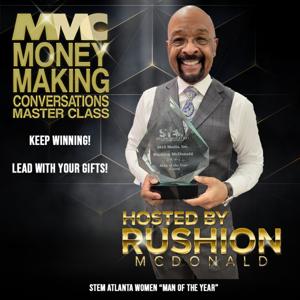


Listen and subscribe to Money Making Conversations on iHeartRadio, Apple Podcasts, Spotify, www.moneymakingconversations.com/subscribe/ or wherever you listen to podcasts. New Money Making Conversations episodes drop daily. I want to alert you, so you don’t miss out on expert analysis and insider perspectives from my guests who provide tips that can help you uplift the community, improve your financial planning, motivation, or advice on how to be a successful entrepreneur. Keep winning!
Two-time Emmy and Three-time NAACP Image Award-winning, television Executive Producer Rushion McDonald interviewed Sahra Halpern.
Title: President & CEO, Business Consortium Fund (BCF) and Triad Investments
Host: Rushion McDonald
Podcast: Money Making Conversations Masterclass
Sahra Halpern explains how Community Development Financial Institutions (CDFIs)—specifically the Business Consortium Fund—provide patient capital, education, and partnership to minority‑owned, B2B businesses. The interview focuses on access to affordable capital, trust in financial systems, and helping business owners grow sustainably rather than be crushed by debt.
Purpose of the Interview
The interview aims to:
Key Themes & Takeaways 1. What Makes a CDFI Different From a Bank
Key takeaway: CDFIs lend with flexibility, patience, and partnership.
2. A “Best‑Kept Secret” in Finance
Insight: Many minority business owners struggle unnecessarily because they don’t know CDFIs exist.
3. Trust Is Central to Capital Access
Takeaway: Capital follows trust—and trust must be earned.
4. Focus on B2B Businesses and Contracts
Key idea: Contracts create opportunity—but only if businesses have working capital to execute.
5. Lending Is Also Education
Important distinction: BCF is not a predatory lender—it refuses to lend irresponsibly.
6. Affordable Capital Through Partnerships
Takeaway: Affordable capital is possible when mission comes before profit.
7. Sahra Halpern’s Personal Motivation
Core belief: Economic justice is essential to community well‑being.
8. Three Financial Principles for Business Owners
Sahra offers three practical “financial truths”:
Know the industry you serve
Understand compliance, insurance, and contract requirements.
Know your credit score—and yourself
Credit can be improved, but only if you face it honestly.
Don’t take on debt you can’t repay
Loans should serve growth, not keep you up at night.
Key lesson: Discipline is more important than loan size.
9. Relationships Must Come Before Loans
Takeaway: Don’t wait for a crisis to build financial relationships.
Notable Quotes
“We are one of the best‑kept secrets—and we should not be a secret anymore.”
“We are not a bank. We are a partner.”
“Put your fear and your self‑doubt aside before you walk in the door.”
“Don’t take on debt that will keep you up at night.”
“You need a relationship before you need financing.”
“We want capital to be a path to growth—not another headache.”
Overall Impact
This interview reframes access to capital as a relationship‑driven process, not a transactional hurdle. Sahra Halpern positions BCF—and CDFIs broadly—as bridges between financial systems and underserved businesses, offering not just loans, but guidance, trust, and accountability.
Final message:
Capital changes communities when it is affordable, patient, and paired with education.
#SHMS #BEST #STRAW #AMI
See omnystudio.com/listener for privacy information.
Listen and subscribe to Money Making Conversations on iHeartRadio, Apple Podcasts, Spotify, www.moneymakingconversations.com/subscribe/ or wherever you listen to podcasts. New Money Making Conversations episodes drop daily. I want to alert you, so you don’t miss out on expert analysis and insider perspectives from my guests who provide tips that can help you uplift the community, improve your financial planning, motivation, or advice on how to be a successful entrepreneur. Keep winning!
Two-time Emmy and Three-time NAACP Image Award-winning, television Executive Producer Rushion McDonald interviewed Robin Wilson.
Topic: Clean Design, wellness, asthma and allergy–aware living
Featured Work: Clean Design: Wellness for Your Lifestyle
Robin Wilson, a clean design lifestyle expert and founder of the Clean Design Home brand, joins Rushion McDonald to discuss how everyday household choices directly impact health—particularly for people living with asthma, allergies, and chronic inflammation. Drawing from her personal experiences as a lifelong allergy and asthma sufferer, Wilson explains how creating an allergen-aware home can dramatically improve quality of life.
Purpose of the Interview
The primary purpose of the interview is to:
Rushion also uses the platform to share his own deeply personal experiences with allergic reactions, reinforcing the life-changing importance of Wilson’s message..
Key Takeaways 1. Your Home Should Be a Breathing Sanctuary
Wilson emphasizes that many people focus on outdoor allergens while overlooking indoor exposure. Shoes, coats, pillows, furniture, and bedding often trap pollen, bacteria, and toxins that worsen symptoms once brought indoors..
2. Pillows and Bedding Are Major Health Triggers
One of the most memorable segments centers on pillows:
Wilson introduces her “rule of threes”:
Rushion shares that replacing a problematic pillow helped eliminate a chronic cough that seriously affected his life..
3. “Allergen-Aware” Is More Honest Than “Hypoallergenic”
Wilson avoids the term hypoallergenic because allergies vary from person to person. Instead, she advocates for ingredient transparency, empowering consumers to decide what is safe for their bodies and homes..
4. Small Habits Create Big Health Outcomes
Key daily practices include:
Wilson stresses that consistency—not perfection—is what reduces exposure over time..
5. Asthma Is a Serious Chronic Condition
Wilson compares asthma management to diabetes care:
She explains that nighttime asthma and allergy attacks often occur when cortisol levels drop during sleep, allowing reactions to surface..
6. The Book Is a Practical, Room-by-Room Guide
Clean Design: Wellness for Your Lifestyle is designed as a reference guide, not a cover-to-cover read. It addresses:
Wilson also includes low-toxicity cleaning tips inspired by her grandmother, such as using baking soda, toothpaste, and even Coca-Cola instead of harsh chemicals..
Notable Quotes
“One in five people suffer from asthma or allergies… and the home should be a sanctuary for easy breathing.”.
“Break up with your pillow.”.
“You might be allergic outside—and then come inside and double your allergen load.”.t
“Asthma is like diabetes. If you manage the triggers, you reduce the risk of a serious episode.”.
“It’s all about effort and consistency.”.
#SHMS #BEST #STRAW
See omnystudio.com/listener for privacy information.
Listen and subscribe to Money Making Conversations on iHeartRadio, Apple Podcasts, Spotify, www.moneymakingconversations.com/subscribe/ or wherever you listen to podcasts. New Money Making Conversations episodes drop daily. I want to alert you, so you don’t miss out on expert analysis and insider perspectives from my guests who provide tips that can help you uplift the community, improve your financial planning, motivation, or advice on how to be a successful entrepreneur. Keep winning!
Two-time Emmy and Three-time NAACP Image Award-winning, television Executive Producer Rushion McDonald interviewed Rod Griffin.
Senior Director of Public Education and Advocacy at Experian.
🎯 Purpose of the Interview
To educate listeners on fraud prevention, identity theft, credit management, and financial literacy. The conversation aims to empower individuals—especially those in underserved communities—to take control of their financial health using tools and resources provided by Experian.
🗝️ Key Takeaways 1. Fraud & Identity Theft Awareness
2. Experian’s Role
3. Understanding Credit Scores
4. Free Resources
5. Establishing & Rebuilding Credit
6. Financial Savviness
7. Insurance Savings
8. Practical Tips
🧠 Final Message
Rod Griffin emphasizes that financial literacy is about empowerment. By understanding your credit, using available tools, and setting clear goals, you can take control of your financial future.
#SHMS #STRAW #BEST
See omnystudio.com/listener for privacy information.
Listen and subscribe to Money Making Conversations on iHeartRadio, Apple Podcasts, Spotify, www.moneymakingconversations.com/subscribe/ or wherever you listen to podcasts. New Money Making Conversations episodes drop daily. I want to alert you, so you don’t miss out on expert analysis and insider perspectives from my guests who provide tips that can help you uplift the community, improve your financial planning, motivation, or advice on how to be a successful entrepreneur. Keep winning!
Two-time Emmy and Three-time NAACP Image Award-winning, television Executive Producer Rushion McDonald interviewed D. Renee Smith.
A transformational life coach and mental wellness advocate:
🎯 Purpose of the Interview
To raise awareness about mental health, especially among professional women, and to promote proactive wellness strategies in personal life and the workplace. The conversation emphasizes the importance of self-care, emotional support, and recognizing mental health signals before they escalate.
🗝️ Key Takeaways 1. Mental Health Is Like Physical Health
2. Women Often Lose Themselves in Roles
3. Self-Care Is Not Selfish
4. Recognizing Mental Health Warning Signs
5. Workplace Stress Is Real
6. Proactive Mental Wellness in the Workplace
💬 Notable Quotes
🌐 Connect with D. Renee Smith
#SHMS #STRAW #BEST
See omnystudio.com/listener for privacy information.
Listen and subscribe to Money Making Conversations on iHeartRadio, Apple Podcasts, Spotify, www.moneymakingconversations.com/subscribe/ or wherever you listen to podcasts. New Money Making Conversations episodes drop daily. I want to alert you, so you don’t miss out on expert analysis and insider perspectives from my guests who provide tips that can help you uplift the community, improve your financial planning, motivation, or advice on how to be a successful entrepreneur. Keep winning!
Two-time Emmy and Three-time NAACP Image Award-winning, television Executive Producer Rushion McDonald interviewed Dr. LaToya Gilmore.
A licensed professional counselor with 20+ years of experience.
2. Dr. Gilmore’s Career Path
3. Mental Health and Career Change
4. Mental Health in the Black Community
5. HBCU Experience
6. Book Discussion: Communication Skills for Healthier Boundaries
7. Therapy Practice Model
8. Entrepreneurship Lessons
9. Betting on Yourself
10. Parenting and Child Development
11. Future of Mental Health Education
12. Boundaries in Social Settings
13. Closing
💡 Key Takeaways
🗣️ Notable Quotes
“You have to allow your voice to be above the external voices and opinions.”
“The individuals around you are not mind readers.”
“The pandemic put us on the forefront of mental health… you had to sit at home with your own thoughts.”
“Everyone is not going to be my client, but I do have resources.”
“Mental wellness is just another leg of healthcare. That’s all it is.”
“Don’t quit because you’re mad. Have an exit strategy.”
“Boundaries can be rigid or absent—both can disrupt your life.”
#SHMS #STRAW #BEST
See omnystudio.com/listener for privacy information.
Listen and subscribe to Money Making Conversations on iHeartRadio, Apple Podcasts, Spotify, www.moneymakingconversations.com/subscribe/ or wherever you listen to podcasts. New Money Making Conversations episodes drop daily. I want to alert you, so you don’t miss out on expert analysis and insider perspectives from my guests who provide tips that can help you uplift the community, improve your financial planning, motivation, or advice on how to be a successful entrepreneur. Keep winning!
Two-time Emmy and Three-time NAACP Image Award-winning, television Executive Producer Rushion McDonald interviewed Jennifer Gaddis.
Interview Summary
Show: Money Making Conversations Masterclass
Host: Rushion McDonald
Guest: Jennifer Gaddis – Senior Quality Assurance Engineer, Educator, Founder of Road to QA
1. Purpose of the Interview
The primary purpose of the interview is to inspire and educate everyday people—especially those without college degrees or traditional tech backgrounds—on how to pivot into technology careers, specifically Quality Assurance (QA), and to reframe fear around AI, layoffs, and automation into opportunity.
Jennifer’s story is used as proof of concept that:
Rushion positions Jennifer not only as a success story, but as a new blueprint for wealth-building through skills, not credentials. [
2. Interview Overview (High-Level Summary)
Jennifer Gaddis shares how she:
She explains what Quality Assurance engineering is, why it is resistant to AI replacement, and how regular users of apps are already doing parts of QA work without realizing it.
3. Key Takeaways A. You’re Already More Qualified Than You Think
Jennifer emphasizes that everyday digital behavior translates into QA skills:
This insight forms the core of her teaching philosophy.
B. The Faster You Add Skills, the Faster You Increase Income
Jennifer repeatedly notes:
“The difference in your paycheck is your skillset.”
By stacking skills (manual QA → automation → AI testing), professionals increase their market value, not just job security.
C. AI Is a Career Accelerator, Not a Threat
Rather than fearing AI, Jennifer encourages people to:
She stresses that human oversight is still required in tech deployment.
D. Entrepreneurship Can Be Accidental—but Scalable
Jennifer did not initially plan to build a company. Her business emerged from:
Her willingness to:
Allowed Road to QA to grow sustainably.
E. Representation and Access Matter
Jennifer openly discusses:
Her story challenges stereotypes about who “belongs” in tech careers. [
4. Notable Quotes from the Interview
“I landed my first year in tech within 90 days.” [
“The difference in your paycheck is your skillset.”
“You’re already a software tester—you just don’t know it yet.” [
“I didn’t set out to build a company. I said yes to myself.” [
“AI still needs human oversight.”
“My journey was already different, so I had to build something different.”
5. Overall Message
Jennifer Gaddis’s interview reinforces a central theme of Money Making Conversations:
Income growth follows skill alignment, not traditional credentials.
Her journey reframes:
The interview serves as both motivation and roadmap for anyone seeking financial mobility through tech—without gatekeeping.
#SHMS #BEST #STRAW
See omnystudio.com/listener for privacy information.
Listen and subscribe to Money Making Conversations on iHeartRadio, Apple Podcasts, Spotify, www.moneymakingconversations.com/subscribe/ or wherever you listen to podcasts. New Money Making Conversations episodes drop daily. I want to alert you, so you don’t miss out on expert analysis and insider perspectives from my guests who provide tips that can help you uplift the community, improve your financial planning, motivation, or advice on how to be a successful entrepreneur. Keep winning!
Two-time Emmy and Three-time NAACP Image Award-winning, television Executive Producer Rushion McDonald interviewed Paris Fletcher.
Entrepreneur, content creator, and founder of Full Bloom, a wellness brand focused on self-discovery and personal growth.
🎭 Entertainment Background
🌱 Birth of Full Bloom
📓 The Journal: Back to Me
💡 Why “Full Bloom”?
💼 Entrepreneurial Journey
💬 Key Messages
📲 Connect with Paris Fletcher
#SHMS #STRAW #BEST
See omnystudio.com/listener for privacy information.
Listen and subscribe to Money Making Conversations on iHeartRadio, Apple Podcasts, Spotify, www.moneymakingconversations.com/subscribe/ or wherever you listen to podcasts. New Money Making Conversations episodes drop daily. I want to alert you, so you don’t miss out on expert analysis and insider perspectives from my guests who provide tips that can help you uplift the community, improve your financial planning, motivation, or advice on how to be a successful entrepreneur. Keep winning!
Two-time Emmy and Three-time NAACP Image Award-winning, television Executive Producer Rushion McDonald interviewed Mela Lovett
💼 Entrepreneurial Journey
🧘🏽♀️ Mental Health & Meditation
🌱 About Family Lawn Services
🛠️ Lessons in Business
📞 How to Contact Family Lawn Services
💬 Key Takeaways
#SHMS #STRAW #BEST
See omnystudio.com/listener for privacy information.
Listen and subscribe to Money Making Conversations on iHeartRadio, Apple Podcasts, Spotify, www.moneymakingconversations.com/subscribe/ or wherever you listen to podcasts. New Money Making Conversations episodes drop daily. I want to alert you, so you don’t miss out on expert analysis and insider perspectives from my guests who provide tips that can help you uplift the community, improve your financial planning, motivation, or advice on how to be a successful entrepreneur. Keep winning!
Two-time Emmy and Three-time NAACP Image Award-winning, television Executive Producer Rushion McDonald interviewed Dr. Kurt Jones.
Purpose of the Interview
The conversation aims to highlight the importance of mental health and wellness, particularly in the Black community, elite sports, and entrepreneurial spaces. It focuses on mental resilience, confidence building, and strategies for handling stress and setbacks, while introducing Dr. Jones’ methodology and his mission through Play 21 Wellness Academy.
Key Takeaways
Mental Health in the Black Community
Customized Approach
The Shelving Method
Confidence & Setbacks
Play 21 Wellness Academy
Broader Client Base
Health & Balance
Upcoming Projects
Notable Quotes
On Mental Health Stigma:
“When people talked about mental health, the first thought was negative.”
On Focus:
“You can’t take the last play to the next play.”
On Success:
“Mental thinking is a huge part of success.”
On Confidence:
“Remind yourself of what got you to the point where you were winning.”
On Consistency:
“You’ve never seen a Brinks truck behind a funeral car—the graveyard is the richest place because people die with million-dollar dreams.”
On Purpose:
“Walk in your purpose. When you walk in your purpose, there’s no stopping you.”
#SHMS #STRAW #BEST
See omnystudio.com/listener for privacy information.
Listen and subscribe to Money Making Conversations on iHeartRadio, Apple Podcasts, Spotify, www.moneymakingconversations.com/subscribe/ or wherever you listen to podcasts. New Money Making Conversations episodes drop daily. I want to alert you, so you don’t miss out on expert analysis and insider perspectives from my guests who provide tips that can help you uplift the community, improve your financial planning, motivation, or advice on how to be a successful entrepreneur. Keep winning!
Two-time Emmy and Three-time NAACP Image Award-winning, television Executive Producer Rushion McDonald interviewed Adonis Lockett.
Titles: Private Capital Expert, Real Estate Investor, Educator
Background: Former engineer for NASA, Boeing, Lockheed Martin, Caterpillar
Host: Rushion McDonald
Podcast: Money Making Conversations Masterclass
Adonis Lockett details his transition from aerospace engineering into real estate and private capital, explaining how he built wealth not just by flipping houses—but by operating on “the money side of real estate.” The interview demystifies private lending, access to capital, and how everyday individuals can participate in wealth-building without owning property themselves.
Purpose of the Interview
The interview aims to:
Key Themes & Takeaways 1. Engineering Was a Backup—Entrepreneurship Was the Goal
Takeaway: A high-paying job can fund your exit, not define your destiny.
2. The Leap Into Real Estate—and the Reality Behind It
Key insight: Early wins can be misleading—longevity requires business mastery, not just intelligence.
3. Ego vs. Education
Takeaway: Hustle without instruction costs time and money.
4. “The Money Isn’t in Real Estate—The Money Is in the Money”
This is the core philosophy of the interview.
Key idea: Control the capital, and you control the transaction.
5. Understanding the Private Lending Model
Adonis explains how people make money without buying houses:
Example:
A $600,000 investment loan × 2% = $12,000 fee for facilitating the introduction.
6. Why Private Money Beats Banks
Banks require:
Private lenders often:
Takeaway: A bank’s “no” is often exactly why private lenders say “yes.”
7. The Smart Money Blueprint
Adonis created the Smart Money Blueprint to teach this system:
Core promise: Learn to be “the bank” without needing money.
8. Flipping Isn’t What It Looks Like on TV
Adonis breaks down common investor mistakes:
Lesson: Education protects profits.
9. Relationships Create Wealth—Not Transactions
Takeaway: Relationships are currency.
10. Flexible Path to Income
The private money model can be:
Key point: This is about leverage, not labor.
Notable Quotes
“The money isn’t in real estate—the money is in the money.”
“Most cash buyers aren’t cash buyers at all.”
“I was flat broke for years after quitting corporate—people don’t talk about that part.”
“A bank’s no is often the reason a private lender says yes.”
“Perseverance kept me alive—but mentorship would have saved me years.”
“You don’t need money to be the bank—you need knowledge.”
Overall Impact
This interview reframes real estate success away from property ownership and toward capital intelligence. Adonis Lockett offers listeners a nontraditional, scalable, and low-risk path to wealth—particularly powerful for:
Final message: If you understand money, you don’t need to chase property—property comes to you.
#SHMS #BEST #STRAW
See omnystudio.com/listener for privacy information.
From the publisher's feed
Money Making Conversations Master Class is more than a podcast. It's a front-row seat to the ideas, experiences, and breakthrough moments that inspire success. Hosted by Rushion McDonald, each episode features influential entrepreneurs, business leaders, celebrities, influencers, and nonprofit changemakers sharing the lessons, strategies, and mindset shifts that helped them turn ambition into achievement. The show empowers dreamers, doers, and leaders to think bigger, move smarter, and take action on their goals. As Rushion McDonald often says, "Stop reading other people's success stories and start planning your own."
Tune in, get inspired, and start writing your own success story, one conversation at a time.
https://www.moneymakingconversations.com
https://www.youtube.com/MoneyMakingConversations
https://www.facebook.com/MoneyMakingConversations/
https://twitter.com/moneymakingconv
https://www.instagram.com/moneymakingconversations/