
Sign up to save your podcasts
Or

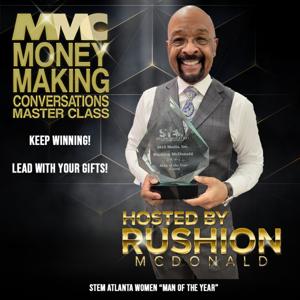


Listen and subscribe to Money Making Conversations on iHeartRadio, Apple Podcasts, Spotify, www.moneymakingconversations.com/subscribe/ or wherever you listen to podcasts. New Money Making Conversations episodes drop daily. I want to alert you, so you don’t miss out on expert analysis and insider perspectives from my guests who provide tips that can help you uplift the community, improve your financial planning, motivation, or advice on how to be a successful entrepreneur. Keep winning!
Two-time Emmy and Three-time NAACP Image Award-winning, television Executive Producer Rushion McDonald interviewed Joxavier Jackson.
A financial advisor with over 15 years of experience across major institutions such as Wells Fargo, Chase, and Bank of America. She discusses her evolution from a teenage bank teller to an independent financial planner at The Piedmont Group in Atlanta, where she provides holistic, comprehensive wealth management—especially for clients who traditionally lack access to financial literacy.
Joe shares her personal journey, the gaps she observed in financial education—especially in working‑class families and communities of color—and why she aims to provide accessible, relationship‑based financial planning. She breaks down the fundamentals of long‑term wealth: insurance, asset allocation, retirement accounts, tax strategies, fraud prevention, and planning for individuals and business owners.
The discussion highlights the importance of financial confidence, the significance of meeting people where they are, and the need to increase participation of Black and Brown individuals in wealth‑building spaces.
🎯 Purpose of the Interview
Introduce Dr. Joe Jackson’s financial journey
From humble beginnings to leadership positions in banking and finally to founding her own firm.
Explain comprehensive financial planning
She contrasts big‑bank limitations with her holistic approach that includes insurance, investments, retirement, and legacy planning.
Educate listeners on wealth‑building fundamentals
Insurance, retirement vehicles, asset allocation, compounding, fraud prevention, and business planning.
Highlight financial literacy gaps in underserved communities
She encourages access, representation, and inclusion for people of color in financial spaces.
Empower people to build confidence with money
Joe stresses that understanding your numbers gives you a competitive advantage in life.
🔑 Key Takeaways 1. Wealth Requires Strategy, Not Accident
Joe explains that wealth is built through planning, long‑term strategy, and educated decisions—not by chance.
2. Insurance Is a Wealth‑Building Tool
Beyond death benefit, insurance can:
3. High Income ≠ Financial Security
Without budgeting, allocation, and strategy, income is quickly lost.
4. Fraud Awareness Is Essential
Joe urges clients to verify communications directly with institutions and avoid clicking suspicious links. 5. Tailored Advice by Age Group
For people in their 20s:
6. Business Owners Need Dual Financial Plans
Joe emphasizes separate strategies for:
7. Representation Matters in Financial Literacy
She highlights the need for more visibility, education, and access for Black and Brown communities.
8. Asset Allocation Depends on Risk Tolerance
Younger clients = more aggressive
Risk‑averse clients = more conservative, bond‑heavy portfolios
9. Dollar Cost Averaging Builds Wealth
Consistent, automated investing—regardless of market conditions—drives compounding.
🗣️ Notable Quotes (Direct From Transcript) On Wealth Building
“Wealth isn’t built by accident… you have to have a plan.”
On Big Banks vs. Her Firm
“If you don’t have at least $250,000, you weren’t considered a worthy client—so far from the truth.”
On Community Access
“People that look like me—we need this education.”
On Term vs. Whole Life Insurance
“Term is renting. Whole life is a tool you use when you're alive and when you die.”
On Financial Confidence
“Financial confidence is a competitive advantage.”
On Helping Older Clients
“We start right where you are.”
On Increasing Black Participation in Finance
“I don’t look at your dollar amount. I have information that will make a difference in your life… you need to hear it.”
On Her Personal Journey
“My family came from humble beginnings… but a manager encouraged me to sit for my licensing. I passed everything on the first try.”
#SHMS #BEST #STRAW
See omnystudio.com/listener for privacy information.
Listen and subscribe to Money Making Conversations on iHeartRadio, Apple Podcasts, Spotify, www.moneymakingconversations.com/subscribe/ or wherever you listen to podcasts. New Money Making Conversations episodes drop daily. I want to alert you, so you don’t miss out on expert analysis and insider perspectives from my guests who provide tips that can help you uplift the community, improve your financial planning, motivation, or advice on how to be a successful entrepreneur. Keep winning!
Two-time Emmy and Three-time NAACP Image Award-winning, television Executive Producer Rushion McDonald interviewed Stacey Gholar.
🔹 Summary of the Interview
Stacey Gholar, founder of Bloom Creative Agency, shares her journey from being a young mother in Chicago to becoming a brand strategist and creative entrepreneur with over 20 years of experience in marketing, media, and business. She emphasizes the importance of aligning personal identity with brand strategy, especially in the digital age. Stacey discusses her approach to brand audits, the role of social media, the impact of AI, and her passion for empowering women through entrepreneurship and skincare.
🔹 Key Takeaways 1. What Is a Brand Strategist?
2. Social Media Strategy
3. Discovery Process
4. Digital Branding & AI
5. Email Marketing
6. Going Viral vs. Being Valuable
7. Brand Refresh & Outreach
8. Skincare Line
🔹 Notable Quotes
#SHMS #STRAW #BEST
See omnystudio.com/listener for privacy information.
Listen and subscribe to Money Making Conversations on iHeartRadio, Apple Podcasts, Spotify, www.moneymakingconversations.com/subscribe/ or wherever you listen to podcasts. New Money Making Conversations episodes drop daily. I want to alert you, so you don’t miss out on expert analysis and insider perspectives from my guests who provide tips that can help you uplift the community, improve your financial planning, motivation, or advice on how to be a successful entrepreneur. Keep winning!
Two-time Emmy and Three-time NAACP Image Award-winning, television Executive Producer Rushion McDonald interviewed Chef Marcus Samuelsson.
Interviewed centered around his book:
📘 The Rise: Black Cooks and the Soul of American Food
Here are the key highlights:
🍽️ About the Book
🌍 Cultural and Historical Themes
🍴 Mouthwatering Recipes Mentioned
💬 Conversation Highlights
#SHMS #STRAW #BEST
See omnystudio.com/listener for privacy information.
Listen and subscribe to Money Making Conversations on iHeartRadio, Apple Podcasts, Spotify, www.moneymakingconversations.com/subscribe/ or wherever you listen to podcasts. New Money Making Conversations episodes drop daily. I want to alert you, so you don’t miss out on expert analysis and insider perspectives from my guests who provide tips that can help you uplift the community, improve your financial planning, motivation, or advice on how to be a successful entrepreneur. Keep winning!
Two-time Emmy and Three-time NAACP Image Award-winning, television Executive Producer Rushion McDonald interviewed Dr. Cameka Smith.
Founder of The BOSS Network, from Money Making Conversations Masterclass:
Purpose of the Interview
The interview aimed to:
Key Takeaways
Origin of The BOSS Network
Impact & Achievements
Pivot During COVID
Challenges & Mindset
Top 3 Mistakes Entrepreneurs Make
Unique Marketing & Partnerships
Core Philosophy
Notable Quotes
#SHMS #STRAW #BEST
See omnystudio.com/listener for privacy information.
Listen and subscribe to Money Making Conversations on iHeartRadio, Apple Podcasts, Spotify, www.moneymakingconversations.com/subscribe/ or wherever you listen to podcasts. New Money Making Conversations episodes drop daily. I want to alert you, so you don’t miss out on expert analysis and insider perspectives from my guests who provide tips that can help you uplift the community, improve your financial planning, motivation, or advice on how to be a successful entrepreneur. Keep winning!
Two-time Emmy and Three-time NAACP Image Award-winning, television Executive Producer Rushion McDonald interviewed Bamidele Farinre.
Founder of No Ceiling Consulting, a biomedical scientist, STEM expert, agile project manager, and advocate for professional development, mentorship, and removing internal and systemic limitations (“ceilings”).
They discuss her STEM background, the evolving role of AI in science, the meaning of “no ceilings,” navigating personal and professional barriers, mentorship, setbacks, agile leadership, and how individuals—especially people of color—can create opportunity even in the face of bias and structural limitations.
🎯 Purpose of the Interview
The purpose of having Bamidele on the show was to:
1. Highlight her work at No Ceiling Consulting
Her firm helps individuals and organizations unlock potential, elevate performance, and lead with purpose, specializing in STEM leadership, DEI, professional development, and agile project management.
2. Explore the concept of “No Ceilings”
She provides a framework for breaking through personal and professional barriers—emphasizing that many “ceilings” are internal, learned, or based on access and systemic issues.
3. Discuss STEM, AI, and the future of work
She explains the growing role of automation and AI, how it reshapes STEM roles, and why professionals must upskill, adapt, and embrace professional development.
4. Provide strategies for career advancement
Her insights include mentorship, persistence, self‑advocacy, managing setbacks, and adopting agile mindsets.
💡 Key Takeaways
1. STEM + AI = New Opportunities, Not Job Loss
Automation and AI enhance efficiency, reduce manual labor, and create new roles—especially in labs and diagnostics. Instead of replacing workers, AI demands that professionals upskill and leverage technology for faster, better outcomes.
.txt).txt)
2. “No Ceilings” Means Removing Internal + External Barriers
Bamidele distinguishes between:
Personal ceilings
Professional ceilings
“No ceilings” means operating from a mindset of possibility, not limitation.
3. Mentorship Is the Missing Link in Many Careers
Mentorship provides:
She explains that while mentorship is more visible today, access to the right mentorship still matters.
4. Setbacks Are Strategies in Disguise
She argues setbacks can redirect you to more aligned paths. Her personal example:
Setbacks force reassessment, new strategies, and new paths—if you don’t let them define you.
5. Professional Success Requires Initiative and Advocacy
She emphasizes:
Rushion supports this point with his IBM story: opportunity started when he stopped complaining and clearly shared his goals.
6. Agile Leadership Applies Beyond Technology
Agile principles help leaders:
Agile mindset = resilience + responsiveness.
7. Faith, Vision, and Purpose Drive Her Journey
Bamidele speaks candidly about:
🗣 Notable Quotes (with citations) On AI and automation
“Automation makes life easier… without it, manual methods take hours, weeks, months to get results.”
.txt) [Bamidele F…(Podcast) | Txt]
On embracing AI
“AI is not taking your jobs, but those that ignore the AI will be left behind.”
On personal ceilings
“You’re thinking to yourself, ‘I can’t do it,’ even though you have the evidence to show you can.”
On professional ceilings
“You may have access, but you don’t have access to access.”
On initiative
“I don’t wait for opportunities—I always go for it. Worst case, you’ll say no.”
On setbacks
“When you have a setback, you’re thinking: what can I do? This can’t stop me.”
On mindset
“Life is all about risk. You have to look for solutions; there has to be another way.”
On faith
“Grace carried me to where I am today… my life is a living testimony.”
On the meaning of ‘No Ceilings’
“Why do we even have a ceiling in the first place? Let’s operate in a world where we don’t see the ceiling—only possibilities.”
.txt)
#SHMS #STRAW #BEST
See omnystudio.com/listener for privacy information.
Listen and subscribe to Money Making Conversations on iHeartRadio, Apple Podcasts, Spotify, www.moneymakingconversations.com/subscribe/ or wherever you listen to podcasts. New Money Making Conversations episodes drop daily. I want to alert you, so you don’t miss out on expert analysis and insider perspectives from my guests who provide tips that can help you uplift the community, improve your financial planning, motivation, or advice on how to be a successful entrepreneur. Keep winning!
Two-time Emmy and Three-time NAACP Image Award-winning, television Executive Producer Rushion McDonald interviewed
Two-time Emmy and Three-time NAACP Image Award-winning, television Executive Producer Rushion McDonald interviewed Cheryl Bevelle-Orange.
Retired Chief Information Officer (CIO) of FedEx Custom Critical and author of The Courage to Continue: Navigating Your Corporate Journey, shares her inspiring story of rising from humble beginnings in Bessemer, Alabama, to becoming a high-ranking executive in a Fortune 500 company. The conversation centers on her book’s core themes: mentorship, advocacy, and sponsorship.
🔑 Key Themes & Highlights
📘 About the Book
#BEST
#STRAW
#SHMS
See omnystudio.com/listener for privacy information.
Listen and subscribe to Money Making Conversations on iHeartRadio, Apple Podcasts, Spotify, www.moneymakingconversations.com/subscribe/ or wherever you listen to podcasts. New Money Making Conversations episodes drop daily. I want to alert you, so you don’t miss out on expert analysis and insider perspectives from my guests who provide tips that can help you uplift the community, improve your financial planning, motivation, or advice on how to be a successful entrepreneur. Keep winning!
Two-time Emmy and Three-time NAACP Image Award-winning, television Executive Producer Rushion McDonald interviewed Dr. George C. Fraser.
Interview Purpose
The purpose of this interview is to educate, challenge, and mobilize listeners—particularly within the Black community—toward financial literacy, economic empowerment, and generational wealth creation. Dr. Fraser uses his platform to stress that financial freedom is not accidental; it is the result of disciplined habits, strategic thinking, and collective economic action. He also emphasizes the critical role of networking, education, and ownership in shifting long‑standing economic disparities.
Core Themes Discussed 1. Financial Literacy as a Survival Skill
Dr. Fraser repeatedly emphasizes that financial illiteracy is dangerous and self‑defeating. He notes that many people are never formally taught how money works, leading to avoidable financial hardship. He argues that talking openly about money—in families, churches, and communities—is essential for progress.
2. The Three Rules of Financial Freedom
Dr. Fraser outlines three foundational rules that, if consistently followed, lead to financial stability and independence:
These rules are positioned as practical guardrails that protect individuals from overextension and debt traps.
3. Habits That Keep People Broke
The interview details six destructive financial habits, including impulse buying, misuse of credit cards, paying minimum balances, and failing to build an emergency fund. Dr. Fraser stresses that these habits compound over time and prevent long‑term wealth accumulation.txt).
4. Generational Wealth Requires Structure
Dr. Fraser introduces four pillars necessary for intergenerational wealth transfer:
He explains that income alone does not create wealth; systems and ownership do.txt).
5. From Consumption to Ownership
A recurring message is the need to shift from being a consumer class to becoming a producer and merchant class. Dr. Fraser encourages entrepreneurship at every level—no matter how small—to build ownership and control economic outcomes.txt).
6. Networking and Collective Economics
Dr. Fraser highlights the importance of strategic networking and introduces concepts behind FraserNet and virtual economic ecosystems designed to connect Black professionals, businesses, and intellectual capital globally. He frames networking as an economic strategy, not a social activity.
Key Takeaways
Notable Quotes
“Your rent or mortgage should be no more than what you make in a week.”
“Only borrow money to make money.”.
“As your income increases, your cost of living should decrease or stay the same.”.
“Stop living above your means. Stop living within your means. Live below your means—and invest the rest.”.
“We are at the bottom of every economic statistic that matters. Education is the answer.”.
“There should not be a Black person in America with a single stream of income.”
“In America, somebody is always buying and somebody is always selling. Stop doing all the buying—sell something.”.
Conclusion
Dr. George C. Fraser’s interview serves as a call to action. It challenges listeners to confront unhealthy financial habits, embrace education, prioritize ownership, and build networks that support long‑term economic empowerment. The conversation underscores that true wealth is not about income alone, but about control, discipline, and legacy
#SHMS #STRAW #BEST
See omnystudio.com/listener for privacy information.
Listen and subscribe to Money Making Conversations on iHeartRadio, Apple Podcasts, Spotify, www.moneymakingconversations.com/subscribe/ or wherever you listen to podcasts. New Money Making Conversations episodes drop daily. I want to alert you, so you don’t miss out on expert analysis and insider perspectives from my guests who provide tips that can help you uplift the community, improve your financial planning, motivation, or advice on how to be a successful entrepreneur. Keep winning!
Two-time Emmy and Three-time NAACP Image Award-winning, television Executive Producer Rushion McDonald interviewed Brett Chestnut.
Managing Director of Northwestern Mutual Goodwin, Wright Gwinnett. The conversation centers on Brett’s mission as a financial leader, his journey from engineering to financial planning, his commitment to mentoring, and his focus on expanding diversity in the financial services industry.
Brett describes how he transitioned from engineering in 2015 to financial planning because he wanted to help people regain the ability to dream—not just survive. He discusses his work in recruiting diverse advisors, supporting career‑shifting professionals, mentoring, and educating people on foundational financial decision‑making.
The interview also explores money mindsets, budgeting, the challenges of building wealth in communities of color, and the often‑overlooked emotional side of money. Brett emphasizes starting with the basics, not skipping steps (e.g., jumping straight to cryptocurrency), and building strong financial foundations.
Rushion repeatedly highlights Brett as a powerful brand and role model, underscoring the importance of Black leadership in financial fields and the role of representation in increasing trust and access.
Purpose of the Interview
The interview’s purpose is to:
1. Introduce Brett Chestnut as a trusted financial leader
Rushion aims to elevate Brett’s visibility as a Black managing director in financial services—an industry where representation has traditionally been limited.
2. Educate listeners on financial empowerment
Brett provides practical, relatable guidance on budgeting, investing, career transitions, and developing financial discipline.
3. Highlight Northwestern Mutual’s diversity initiatives
Brett explains how the company is intentionally investing in diverse advisors and underserved markets.
4. Inspire career‑based and financial self‑reflection
He encourages people to examine their spending habits, consider new career paths, and align decisions with long-term goals.
5. Promote mentorship and community uplift
Both Brett and Rushion stress the transformative power of mentorship and generational investment.
Key Takeaways
1. Financial empowerment starts with awareness
Brett urges everyone to analyze their last 2–3 months of spending to understand what their habits really prioritize.
2. You must “choose your hard”
Saving and planning may be difficult now, but the alternative is harder later. Financial success requires discipline, not magic formulas.
3. Wealth building is emotional as much as logical
Money connects to family, relationships, self‑worth, stress, and confidence. Advisors must understand clients emotionally, not just mathematically—especially women and diverse communities.
4. Don’t skip steps (especially with investing and crypto)
Many want to “get rich fast,” but Brett warns that skipping foundational steps (budgeting, savings, retirement planning) leads to confusion and poor decisions.
5. Mentorship works only with real relationship
True mentorship requires understanding someone’s full life story, not just giving advice.
6. Representation matters in financial services
Northwestern Mutual is investing heavily in diverse advisors not just for optics, but because entire markets have been historically underserved.
7. Closing the wealth gap requires generational strategy
One generation must be willing to be selfless, disciplined, and intentional with assets to move future generations forward.
8. Brett sees his work as multiplying impact
By developing new advisors and helping create “15 millionaires,” he hopes to create compounding community uplift.
Notable Quotes
On financial empowerment
On career purpose
On money habits
On investing and crypto
On mentorship
On diversity and empowerment
On community and identity
On wealth-building reality
#SHMS #STRAW #BEST
See omnystudio.com/listener for privacy information.
Listen and subscribe to Money Making Conversations on iHeartRadio, Apple Podcasts, Spotify, www.moneymakingconversations.com/subscribe/ or wherever you listen to podcasts. New Money Making Conversations episodes drop daily. I want to alert you, so you don’t miss out on expert analysis and insider perspectives from my guests who provide tips that can help you uplift the community, improve your financial planning, motivation, or advice on how to be a successful entrepreneur. Keep winning!
Two-time Emmy and Three-time NAACP Image Award-winning, television Executive Producer Rushion McDonald interviewed Jasmine Hood
Founder of Better Bodies Massage in Atlanta (originally from Greenville, South Carolina), joined Rushion McDonald on Money Making Conversations Masterclass to share her journey from CNA to licensed massage therapist, the realities of being a traveling service provider, and the wellness benefits of massage therapy.
She discusses body alignment, stress, trauma release, the differences between massage modalities, alternative treatments like cupping, entrepreneurship during COVID‑19, safety considerations for mobile therapists, corporate/wellness partnerships, and her long‑term goal of building a scalable massage brand supported by contractors.
🎯 Purpose of the Interview
The interview aims to:
🔑 Key Takeaways 1. Career Shift & Fearless Beginnings
2. Massage Therapy Is Both Physical & Emotional Healing
3. The Three Most Popular Massage Types
Jasmine explained the differences clearly:
She stressed that deep tissue should not be rushed—the muscle needs warming before intense pressure.
4. Stretching Is Critical—Most People Do It Wrong
5. Travel Massage: Safety, Boundaries & Professionalism
6. Entrepreneurship Journey & Business Model
7. Alternative Treatment: Cupping Therapy
8. The Jasmine Experience
🗣️ Notable Quotes ✔ On taking risks
“I just jumped up and moved. I didn’t know anyone… I just said I’m going to start over.”
✔ On stress in the body
“We all carry trauma. When you’re stressed, it all ends up in your body.”
✔ On deep tissue massage
“If it gets to be too much, let me know. Don’t be afraid to speak up.”
✔ On stretching
“If you don’t use it, you’re going to lose it.”
✔ On business growth
“Some days are easy and some days are like… alright, don’t know. But you keep going.”
✔ On long‑term goals
“I don’t plan on being hands-on forever. The goal is to build my brand and have a team I can send out—like Amazon.”
#SHMS #STRAW #BEST #AMI
See omnystudio.com/listener for privacy information.
Listen and subscribe to Money Making Conversations on iHeartRadio, Apple Podcasts, Spotify, www.moneymakingconversations.com/subscribe/ or wherever you listen to podcasts. New Money Making Conversations episodes drop daily. I want to alert you, so you don’t miss out on expert analysis and insider perspectives from my guests who provide tips that can help you uplift the community, improve your financial planning, motivation, or advice on how to be a successful entrepreneur. Keep winning!
Two-time Emmy and Three-time NAACP Image Award-winning, television Executive Producer Rushion McDonald interviewed Kelsey Nicole Nelson.
Award‑winning sports media personality, and entrepreneur. She joins Rushion McDonald to discuss her journey in sports journalism, entrepreneurship, branding, and building a successful multi‑hyphenate career. She details how she built her media presence from the DMV area, launched her branding and digital communications company, navigated a male‑dominated industry, and leveraged authenticity, work ethic, and strategic networking to grow both her journalism and business ventures.
🎯 Purpose of the Interview
The interview was designed to:
🔑 Key Takeaways 1. Building a Media Career Starts with Identity, Roots & Confidence
2. Entrepreneurship Grew Out of Demand for Her Skills
3. Career Growth Comes from Work Ethic + Relationships + Visibility
4. Journalism Today Requires Branding, Storytelling & Ethical Grounding
5. Entrepreneurship Requires Client Base, Visual Branding & Courage
6. Relationship‑Building Matters in Athlete and Nonprofit Work
🗣️ Notable Quotes from the Interview On Career Confidence & Identity
On Journalism
On Entrepreneurship
On Branding & Social Media
On Athletes & Image
On Her Purpose
#SHMS #STRAW #BEST
See omnystudio.com/listener for privacy information.
From the publisher's feed
Money Making Conversations Master Class is more than a podcast. It's a front-row seat to the ideas, experiences, and breakthrough moments that inspire success. Hosted by Rushion McDonald, each episode features influential entrepreneurs, business leaders, celebrities, influencers, and nonprofit changemakers sharing the lessons, strategies, and mindset shifts that helped them turn ambition into achievement. The show empowers dreamers, doers, and leaders to think bigger, move smarter, and take action on their goals. As Rushion McDonald often says, "Stop reading other people's success stories and start planning your own."
Tune in, get inspired, and start writing your own success story, one conversation at a time.
https://www.moneymakingconversations.com
https://www.youtube.com/MoneyMakingConversations
https://www.facebook.com/MoneyMakingConversations/
https://twitter.com/moneymakingconv
https://www.instagram.com/moneymakingconversations/