
Sign up to save your podcasts
Or

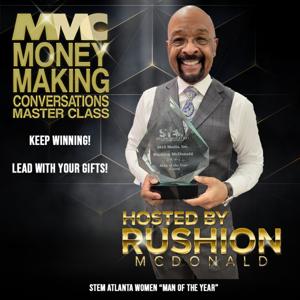


Two-time Emmy and Three-time NAACP Image Award-winning, television Executive Producer Rushion McDonald interviewed Dr. Tabitha Carr.
Founder of Good Girl Chocolate:
🎯 Purpose of the Interview
The interview centers on:
🍫 Key Takeaways 1. Personal Health Transformation
2. Empowerment Through Education and Action
3. Creation of Good Girl Chocolate
4. Moderation Is Key
5. Recognition and Growth
6. Support Network and Faith
🌟 Notable Moments
#STRAW
#BEST
#SHMS
See omnystudio.com/listener for privacy information.
Two-time Emmy and Three-time NAACP Image Award-winning, television Executive Producer Rushion McDonald interviewed Anne Lester.
A financial expert and former head of retirement solutions at J.P. Morgan Asset Management. The discussion focused on saving strategies, financial psychology, and overcoming behavioral biases to achieve long-term financial success.
🔑 Key Themes & Highlights
Overcoming Financial Mistakes
Saving Strategies & Behavioral Hacks
Emergency Funds & Smart Spending
Subscription Detox & Hidden Expenses
Investing vs. Traditional Savings
📘 About Anne Lester
Anne Lester is a financial strategist, speaker, and author, known for her expertise in retirement planning and behavioral finance. She spent over 30 years at J.P. Morgan Asset Management, leading retirement solutions and helping individuals build financial security.
Her book, Your Best Financial Life, provides practical strategies for saving, investing, and overcoming financial biases.
#STRAW
#BEST
#SHMS
See omnystudio.com/listener for privacy information.
Two-time Emmy and Three-time NAACP Image Award-winning television Executive Producer Rushion McDonald interviewed Charles Cofield.
Thanks! The transcript from this episode of Money Making Conversations Masterclass features an inspiring and high-energy interview with CPA and financial educator Carter Cofield, co-founder of Melanin Money. Here's a breakdown of the key highlights and takeaways:
🔑 Key Themes & Takeaways 1. Melanin Money: A Mission-Driven Firm
2. Authenticity as a Brand
3. Personal Tragedy & Financial Awakening
4. Financial Literacy & Health
5. Melanin Money Awards
6. Generational Wealth: Redefined
7. Free Weekly Financial Classes
💬 Notable Quotes
#SHMS #STRAW #BEST
See omnystudio.com/listener for privacy information.
Two-time Emmy and Three-time NAACP Image Award-winning, television Executive Producer Rushion McDonald interviewed Pastor Dexter Jenkins.
Purpose of the Interview
The interview aimed to educate and inspire listeners about wealth creation through real estate and financial literacy, particularly for individuals over 50. Pastor Jenkins shared strategies for building generational wealth, shifting mindsets about money, and leveraging real estate as a primary tool for financial independence.
Key Takeaways
Intersection of Faith, Finance, and Business
Pastor Jenkins emphasizes that faith and financial success are not mutually exclusive. He advocates using biblical principles as a success manual, especially from Proverbs.
Real Estate as “Low-Hanging Fruit” for Wealth
Real estate is one of the simplest and most effective ways to build wealth because land is finite and historically valuable.
Mindset Over Money
Wealth building starts with changing beliefs about money. Many misconceptions learned in childhood or church need to be unlearned.
Refire, Don’t Retire
For those over 50, Jenkins encourages leveraging life experience to create new income streams instead of slowing down.
Social Security Reality Check
The average Social Security check (~$1,400/month) is insufficient for most Americans, highlighting the need for personal wealth strategies.
The SHIP Method
Education Before Action
Start with learning—books, podcasts, seminars—before diving into real estate or other ventures.
Community Wealth Building
Jenkins supports initiatives like “buying back the block” to revitalize neighborhoods and build collective wealth.
Secrets to Success
Desire, planning, education, and execution are essential. Dreams without plans remain dreams.
Upcoming Resources
Jenkins is releasing a book: The Real Estate Wealth Creation Blueprint, offering practical steps for using real estate to build wealth.
Notable Quotes
#SHMS #STRAW #BEST
See omnystudio.com/listener for privacy information.
Listen and subscribe to Money Making Conversations on iHeartRadio, Apple Podcasts, Spotify, www.moneymakingconversations.com/subscribe/ or wherever you listen to podcasts. New Money Making Conversations episodes drop daily. I want to alert you, so you don’t miss out on expert analysis and insider perspectives from my guests who provide tips that can help you uplift the community, improve your financial planning, motivation, or advice on how to be a successful entrepreneur. Keep winning!
Two-time Emmy and Three-time NAACP Image Award-winning, television Executive Producer Rushion McDonald interviewed Rhonda Spratt.
Founder of Bella Luv, a Georgia‑based nonprofit (referred to in the transcript as Ghost Pink / Bella Luv) dedicated to year‑round breast cancer awareness, early detection advocacy, and compassionate support for women undergoing treatment. Inspired by her mother’s experience and eventual passing from metastatic breast cancer, Spratt explains her mission to move beyond October awareness campaigns and create continuous impact through education, community engagement, and personalized care boxes for women in active treatment.
The conversation touches on her personal grief journey, her motivations, the work required to run a nonprofit, her practices for emotional balance, and her vision to normalize year‑round breast cancer education.
🎯 Purpose of the Interview 1. To Share Rhonda Spratt’s Motivation for Founding Bella Luv
Her mother's breast cancer journey—early detection success followed by recurrence due to lack of ongoing screenings—motivated her to create a nonprofit that centers early detection and support.
.txt)
2. To Educate Listeners About the Realities of Breast Cancer
She discusses stages, recurrence, survival rates, and the importance of consistent mammograms beyond October.
.txt)
3. To Promote Year‑Round Awareness and Action
Spratt stresses that breast cancer does not “take a break” and that communities must stop limiting education and advocacy to Breast Cancer Awareness Month.
.txt)
4. To Highlight the Work and Impact of Her Nonprofit
Bella Luv has supported 76+ women nationwide with tailored care boxes that meet their personal treatment needs.
.txt)
5. To Inspire Others to Balance Purpose, Grief, Community Work, and Personal Wellness
She shares how golf, yoga, and intentional self‑care allow her to manage emotional weight while serving others.
.txt)
📌 Key Takeaways 1. Early Detection Saves Lives
2. Breast Cancer Awareness Should Be Year‑Round
3. Bella Luv Provides Tailored Support for Women in Treatment
4. Running a Nonprofit Requires Community, Consistency & Help
5. Emotional Balance Is Essential
6. Nationwide Impact From a Georgia Base
7. Personal Loss Transformed Into Purpose
💬 Notable Quotes (from the transcript) On early detection
“If you detect breast cancer early, the five‑year survival rate is 99%.”
.txt)
On her mother’s recurrence
“She didn’t schedule a mammogram… she was distracted, caught up with life instead of making her health a priority.”
.txt)
On year‑round awareness
“Breast cancer doesn’t wait until October to be diagnosed. Women are diagnosed every day.”
.txt)
On founding her nonprofit
“I wanted to be more hands‑on… intentionally gift women with items they need as they’re going through breast cancer.”
.txt)
On emotional healing
“It is very healing… I get joy from helping other women as they’re going through their healing journey.”
.txt)
On running a nonprofit
“You have to ask for help… in the beginning I was a one‑woman show.”
.txt)
On women’s identity and mastectomy
“It’s like losing a part of yourself… you feel like a part of your womanhood has been taken away.”
.txt)
On faith and purpose
“Faith is definitely driving this… I felt a strong call that I needed to step up and do more.”
.txt)
#STRAW #SHMS #BEST
Money Making Conversations Master Class with Rushion McDonald is America's premier entrepreneurship, business leadership, financial literacy, and wealth-building podcast featuring successful entrepreneurs, executives, founders, celebrities, and industry experts sharing actionable insights for professional and financial success.
Business Podcast
Entrepreneurship
Small Business
Business Growth
Financial Literacy
Wealth Building
Black Entrepreneurs
Minority Business
Leadership
Executive Leadership
Business Funding
Marketing Strategies
Personal Development
Startup Advice
Sales Training
CEO Interviews
Founder Stories
Professional Development
Economic Empowerment
Business Success
Networking
Brand Building
Innovation
How to start a business
Small business funding
Entrepreneur success stories
Business leadership podcast
Wealth building strategies
Black entrepreneur podcast
Minority business development
Marketing for small businesses
Business growth strategies
Startup funding opportunities
Executive leadership training
Financial literacy education
Success mindset podcast
See omnystudio.com/listener for privacy information.
Two-time Emmy and Three-time NAACP Image Award-winning, television Executive Producer Rushion McDonald interviewed El' Deity Princey.
📝 Summary of the Interview
El' Deity Princey is a transformational master coach, author, and speaker with a background in social science, neuroscience, and trauma recovery. In this powerful and deeply personal interview, she shares her journey from childhood trauma and dysfunction to becoming a high-achieving coach helping others reprogram their minds, cut toxic ties, and build wealth-driven lives. Her book, Monetize a Mind That’s Colonized, and her coaching business, 11 Master Consulting, are tools she uses to empower others to transcend adversity and manifest success.
🔑 Key Takeaways 1. Mindset is the Foundation of Wealth
2. Cutting Toxic Ties
3. Coaching vs. Therapy
4. Routine Builds Wealth
5. Healing from Trauma
6. Manifestation Requires Action
7. Empowering Language
8. Client Success Stories
9. Accessibility & Services
💬 Notable Quotes
#SHMS #STRAW #BEST
See omnystudio.com/listener for privacy information.
Two-time Emmy and Three-time NAACP Image Award-winning, television Executive Producer Rushion McDonald interviewed Jasmine Young.
Founder and president of the Financial Literacy Institute. Here's a summary of the key themes and highlights from the conversation:
🎙️ Interview Highlights Jasmine Young’s Background
Financial Literacy Mission
Cultural and Historical Awareness
Social Impact and Civic Engagement
Personal Insights
#STRAW
#BEST
#SHMS
See omnystudio.com/listener for privacy information.
Two-time Emmy and Three-time NAACP Image Award-winning, television Executive Producer Rushion McDonald interviewed T.M. Robinson-Mosley.
Summary of the Interview: Dr. T.M. Robinson-Mosley on Money Making Conversations Masterclass
Dr. T.M. Robinson-Mosley—founder of The Playbook, an award‑winning mental‑health‑performance sports‑tech company—joins Rushion McDonald to discuss how her platform is transforming athlete care, team culture, and performance measurement. The Playbook uses AI‑powered, gamified psychological assessments to measure stress, resilience, and overall mental well‑being across youth, collegiate, professional, and military sports environments.
Mosley explains how mental health—long treated as unmeasurable and stigmatized—is finally becoming trackable, private, and actionable. The Playbook provides real‑time alerts, data‑driven insights, and ecosystem‑wide tools for coaches, trainers, clinicians, and entire organizations.
She also shares her journey as a non‑coding tech founder, the scaling challenges brought on by the pandemic, and the broader impact The Playbook is poised to have across corporate, construction, military, and other high‑stress fields.
Purpose of the Interview 1. Introduce and explain The Playbook
To present The Playbook as a next‑generation mental health performance platform that quantifies mental well‑being, provides action plans, and enhances team culture.
2. Elevate the conversation around athlete mental health
Mosley breaks down stigma, highlights real athlete stories, and explains why mental analytics are as critical as physical analytics.
3. Show how the platform uses technology to prevent crises
The Playbook provides early detection, privacy protection, and immediate care support—catching problems before they become crises.
4. Highlight the expansion beyond sports
Although built in sports, the platform is already being requested by industries like construction, healthcare, first responders, and more. ]
5. Demonstrate the business model
As a SaaS B2B platform, The Playbook sells licensed subscriptions to organizations, teams, and associations.
Key Takeaways 1. Mental health can be measured—and must be
The Playbook converts psychological assessments into quantifiable metrics similar to heart rate or step count.
Athletes receive resilience, stress, and well‑being scores—like a “mental batting average.”
2. The platform offers real-time alerts
If an athlete’s score enters the “red zone,” coaches/clinicians receive immediate alerts with steps to take within 24 hours.
3. Privacy is paramount
The Playbook is HIPAA‑compliant, mobile, secure, and built to protect athlete data from misuse (e.g., contract negotiations).
4. Mental analytics are the next frontier of sports
Teams already use physical analytics. Now they can use mental analytics to track performance, prevent burnout, and reduce crises.
5. Built for the entire ecosystem—not just athletes
Coaches, front offices, sports medicine staff, and military leadership also use the platform—promoting culture-wide mental health.
6. The Playbook is expanding beyond sports
Industries with high stress—construction, medicine, law, emergency responders, veterinarians—are already approaching Mosley to adapt the system.
7. A critical solution for underserved communities
The platform makes mental health care accessible, private, digital, and stigma‑free—especially for youth and communities of color.
8. Performance is universal
Whether you’re an athlete, military member, parent, or worker—your mental state impacts how you perform. Performance is “agnostic.” [
9. Mosley’s journey shows innovation can come from anywhere
She is a non‑coding tech founder, originally trained as a psychologist working across the NBA, NFL, NCAA, and Olympic sports. [T.M. ROBINSON MOSLEY | Txt]
Notable Quotes On what The Playbook does
“We measure mental health metrics like resilience, stress and overall well‑being using gamified psych assessments.”
“Mental health becomes measurable—like a batting average.” [
On why athletes need this
On the power of technology
On privacy
On team culture
On mental and physical health
On the future outside sports
On purpose
In One Sentence
The interview reveals how Dr. T.M. Robinson-Mosley’s Playbook uses AI‑driven mental health metrics to revolutionize athlete care, provide real‑time performance insights, and expand mental wellness tools far beyond sports into everyday life.
#SHMS #STRAW #BEST
Just let me know!
See omnystudio.com/listener for privacy information.
Two-time Emmy and Three-time NAACP Image Award-winning, television Executive Producer Rushion McDonald interviewed Dr. Willie Jolley.
Summary of the Interview: Dr. Willie Jolley on Money Making Conversations Masterclass
Dr. Willie Jolley—Hall of Fame speaker, bestselling author, and longtime SiriusXM host—joins Rushion McDonald to discuss his new book Rich Is Good, Wealthy Is Better. The conversation focuses on redefining wealth, transforming money mindsets, developing discipline, and overcoming setbacks to build generational prosperity.
Throughout the interview, Dr. Jolley shares insights gathered over 20 years of interviewing billionaires, CEOs, and major wealth creators. He outlines the crucial difference between being rich (high income) and being wealthy (owning assets that work without you). He emphasizes the role of discipline, humility, learning, and generational thinking in achieving sustainable wealth.
The interview closes with Jolley’s personal comeback story—from nightclub singer to world‑renowned speaker—and his message that it’s never too late to change your financial future.
Purpose of the Interview
The interview aims to:
1. Promote and explain Jolley’s new book
“Rich Is Good, Wealthy Is Better,” which clarifies the difference between income-based wealth (rich) and asset‑based, multi‑generational wealth (wealthy).
2. Teach listeners how to shift their money mindset
Jolley walks through the five levels of money thinking, showing how most Americans operate in the lower levels due to habit or lack of knowledge.
3. Encourage financial independence and discipline
Listeners—especially entrepreneurs and families—learn the role of discipline, insurance, multiple income streams, and investment.
4. Provide motivation through Jolley’s story
His setback-to-comeback story proves that financial and personal reinvention is possible at any age.
5. Address generational wealth and financial stewardship
The book is also written for parents/grandparents worried their heirs may squander what they built.
Key Takeaways 1. The crucial difference between rich and wealthy
2. Wealth begins with mindset
Jolley identifies five money mindsets:
His goal: move people one level higher.
3. Discipline is the #1 lever for wealth
Wealth requires:
4. The “Five Types of Wealth”
5. The 3 Legs of Wealth
6. At least two streams of income are essential
Examples: stocks, real estate, crypto, collectibles, content creation.
7. Pride destroys wealth
People overspend to look successful rather than be successful.
Pride → debt → stress → financial ruin.
Humility → learning → planning → wealth.
8. It’s never too late to become wealthy
He shares stories of:
9. A setback is a setup for a comeback
Jolley’s message is deeply motivational:
Notable Quotes (from the transcript) On Wealth vs. Rich
On Mindset
On Discipline
On Pride
On Setbacks
On Starting Late
In One Sentence
The interview teaches that becoming wealthy is less about income and more about mindset, discipline, humility, and long-term planning—and that anyone can build generational wealth starting right now.
#SHMS #STRAW #BEST
See omnystudio.com/listener for privacy information.
Two-time Emmy and Three-time NAACP Image Award-winning, television Executive Producer Rushion McDonald interviewed Shelli-Ann McKenzie.
Purpose of the Interview
The interview focuses on advocating for healthcare professionals, addressing the challenges they face, and introducing Shelli-Ann McKenzie’s nonprofit organization, Help for Healthcare Professionals (HCPP). The goal is to highlight burnout, financial struggles, and systemic issues in healthcare while promoting programs that support mental wellness, financial literacy, and career development.
Key Takeaways
Healthcare Workforce Challenges
Understanding Nursing Roles
Respect and Recognition
Why HCPP Was Founded
Youth Med Program
Funding and Community Support
Notable Quotes
#SHMS #STRAW #BEST
See omnystudio.com/listener for privacy information.
From the publisher's feed
Money Making Conversations Master Class is more than a podcast. It's a front-row seat to the ideas, experiences, and breakthrough moments that inspire success. Hosted by Rushion McDonald, each episode features influential entrepreneurs, business leaders, celebrities, influencers, and nonprofit changemakers sharing the lessons, strategies, and mindset shifts that helped them turn ambition into achievement. The show empowers dreamers, doers, and leaders to think bigger, move smarter, and take action on their goals. As Rushion McDonald often says, "Stop reading other people's success stories and start planning your own."
Tune in, get inspired, and start writing your own success story, one conversation at a time.
https://www.moneymakingconversations.com
https://www.youtube.com/MoneyMakingConversations
https://www.facebook.com/MoneyMakingConversations/
https://twitter.com/moneymakingconv
https://www.instagram.com/moneymakingconversations/