
Sign up to save your podcasts
Or



Two-time Emmy and Three-time NAACP Image Award-winning, television Executive Producer Rushion McDonald, interviewed Sahra Halpern.
President and CEO of the Business Consortium Fund (BCF) and Triad Investments. Here's a summary of the key points discussed:
🎙️ Episode Highlights 🌟 About BCF and CDFIs
💼 Mission and Services
🧭 Application Process
💡 Financial Advice for Entrepreneurs
🤝 Community Engagement
📍 Location and Access
#SHMS #STRAW #BEST
See omnystudio.com/listener for privacy information.
Two-time Emmy and Three-time NAACP Image Award-winning, television Executive Producer Rushion McDonald interviewed Dr. Nicole Roberts Jones.
🎯 Purpose of the Interview
The interview aims to:
🧠 Key Takeaways 1. From Casting to Coaching
Nicole’s early career in talent management and casting helped her develop a gift for recognizing people’s potential. She now uses that gift to help entrepreneurs and executives identify their “DNA” (Distinct Natural Ability) and turn it into income.
“I could see you and how you could fit into the script… That’s really what I do with entrepreneurs now.” – Dr. Nicole Roberts Jones
2. Purpose Is Your Power
Nicole emphasizes that purpose is the one thing you never get fired from. Aligning your work with your purpose leads to higher performance and deeper fulfillment.
“When you bless somebody with the thing that you do, they’re gaining—and you’re gaining for God.” – Dr. Nicole Roberts Jones
3. Multiple Streams of Income
She teaches clients to diversify their income by creating products, programs, and services that don’t require their constant presence—what she calls “money while you sleep” or “mailbox money.”
Examples include:
“Your comfort zone is where your dreams go to die.” – Dr. Nicole Roberts Jones
“If you are physically tied to the money you make, you’re capping your potential.” – Rushion McDonald
4. Stop Giving Away Your Brilliance
Nicole warns against giving away intellectual property for free. She encourages professionals to recognize the value of their expertise and package it into paid offerings.
“You’re giving away your cookie for free… You have value that people will pay for.” – Dr. Nicole Roberts Jones
5. Create a Methodology
She helps clients build a blueprint for their expertise, turning routines and habits into teachable systems. Her metaphor: “You can’t see the label from inside the jar,” meaning people often overlook their own value.
“It’s really helping someone produce the value that is coming out of you effortlessly.” – Dr. Nicole Roberts Jones
6. Authenticity Is a Business Strategy
Nicole encourages people to embrace their full personality, even if it’s “too much” for some. She believes that being yourself is the key to attracting the right audience and opportunities.
“Stop letting people turn down your light. This is who I am. God made me this way.” – Dr. Nicole Roberts Jones
💬 Memorable Quotes
🌟 Impact of the Interview
This episode is a masterclass in personal branding, purpose alignment, and entrepreneurial strategy. Nicole’s energy and clarity make her insights actionable and inspiring, especially for professionals looking to pivot, scale, or rediscover their value.
#SHMS #STRAW #BEST
See omnystudio.com/listener for privacy information.
Two-time Emmy and Three-time NAACP Image Award-winning, television Executive Producer Rushion McDonald interviewed Germaine Bolds-Leftridge.
💼 Business Overview
💡 Key Insights
🧠 Business Wisdom
📦 Bonus Highlights
#AMI
#STRAW
#BEST
#SHMS
See omnystudio.com/listener for privacy information.
Two-time Emmy and Three-time NAACP Image Award-winning, television Executive Producer Rushion McDonald interviewed Shelby Williams.
🌟 Summary of the Shelby Williams Interview
(From “Money Making Conversations Masterclass” with Rushion McDonald)
The interview features Shelby English Williams, a registered nurse and founder of SEW Nursing, LLC, a luxury concierge nursing firm based in Atlanta. She shares her personal journey from childhood inspiration, to becoming an RN, to ultimately building a business that provides personalized, at‑home, patient‑first nursing services.
Shelby also discusses the challenges nurses face, the importance of compassionate care, entrepreneurship in healthcare, and her annual nursing celebration event called the Nursing Shindig.
🎯 Purpose of the Interview
The interview serves to:
1. Highlight Shelby Williams’ entrepreneurship journey
She demonstrates how nurses can expand beyond traditional clinical roles and launch independent nursing businesses.
2. Educate the audience about concierge nursing
Shelby breaks down what “luxury nursing care” means and how her services differ from standard home health and Medicare‑funded care.
3. Inspire nurses to pursue business ownership
She provides advice, real stories, and a transparent look into the challenges and rewards of being a nurse‑entrepreneur.
4. Promote her event — the Nursing Shindig
An annual celebration and empowerment gathering for nurses.
📌 Key Takeaways 1. Shelby’s Background & Calling
2. COVID‑19 Shaped Her Perspective
3. Why She Started SEW Nursing, LLC
4. What “Luxury Nursing” Means to Her
It’s not about extravagance — it’s about meeting patients where they are with:
5. Her Approach to Care
Shelby emphasizes:
She shares a story about driving over an hour on a Sunday to help a client’s mother without charging upfront — because the priority was care, not fees.
6. Hospice Wisdom
Shelby reframes the term:
7. The Nursing Shindig
A social + educational event for nurses.
Features:
Next event:
📅 August 8, 2026 — Atlanta (ATL Experience)
8. Her Message About Nursing & the System
9. Entrepreneurship Advice for Nurses
💬 Notable Quotes (Attributed to Shelby or Rushion) On purpose and calling
On entrepreneurship
On luxury nursing
On hospice
On patient families
On service vs money
On why she keeps returning to the profession
Rushion on trust
#SHMS #STRAW #BEST
See omnystudio.com/listener for privacy information.
Two-time Emmy and Three-time NAACP Image Award-winning, television Executive Producer Rushion McDonald interviewed Brian Custer.
Summary of the Interview
On Money Making Conversations Masterclass, Rushion McDonald interviews Brian Custer—Emmy Award–winning sportscaster, ESPN anchor, play-by-play commentator, cancer survivor, fashion enthusiast, and HBCU graduate of Hampton University. The discussion moves through Custer’s early life in Columbus, Ohio; the influence of Black media figures on his career; his journey from a childhood dreamer sitting beside his grandmother watching Walter Cronkite to becoming a nationally recognized sports broadcaster; and his path into fraternity life as a member of Kappa Alpha Psi.
Custer describes how he discovered broadcasting at an early age, secured internships in high school, and worked grueling night shifts in radio before transitioning into television. But the most powerful portion of the interview is his emotional recounting of his battle with aggressive prostate cancer at age 42—a diagnosis he initially wanted to hide. He shares the moment his doctor insisted he use his platform to educate men of color about prostate cancer, a mission he now treats as a calling.
The interview ends with sports talk—including commentary on the Gervonta “Tank” Davis vs. Ryan Garcia fight—and a heartfelt exchange about mentorship, legacy, and the importance of Black excellence and representation in media.
Purpose of the Interview
1. To spotlight Brian Custer’s broadcasting journey
He shares how childhood influences, mentors, and early opportunities shaped his journalism career.
2. To promote awareness about prostate cancer in men of color
Custer uses his personal story to break stigmas surrounding screenings, early detection, and open discussion.
3. To inspire listeners to pursue their dreams despite obstacles
He emphasizes resilience—from working overnight radio shifts to confronting a life-threatening diagnosis.
4. To highlight the impact of HBCUs and Black fraternities
He explains how Hampton University and Kappa Alpha Psi shaped his identity and leadership.
5. To celebrate representation in sports media
Custer honors trailblazers like Irv Cross, James Brown, and Carol Simpson, showing how visibility opened doors.
Key Takeaways
1. Early exposure builds dreams
Watching Walter Cronkite, Friday Night Videos, and Ted Koppel developed his passion for broadcasting.
His grandmother’s nightly viewing rituals deeply influenced him.
2. Representation matters
Seeing Irv Cross, James Brown, and Carol Simpson on television affirmed his ambition and provided powerful role models.
3. Hard work—not shortcuts—built his career
Custer’s first job was midnight–8 a.m. radio, reading hourly newscasts.
He later interned and volunteered long after programs ended to gain experience.
4. Prostate cancer is a silent but deadly threat
His routine physical revealed a suspicious PSA level (5.4), leading to a biopsy and an aggressive cancer diagnosis.
He initially refused repeat screenings due to stigma but credits his doctor’s persistence with saving his life.
5. Using his platform for good became a mandate
His surgeon urged him to become an advocate for prostate cancer awareness—particularly for Black men, who are disproportionately affected.
6. Vulnerability creates connection
Custer’s openness about fear, masculinity, and mortality mirrors Rushion’s own thyroid cancer journey, creating an intimate, healing conversation.
7. Career longevity requires authenticity and relationship-building
Custer praises mentors like James Brown and the brotherhood of Black media professionals.
He underscores the importance of connections—not shortcuts—in building a respected brand.
Notable Quotes
(All directly from the transcript.) [Brian Custer | Txt]
On childhood dreams & representation
On fraternity life
On breaking into broadcasting
On prostate cancer
On stigma and survival
On sports and life
On brotherhood and mentorship
#SHMS #STRAW #BEST
See omnystudio.com/listener for privacy information.
Hi, I'm Rushion McDonald, the host of the weekly Money Making Conversations Master Class show. This show provides interviews and information for everyone. It’s time to stop reading other people’s success stories and start living your own. Have you ever thought about starting a business? If so, why did – or didn’t – you do it?
I am sharing valuable insights on how to be a successful business owner and the role Amazon Business can play in streamlining operations.
Keys to Business Success
Hiring Wisely: Avoid hiring based on familiarity or budget alone—background checks and qualifications matter.
Budgeting & Planning: Many businesses fail because they lack a financial plan before launching.
Time Management: Running a business requires dedication—McDonald wakes up at 4:30 AM daily to stay ahead.
Consistency & Trust: Businesses must be reliable—whether it’s keeping inventory stocked or ensuring parking availability for customers.
Learning from Mistakes: McDonald shared his early struggles, including hiring unqualified staff and failing to pay taxes properly.
How Amazon Business Helps
Bulk Purchasing: Saves time and money by allowing businesses to buy supplies in bulk.
Smart Insights: Amazon Business Analytics helps track spending and optimize purchases.
Efficiency & Convenience: Offers free accounts with no spending minimum, making it accessible for small businesses and large organizations alike.
Flexible Payment Options: Businesses can choose multiple payment methods for streamlined transactions.
McDonald emphasized that Amazon Business can help entrepreneurs focus on growth rather than administrative burdens. His advice encourages strategic decision-making and leveraging technology for success. The Amazon Business account is free, and there’s no spending minimum.
#SHMS #STRAW #BEST
See omnystudio.com/listener for privacy information.
Two-time Emmy and Three-time NAACP Image Award-winning, television Executive Producer Rushion McDonald interviewed Ashley M. Fox.
Summary of the Interview
In this episode of Money Making Conversations Masterclass, Rushion McDonald interviews Ashley M. Fox—former Wall Street analyst, Howard University alum, financial educator, and founder/CEO of Amplify, a fintech platform focused on making wealth‑building accessible to everyday people.
Ashley shares her journey from working with ultra‑high‑net‑worth clients on Wall Street to becoming an entrepreneur determined to bring financial education and empowerment to communities traditionally excluded from wealth conversations. She discusses the creation of Amplify, her financial fall and recovery, her work in schools and prison systems, and how digital content has allowed her to scale her mission globally.
The discussion emphasizes mindset, self‑belief, access, and a practical path to wealth, even starting with as little as $20.
Purpose of the Interview
The interview aims to:
1. Inspire financial empowerment
Ashley explains how anyone—regardless of background or starting point—can begin building wealth and shift generational outcomes.
2. Demystify investing and wealth-building
She breaks down how simple investing can be, the power of small consistent contributions, and how wealth isn’t limited to entrepreneurs or high earners.
3. Highlight her fintech platform Amplify
She shares how Amplify democratizes financial education through online tools, community, and accessible investing classes.
4. Encourage a mindset shift
Ashley stresses the importance of eliminating fear, building confidence, and using logic instead of emotion when making financial decisions.
Key Takeaways 1. Wealth Begins with Belief and Mindset
Ashley learned on Wall Street that the biggest difference between wealthy and non-wealthy people is not education—it's self-belief. Many people don’t believe wealth is possible for them because they've never seen it.
2. You Don’t Need a Lot of Money to Start Investing
She urges people to start with $20, even buying fractional shares. It’s consistency—not starting amount—that builds wealth.
3. You Can Invest in Others’ Ideas—Not Just Your Own
Building wealth doesn’t require launching a business. Buying stock is one of the easiest ways to participate in wealth creation.
4. Ashley’s Own Journey Included Failure
After leaving Wall Street, she was evicted, slept on her parents’ couch for two years, and maxed out credit cards. Her purpose kept her going.
5. Financial Education Should Start Early
She developed financial education programs for schools, prison systems, and everyday families because adults often learn too late.
6. Amplify Scales Wealth Education
Her platform offers 300+ hours of videos and tools, helping members open 3,000+ investment accounts and invest $7.4M collectively.
7. Social Media Is Her Biggest Access Point
Ashley reaches millions by being authentic, relatable, and consistent—meeting people where they are.
8. You Must Pay Yourself First
Most people pay bills, companies, and creditors before investing in themselves. She emphasizes reversing that pattern.
9. Logic Over Emotion
Wealth requires logical decision‑making, especially in the market. Emotional reactions undermine long-term financial growth.
Notable Quotes (Taken From the Transcript) On Wealth Mindset
On Starting Small
On Investing
On Self-Reliance
On Purpose and Identity
#SHMS #STRAW #BEST
See omnystudio.com/listener for privacy information.
Two-time Emmy and Three-time NAACP Image Award-winning, television Executive Producer Rushion McDonald interviewed Paul Dashevsky.
Serial entrepreneur and founder of Maxwell, a platform focused on Accessory Dwelling Units (ADUs), also known as tiny homes:
🎯 Purpose of the Interview
To educate listeners on the growing trend of Accessory Dwelling Units (ADUs), their practical uses, legal considerations, and how platforms like Maxwell help homeowners navigate the process of building or buying tiny homes—especially in light of new options like Amazon’s prefab homes.
🗝️ Key Takeaways
What Are ADUs?
Growing Popularity
Use Cases
Amazon’s Entry
Legal & Practical Considerations
Maxwell Platform
Impact on Property Value
Social Impact
💬 Notable Quotes
#SHMS #STRAW #BEST
See omnystudio.com/listener for privacy information.
Two-time Emmy and three-time NAACP Image Award-winning television Executive Producer Rushion McDonald interviewed Crystal Victoria.
🎯 Purpose of the Interview
The interview aims to:
🔑 Key Takeaways 1. Empowering Youth Through Entrepreneurship
2. Teen Biz Box: A Practical Solution
3. Alternative Pathways Matter
4. Personal Story of Redemption
5. Preparing for the Future of Work
🗣️ Notable Quotes
On youth entrepreneurship:
“An app will never replace food and eating. We need programs for culinary and hospitality entrepreneurs.”
On her personal journey:
“I didn’t have a Teen Biz Box. I had trouble. But I prayed to God: ‘Give me something to do with this story.’”
On accessibility:
“Some kids don’t have bootstraps to pull themselves up. Let’s slide down the ladder and help them climb.”
On the Teen Biz Box:
“Before you spend $1,000 on your kid’s business idea, give them a box. If they sell everything, maybe they’re serious.”
On preparing for the future:
“Long gone are the days of one career for life. Learning, unlearning, and reskilling is the new normal.”
📦 Teen Biz Box Highlights
#SHMS #STRAW #BEST
See omnystudio.com/listener for privacy information.
Two-time Emmy and Three-time NAACP Image Award-winning, television Executive Producer Rushion McDonald interviewed Cassandra Lester.
Purpose of the Interview
The interview introduces Cassandra Lester’s nonprofit Grow Give Prosper and its partnership with Google’s “Grow with Google” initiative. The goal is to provide free career certification scholarships to underserved and economically impacted communities, helping individuals increase earning potential and gain financial literacy.
Key Takeaways
Mission of Grow Give Prosper
Google Partnership
Accessibility
Impact
Financial Literacy
Challenges
Personal Drive
Notable Quotes
#SHMS #STRAW #BEST
See omnystudio.com/listener for privacy information.
From the publisher's feed
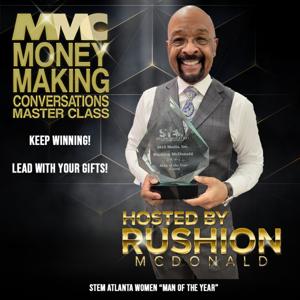
Money Making Conversations Master Class is more than a podcast. It's a front-row seat to the ideas, experiences, and breakthrough moments that inspire success. Hosted by Rushion McDonald, each episode features influential entrepreneurs, business leaders, celebrities, influencers, and nonprofit changemakers sharing the lessons, strategies, and mindset shifts that helped them turn ambition into achievement. The show empowers dreamers, doers, and leaders to think bigger, move smarter, and take action on their goals. As Rushion McDonald often says, "Stop reading other people's success stories and start planning your own."
Tune in, get inspired, and start writing your own success story, one conversation at a time.
https://www.moneymakingconversations.com
https://www.youtube.com/MoneyMakingConversations
https://www.facebook.com/MoneyMakingConversations/
https://twitter.com/moneymakingconv
https://www.instagram.com/moneymakingconversations/