
Sign up to save your podcasts
Or

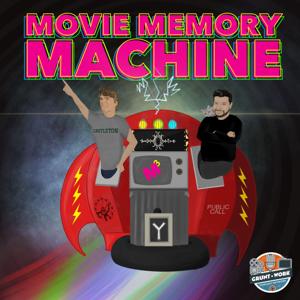


In the final episode of our Guy Ritchie dimension, hosts Truman Caps and Landon Solano dive into the chaotic world of *The Gentleman*. What makes this 2019 film a homecoming for Ritchie, and why did it slip through the cracks during its initial release? If you're a fan of crime dramas or simply curious about cinematic missteps, this episode is tailor-made for you.
Ever wondered why some films fade into obscurity while others become classics? Join hosts Landon Solano and Truman Caps in this episode of Movie Memory Machine as they delve into the action-packed yet often overlooked sequel, *Sherlock Holmes: A Game of Shadows*.
In a cinematic realm where privilege meets desperation, this week’s episode dives into the controversial waters of Guy Ritchie’s 2002 remake of Swept Away. Join hosts Truman and Landen as they navigate the choppy dynamics between wealth and class, serving up a thought-provoking discussion that reveals just why this film has been largely forgotten. If you’ve ever wondered how a movie starring Madonna could flop despite all its buzz, this episode is a must-listen.
A mid-2010s attempt to relaunch a Cold War spy property with a stylized, fashion-forward tone.
This is an adaptation of a 1960s television series, repositioned as a sleek ensemble piece that leans on chemistry, design, and period aesthetics rather than large-scale franchise setup.
We’re landing in 2015 to see how the machine handles a retro property rebuilt for a post-Bond, post-Mission: Impossible landscape.
Released in 2015, directed by Guy Ritchie, and starring Henry Cavill, Armie Hammer, Alicia Vikander, Elizabeth Debicki, and Hugh Grant. Based on the television series The Man from U.N.C.L.E. created by Sam Rolfe, the film was released during a period of renewed interest in legacy properties and stylized spy films.
The film emphasizes production design, costume, and editing rhythm as primary drivers of its tone, with split-screen techniques and curated soundtrack choices reinforcing its period setting. Its structure foregrounds character interplay and shifting alliances, aligning more with caper dynamics than traditional espionage escalation.
Casting plays a central role in defining the film’s identity, pairing contrasting leads to create a deliberate tonal balance between tension and levity. The result positions the film as a contained, style-forward entry within the broader spy genre rather than a conventional blockbuster launch point.
This episode looks at how a known property is reframed through aesthetic control and performance chemistry, and why that approach can exist somewhat outside the dominant franchise model of its time.
Subscribe & Follow
Website: https://www.moviememorymachine.com
Letterboxd: https://letterboxd.com/moviememorypod/
YouTube: https://www.youtube.com/@MovieMemoryMachine
Support the Show
Patreon: https://patreon.com/gruntworkpod
The Machine is back online, the dimensional drive is active, and for the first time, it isn’t making us guess where we’re going.
We’re heading straight into the work of one filmmaker—through spies, shipwrecks, detectives, criminals, class warfare, very expensive clothes, and an alarming amount of bare-knuckle violence.
Over the next several weeks, Movie Memory Machine is traveling through four Guy Ritchie films that have slipped a little farther out of the cultural memory than they probably deserve:
The Man from U.N.C.L.E.
Swept Away
Sherlock Holmes: A Game of Shadows
The Gentlemen
This is also the beginning of something new for the show. Instead of following clues from film to film, the Machine is now sending us into Dimensions: five-film journeys built around a director, genre, trend, cultural moment, or whatever strange connection it decides to make next.
Did we say five and only list four? That's because the Machine is allowing us to begin exploring memorable movies, and once per dimension we will cover a remembered movie here on the Patreon, along with trailer games for each main episode.
Tune in to find out exactly where we’re headed, see the complete lineup for the first time, and try to figure out what kind of trip the Machine has planned for us.
Stay tuned. The Guy Ritchie Dimension starts now.
And if you’re hearing this somewhere other than Patreon, you can join us and support the show at https://patreon.com/gruntworkpod.
Truman and Landen notice the trip between seasons feels longer, so they check the Movie Memory Machine and perform a software update to Machine OS 3.0. The reboot prints an unexpected message — “Dimensional rift activated” — leading to a surreal turn of events.
New episodes coming soon!
Hosts Truman Capps and Landon Solano celebrate the end of Movie Memory Machine season two by revisiting the season’s highlights, relitigating past verdicts, and sharing behind-the-scenes reflections.
They discuss standout episodes (like Hotel Artemis), director’s-cut discoveries (Nightmare Alley), memorable performances, box‑office and budget stats, hand out M3P awards, correct a few on‑air missteps, and tease the machine’s next destination for season three.
A dark fantasy reimagining that reframes a classic fairy tale as a large-scale action-driven property.
This is a studio attempt to position a familiar story within the early-2010s wave of gritty fairy tale adaptations, combining franchise ambitions with a more grounded visual tone.
We’re dropping into 2012 to see how the machine handles a traditional narrative rebuilt for blockbuster positioning.
This is the People's Choice movie for Season 2. For more information on how YOU can suggest a film, visit our Patreon.
Released in 2012, directed by Rupert Sanders, and starring Kristen Stewart, Chris Hemsworth, Charlize Theron, and Sam Claflin. Based on the fairy tale Snow White, the film was released by Universal Pictures during a period when studios were reworking public domain stories into darker, action-oriented films.
The film emphasizes production design and visual effects, using large-scale environments and battle sequences to expand the scope of the source material. Its structure integrates familiar narrative elements with action set pieces, aligning with broader trends in fantasy filmmaking at the time.
Casting plays a central role in shaping tone and audience expectations, with performances calibrated to support both dramatic and action-driven components. The production reflects a moment when studios sought to reposition well-known stories for contemporary audiences through scale, tone, and franchise potential.
This episode looks at how a film like this transforms a widely recognized narrative into a modern blockbuster framework, and how those choices influence its identity.
Subscribe & Follow
Website: https://www.moviememorymachine.com
Letterboxd: https://letterboxd.com/moviememorypod/
YouTube: https://www.youtube.com/@MovieMemoryMachine
Support the Show
Patreon: https://patreon.com/gruntworkpod
A hyper-stylized Greek myth adaptation that leans heavily on digital visuals and slow-motion combat.
This is a mid-budget mythological epic positioned between the grounded approach of earlier sword-and-sandal films and the graphic-novel aesthetic that followed in the wake of 300.
We’re dropping into 2011 to see how the machine processes a film built almost entirely on visual identity and tone.
This is a cross-over episode with Odyssey: A Daily Odyssey through Homer's The Odyssey.
Released in 2011, directed by Tarsem Singh, and starring Henry Cavill, Mickey Rourke, Freida Pinto, and Luke Evans. The film draws loosely from Greek mythology, particularly the story of Theseus, and was produced during a resurgence of myth-based action films following the commercial success of 300.
The film’s approach is defined by its visual design, emphasizing high-contrast lighting, stylized violence, and digitally constructed environments. Its narrative framework uses familiar mythological figures but prioritizes imagery and tone over strict adherence to classical source material.
Casting reflects a mix of emerging and established actors, with performances shaped to fit the film’s heightened, almost operatic style. The production positions itself within a broader trend of mythological adaptations in the early 2010s, where traditional stories were reinterpreted through a modern action lens.
This episode examines how visual ambition drives the identity of a film like this, and what happens when style becomes the primary organizing principle of a myth adaptation.
Subscribe & Follow
Website: https://www.moviememorymachine.com
Letterboxd: https://letterboxd.com/moviememorypod/
YouTube: https://www.youtube.com/@MovieMemoryMachine
Support the Show
Patreon: https://patreon.com/gruntworkpod
A steampunk-leaning reimagining of a classic swashbuckler, built around spectacle, 3D visuals, and an ensemble cast.
This is a version of The Three Musketeers that shifts the focus from period adventure to action-driven franchise potential, reframing a well-worn story through the lens of early-2010s blockbuster trends.
We’re locking into 2011 to examine how the machine handles a literary staple rebuilt for the post-Pirates, post-Avatar era.
This is a cross-over episode with The Countdown of Monte Cristo.
Released in 2011, directed by Paul W. S. Anderson, and starring Logan Lerman, Milla Jovovich, Orlando Bloom, Matthew Macfadyen, Ray Stevenson, and Luke Evans. Based on the 1844 novel The Three Musketeers by Alexandre Dumas, this adaptation was released during a wave of 3D conversions and effects-heavy reboots aimed at global audiences.
The film leans heavily into stylized action and visual effects, incorporating elements like airships and heightened combat choreography that depart significantly from traditional period interpretations. Its structure prioritizes set pieces and ensemble dynamics, aligning with franchise-building strategies common in early-2010s studio filmmaking.
Casting and character presentation emphasize distinct archetypes and screen presence, with performances calibrated toward spectacle and tone rather than historical grounding. The result positions the film closer to contemporary fantasy-action hybrids than to earlier, more classical adaptations of the source material.
This episode looks at what happens when a foundational adventure story is re-engineered around modern blockbuster expectations, and whether that shift enhances or dilutes what made the material endure.
Subscribe & Follow
Website: https://www.moviememorymachine.com
Letterboxd: https://letterboxd.com/moviememorypod/
YouTube: https://www.youtube.com/@MovieMemoryMachine
Support the Show
Patreon: https://patreon.com/gruntworkpod
From the publisher's feed
6,189 Listeners
43 Listeners
2 Listeners