
Sign up to save your podcasts
Or



African Living: Community & Social Sustainability
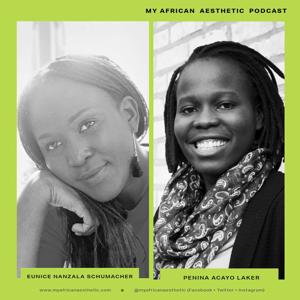
Kinam Imole Konlan (sosial entrepreneur), Terese Mungai-Foyn(Actress and director) and Eunice Nanzala Schumacher(moderator) reflect on how African diaspora communities collectively adapt traditional cultural practices to build thriving, inclusive and sustainable neighborhoods. The panel explores and reflects on how African cultural practices can contribute to social sustainability, building community, and resilience in African diaspora communities and the contexts to which they belong.
Eunice Nanzala Schumacher is an architect, curator at the National Museum of art, Architecture and design and founder of My African Aesthetic . Currently a curator of learning and engagement at the National Museum in Oslo, she has over 15 years varied experience in architecture, city and regional planning, design and project management. She is also passionate about education and spends time away from my job with my family, friends and managing My African Aesthetic, a platform that interrogates, documents and celebrates African aesthetics, African design philosophy and African Placemaking.
Kinam Imole Konlan is a culinary culture reformer, entrepreneur, and founder of African Food Festival Norway (AFFN) — Scandinavia’s largest celebration of African cuisine and culture. As CEO of BAAT DII AS and founder of Ark Builders Academy, she works at the intersection of food, culture, and community development. Kinam’s work centers on reclaiming and reimagining African food traditions not just as nourishment, but as tools for empowerment, identity, and sustainable community building. Through AFFN, she creates inclusive spaces that honor Africa’s culinary diversity while fostering economic opportunities, especially for women and diaspora entrepreneurs.
www.kinam.net
https://africanfoodfestivalnorway.no/
IG @africanfoodfestivalnorway
[email protected]
Terese Mungai-Foyn is an Oslo-based theatre director, instructor, and performer studying an MA in directing at Oslo National Academy of the Arts (KHiO). Mungai-Foyn is also a cultural advocate with a career spanning over two decades in both institutional and independent performing arts. A graduate of Nordic Black Theatre's theatre school, she began as an actor in 1998 before shifting to directing to tell stories on her own terms—centered on authenticity, systemic critique, and social justice. Her directorial work, including the recent production of Blue/Orange, explores themes of power, race, and mental health, and challenges societal norms around accessibility, representation, and inclusion.
Mungai-Foyn is deeply committed to collaborative storytelling and community engagement. She believes theatre should serve as a barometer of society—reflecting, challenging, and inspiring action. Her practice is rooted in values such as collective responsibility and cultural integrity, making her an important voice in discussions about how African cultural practices, both traditional and reimagined, can offer sustainable and inclusive models for living.
A collaboration with Black History Month Norway. With support from Oslo kommune, Kulturrådet og Fritt Ord.
30.10.2025
https://www.blackhistorymonthnorway.no/events-1-1/sampson-addae-4yjf3-7rrjy-yzb6d
Support the show
Instagram: @myafricanaesthetic
Website: https://www.myafricanaesthetic.com/
Diaspora Dialogues, African Living- African aesthetics in a global context.
The talk connects historical and contemporary African aesthetics and design philosophy. We explore how African aesthetics and design philosophy shape and challenge global academic discourse. The panel also reflects on how African perspectives challenge and contribute to the expansion of our knowledge and understanding of design, identity and cultural heritage in an era marked by increasing globalization and the need for decolonization of knowledge. The conversation dwells on both historical and contemporary expressions, focusing on how African aesthetics can provide new impulses for teaching, research and creative practice.
Henry Mainsah is a Research Professor at OsloMet and part of the Technology and Sustainability research group at Consumption Research Norway (SIFO). He obtained a PhD in Media and Communication from the University of Oslo and has developed an interdisciplinary research portfolio located at the crossroads between the social sciences and the creative disciplines focusing on digital media, youth culture, design, and interdisciplinary methods. Mainsah’s research covers topics such as digitization, digital literacy, youth culture, smart living, creative research methods, and participatory design.
Academic disciplines: Media studies and journalism, Cultural studies, Humanities. Henry is also a Board member at My African Aesthetic.https://www.oslomet.no/om/ansatt/henryma/
Don Lawrence is an award-winning architect and founder of Don Lawrence Arkitekt AS, a contemporary architecture practice based in Oslo, Norway. With degrees from The Cooper Union in New York City and the Oslo School of Architecture and Design (AHO), Don’s cross-continental education and practice have shaped a design approach that bridges art, architecture, and landscape. His work explores how built form can respond to and shape a place, focusing on cultural narrative, identity, and the natural environment.
Don’s practice reflects a deep commitment to rethinking the role of architecture in a global context—one that honors the past while engaging contemporary challenges. As a panelist, he brings a unique perspective on how African aesthetics and design philosophies can expand prevailing architectural discourse, contributing to new modes of teaching, research, and creative practice. www.don-lawrence.com @_don_lawrence_arkitekt
T-Michael is a Ghanaian/Norwegian Artist based in Bergen, the western coastal city of Norway. His creative work comprises his eponymous label, Norwegian Rain, T-Kimono, Film lab (short films) and T Creative Spaces.
T-Michael is renowned for his eponymous label. His conceptual approach to tailoring is inspired by his love of sartorial traditions and his passionate quest for a different narrative within tailoring, design and creativity.
Celebrating stylistic and cultural diversities present in today's zeitgeist, T-Michael's creations are characterized by meticulous attention to detail and impeccable construction.
The collection skillfully navigates the convergence of tradition and innovation, seamlessly blending elements from the timeless and the avant-garde.
A collaboration with Black History Month Norway. With support from Oslo kommune, Kulturrådet og Fritt Ord.
08.10.2025
https://www.blackhistorymonthnorway.no/events-1-1/event-one-5j9cr-shd9j-er3s6-2skf5-kxtzx-cxxmf-bxzzn-4mm6z-wtecz-wdr7t-sefz3-mjjn7-ldw8z
Support the show
Instagram: @myafricanaesthetic
Website: https://www.myafricanaesthetic.com/
Professor Mugendi Kanampiu M’Rithaa is a pioneering transdisciplinary designer, educator, and President Emeritus of the World Design Organization. He is a thinker whose work spans continents, cultures, and causes, a passionate advocate for design as a transformative force on the African continent and a believer in the idea of “Afrika with a K” – a linguistic and philosophical shift toward self-definition and narrative ownership.
In this interview, anchored in the project Unwasted by Holos Creative Solutions Afrika LTD, Mugendi helps us unpack the effects of consumerism, post-consumer waste and colonial legacies on African beauty standards and forms of artistic expression. Unwasted reimagines discarded synthetic hair as a material of value but also sparks deeper reflections on African aesthetics, material culture, and self-definition. We reflect on how African women navigate inherited colonial beauty norms, the environmental burden of synthetic hair, and the loss of indigenous African art, design and architecture knowledge systems.
Professor M’Rithaa calls for a reclamation of traditional African hair practices – ethically, aesthetically, and sustainably – illustrating how local and indigenous cultural practices interact with global consumer-driven beauty ideals. He takes us on a journey through African aesthetic traditions – from the symbolic meanings of hair and adornment, to the deep knowledge systems embedded in crafts, patterns and materials. Our dialogue moves beyond African hair aesthetics examining broader questions of community-based craft, circular economies, and how African artists, architects and creatives are shaping a vibrant, self-defined aesthetic.
Professor M’Rithaa invites us to rethink our materials, our methods, and our mindsets – in service of a more sustainable, culturally grounded, and creatively liberated future for African aesthetic and design philosophy.
Link to UNWASTED Documentary | Holos Creative Solutions (HCS_Afrika Ltd): https://www.youtube.com/watch?v=aX2WWoguuz4
Produced for PRAKSIS Presents/ https://www.praksisoslo.org/presents.
Guest edited by My African Aesthetic under the theme: “African aesthetics- a diasporan perspective”
Support the show
Instagram: @myafricanaesthetic
Website: https://www.myafricanaesthetic.com/
In this episode, Celia shares how a move from Paris to Norway, and a lifelong pull toward design led her to create Oriaku, a jewelry brand that fuses African craftsmanship with Scandinavian minimalism. She reflects on growing up with a seamstress mother who shaped her understanding of fashion, and how lived experiences in different contexts helped her develop her personal design language.
We talk about the work behind her rebrand, the psychology of visual identity, and the ways she reimagines traditional forms—like Fulani earrings—for everyday wear. Celia also offers an inside look at her process of collaborating directly with artisans across Africa, ensuring fair pay, honoring each maker’s strengths, and documenting the histories behind every piece. The conversation expands into identity as well: what it means to find home across Africa, France, and Scandinavia without feeling pressured to choose just one.
Themes: African design, Ethical sourcing, modern minimalism, cultural integrity.
https://www.oriaku-studio.com/nb, https://www.instagram.com/oriaku_studio/
Support the show
Instagram: @myafricanaesthetic
Website: https://www.myafricanaesthetic.com/
George Daniels, Managing Director of the Oslo Afro Arts Festival talks about how the festival contributes to reshaping cultural narratives in Norway through the power of African arts.
From teaching salsa classes to directing one of Scandinavia’s most vibrant cultural festivals, George shares his personal journey from South Africa to Oslo—a path fueled by love, fatherhood, and a vision for representation.
We dive into how the festival reclaims Oslo’s Grønland neighborhood as a space of celebration, not stigma and negative stereotypes. George talks about curating experiences across generations—children’s drumming workshops, international music acts, fashion shows, food, and more—all aimed at uplifting African-Norwegian voices and building community.
Plus, we get a glimpse of his future plans: cross-Nordic collaborations, deeper civic engagement, and growing the festival into a platform for social change.
🔗 Learn more at osloafroartsfestival.no and follow @osloafroarts for the latest updates.
Support the show
Instagram: @myafricanaesthetic
Website: https://www.myafricanaesthetic.com/
Discover how youth-led filmmaking is reshaping cultural narratives in Norway and beyond.
In this episode, Regina Ohiama Udalor, producer & director at Peridot Films and founder of the Bragi Film Festival—shares her journey of building a sense of home in Norway while staying rooted in her African identity. Through the Bragi Film Festival, she empowers young people to tell their own stories, explore filmmaking as a career, and or as a bridge to cultural and generational gaps.
Regina discusses how collaborative storytelling helps youth tackle personal themes like family, body image, and identity. Her unique approach connects kids from different backgrounds through shared stories and ideas, fostering empathy and highlighting their common humanity.
As a film director, Regina blends traditional African storytelling with modern media, creating a powerful space for youth to express themselves as individuals while engaging in cross-cultural connection.
Her film @The Lost Cafe was featured on Netflix and won the afriff Audience Choice Award Film 2017
This year another film «A warm Christmas» directed by Regina will be showcased on Friday, May 16, 2025 at the African Pavilion/pavilionafriques at the Cannes Film Festival.
@peridotent
@reginaudalor
@bragi_film_festival
https://www.pavillonafriques.com
@pavillonafriques
https://bragifestival.com
https://www.youtube.com/@peridotstudios
Visit our website or follow us on social media for updates on our work and opportunities to collaborate or support us.
Support the show
Instagram: @myafricanaesthetic
Website: https://www.myafricanaesthetic.com/
In this episode, founder and creative director at Tabanka Dance Ensemble, Thomas Isak Michael Talawa Presto shares his journey of embracing his diverse heritage and the role of Africana aesthetics in his work. He discusses how his supportive family challenged societal stereotypes, shaping his artistic vision. We explore the significance of naming traditions and the profound resistance embedded within them, identity complexities in multicultural settings, and the challenges of seemingly innocent questions that cross personal boundaries. He reflects on how cultural practices like food and dance connect us to heritage and help reconstruct identity in the face of adversity. Thomas delves into the relationship between dance, African aesthetics and identity, offering insights on how cultural legacies shape personal narratives & storytelling through movement. We talk about “The Tawala Technique: An Africognosomatic Approach to Dance”; a technique that he has meticulously developed for over 27 years, one that represents a groundbreaking advancement in African and African Diaspora dance studies. Thomas also discusses the concept of the "cognoscape"—a way to present African perspectives outside Eurocentric academic norms and its intersections with cultural identity, artistic expression, and the ongoing push for inclusivity and decoloniality in the arts.
https://tabankadance.com/
Support the show
Instagram: @myafricanaesthetic
Website: https://www.myafricanaesthetic.com/
Angelica Maria Castillo Balanta, founder of Miss Balanta Turbans & Headwear, takes us through her life across continents, shedding light on the challenges and triumphs of adapting to new cultures. From the lively salsa capital of Cali in Colombia, Panama, Barcelona, and finally to Norway, her journey highlights the essence of community ties that transcend borders. She underscores the significance of building a supportive network and maintaining connections with the Colombian community and other Black friends as this has been pivotal in preserving her cultural identity and authentic self-expression.
Angelica also reflects on the symbolism of turbans, not just as a fashion statement but as a cultural and political emblem uniting the African diaspora and allowing them to trace their ancestry- an exploration of African aesthetics that led to recognition at the Smithsonian's African History Museum.
Instagram: @missbalanata
Miss Balanta was featured in the “In Slavery’s Wake” exhibition at the Smithsonian's African History Museum. https://nmaahc.si.edu/explore/exhibitions/in-slaverys-wake
Support the show
Instagram: @myafricanaesthetic
Website: https://www.myafricanaesthetic.com/
In an engaging conversation with Peter Fongod, we trace his journey from the oil and gas industry to the world of real estate investment. We talk about the emotional rollercoaster of career shifts from oil and gas to real estate; and the hurdles of starting anew which led to the birth of FolksEiendom. He also sheds light on the broader themes of economic opportunities within the African diaspora, highlighting the potential for growth when embracing new ventures. We talk about the evolving landscape of real estate investment for Africans in the diaspora/Norway. He advocates for leveraging resources and collective efforts, drawing parallels with other immigrant communities who successfully build wealth. Beyond financial gains, the conversation touches upon raising children with diverse backgrounds and the power of community and parental involvement in children's activities, reinforcing the value of nurturing relationships and life skills beyond traditional academic settings.
Recorded: 31.10.2024
https://www.folkseiendom.no/
Support the show
Instagram: @myafricanaesthetic
Website: https://www.myafricanaesthetic.com/
Dilú Matola shares her inspiring journey from Mozambique to Norway, highlighting her passion for African culture and how it informs her work with AfroCraft; a social enterprise that merges cultural pride with innovation, bringing the beauty of African aesthetics to Norway through fashion. This episode explores Dilu’s commitment to representation, inclusivity, and the transformative power of African aesthetics in diverse contexts. You will hear about;
• Dilu’s upbringing during Mozambique's civil war and the impact of childhood experiences on her values
• The genesis of AfroCraft and the role of creativity in finding/ building community and preserving cultural authenticity.
• The significance of cultural aesthetics in fostering inclusion, connection, social integration and bridging cultural gaps.
• How AfroCraft embraces, compliments and contrasts different aesthetics and preferences.
Recorded: 12.10.2024
https://afrocraft.no/
Support the show
Instagram: @myafricanaesthetic
Website: https://www.myafricanaesthetic.com/
From the publisher's feed
This podcast is part of My African Aesthetic.
On this Podcast, we shed light on the central and important roles Africans themselves have had, have and will have in creating sustainable…